Vera Intan Clara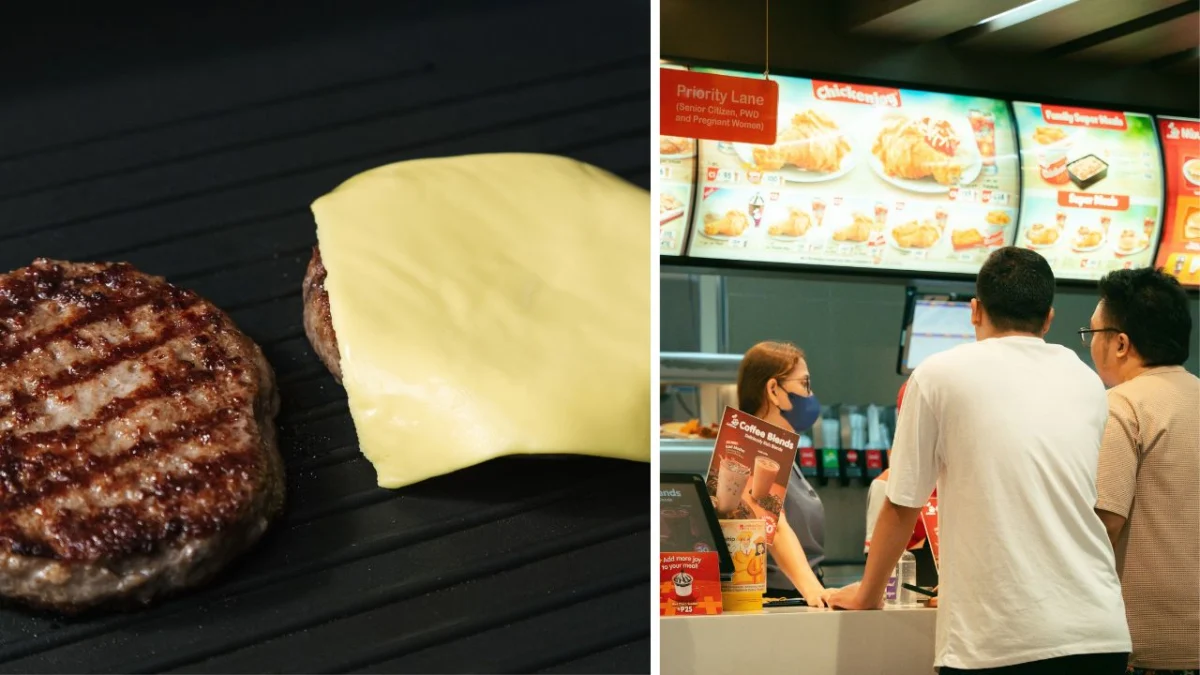
A seemingly innocuous order for a "plain, regular cheeseburger" at a Five Guys establishment has spiraled into a viral sensation, igniting a fervent debate across social media platforms regarding linguistic ambiguity, customer expectations, and the operational realities faced by the quick-service restaurant (QSR) industry. The incident, meticulously recounted by an employee on Reddit’s r/mildlyinfuriating forum, garnered over 22,000 upvotes and nearly 3,700 comments within hours, becoming a microcosm for the recurring communication breakdowns that plague daily interactions in customer service roles.
The Incident Unfolds: A Chronological Account
The narrative, posted approximately 17 hours prior to its widespread circulation by Reddit user "50calTaco," describes a routine transaction that quickly veered into misunderstanding. On a busy shift, an employee at a Five Guys location received an order for a "plain, regular cheeseburger." Adhering to long-established industry conventions within the QSR sector, the employee processed the order as a burger consisting solely of the patty, cheese, and bun, devoid of any additional toppings, sauces, or condiments typically offered. This interpretation aligns with the widely accepted definition of "plain" in the context of fast-food customization, where "plain" signifies the absence of embellishments.
Minutes later, the customer, identified as an adult male, returned to the counter, visibly agitated. He presented the prepared burger, stating, "You made my food wrong. There’s nothing on it." The employee, attempting to clarify the discrepancy, reiterated that the order had been fulfilled precisely as requested: a "plain cheeseburger." The customer, however, challenged this explanation, responding with a rhetorical query, "I did. Do you not know what that means? Like a McDonald’s burger." This statement revealed a significant divergence in understanding, as the customer evidently equated "plain" with the standard, pre-set topping configuration of a specific competitor’s product, rather than the literal absence of toppings.
In an effort to de-escalate the situation and ensure customer satisfaction, the Five Guys employee promptly apologized, offering to remake the order without additional charge. The employee then inquired, "What exactly did you want on it?" With palpable irritation, the customer proceeded to list his desired toppings: ketchup, lettuce, and pickles. Notably, this combination does not correspond to the standard toppings found on a McDonald’s cheeseburger, which typically includes ketchup, mustard, rehydrated onions, and a pickle slice. This further complicated the customer’s initial assertion and underscored the subjective nature of his definition of "plain." The order was subsequently remade to the customer’s specific, albeit belated, requirements.
Viral Resonance: The Reddit Phenomenon
The account quickly resonated with a vast online audience, particularly current and former fast-food workers who recognized the frustrating familiarity of such encounters. Reddit, with its extensive network of niche communities, provided an ideal platform for this collective outpouring of shared experience. The r/mildlyinfuriating subreddit, dedicated to "things that aren’t quite infuriating enough to be posted on r/extremelyinfuriating but are still annoying," proved to be the perfect venue for the post, capturing the exasperated sentiment of service industry professionals. The sheer volume of upvotes and comments not only amplified the original post but also transformed it into a broader commentary on customer service challenges in the digital age. Social media platforms increasingly serve as de facto public forums where anecdotal experiences can rapidly escalate into widespread discussions, influencing public perception and industry dialogue.
Comment sections became a digital support group for those who had endured similar linguistic quandaries. Thousands of individuals shared nearly identical anecdotes, highlighting the systemic nature of these communication gaps. One of the most upvoted comments detailed a customer’s insistence that a "cheeseburger with no cheese" was fundamentally distinct from a hamburger, despite the two being functionally identical from an ingredient perspective. Another commenter recalled a patron who specifically ordered a "bacon double cheeseburger with no bacon," bypassing the simpler and readily available "double cheeseburger" option already present on the menu. These examples underscore a recurring pattern of customers employing convoluted or contradictory terminology, often stemming from a misunderstanding of menu structures or basic culinary definitions.
The Linguistic Labyrinth of "Plain": Industry Standard vs. Public Perception
At the heart of the Five Guys incident lies a fundamental disagreement over the interpretation of the word "plain." Within the quick-service restaurant industry, "plain" has been an established, industry-standard term for decades. It typically denotes a core product—in this case, a burger—stripped down to its most basic components: the patty, cheese (if a cheeseburger), and bun, with no added condiments, vegetables, or sauces. This standardized usage is crucial for operational efficiency, ensuring that kitchen staff can quickly and accurately prepare orders that deviate from standard menu builds. Training manuals across various QSR chains often explicitly define "plain" in this manner to minimize errors and expedite service.
However, the customer’s reaction suggests a common public perception that deviates significantly from this industry standard. His reference to "like a McDonald’s burger" indicates an expectation that "plain" might signify a chain’s default or standard build, irrespective of whether that default includes multiple toppings. This cognitive dissonance can arise from several factors:
- Lack of Universal Glossary: There is no single, publicly accessible dictionary for fast-food terminology, leading to varied interpretations.
- Chain-Specific Defaults: Different QSRs have distinct standard builds. A "plain" burger at one establishment might implicitly include ketchup and mustard, while at another, it means literally nothing.
- Customer Assumption: Consumers often project their experiences from one brand onto another, assuming consistency in terminology.
- Colloquial Usage: In everyday language, "plain" can sometimes imply "simple" or "unadorned but complete," which might be misconstrued as "standard recipe" rather than "devoid of extra toppings."
Several commenters on Reddit theorized that some customers mistakenly believe "plain" means "whatever comes standard on the burger," despite that not matching how the word functions anywhere else in food service, nor its literal definition in most contexts. This highlights a broader challenge in customer communication: the gap between specialized industry jargon and general public understanding.
Operational Ramifications: Costs and Efficiency
While seemingly minor, incidents like the Five Guys "plain" burger misunderstanding carry tangible operational and financial implications for businesses.
- Food Waste: Remaking an order directly translates to food waste. The initial burger, having been prepared and touched, is typically discarded for health and safety reasons. For a single burger, this might seem negligible, but aggregated across thousands of such incidents daily nationwide, it represents a substantial volume of wasted food and ingredients.
- Labor Costs: Each remake requires additional labor time from employees, diverting them from preparing new orders or attending to other customers. This can lead to increased wait times, reduced service efficiency, and heightened stress for staff, particularly during peak hours.
- Financial Impact: The cost of ingredients for a remade item, combined with the labor involved, directly impacts a restaurant’s profit margins. In a high-volume, low-margin industry like QSR, these costs can quickly accumulate. Industry analysts suggest that customer service errors, including order remakes, can account for a significant percentage of operational overhead, sometimes reaching 3-5% of total food costs for some establishments.
- Brand Perception: While the immediate outcome was customer appeasement, frequent remakes or unresolved disputes can negatively impact brand perception, leading to lower customer satisfaction scores and reduced loyalty in the long run.
The "customer is always right" mantra, a cornerstone of American customer service philosophy, often dictates that businesses absorb these costs to maintain goodwill. However, as the Reddit discussion revealed, this approach is not universally applied.
A Global Perspective on Customer Service
A particularly insightful comment from the Reddit thread provided a stark contrast to the American approach, stating, "The problem is businesses in America cater to this stupidity. OP apologized and made the burger again for free. Here in Spain they would tell you if you want a different burger you need to order and pay for a new one. They definitely would not give you another meal because you didn’t order correctly."
This observation highlights significant cultural differences in customer service philosophies. In many European and other international markets, the onus of ordering correctly often rests more firmly with the customer. If a customer makes an error in their order, they are typically expected to pay for a new item, as the original was prepared according to their initial (albeit misunderstood) request. This approach emphasizes accountability and reduces the financial burden of customer error on businesses.
In contrast, American customer service culture, particularly in competitive industries like fast food, often prioritizes customer satisfaction and appeasement, even at the cost of operational efficiency or material loss. The practice of remaking orders for free, offering discounts, or providing additional items is deeply ingrained as a means of retaining customers and managing public relations. This cultural disparity has implications for multinational QSR chains, which must navigate varying customer expectations and service norms across different regions.
Bridging the Communication Gap: Potential Solutions and Best Practices
The Five Guys incident, while anecdotal, serves as a powerful illustration of systemic challenges in customer-facing industries. Addressing these issues requires a multi-faceted approach:
- Clearer Menu Descriptions: Restaurants could enhance menu clarity by explicitly defining terms like "plain," "standard," or "default build" with concise explanations or visual aids. For instance, a menu could state: "Plain = Patty, Cheese, Bun ONLY."
- Enhanced Employee Training: Training programs for QSR staff should include modules on clarifying ambiguous orders. Employees could be empowered to proactively ask clarifying questions such as, "When you say ‘plain,’ do you mean just the patty, cheese, and bun, or are there specific toppings you’d like?"
- Visual Order Confirmation: Implementing digital order screens at drive-thrus and counters that display the order as it’s being placed can significantly reduce misunderstandings. Customers can visually confirm their selections, including the absence or presence of toppings.
- Standardized Terminology: While challenging, industry bodies could work towards promoting more standardized and universally understood terminology across QSR brands.
- Self-Ordering Kiosks: The increasing adoption of self-ordering kiosks and mobile apps allows customers to customize their orders step-by-step, explicitly selecting or deselecting each ingredient. This reduces the potential for verbal miscommunication.
Conclusion: A Microcosm of Modern Service Challenges
The viral Five Guys incident transcends a simple dispute over a burger; it encapsulates the broader complexities of modern customer service. It highlights the inherent challenges arising from linguistic ambiguity, the diverse expectations of a globalized consumer base, and the operational pressures faced by businesses striving for efficiency and customer satisfaction. As the digital age continues to amplify individual experiences into widespread discourse, the seemingly minor miscommunications at the counter become potent case studies for understanding and improving the intricate dance between businesses and their patrons. The quest for the "plain" truth in customer orders is an ongoing journey, demanding constant adaptation, clearer communication, and a deeper understanding of human perception.