
 Lina Irawan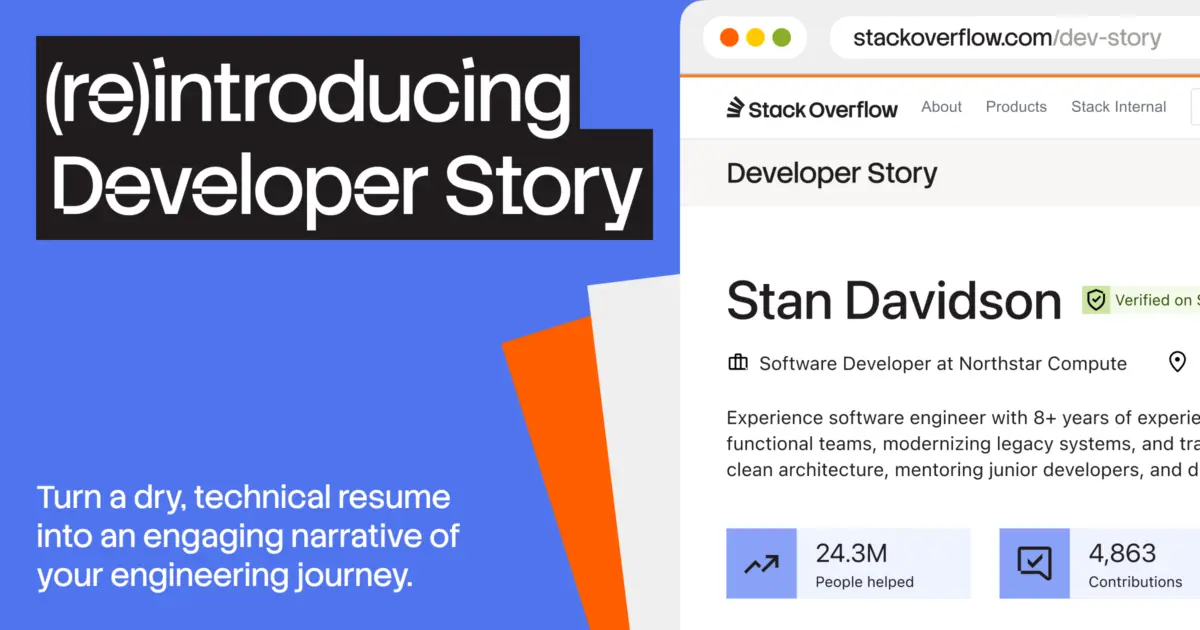
The global technology recruitment landscape is currently facing a period of unprecedented friction, characterized by a transition from a candidate-led market to an employer-led one, the proliferation of artificial intelligence in application processes, and a fundamental breakdown in trust between hiring managers and job seekers. In response to these systemic challenges, Stack Overflow, the world’s leading platform for developer knowledge sharing, has announced the re-introduction of its "Developer Story" feature. This strategic move aims to replace the traditional, static resume with a dynamic, verifiable portfolio that emphasizes actual impact, community contributions, and technical growth over keyword-optimized documents.
As the tech industry grapples with a surge in job applications—often reaching thousands within hours of a posting—talent acquisition professionals report that the traditional resume has become an unreliable indicator of a candidate’s true capabilities. Stack Overflow’s initiative seeks to bridge this information gap by leveraging nearly two decades of community data to provide a more holistic view of a technologist’s journey.
The Evolution of a Fractured Recruitment Ecosystem
To understand the necessity of the Developer Story, one must examine the drastic shifts in the technology labor market over the last decade. In 2015, the industry was largely candidate-led, with companies competing fiercely for a limited pool of specialized talent. During this period, technical recruitment was focused on discovery and outreach. However, the current landscape of 2024 presents a starkly different reality.
The market has shifted toward an employer-led dynamic, fueled in part by high-profile layoffs across the "Big Tech" sector and a tightening of venture capital. This shift has resulted in a disproportionately high number of active job seekers for every open position. Simultaneously, the emergence of generative AI has created a "vicious cycle" in the application process. Candidates now use AI tools to mass-produce and format resumes to bypass Automated Tracking Systems (ATS), while recruiters use AI to filter the resulting deluge of applications.
This "AI arms race" has led to what industry experts describe as a total erosion of trust. Recruiters are increasingly suspicious of the validity of the information presented on resumes, which often appear identical or over-engineered to meet specific algorithm requirements. Conversely, candidates feel forced to prioritize "keyword stuffing" over authentic representation, fearing that a human will never actually see their work if they do not conform to hidden digital criteria.
The Burden of Volume: A Case Study in Data Science Hiring
The scale of the modern hiring challenge is best illustrated by recent internal data from Stack Overflow’s own talent acquisition team. When the company recently posted a vacancy for a Staff Data Scientist, the position received over 1,000 applications within the first 24 hours. This volume is no longer an anomaly but has become the standard for reputable technology firms.
The difficulty lies not just in the quantity of applications, but in their homogeneity. Talent professionals at Stack Overflow noted that a significant portion of these resumes were remarkably similar in structure and phrasing, likely due to the widespread use of AI-driven resume builders. For a small recruitment team, discerning which candidates to move forward with becomes an exercise in navigating "needlessly detailed or not-detailed-enough" information.
The result is a process that is increasingly convoluted. Companies are adding more stages to their hiring funnels—technical screens, take-home assignments, and multiple rounds of peer interviews—simply to gain the certainty that a candidate possesses the skills they claim to have. This adds weeks, if not months, to the time-to-hire, frustrating both the employer and the applicant.
The AI Paradox in Talent Acquisition
The role of artificial intelligence in recruitment is paradoxical. While AI tools have the potential to streamline sourcing and minimize the time spent on manual data entry, they have also introduced "bad actors" into the ecosystem. These include bots that automatically apply to every job posting and candidates who use AI to fabricate experience or bypass technical assessments.
According to industry reports, nearly 70% of recruiters now use some form of AI in their workflow, yet candidate dissatisfaction is at an all-time high. Job seekers often feel their applications disappear into a "black hole," leading to increased anxiety and a further reliance on automation to increase their chances through volume. This feedback loop has effectively "broken" the traditional recruitment funnel, making it harder for genuine talent to stand out and for recruiters to find the right fit for specialized roles, particularly in emerging fields like machine learning and data science.
Developer Story: Reimagining the Technical Portfolio
The re-introduction of the Developer Story is designed to serve as a corrective measure for this broken system. Originally launched years ago and then shelved during a period of corporate restructuring, the feature has been resurrected with a focus on modern technical needs.
Unlike a standard CV, the Developer Story allows users to showcase a chronological and impact-based narrative of their career. Key features include:
- Community Integration: Directly linking a candidate’s contributions on Stack Overflow, such as highly-voted answers or niche technical expertise, to their professional profile.
- Verifiable Impact: A focus on "what was built" rather than just "where they worked." This includes the ability to highlight specific projects, such as a production-critical bug fix or a personal side project.
- Holistic Representation: The platform encourages the inclusion of non-traditional experience, such as hobbyist apps or open-source contributions, providing a 360-degree view of the individual’s relationship with technology.
- Employer Insight: For hiring managers, the tool provides a way to see where a candidate’s past achievements overlap with the future needs of the company, offering "objectively verifiable insight" that a text-based resume cannot provide.
The vision for the tool is to move the industry toward a "proof of work" model. By integrating a developer’s history of learning and helping others within the Stack Overflow community, the platform provides a layer of social proof that is difficult to forge with generative AI.
Chronology of Stack Overflow’s Recruitment Tools
Stack Overflow’s involvement in the professional development space has evolved significantly over the past decade:
- 2011–2015: The platform focused on its "Careers" product, which aimed to connect developers with employers through a specialized job board.
- 2016: The first iteration of "Developer Story" was introduced as an alternative to the resume, emphasizing "what you’ve built" over "where you went to school."
- 2021: Following its acquisition by Prosus, the company underwent a strategic shift, focusing on "Stack Overflow for Teams" and internal knowledge management products.
- 2023: The rise of Overflow AI and a renewed focus on the developer experience prompted the company to re-evaluate its role in the hiring ecosystem.
- 2024: The official relaunch of Developer Story, specifically designed to address the "trust gap" created by AI-generated application spam.
Industry Implications and the Future of Verifiable Expertise
The relaunch of Developer Story comes at a time when the tech industry is reconsidering the value of traditional credentials. With the rapid pace of change in fields like AI and cloud computing, a degree earned four years ago may be less relevant than a project completed four months ago.
Market analysts suggest that the industry is moving toward "skill-based hiring." Organizations are increasingly prioritizing what a candidate can do over their job titles. By providing a platform where these skills are demonstrated through community interaction and project documentation, Stack Overflow is positioning itself as the central repository for technical identity.
However, the success of this initiative depends on widespread adoption by both the developer community and corporate talent teams. If recruiters continue to rely solely on legacy ATS platforms that cannot ingest rich portfolio data, the friction in the market will persist. Stack Overflow’s challenge will be to integrate the Developer Story into the existing workflows of global HR departments.
Ultimately, the move represents a broader trend in the digital economy: the shift toward verifiable, decentralized proof of expertise. As AI makes it easier to simulate competence, the value of a documented, community-vetted history of work becomes the new gold standard for professional trust. For the millions of developers who use Stack Overflow daily, the Developer Story offers a way to reclaim their narrative in a crowded and often impersonal job market.









