George Chandra Eka
For new electric vehicle (EV) owners, the landscape of charging options can appear surprisingly complex, presenting a crucial decision point for both home and on-the-go energy replenishment. While industry-standard terms like Level 1, Level 2, and Level 3 charging provide a basic classification, they often offer little intrinsic information about their practical implications. Understanding the distinctions, costs, and benefits of each charging level is paramount for optimizing EV ownership, managing range anxiety, and making informed financial decisions, particularly when considering a significant investment like a Level 2 charger installation. This guide aims to demystify these options, providing a detailed analysis to help EV drivers navigate their charging journey effectively.
The fundamental difference among charging levels lies in their power output and how they deliver electricity to the vehicle’s battery. This distinction is rooted in the type of current utilized: alternating current (AC) or direct current (DC). The vast majority of household electrical grids supply AC power. For an EV battery to store this energy, it must be converted into DC. This conversion typically happens within the vehicle’s onboard charger for Level 1 and Level 2 AC charging. However, Level 3 charging, often referred to as DC Fast Charging (DCFC), performs this conversion externally, allowing for significantly higher power delivery directly to the battery, bypassing the car’s internal rectifier.
Level 1 Charging: The Ubiquitous Baseline
Level 1 charging represents the most accessible and basic form of EV power replenishment. It utilizes a standard 120-volt household outlet in North America, the same type used for everyday appliances. This simplicity means that Level 1 chargers require no special installation or electrical upgrades; the charging cable typically comes bundled with the EV upon purchase.
- Technical Specifications: Level 1 chargers deliver approximately 1.4 kilowatts (kW) of power. This relatively low output translates to a modest charging speed.
- Charging Speed and Range: The U.S. Environmental Protection Agency (EPA) estimates that Level 1 charging adds roughly 4 to 5 miles of range per hour. Consequently, fully recharging a depleted EV battery, which often has capacities ranging from 40 kWh to over 100 kWh, can take more than 40 hours. For example, a common EV with a 60 kWh battery would require approximately 43 hours to fully charge from empty using a 1.4 kW Level 1 charger.
- Ideal Use Cases: Level 1 charging is perfectly adequate for EV owners who drive short distances daily, typically less than 30-40 miles. It excels as an overnight "trickle charge" or for supplemental charging during periods when the vehicle is parked for extended durations, such as weekends. Many consumers on time-of-use (TOU) electricity plans can leverage off-peak rates by scheduling Level 1 charging during the cheapest hours, gaining sufficient range for their next day’s commute without incurring significant costs.
- Advantages: Zero upfront installation cost, universal compatibility with standard outlets, and ease of use.
- Disadvantages: Extremely slow charging speed, which can be a significant limitation for higher daily mileage or larger battery capacities. In cold weather, Level 1 chargers may struggle to both pre-condition the battery (warm it to an optimal charging temperature) and deliver power efficiently, further reducing effective range replenishment.
Level 2 Charging: The Residential Standard
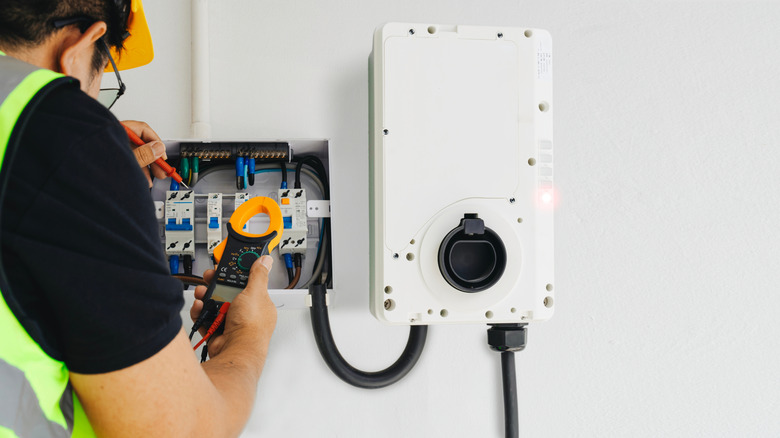
Level 2 charging steps up the power delivery significantly, becoming the preferred home charging solution for a vast majority of EV owners. These chargers utilize a 240-volt circuit, similar to those used for electric clothes dryers or ovens. While the charger unit itself can cost a few hundred dollars, the primary expense often comes from professional installation, which involves running a dedicated 240V circuit to the charging location.
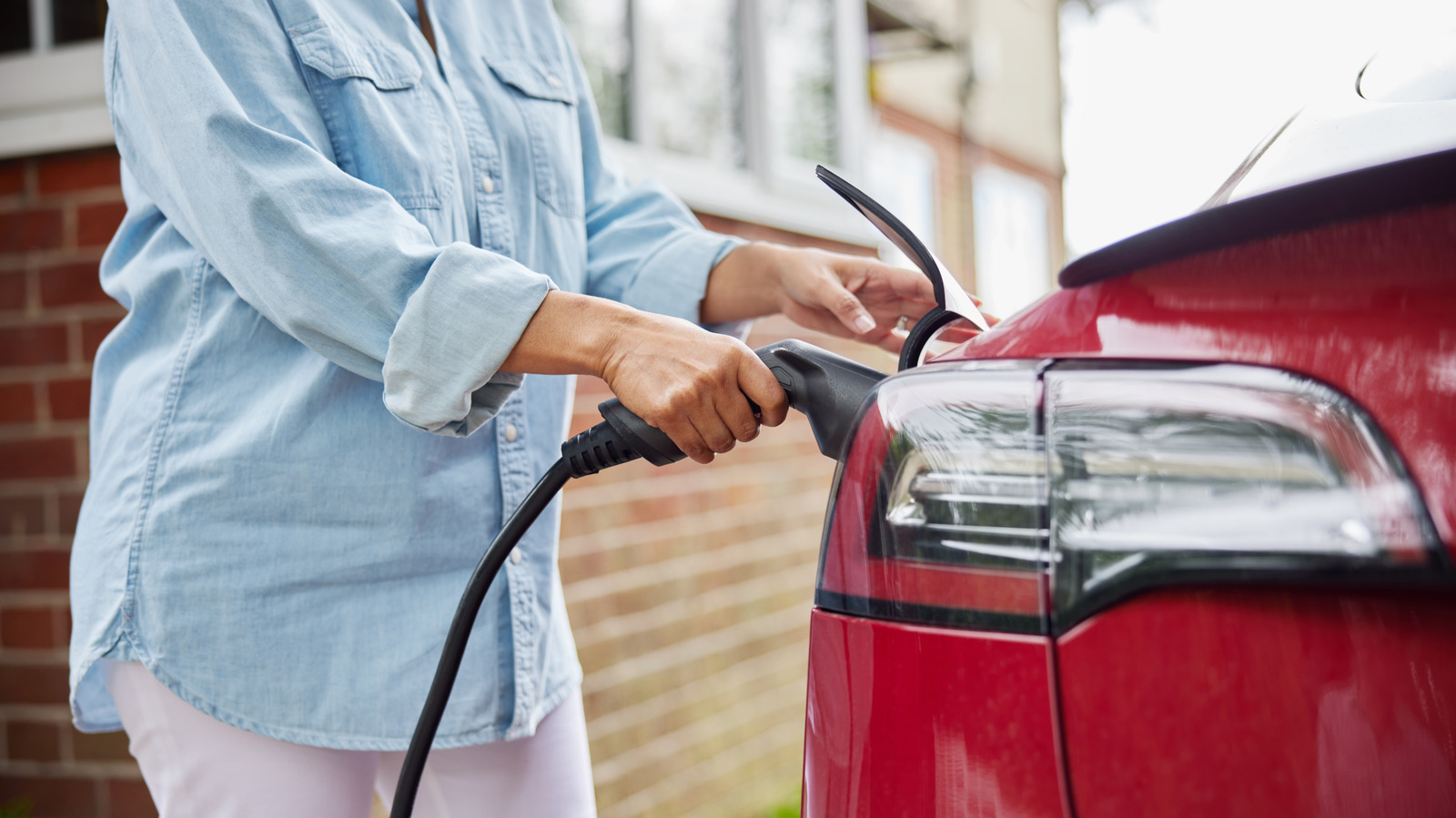
- Technical Specifications: Level 2 chargers typically deliver power ranging from 3.3 kW to 19.2 kW. The most common residential installations feature chargers operating at 40 amps on a 50-amp circuit, providing approximately 9.6 kW of power. Higher amperage Level 2 chargers (e.g., 80A for 19.2 kW) are available but require more robust home electrical service, which may entail additional upgrades.
- Charging Speed and Range: With a 9.6 kW Level 2 charger, an EV can gain approximately 25 to 40 miles of range per hour. This translates to a full charge for most EVs in 6 to 12 hours. For instance, the same 60 kWh battery that took over 40 hours on Level 1 could be fully charged in about 6-7 hours with a 9.6 kW Level 2 charger. This speed effectively eliminates range anxiety for most daily drivers.
- Ideal Use Cases: Level 2 charging is ideal for EV owners with moderate to long daily commutes (e.g., 50+ miles), or those who simply desire faster home charging convenience. It allows for substantial range replenishment overnight, easily covering typical weekly driving needs. The ability to charge efficiently during off-peak hours on TOU plans makes it economically attractive. In colder climates, Level 2 chargers can more effectively warm the battery, mitigating the performance reduction seen with Level 1.
- Advantages: Significantly faster than Level 1, practical for daily use, and future-proofs home charging capabilities as battery sizes increase. Many government programs and utility companies offer rebates or tax credits for Level 2 charger installation, reducing the effective cost.
- Disadvantages: Requires professional installation, which can range from $500 to $2,000 or more, depending on the complexity of the electrical work and the distance from the main panel. The charger unit itself is an additional cost.
Level 3 Charging (DC Fast Charging): Power for the Road
Level 3 chargers, also known as DC Fast Chargers (DCFC), represent the pinnacle of EV charging speed. Unlike Level 1 and Level 2, which supply AC power, Level 3 chargers deliver high-voltage DC power directly to the vehicle’s battery, bypassing the onboard AC-to-DC converter. This external conversion allows for dramatically higher power output.
- Technical Specifications: Level 3 chargers push anywhere from 50 kW to over 500 kW of power. Common public DCFC stations offer power levels like 50 kW, 150 kW, 250 kW, and increasingly, ultra-fast options at 350 kW and above. The actual charging speed an EV receives depends on the charger’s output, the vehicle’s maximum accepted charging rate, and the battery’s state of charge (SoC).
- Charging Speed and Range: DC Fast Chargers can add hundreds of miles of range in as little as 15-60 minutes. For example, a Lucid Gravity can accept up to 400 kW, potentially adding hundreds of miles in under 20 minutes at an ultra-fast charger. A Tesla Model Y, with peak charging rates ranging from 175 kW to 250 kW depending on the model, can typically add 150-200 miles of range in a 20-30 minute session. It’s crucial to note that charging speeds are highest when the battery is low (e.g., 10-20% SoC) and gradually decrease as the battery fills (e.g., above 80% SoC) to protect battery health. This is known as the "charging curve."
- Ideal Use Cases: Level 3 chargers are not feasible for residential installation due to their immense power requirements, which would necessitate substantial and prohibitively expensive electrical service upgrades. They are primarily found in commercial settings such as highway rest stops, public parking lots, retail centers, and dedicated charging hubs. Their primary purpose is to facilitate long-distance travel, enabling quick top-ups during road trips, or for drivers who lack reliable home charging options.
- Advantages: Unparalleled speed, making long-distance EV travel comparable to refueling a gasoline car.
- Disadvantages: Higher cost per kWh compared to home charging, potential for slight long-term battery degradation with very frequent use (though modern battery management systems mitigate this), and availability can still be a concern in some regions.
The Home Charging Dilemma: Level 1 vs. Level 2
The decision between a Level 1 and Level 2 charger for home use hinges on several factors: your daily driving habits, budget, and local electricity costs.
For individuals with minimal daily driving (e.g., 20-30 miles per day), a Level 1 charger may be entirely sufficient. If your EV is parked for 8-10 hours overnight, you can easily replenish 30-50 miles of range, more than enough for many commutes. This option saves the hundreds to thousands of dollars associated with Level 2 installation. Furthermore, if you primarily use your EV as a second vehicle or have ample charging time on weekends when the car is idle, Level 1 can be perfectly viable. Many time-of-use electricity plans offer very low rates during off-peak weekend hours, allowing for significant range gains over a full day of Level 1 charging.
However, a Level 2 charger becomes a near necessity for drivers with longer daily commutes (e.g., 50+ miles), those who rely on their EV as their primary vehicle, or those living in colder climates. The ability to add 30+ miles of range per hour means even a few hours of overnight charging can fully replenish a day’s worth of driving. This provides unparalleled convenience and peace of mind. In winter months, when EV batteries are less efficient and effective range is reduced, the higher power of a Level 2 charger can more effectively pre-condition the battery, ensuring optimal charging and range retention. The investment in a Level 2 charger is often recouped through convenience and the ability to maximize savings by consistently charging during the cheapest off-peak hours.
Navigating Public Charging Infrastructure and Connector Standards
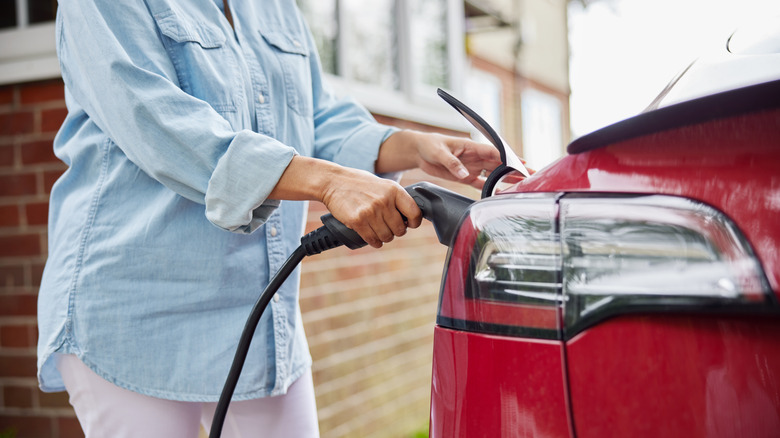
Public charging, predominantly Level 2 and Level 3, is a critical component of the EV ecosystem. However, it introduces the added complexity of connector standards.
- J1772: This is the standard connector for Level 1 and Level 2 AC charging in North America. Virtually all non-Tesla EVs in the region come equipped with a J1772 port.
- CCS (Combined Charging System): This connector builds upon J1772 by adding two pins for DC fast charging, making it the dominant Level 3 standard for most non-Tesla EVs in North America.
- NACS (North American Charging Standard): Historically proprietary to Tesla’s Supercharger network, the NACS connector has rapidly become the de facto standard for EV charging in North America. Major automakers like Ford, GM, Rivian, Hyundai, Kia, and others have announced their adoption of NACS for future EV models, with many planning to integrate it starting in 2025. This transition marks a significant shift towards interoperability and aims to simplify the charging experience.
The NACS Transition and Its Implications:
The widespread adoption of NACS is a pivotal development. For existing non-Tesla EV owners, this transition means that they may need adapters to access the expanding NACS network, which includes Tesla Superchargers and other NACS-equipped stations. Conversely, future non-Tesla EVs will ship with NACS ports, granting them direct access. This shift is expected to streamline public charging, reducing the confusion and fragmentation caused by multiple connector types.
To navigate the current mixed-standard environment, EV owners are strongly advised to utilize charging network applications such as PlugShare, ChargePoint, Electrify America, or the native navigation systems in their vehicles. These apps provide real-time information on charger locations, availability, power levels (Level 2 or Level 3), and crucially, the specific connector types offered at each station. This prevents frustrating situations where a charger is available but incompatible with your vehicle.
Battery Health and Charging Habits
A common concern among EV owners is the potential impact of fast charging on battery longevity. While it’s true that Level 3 DC fast charging generates more heat than slower AC charging, modern EV battery management systems (BMS) are highly sophisticated. These systems actively monitor battery temperature, voltage, and current, dynamically adjusting charging rates to protect the battery and prevent damage.
Experts generally agree that while very frequent, exclusive use of DC fast charging might lead to a slightly accelerated rate of degradation compared to predominantly Level 1 or Level 2 charging, the effect is often minor for typical use patterns. For most drivers, the convenience of occasional Level 3 charging for road trips far outweighs any negligible long-term impact.
Best practices for battery health include:
- Avoid extreme states of charge: Try not to consistently charge to 100% or discharge below 20%. Many manufacturers recommend charging to 80-90% for daily use.
- Minimize exposure to extreme temperatures: Parking in a garage or shaded area can help.
- Utilize pre-conditioning: When available, pre-conditioning the battery before charging or driving in cold weather can improve efficiency and reduce stress on the battery.
The Future of EV Charging
The EV charging landscape is continuously evolving, promising even greater convenience and efficiency.
- Ultra-Fast Charging: The race for faster charging continues, with companies developing chargers capable of exceeding 500 kW, potentially enabling "fill-ups" in under 10 minutes for vehicles designed to accept such power.
- Bidirectional Charging (V2G/V2H): Vehicle-to-Grid (V2G) and Vehicle-to-Home (V2H) technologies are emerging, allowing EVs to not only draw power from the grid but also feed power back into it or supply a home’s electricity during outages. This turns EVs into mobile energy storage units, enhancing grid resilience and offering potential economic benefits to owners.
- Wireless Charging: Inductive charging solutions, where EVs can charge by simply parking over a charging pad, are under development. While not yet widespread, this technology promises ultimate convenience by eliminating physical cables.
- Smart Charging and Load Management: As EV adoption grows, managing the electrical grid’s load becomes crucial. Smart charging systems that can communicate with utilities to optimize charging times based on grid demand and electricity prices are becoming more prevalent.
- Government Investment and Policy: Governments globally are investing heavily in expanding charging infrastructure. In the U.S., initiatives like the Bipartisan Infrastructure Law are allocating billions to build a national network of high-speed chargers, particularly along major travel corridors, further reducing range anxiety and accelerating EV adoption.
In conclusion, the optimal EV charging strategy is highly personalized. While a Level 1 charger offers a no-cost entry point for minimal daily driving, a Level 2 home charger provides the ideal balance of speed, convenience, and cost-effectiveness for most EV owners. Level 3 DC fast chargers are indispensable for long-distance travel, offering rapid replenishment when time is of the essence. As the industry progresses, with standardized connectors like NACS gaining traction and innovative technologies on the horizon, the experience of owning and charging an electric vehicle is set to become even more seamless and accessible. Understanding these distinctions empowers EV owners to make informed choices that best suit their driving habits, budget, and lifestyle, ultimately contributing to a more sustainable transportation future.