Garick Elordi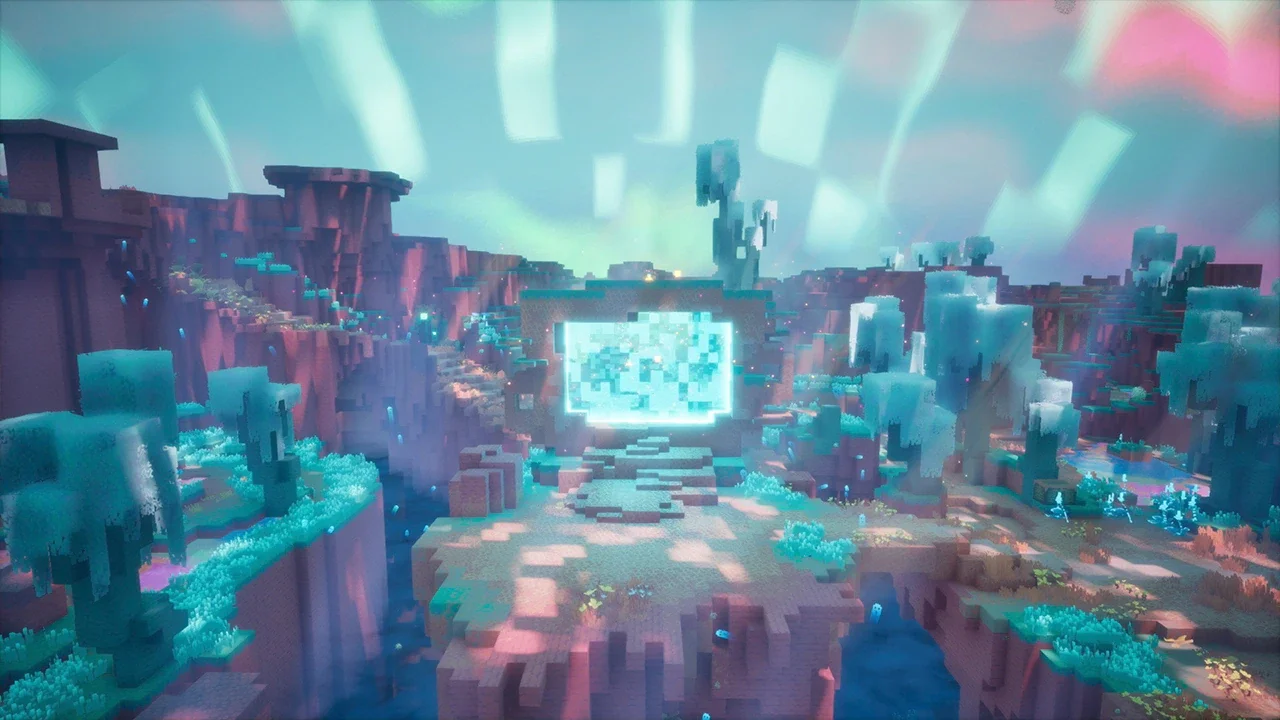
The global gaming landscape shifted significantly during the recent Minecraft Live broadcast on September 26, 2026, as Mojang Studios officially pulled back the curtain on "The Sift," the first major dimensional expansion to the Minecraft universe since the introduction of The End in 2011. This landmark announcement marks a pivotal moment for the best-selling video game of all time, signaling a new era of exploration for a player base that continues to grow at a staggering rate of 300,000 new users every day. According to the development team, The Sift will serve as a cornerstone of the franchise’s roadmap for the next several years, debuting first in the newly announced Minecraft Dungeons 2 on September 29, 2026, before being integrated into the core Minecraft Java and Bedrock editions in 2027.
A New Frontier: Understanding The Sift
For over a decade, the Minecraft multiverse has been defined by a trinity of realms: the Overworld, where players begin their journey; the Nether, a hellish subterranean expanse added during the game’s early development; and The End, the final desolate frontier housing the Ender Dragon. The introduction of a fourth dimension, The Sift, represents a departure from this long-standing status quo. While Mojang has remained characteristically enigmatic regarding the specific lore and mechanics of the new realm, early visual teasers and developer commentary suggest a surreal, ethereal environment.
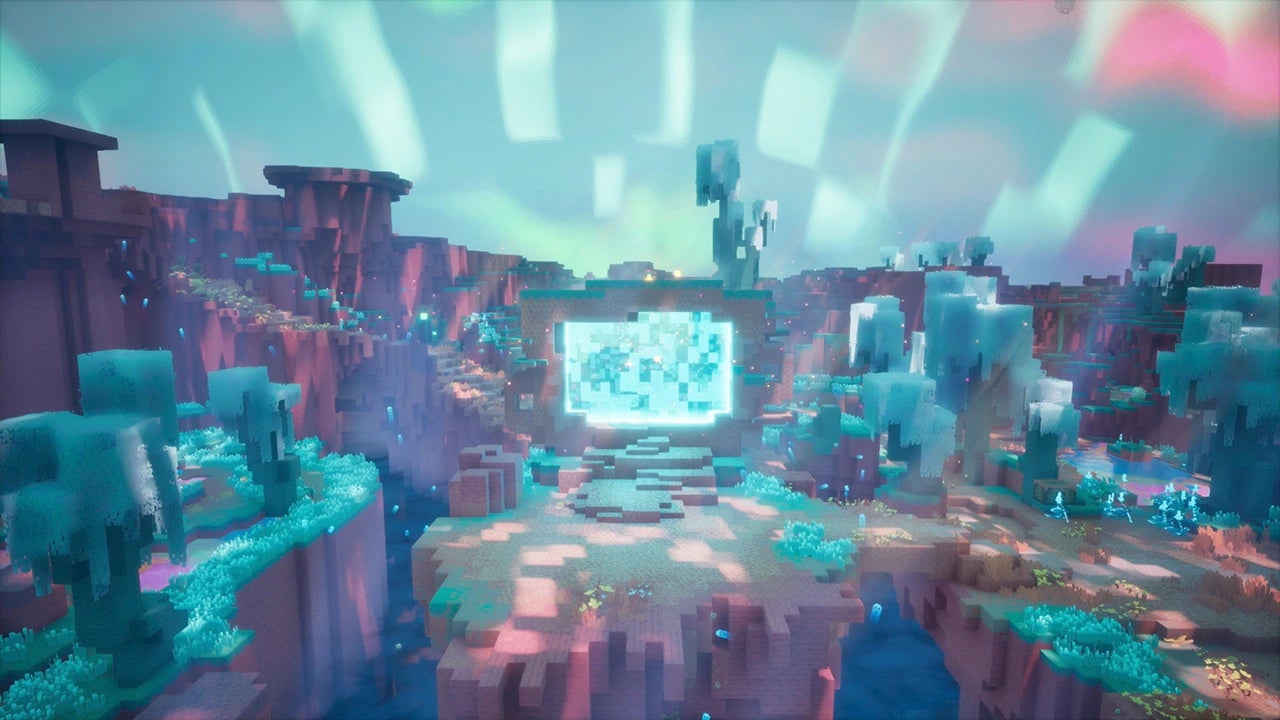
The Sift is characterized by a vibrant, almost psychedelic aesthetic that stands in stark contrast to the gritty reds of the Nether or the stark voids of The End. Concept imagery reveals a landscape dominated by pink and purple rock formations, turquoise-tinted foliage, and a sky illuminated by shimmering, aurora-like streaks of green and white. Central to this new world is a glowing blue portal, which appears to be the primary gateway for players. Mojang has confirmed that The Sift will feature entirely unique biomes, a new roster of mobs, and innovative gameplay loops that challenge traditional survival and exploration strategies.
The decision to launch The Sift first within the framework of Minecraft Dungeons 2 suggests a strategic "phased rollout." Minecraft Dungeons 2, the sequel to the 2020 dungeon-crawler spin-off, will provide the initial playground for this dimension. By introducing the environment in a combat-centric, linear format first, Mojang can test mob AI and environmental interactions before the complex task of integrating a procedurally generated version of the dimension into the infinite sandbox of the base game.
The Chronology of Minecraft’s Dimensional Evolution
To understand the weight of this announcement, one must look at the historical timeline of Minecraft’s development. The game, which celebrated its 17th anniversary recently, has undergone countless updates, yet the fundamental structure of its universe has remained static for nearly fifteen years.
- The Overworld (2009): The foundational layer of the game, providing the primary sandbox experience.
- The Nether (2010): Introduced during the Alpha 1.2.0 "Halloween Update," providing a high-risk, high-reward environment for mid-game players.
- The End (2011): Added in the 1.0.0 Adventure Update, providing a definitive "ending" to the survival loop and introducing the elytra mechanic years later.
- The Sift (2026/2027): The first expansion of the dimensional roster in the post-Microsoft acquisition era that fundamentally alters the game’s core architecture.
Industry analysts note that for years, the Minecraft community has speculated about a "Sky Dimension" or an "Aether-like" realm. The Sift appears to be Mojang’s official answer to these long-standing player desires, though it carries a distinct identity separate from fan-made mods. The 14-year gap between dimensions is attributed by experts to the technical challenges of maintaining parity between the legacy Java Edition and the modern Bedrock Edition, as well as Mojang’s philosophy of "depth over breadth," which saw them revitalizing existing dimensions (such as the 2020 Nether Update) rather than adding new ones.
Minecraft Dungeons 2 and the September Launch
While the base game’s update is the long-term highlight, the immediate focus for the franchise is the launch of Minecraft Dungeons 2. Scheduled for release on September 29, 2026, the sequel aims to expand upon the foundations of its predecessor with deeper RPG mechanics, more sophisticated loot systems, and a narrative that centers heavily on the discovery of The Sift.
The "Official Get Ready Trailer," released during Minecraft Live, showcased high-octane combat within the new dimension. Players were seen battling bioluminescent creatures and navigating gravity-defying terrain. The synergy between the spin-off titles and the main game has become a hallmark of Microsoft’s stewardship of the brand, ensuring that new lore and assets are cross-pollinated across the entire ecosystem. This approach not only drives sales for the spin-offs but also keeps the 425 million-strong player base engaged with the overarching narrative of the Minecraft world.
Expanding the Brand: Minecraft World at Chessington
In a move that mirrors the "Super Nintendo World" expansions seen in Universal Studios, Mojang and Microsoft announced a massive physical expansion of the brand. Minecraft World is set to open at the Chessington World of Adventures Resort in London in 2027. This multi-million-pound investment aims to translate the digital experience into a tangible destination for fans.
The development will include:
- The Minecraft World Hotel: A fully themed lodging experience featuring rooms modeled after various in-game biomes.
- Deep-Sea Diner: An immersive restaurant where guests can dine in an environment mimicking the game’s aquatic monuments.
- The World’s First Minecraft Rollercoaster: Described as a hybrid indoor-outdoor attraction, the ride is designed to simulate the "terrifying and thrilling" experience of a high-speed minecart journey through dangerous caves and portals.
This venture into location-based entertainment signifies Minecraft’s transition from a video game to a comprehensive lifestyle brand. By establishing a permanent physical presence, Mojang is securing the franchise’s relevance for future generations who may interact with the brand through theme parks and merchandise before they ever pick up a controller.
Market Data and Player Growth Dynamics
The scale of Minecraft’s continued dominance is underscored by recent data shared by Xbox CEO Asha Sharma. Despite being nearly two decades old, the game is experiencing a renaissance. Sharma revealed that over 300,000 new players join the Minecraft community every single day. With total sales surpassing 425 million copies, the game has transcended the typical lifecycle of a software product.
Analysts attribute this sustained growth to several factors:

- Generational Cycling: Parents who played Minecraft in their youth are now introducing the game to their children, creating a self-sustaining loop of new users.
- Educational Integration: Minecraft Education Edition remains a staple in classrooms worldwide, introducing the mechanics to students in a non-gaming context.
- Content Creator Ecosystem: The game remains one of the most-watched categories on platforms like YouTube and Twitch, providing constant free marketing and community engagement.
The introduction of The Sift is seen as a strategic move to retain "veteran" players who may have exhausted the content of the existing three dimensions. By providing a new end-game or mid-game goal, Mojang ensures that the 166 million monthly active users have a reason to continue their subscriptions and digital purchases.
Technical Implications and Industry Reaction
The technical feat of adding a new dimension to a game as complex as Minecraft cannot be overstated. For the Java Edition, it involves modifying the core world-generation engine that has been tweaked for 17 years. For Bedrock, it requires ensuring seamless performance across a range of devices, from high-end PCs to aging mobile phones.
Industry reactions to the announcement have been overwhelmingly positive, though some developers express caution. "Adding a dimension is more than just adding a new biome," noted one independent game consultant. "It’s about balance. You have to ensure that the resources found in The Sift don’t make the Overworld or the Nether obsolete. It has to sit alongside them, not above them."
Mojang’s internal teams have hinted that the "Sift" name implies a mechanic related to filtration or searching through the fabric of reality. This has led to speculation about new "sifting" or "archaeology" mechanics that could be expanded within the new realm, potentially allowing players to recover lost artifacts or ancient technologies that change how blocks are placed or manipulated.
Looking Ahead to 2027
As the Minecraft community prepares for the launch of Dungeons 2 this week, the long-term gaze is fixed on 2027. The arrival of The Sift in the base game, coupled with the opening of the Chessington theme park, suggests that 2027 will be the most significant year for the franchise since its official 1.0 release.
Mojang has promised more deep dives into the mobs of The Sift in the coming months. For now, the "glowing blue portal" remains a symbol of the unknown, beckoning a massive global audience to prepare for a journey into a fourth dimension that has been fourteen years in the making. With a robust player growth rate and an aggressive expansion into physical entertainment, Minecraft appears well-positioned to maintain its status as the foundational pillar of modern gaming culture.