Sisilia Frederika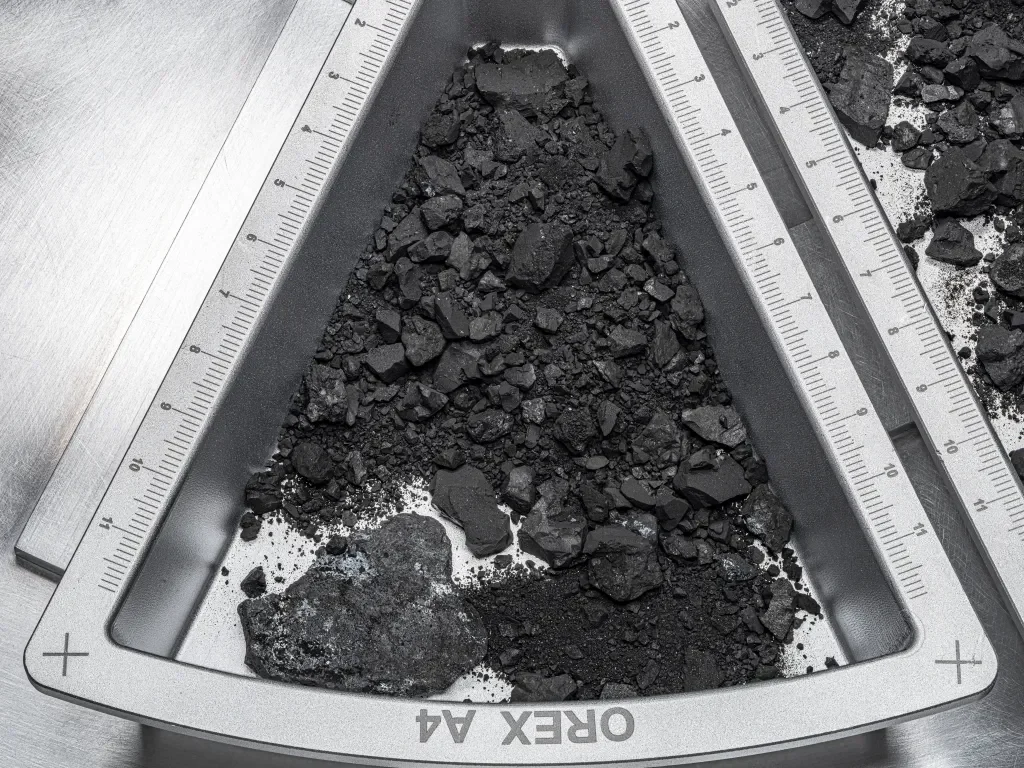
The successful return of samples from the asteroid (101955) Bennu by NASA’s OSIRIS-REx mission has provided the scientific community with its first look at a pristine, unadulterated "time capsule" from the dawn of the solar system. Unlike meteorites that have endured the searing heat of atmospheric entry, these samples arrived in a state of preservation that allows for unprecedented precision in chemical and isotopic analysis. However, as researchers begin to delve into the chemical composition of these ancient grains, the data has presented a significant cosmic puzzle. A recent study, published in the journal Science Advances by a collaborative team from ETH Zurich and Lawrence Livermore National Laboratory (LLNL), suggests that Bennu’s birth was far more complex than previously hypothesized, involving a unique formation site that bridged the gap between the inner and outer solar system.
The study, led by Maria Schönbächler, a Professor of Isotope Geochemistry at ETH Zurich, utilized a half-gram portion of the Bennu material to conduct a deep dive into nucleosynthetic isotopes. These isotopes serve as "cosmic fingerprints," revealing the specific conditions and locations within the protoplanetary disk where an object first coalesced. By analyzing the isotopic ratios of elements like iron, titanium, and chromium, the team sought to pinpoint exactly where Bennu fit into the existing map of solar system formation. Their findings suggest that Bennu did not form in a single isolated reservoir but was instead the product of a "dust traffic jam" created by the nascent gas giant Jupiter.
The Dual Nature of Bennu’s Isotopic Signature
For decades, planetary scientists have classified the building blocks of the solar system into two distinct families based on their isotopic compositions. The first group, known as Non-Carbonaceous (NC) meteorites, originated in the inner solar system—the region where terrestrial planets like Earth, Venus, and Mars formed. These materials are generally dry and depleted in volatile elements. The second group, Carbonaceous (CC) meteorites, formed in the outer solar system beyond the orbit of Jupiter. These are rich in water, carbon, and organic compounds.
Bennu has long been classified as a CI chondrite, a rare sub-category of carbonaceous asteroids. CI chondrites are of immense interest to geologists because their chemical composition closely mirrors that of the Sun’s photosphere, minus the gaseous elements. Despite their importance, they are incredibly rare on Earth; of the tens of thousands of meteorites recovered, only about 10 are CI chondrites, representing less than 0.0127% of the total collection. This scarcity is largely attributed to their fragile, crumbly nature, which causes them to disintegrate upon entering Earth’s atmosphere.
When Schönbächler’s team analyzed the titanium and chromium isotopes in the OSIRIS-REx samples, the results aligned perfectly with the CC (outer solar system) classification. However, the iron isotopes told a different story. The iron isotopic signature in Bennu was found to be more consistent with NC (inner solar system) materials. This isotopic "mismatch" suggested that Bennu was a hybrid, containing ingredients from both sides of the early solar system’s divide.
The Role of Jupiter and the Protoplanetary Pressure Ridge
To explain how an asteroid could possess such a contradictory chemical makeup, the researchers turned to the influence of the early solar system’s most massive inhabitant: Jupiter. At the time Bennu began to form—approximately two million years after the first solid rocks (Calcium-Aluminum-rich Inclusions, or CAIs) appeared in the solar system—Jupiter had already grown to roughly 23 times the mass of Earth.
As Jupiter orbited the young Sun, its massive gravitational presence carved a gap in the protoplanetary disk of gas and dust. This gap acted as a filter. According to the study, Jupiter created "pressure ridges" at the edges of its orbit. These ridges acted like cosmic barriers. Large, millimeter-sized molten droplets known as chondrules, which were abundant in the inner solar system, were effectively trapped by these pressure gaps, preventing them from migrating outward. Conversely, larger grains from the outer solar system were prevented from moving inward.
However, the researchers found that very fine dust grains—smaller than the chondrules—were able to bypass these gravitational and pressure barriers. These tiny grains could drift across Jupiter’s orbit, moving from the outer solar system toward the Sun. The "ice line"—the boundary where temperatures were low enough for water to freeze into solid ice—was located just inside Jupiter’s orbit during this era. As the inward-drifting dust hit this water-ice line and the associated pressure ridges, it began to accumulate in a "traffic jam."
Formation at the Cosmic Crossroads
The accumulation of dust at the ice line provided the perfect environment for asteroid formation. The "traffic jam" increased the local density of material, allowing gravity to pull the grains together into larger bodies. Bennu, the researchers propose, formed in this specific region. This location explains its dual nature: it was close enough to the outer solar system to incorporate titanium and chromium-rich dust that had drifted inward, but it also captured iron-bearing materials that were characteristic of the inner solar system.
This model is further supported by the age of the asteroid. Using manganese-53 radioactive decay dating, the team determined that Bennu formed roughly two million years after the solar system’s inception. This timeline is crucial because, in the more sparsely populated outer reaches of the solar system, it would have taken much longer for an asteroid to assemble. Furthermore, Bennu lacks the "heavy" hydrogen and nitrogen isotopes commonly found in comets that formed in the far reaches of the outer solar system, suggesting its birthplace was closer to the Sun than previously assumed for carbonaceous objects.
Chronology of the OSIRIS-REx Mission and Sample Analysis
The journey to uncover these secrets began on September 8, 2016, with the launch of the OSIRIS-REx (Origins, Spectral Interpretation, Resource Identification, Security, Regolith Explorer) spacecraft. After a two-year journey, the probe arrived at Bennu in December 2018. For the next two years, the spacecraft mapped the asteroid in exquisite detail, discovering a "rubble pile" world covered in boulders and fine regolith.
On October 20, 2020, the spacecraft performed a "Touch-And-Go" (TAG) maneuver, extending its robotic arm to collect at least 60 grams of material. The collection was so successful that the sampler head became jammed open by larger rocks, necessitating an early stowage of the sample to prevent loss. The return capsule finally touched down in the Utah desert on September 24, 2023.
Since the samples were transported to NASA’s Johnson Space Center, they have been distributed to over 200 scientists worldwide. The ETH Zurich and LLNL analysis represents one of the most significant peer-reviewed results to emerge from this global effort, providing a definitive look at the nucleosynthetic history of the material.
Implications for Planetary Science and Earth’s Water
The discovery that Bennu formed near the ice line has profound implications for our understanding of how Earth acquired its water and organic molecules. If asteroids like Bennu formed at the boundary between the inner and outer solar system, they could have acted as the primary delivery mechanism for the ingredients of life.
The "Grand Tack" hypothesis and other planetary migration models suggest that Jupiter and Saturn moved inward and then outward during the solar system’s youth, scattering asteroids in their wake. Bennu’s chemistry suggests it was one of the objects caught in this gravitational dance. Over billions of years, collisional shoves and gravitational interactions with the planets pushed Bennu from its original home near the ice line into the inner asteroid belt, and eventually into a Near-Earth Orbit (NEO).
"Bennu is essentially a cosmic sedimentary rock," noted one researcher involved in the broader OSIRIS-REx analysis. "It has layers of history from different parts of the solar system all mashed together. By unzipping those layers through isotopic analysis, we aren’t just learning about one asteroid; we are learning about the plumbing of the early solar system."
Future Outlook and Continuing Research
The work on the OSIRIS-REx samples is far from over. While the ETH Zurich study has provided a compelling answer to the "where" and "how" of Bennu’s formation, other teams are currently investigating the organic compounds found within the dust. Initial reports from NASA have already confirmed the presence of high carbon and water content, as well as precursors to DNA and proteins.
The comparison between Bennu and Ryugu—the asteroid sampled by the Japanese Hayabusa2 mission—is also ongoing. Ryugu, another carbonaceous asteroid, appears to have different isotopic signatures, suggesting that the "traffic jams" created by Jupiter may have produced a diverse array of asteroids with varying compositions depending on their exact distance from the Sun.
As instrumentation becomes more sensitive, the half-gram of material at ETH Zurich will likely continue to yield secrets. For now, the study stands as a testament to the power of sample return missions. Without the pristine grains of Bennu, the subtle isotopic variations that revealed Jupiter’s role as a cosmic gatekeeper would have remained lost in the noise of terrestrial contamination. The findings confirm that our solar system was not a static environment, but a dynamic, churning disk where giants like Jupiter dictated the very composition of the worlds that would eventually form closer to home.