Lina Irawan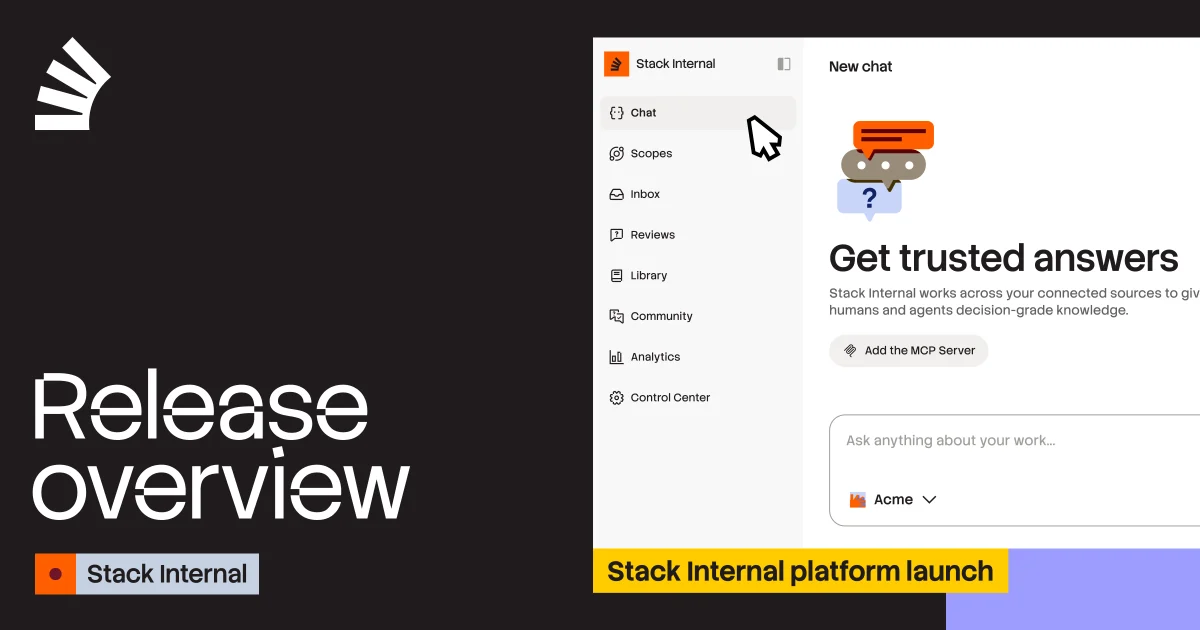
The landscape of enterprise knowledge management is undergoing a fundamental shift as Stack Overflow officially announces the general availability of Stack Internal, a platform designed to transform how organizations capture, verify, and deploy institutional intelligence. Moving beyond the traditional limitations of simple data storage and retrieval, Stack Internal leverages the curation mechanisms perfected by Stack Overflow over nearly two decades to provide context-aware, expert-vetted knowledge grounded in traceable evidence. This launch marks a significant evolution for the company, positioning its trusted community-driven methodology as a critical infrastructure layer for the burgeoning era of AI agents and autonomous workflows.
Effective immediately, the platform is open to the public, allowing users to create and share knowledge within a Stack Internal workspace. This follows a successful introductory phase in July, during which the platform was limited to existing enterprise customers. As of September 30, the platform has expanded its reach, offering a free "Starter" tier for individuals and small teams, while providing robust, high-scale options for large organizations looking to integrate knowledge from fragmented internal systems.
The Evolution of Corporate Memory: From Repositories to Living Knowledge
For decades, the primary challenge for large organizations has not been a lack of information, but the inability to find and trust it. Industry data suggests that the average knowledge worker spends nearly 20% of their workweek—approximately one day per week—searching for internal information or tracking down colleagues who possess specific expertise. In an AI-first world, this "knowledge tax" is amplified. When AI agents are trained on or retrieve information from unvetted, outdated, or conflicting sources, the resulting "hallucinations" or inaccuracies can lead to costly operational errors.
Stack Internal addresses this by applying a core curation mechanism to internal data. Unlike traditional wikis or document repositories that often become "data graveyards," Stack Internal treats knowledge as a living asset. It utilizes signals such as provenance, recency, expertise, and human validation to assign a machine-facing "trust score" to information. This ensures that when an AI agent or a human employee queries the system, the response is not merely a guess based on probability, but a decision-grade answer backed by the organization’s collective intelligence.
A Chronology of Development and Release
The journey toward the general availability of Stack Internal has been a strategic, phased rollout aimed at ensuring enterprise-grade stability and security.
- Initial Concept and Foundation: Leveraging the 16-year history of Stack Overflow’s public Q&A platform, the company began adapting its reputation and curation algorithms for private, internal use cases several years ago.
- July 2026 – Initial Customer Introduction: The platform was first introduced to a select group of existing Stack Overflow for Teams and Enterprise customers. This phase focused on integrating Stack Internal Community knowledge through Chat interfaces, APIs, and the Model Context Protocol (MCP).
- September 2, 2026 – Release 2026.6: This update laid the groundwork for enterprise-level security. Key features included centralized administrative security controls, header-enforced API keys, and configurable rate limits. Crucially, it introduced automated lifecycle tools, such as article expiration, to combat the natural decay of technical documentation.
- September 30, 2026 – General Availability and Release 2026.7: The current release opens the platform to the general public. It introduces the "Starter" workspace and expands the API ecosystem with v3 endpoints for aggregate reputation leaderboards, badge discovery, and a scoped content-import API designed for seamless migration from legacy systems.
Technical Infrastructure and Integration Capabilities
Stack Internal is built to exist where teams already work, rather than requiring them to migrate to a new, isolated silo. The platform’s integration suite has been significantly expanded to capture context from the most common enterprise communication tools.
Seamless Connectors and Security
The new Microsoft Teams connector allows for the persistent ingestion of learnings from standard, private, and shared channels. Similarly, updated connectors for Slack and Google Docs have been engineered to respect existing source permissions. This ensures that restricted or private content remains secure, only being ingested and surfaced to users who have the appropriate authorization.
For organizations using niche or proprietary tools, Stack Internal has launched a new Ingestion API. This allows developers to pipe knowledge from any source—be it a custom wiki, a specific ticketing system, or a legacy code repository—into the Stack Internal ecosystem.
The Role of the MCP Server
One of the most technically significant features of this release is the integration of the Model Context Protocol (MCP) Server. The MCP serves as a bridge, allowing organizations to push trusted Stack Internal knowledge directly into popular AI-driven development tools such as Claude, Codex, and Cursor. By grounding these AI models in verified organizational know-how, the platform prevents the common pitfall where an AI suggests a solution that contradicts a company’s internal standards or security protocols.
Empowering Subject Matter Experts through Automation
A recurring problem in corporate environments is the "expert bottleneck," where a small number of Subject Matter Experts (SMEs) are overwhelmed by repetitive questions. Stack Internal utilizes topic-based detection to automatically identify these experts based on their contributions and activity.
When a knowledge gap is identified—either by a human user or an AI agent—the system can trigger an SME validation workflow. This notification is delivered directly within Slack, allowing the expert to confirm, update, or refine an answer without leaving their primary workspace. This "in-flow" validation ensures that the knowledge base remains current without imposing a significant administrative burden on the organization’s most valuable contributors.
Governance, Analytics, and Administrative Control
As enterprises increasingly rely on AI to drive decision-making, the need for robust governance has become paramount. Stack Internal provides administrators with granular control over how knowledge is managed and who has access to it.
Roles and Permissions
The platform introduces custom roles, allowing organizations to appoint specific "knowledge managers" and "reporting analysts." This separation of duties ensures that while everyone can contribute, the final stamp of "verified" knowledge is controlled by those with the proper authority.
Audit Trails and Health Metrics
To satisfy compliance and security requirements, Stack Internal now includes full activity tracking and self-serve exportable audit trails. These logs provide clear provenance for every decision made by an AI agent using the platform’s data. Furthermore, a new "Knowledge Health and Usage Dashboard" allows leadership to monitor engagement through metrics such as the "Helpful Answer Rate" and "Daily Active Users," providing tangible data on the platform’s return on investment.
Market Analysis: The Shift Toward Verified AI Grounding
The launch of Stack Internal comes at a time when the tech industry is grappling with the limitations of Large Language Models (LLMs). While LLMs are adept at processing language, they lack a "source of truth" regarding specific corporate environments. This has led to the rise of Retrieval-Augmented Generation (RAG), but RAG is only as effective as the data it retrieves.
Market analysts suggest that Stack Internal’s move is a direct response to the "garbage in, garbage out" dilemma. By providing a curated, human-vetted layer of data, Stack Overflow is positioning itself as the "ground truth" provider for the enterprise. This strategy differentiates them from general-purpose document storage solutions like Notion or SharePoint, which lack the built-in reputation and validation logic that defines the Stack Overflow experience.
Future Outlook: The Knowledge Flywheel and "Scopes"
Looking ahead, Stack Overflow has signaled that the current release is only the beginning of a broader vision for "living memory." The company is currently developing a concept known as "Scopes" to manage contextual boundaries. This will allow knowledge to move intentionally from an individual’s workspace to a project team, and finally to an organization-wide guidance document.
The ultimate goal is the creation of a "Knowledge Flywheel." In this model, the insights gained by an engineer fixing a bug in an IDE are effortlessly captured and preserved. Instead of that knowledge disappearing when a chat session ends, it is cycled back into the institutional memory, ensuring that the next person—or the next AI agent—to encounter the problem has the solution ready in seconds.
Conclusion and Availability
Stack Internal represents a significant milestone in the effort to make organizational intelligence more accessible and reliable. By combining the best of human expertise with the efficiency of AI, the platform aims to eliminate the friction of information silos and the danger of unverified data.
As of today, individuals can sign up for a free Starter workspace at stackinternal.com to connect up to three data sources and begin capturing verified knowledge. Existing enterprise customers are encouraged to contact their account teams to enable the full suite of platform features, including the new API endpoints and governance tools. As the platform continues to evolve, the focus remains clear: ensuring that an organization never forgets what it knows.