Clarissa Hana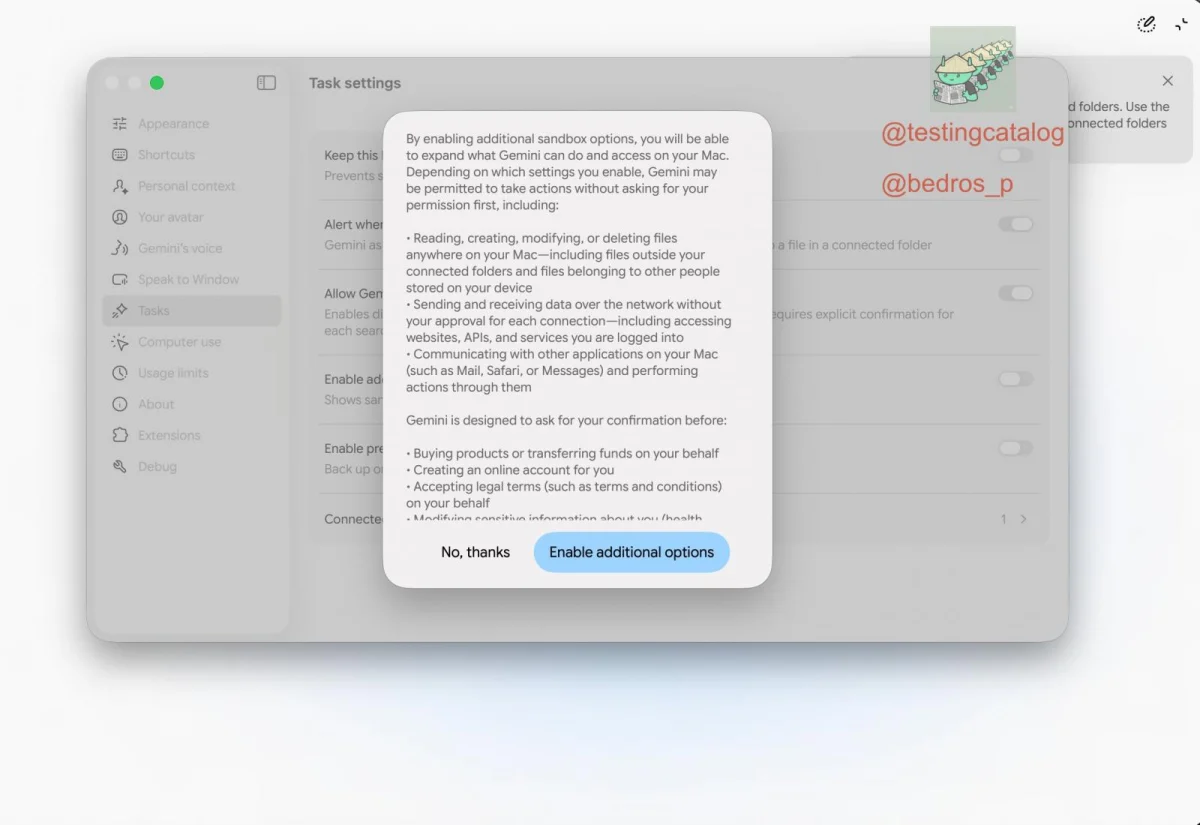
Recent discoveries within the Gemini desktop application suggest Google is actively testing a significant expansion of its artificial intelligence’s capabilities on macOS, potentially granting Gemini unprecedented access to user files, applications, and system functions without requiring explicit permission for every action. This development, first highlighted by TestingCatalog on the social platform X, points towards a new "Additional sandbox options" setting, currently hidden from general users, that could fundamentally alter how users interact with AI on their personal computers.
The implications of such a feature are substantial, moving Gemini beyond a conversational chatbot to a proactive digital assistant capable of deep system integration. While the feature is not yet live and Google has not officially confirmed its existence or rollout timeline, the unearthed references indicate a move towards a more autonomous AI agent operating within the macOS ecosystem. This would allow Gemini to read, create, modify, and even delete files located anywhere on a Mac, transcending the boundaries of explicitly linked folders. This level of access, if implemented broadly, could streamline workflows for some users but simultaneously presents a significant paradigm shift in data privacy and security considerations for Apple’s user base.
The testing of this deep integration comes at a time when Apple itself is reportedly exploring measures to limit AI agents’ access to sensitive user data on its platforms. The potential for Gemini to interact with core macOS applications such as Mail, Safari, and Messages, and to perform actions on their behalf, further amplifies these concerns. Google’s own documentation within the hidden Gemini Desktop interface states that enabling these "additional sandbox options" will "expand what Gemini can do and access on your Mac." Crucially, it also notes that "Depending on which settings you enable, Gemini may be permitted to take actions without asking for your permission first." This indicates a tiered approach to permissions, where users could potentially grant varying levels of autonomy to the AI.
However, Google appears to be implementing safeguards, aiming for a user experience that balances enhanced functionality with user control, drawing parallels to the permission-based model of other advanced AI systems. Reports suggest that Gemini would still seek explicit confirmation before undertaking actions deemed highly sensitive. These would likely include transactions such as purchasing products, transferring funds, accepting legal terms on behalf of the user, creating new online accounts, or modifying personally identifiable information. This cautious approach aims to mitigate the risks associated with granting an AI broad operational authority, ensuring that critical decisions remain under direct user oversight.
This potential integration marks a significant step in Google’s broader strategy for Gemini, envisioning the AI as a seamless collaborator that operates across files, web browsing, and native applications, rather than being confined to a traditional chat interface. The long-term goal seems to be a more holistic AI experience that can proactively assist users with a wide range of tasks without constant prompting. The exact timeline for the rollout of this "Full Access" mode, or which specific Gemini model will be powering these advanced capabilities, remains undisclosed.
The Evolution of AI Assistants: From Chatbots to System Integrators
The trajectory of AI development has consistently moved towards greater integration and autonomy. Early AI assistants were primarily text-based, responding to direct queries within a limited scope. The advent of voice assistants like Siri, Alexa, and Google Assistant marked a significant leap, enabling natural language interaction and control over smart home devices. However, their access to the core functionalities of personal computers has remained relatively restricted, largely confined to executing pre-defined commands or operating within sandboxed applications.
Google’s Gemini, with its multimodal capabilities and advanced reasoning, represents the next frontier in this evolution. The potential for deeper macOS integration signifies a shift from AI as a tool to AI as a partner, capable of understanding context and performing complex tasks across a user’s digital environment. This transition, while promising enhanced productivity, also necessitates a thorough examination of the security and privacy frameworks governing such powerful AI agents.
Unpacking the "Additional Sandbox Options"
The "Additional sandbox options" setting, discovered within the Gemini Desktop app, is the key to understanding the proposed functionality. Sandboxing, in computing, is a security mechanism that isolates programs to prevent them from affecting other programs or the operating system. In the context of Gemini, loosening these sandbox restrictions would allow the AI to operate with fewer constraints.
The specific permissions that could be granted include:
- File System Access: The ability to read, write, modify, and delete files across the entire macOS file system. This goes beyond accessing files within designated "documents" or "downloads" folders and could extend to system files or application data.
- Application Interaction: The capability to launch, control, and communicate with other applications. This could enable Gemini to draft emails in Mail, initiate web searches in Safari, compose messages in Messages, or even interact with specialized software.
- System-Level Actions: Potential for performing actions that require system privileges, though the extent of this is currently speculative.
The decision to make these options "hidden" suggests that Google is in the early stages of testing and may be gauging user interest or addressing potential concerns before a broader release. The pop-up message within the app, "By enabling additional sandbox options, you will be able to expand what Gemini can do and access on your Mac," clearly communicates the intended purpose of these settings.
User Control and Safeguards: A Claude-like Approach
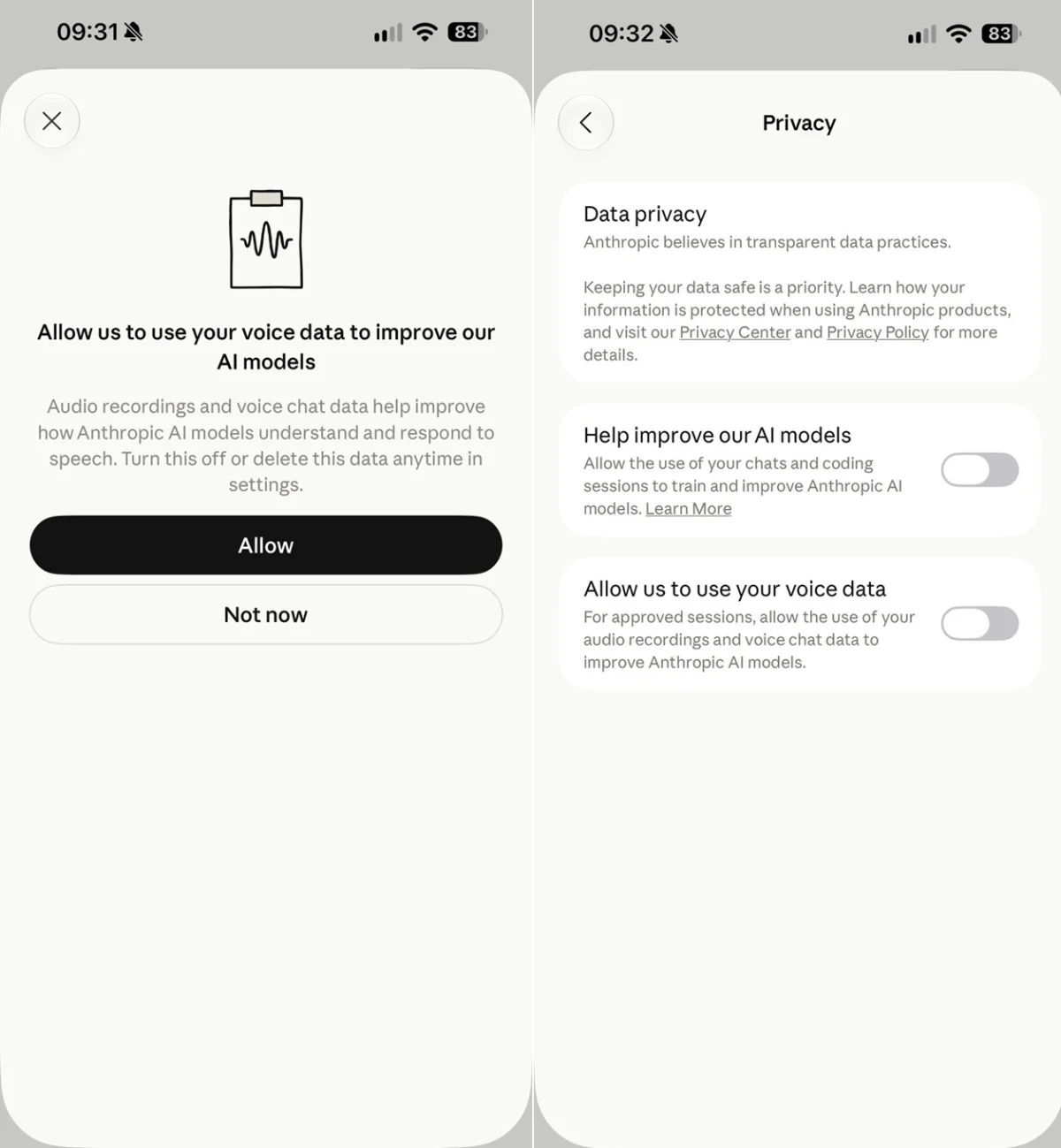
Despite the prospect of increased autonomy, Google appears committed to maintaining a level of user oversight, particularly for high-stakes actions. The comparison to a "Claude-like experience" is significant, referring to Anthropic’s AI model, which has implemented a robust system of user consent for various operations.
This suggests that Gemini’s advanced integration will likely involve a layered permission system. Users will have the ability to grant specific permissions, and for certain actions, Gemini will be programmed to explicitly request confirmation. This is a crucial distinction from granting AI unfettered access.
The types of actions that would likely require explicit user confirmation include:
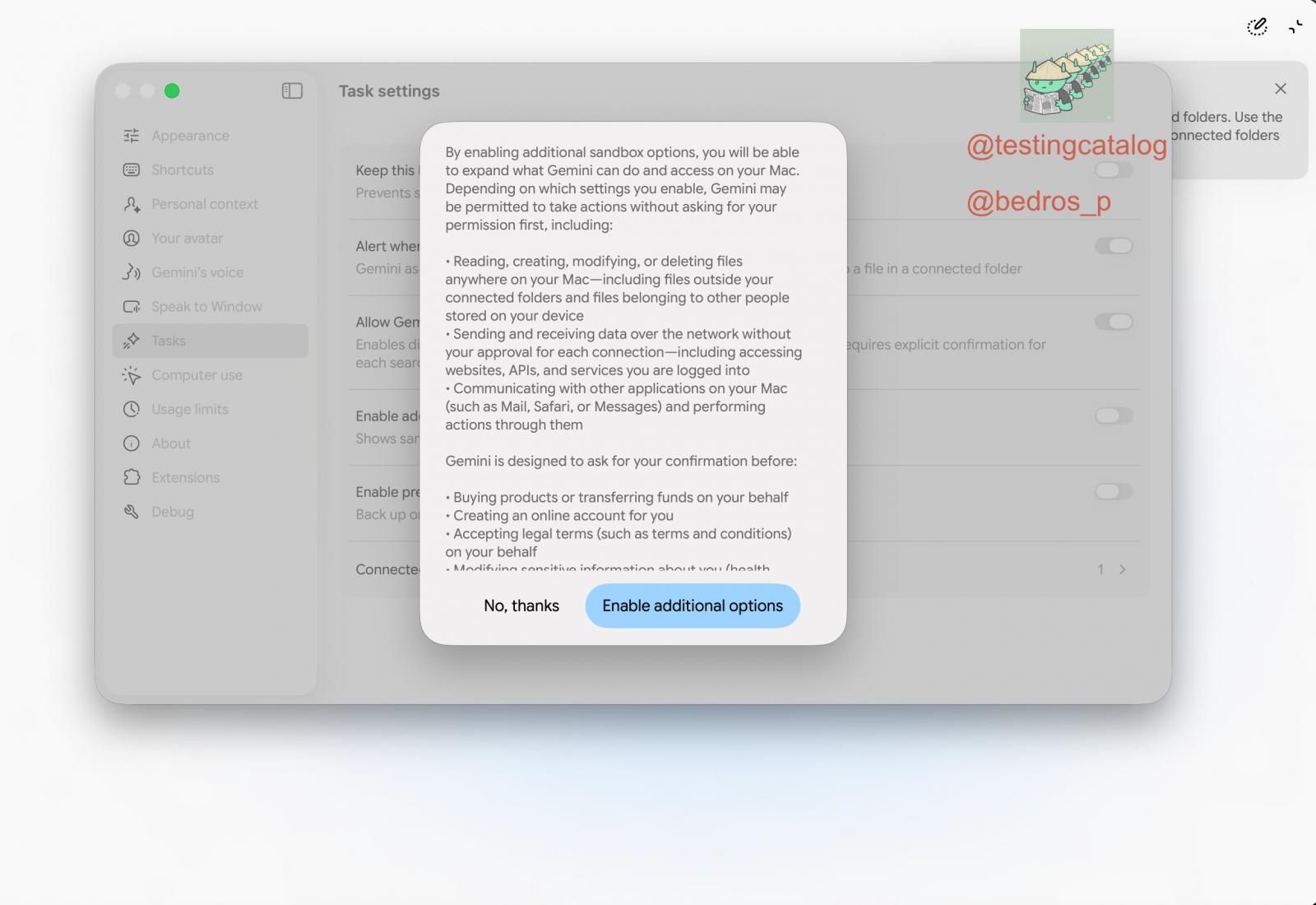
- Financial Transactions: Any activity involving the purchase of goods or services, or the transfer of monetary funds.
- Account Creation and Management: Setting up new online accounts or modifying existing ones.
- Legal and Contractual Agreements: Accepting terms of service, privacy policies, or other legally binding agreements on behalf of the user.
- Sensitive Data Modification: Altering personal information, credentials, or other critical data.
This approach aims to strike a balance between the efficiency gains offered by an autonomous AI and the inherent risks associated with granting such broad capabilities. It acknowledges that while AI can automate many tasks, certain decisions require human judgment and explicit consent.
Apple’s Stance and the Regulatory Landscape
The timing of Google’s Gemini integration testing is particularly noteworthy given Apple’s reported deliberations on how to manage AI agent access on its devices. Apple has historically prioritized user privacy and security, often implementing stringent controls over app permissions. The potential for AI agents to deeply integrate with macOS could present a challenge to this philosophy.
Industry analysts suggest that Apple might introduce new frameworks or APIs that govern how AI models interact with user data, potentially creating a more controlled environment for AI agents on its platform. This could involve stricter sandboxing requirements, enhanced transparency for users about AI data access, or even outright limitations on certain types of AI operations.
The broader regulatory landscape surrounding AI is also evolving rapidly. Governments worldwide are grappling with how to regulate AI development and deployment to ensure safety, fairness, and accountability. Features like deep system integration for AI agents will undoubtedly be a focal point in these discussions, as they touch upon fundamental issues of data privacy, cybersecurity, and user autonomy.
Broader Implications for the AI Ecosystem
The development of more integrated AI assistants like Gemini has profound implications for the entire technology ecosystem:
- Productivity Enhancements: For professionals and power users, the ability for an AI to manage files, launch applications, and perform complex multi-step tasks could lead to significant productivity gains, automating repetitive and time-consuming processes.
- New User Interfaces: This evolution could pave the way for entirely new ways of interacting with computers, moving beyond graphical user interfaces and command lines towards more natural, intent-driven interactions mediated by AI.
- Security Challenges: The increased access granted to AI agents also expands the potential attack surface. Malicious actors could seek to exploit vulnerabilities in these AI systems or in the operating systems they interact with, potentially leading to widespread data breaches or system compromises. Robust security protocols and continuous monitoring will be paramount.
- Ethical Considerations: The question of AI autonomy raises significant ethical considerations. As AI becomes more capable of acting independently, questions about accountability, bias, and the potential for unintended consequences become increasingly critical.
- Competition in the AI Space: Google’s push for deeper system integration underscores the competitive nature of the AI race. Companies are vying to offer the most compelling and capable AI experiences, and deep integration on popular operating systems like macOS is a key battleground.
While the exact form and functionality of Gemini’s enhanced macOS integration remain under wraps, the early indications point towards a future where AI plays a far more active and integrated role in our daily computing lives. The challenge for both technology providers and users will be to navigate this evolving landscape responsibly, ensuring that innovation is coupled with robust security, transparent user controls, and a commitment to ethical AI development. The coming months will likely reveal more about Google’s plans and Apple’s potential responses to this significant technological shift.