Vera Intan Clara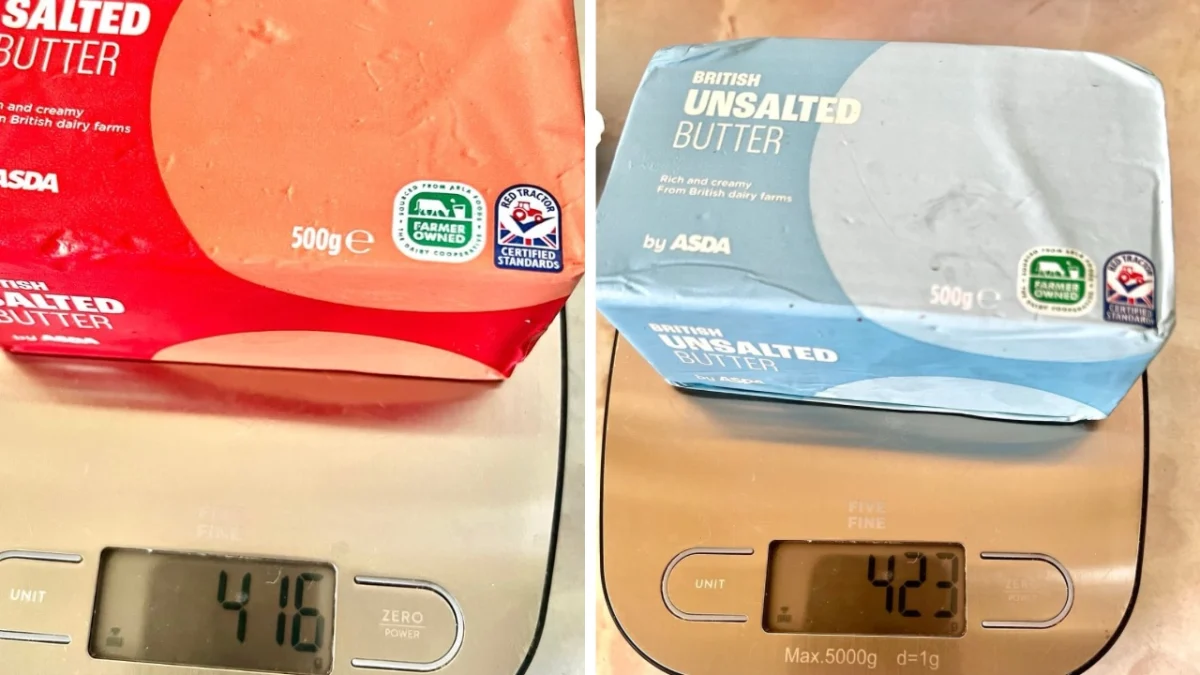
A recent online discussion originating from the r/AskUK subreddit has propelled the seemingly mundane act of weighing supermarket butter into a national conversation, spotlighting consumer vigilance, the accuracy of household scales, and the intricacies of food packaging regulations. The catalyst was a post by Reddit user u/NoCarrot2064, who shared photographic evidence purporting to show two packs of Asda butter significantly underweight compared to their advertised 500-gram labels. One pack, a salted variety, allegedly registered 416 grams, while an unsalted counterpart reportedly weighed 423 grams on a kitchen scale. This considerable deviation, if accurate, represents an 18.8% and 15.4% shortfall respectively, far exceeding typical industry tolerances and immediately sparking a fervent debate among thousands of commenters regarding product integrity, the reliability of home measuring equipment, and the appropriate course of action for consumers.
The Genesis of the Weigh-In: A Consumer’s Suspicions Surface
The incident unfolded on a weekday evening when u/NoCarrot2064, having previously harboured suspicions about butter purchases from another retailer, Lidl, decided to meticulously weigh their latest acquisitions from Asda. The user laid out two distinct packs: one of Asda’s own-brand salted butter and another of their unsalted variant. Both clearly displayed "500g" on their packaging, a standard measure for many dairy products in the UK. With a digital kitchen scale at hand, the user proceeded to measure each pack individually. The resulting readings – 416g for the salted and 423g for the unsalted – were captured in photographs and subsequently uploaded to Reddit.
The post, titled with a direct query about the legality and reportability of such a discrepancy, quickly gained traction. It tapped into a vein of consumer concern often dismissed as anecdotal but frequently discussed in online forums: the persistent feeling that products, particularly during periods of economic strain and rising inflation, are shrinking in size or quantity without a corresponding reduction in price, a phenomenon colloquially known as "shrinkflation." While the user’s primary concern was the immediate weight discrepancy, the broader context of diminishing value for money likely amplified the post’s resonance. The user’s specific question, "Does this count as legal and should I report it?", framed the subsequent discussion around both practical troubleshooting and the legal parameters governing packaged goods.
Navigating the Labyrinth of Legal Weight Standards: The Average Weight System
The discussion swiftly moved beyond the initial observation to the more complex realm of legal weight standards for pre-packed goods in the United Kingdom. Unlike a system requiring every single pack to meet or exceed the stated net weight, the UK, in line with European Union regulations (prior to Brexit, and largely maintained since), operates under the "average weight system," often denoted by the ‘e-mark’ symbol found on packaging. This system, governed by the Weights and Measures (Packaged Goods) Regulations 1986, is designed to ensure fair trade while acknowledging the practical difficulties of filling every single package to an exact, identical weight on high-speed production lines.
The average weight system is predicated on three key rules for batches of pre-packed products:
- Average Quantity: The actual average quantity of product in a batch of pre-packages must not be less than the nominal quantity (the stated weight on the label).
- Tolerated Negative Error (TNE): No more than 2% of the packages in the batch may have a ‘tolerated negative error’ (TNE) greater than a prescribed amount. This TNE is a legally defined maximum permissible shortfall for individual packages.
- Maximum Shortfall: No package may have a negative error greater than twice the TNE. This rule acts as a strict upper limit for individual package underfilling.
For a product labelled at 500 grams, like the butter in question, the prescribed TNE is typically 1.5% of the nominal quantity for products between 300g and 1kg. This translates to 7.5 grams. Therefore, under the average weight system, a package of 500g butter should ideally not weigh less than 492.5 grams. Crucially, no package should fall below twice the TNE, meaning it should not be less than 485 grams (500g – 2 * 7.5g).
The Reddit user’s reported weights of 416g and 423g are significantly below even this twice-TNE threshold. A 416g pack is 84 grams underweight, and a 423g pack is 77 grams underweight. These figures represent a substantial deviation from the legal minimums, potentially indicating a serious issue if the measurements were independently verified as accurate. This legal context became a cornerstone of the Reddit debate, with several users referencing these regulations and encouraging the original poster to investigate further if their scale proved reliable.
The Crucial Variable: The Accuracy of Household Scales
Despite the alarming reported discrepancies, a significant portion of the Reddit community’s initial reaction centred not on the supermarket’s potential error, but on the reliability of the u/NoCarrot2064’s measuring device. "My first thought here is your scales are probably shit. Try someone else’s," one blunt commenter stated, encapsulating the prevailing skepticism. This immediate focus on the scale’s accuracy is understandable; digital kitchen scales, while ubiquitous in modern households, are consumer-grade instruments not typically subject to rigorous, regular calibration. Their accuracy can be affected by various factors, including battery levels, uneven surfaces, temperature fluctuations, and inherent manufacturing tolerances.
Several practical suggestions emerged from the thread for verifying the scale’s calibration. One common piece of advice was to "Weigh a coin to get the calibration checked." While seemingly simple, this method has its own caveats, as the exact weight of coins can vary slightly due to wear and tear, minting differences, and material composition. For instance, a UK 1p coin is typically 3.56g, and a 2p coin is 7.12g, but relying on these for precise calibration of a scale designed for hundreds of grams can be problematic.
A more robust, yet still household-level, calibration test involved water. "Get an empty measuring jug, place [it] on the scale, and zero the weight," one user advised, "Then add 500 milliliters of water to test the reading." This method leverages the well-known property that 1 milliliter of water at standard temperature and pressure weighs approximately 1 gram. Therefore, 500ml of water should register close to 500g. However, even this seemingly straightforward test sparked further discussion, with some users pointing out that measuring jugs themselves can introduce errors due to their own inaccuracies or the meniscus effect when reading liquid volumes. The most reliable method, as suggested by some, would be to compare the reading with a known, certified weight or to use a calibrated scale at a local supermarket or post office.
The Broader Implications of the Debate: Consumer Trust and Economic Climate
Beyond the technicalities of scales and legal definitions, the Reddit thread highlighted deeper currents of consumer sentiment. The light-hearted jokes, such as "i cant believe its not 500g butter," a playful nod to the iconic "I Can’t Believe It’s Not Butter!" spread, underscore a collective unease about product value. This sentiment is particularly acute in the current economic climate, characterised by high inflation and a cost-of-living crisis. Consumers are increasingly scrutinising their purchases, making even minor discrepancies in weight or quantity feel more significant.
The discussion also touched upon the principle of "averaging" weights across a batch. While legally permissible, the idea that a consumer might "get super unlucky" and consistently receive significantly underweight items due to this system raised questions about fairness, especially if such instances are not balanced by overfilled packs. This perception can erode consumer trust in brands and retailers, fostering a sense of being short-changed.
The humorous responses, like the suggestion of writing "a strongly-worded letter to the Telegraph" and signing off as "Outraged of Tunbridge Wells," reflect a peculiarly British way of expressing collective frustration. These quips, while satirical, nonetheless point to a genuine underlying concern about consumer rights and the expectation of fair dealing from large corporations.
Potential Responses from Related Parties (Inferred)
While no official statements from Asda or regulatory bodies were immediately available in response to this specific Reddit post, it is possible to infer their likely responses based on standard industry practices and legal obligations.
Asda’s Likely Stance: A major retailer like Asda would typically acknowledge customer feedback with seriousness. Their official response, if contacted directly by u/NoCarrot2064, would likely involve:
- Emphasising Quality Control: Reassuring the customer of their commitment to product quality and adherence to all legal weights and measures regulations.
- Requesting Specifics: Asking for batch numbers, best-before dates, and purchase locations to trace the specific product run.
- Suggesting Return/Refund: Offering a full refund or replacement for the product, regardless of the cause of the discrepancy.
- Internal Investigation: Initiating an internal review of their production and packaging processes for the specific product batch, potentially including re-calibration of their own weighing equipment. They would likely also highlight that their own industrial scales are regularly calibrated and certified.
Trading Standards’ Role: Should a consumer formally report such a discrepancy to their local Trading Standards office (part of the Department for Business and Trade), the response would be more structured:
- Information Gathering: Trading Standards would collect detailed information from the complainant, including photographs, product details, and purchase receipts.
- Investigation: They would likely conduct an investigation, which could involve purchasing samples of the butter from the specified Asda store and having them weighed on certified, calibrated scales.
- Batch Testing: If a pattern of underweight products is suspected, Trading Standards has the power to visit the manufacturer’s premises and conduct batch testing on production lines, using their own certified equipment to verify compliance with the average weight system.
- Enforcement: If systematic non-compliance is found, Trading Standards has enforcement powers, ranging from issuing warnings and requiring corrective actions to imposing fines or initiating prosecution in severe cases of deliberate deception.
Timeline of Events and Unresolved Questions
The initial Reddit post and subsequent discussion occurred over a period of days, with comments continually flowing in as the thread gained visibility.
- Day 1: u/NoCarrot2064 posts photos of alleged underweight butter on r/AskUK, sparking immediate debate.
- Day 1-3: Discussion escalates, with hundreds of comments focusing on scale accuracy, legal tolerances, and consumer rights. Practical advice for scale calibration is shared.
- Ongoing: The original poster has not yet updated the thread with information on whether they calibrated their scale, contacted Asda, or reported the issue to Trading Standards. The veracity of the initial claim, therefore, remains unverified by independent sources.
The Daily Dot, which initially covered the story, and this article could not independently verify the weights shown in the photos or the accuracy of the Reddit user’s kitchen scale. The details above reflect the Reddit user’s post and the responses visible within the thread. This lack of independent verification leaves the central question unanswered: was the butter truly underweight, or was the consumer’s scale simply inaccurate?
Recommendations for Consumers
The Reddit discussion, despite its unresolved nature, serves as a valuable reminder for consumers regarding product quantities and their rights. If a consumer suspects a product is significantly underweight, several steps can be taken:
- Verify Your Scale: Before taking further action, attempt to verify the accuracy of your household scale using known weights (e.g., specific calibration weights, or even a precisely measured volume of water). Consider using a public scale at a post office or supermarket if available.
- Document Evidence: Take clear photographs or videos of the product on the scale, ensuring the product label and the weight reading are visible. Keep the original packaging and any receipts.
- Contact the Retailer: First, contact the customer service department of the supermarket where the item was purchased. Provide all relevant details and evidence. They will often offer a refund or replacement.
- Report to Trading Standards: If the retailer’s response is unsatisfactory, or if there is a suspicion of a widespread issue or deliberate mislabelling, report the matter to your local Trading Standards office. This can often be done via the Citizens Advice consumer helpline.
In conclusion, the Reddit post about alleged underweight Asda butter, while unverified, has illuminated the complex interplay between consumer perception, the technicalities of measurement, and the legal framework governing packaged goods. It underscores the increasing importance of consumer vigilance in an economy where every gram and penny counts, and the powerful role social media platforms play in bringing such issues to public attention, fostering community discussion, and potentially prompting broader scrutiny of industry practices.