George Chandra Eka
The landscape of personal health technology has undergone a profound transformation, moving from rudimentary step counters to sophisticated devices capable of monitoring a myriad of physiological markers. Once considered niche gadgets for elite athletes or tech enthusiasts, health and fitness wearables have firmly entrenched themselves in mainstream culture. This widespread adoption is largely attributable to the accessibility offered by early innovators like Fitbit, which popularized simple, affordable wristband trackers, and Apple, whose strategic integration of advanced health sensors into the Apple Watch ecosystem captured the attention of millions of iPhone users, sparking a wave of innovation and imitation across the industry. The tangible benefits of these devices are increasingly evident, with countless personal accounts highlighting their role in catalyzing transitions from sedentary lifestyles to active ones, and in some cases, even providing early warnings that have been credited with saving lives.
In recent years, the dominance of traditional wristbands and smartwatches has encountered a formidable challenger in the form of smart rings. These discreet devices promise to deliver many, if not all, of the same comprehensive health tracking benefits as their wrist-worn counterparts, but within an even more compact and often less obtrusive form factor. The appeal of smart rings also extends to aesthetic preferences, with some users favoring their more subtle, stylish, or "professional" appearance, although such preferences remain inherently subjective.
At the premium end of the market, beginning around the $400 price point, the Oura Ring 5 stands as a direct competitor to Apple’s latest flagship wearable, the Apple Watch Series 12. Both devices represent the pinnacle of current wearable technology, offering advanced health insights. However, the decision between these two sophisticated trackers is far from straightforward. Critical factors such as platform compatibility, the intensity and nature of one’s typical workout regimen, and a user’s willingness to commit to recurring subscription fees will likely play a decisive role in dictating the optimal choice. In this high-stakes comparison, the purely aesthetic appeal of either device should certainly not be the sole determinant.
The Evolution of Wearable Technology: A Brief Chronology
The journey of health wearables began in earnest in the early 2000s with basic pedometers. The introduction of the first Fitbit tracker in 2009 marked a significant shift, bringing activity tracking to a broader audience with its focus on steps, distance, and calories. The subsequent decade saw an explosion in functionality, with heart rate monitors becoming standard and sleep tracking emerging as a key feature. Apple’s entry into the market with the Apple Watch in 2015 redefined the smartwatch, blending health tracking with extensive smart functionality, app ecosystems, and seamless integration with the iPhone. Meanwhile, the Oura Ring, first launched in 2015, pioneered the smart ring category, emphasizing sleep and recovery data in a minimalist design. Each successive generation of both the Apple Watch and Oura Ring has introduced more refined sensors, advanced algorithms, and expanded health metrics, culminating in the highly capable Oura Ring 5 and Apple Watch Series 12 that users consider today. This continuous innovation has pushed wearables from mere activity trackers to sophisticated personal health companions.
Core Health Data: Commonalities and Distinctive Insights
Both the Oura Ring 5 and the Apple Watch Series 12 are engineered to collect a broad spectrum of fundamental health data, forming the bedrock of their respective tracking capabilities. This shared data includes vital metrics such as sleep patterns and quality, daily step counts, estimated calorie expenditure, and continuous heart rate monitoring, encompassing heart rate variability (HRV). The inclusion of HRV is particularly significant, as it offers a crucial indicator of the autonomic nervous system’s balance, providing insights into stress levels, recovery status, and overall well-being.
Beyond these commonalities, both devices also offer tracking functionalities related to menstrual cycles, aiding users in understanding their body’s natural rhythms. However, Oura distinguishes itself by asserting a more profound focus on women’s health, claiming to provide more nuanced and comprehensive insights pertaining to various stages of a woman’s life, including pregnancy and menopause. This specialized focus, leveraging its precise temperature sensing and long-term data analysis, aims to offer tailored guidance that goes beyond simple cycle prediction.
A notable shared feature between the two wearables is the provision of "Readiness" or "Recovery" scores. These sophisticated metrics synthesize data from multiple physiological factors, such as sleep quality, activity levels, and heart rate variability, to generate a consolidated score. This score serves as an intuitive guide, indicating whether a user’s body is adequately recovered and prepared for strenuous physical activity, suggesting either the pursuit of a new personal record in the gym or the wisdom of opting for a lighter, restorative day.
Fundamental Divergence: Design, Interaction, and Core Functionality
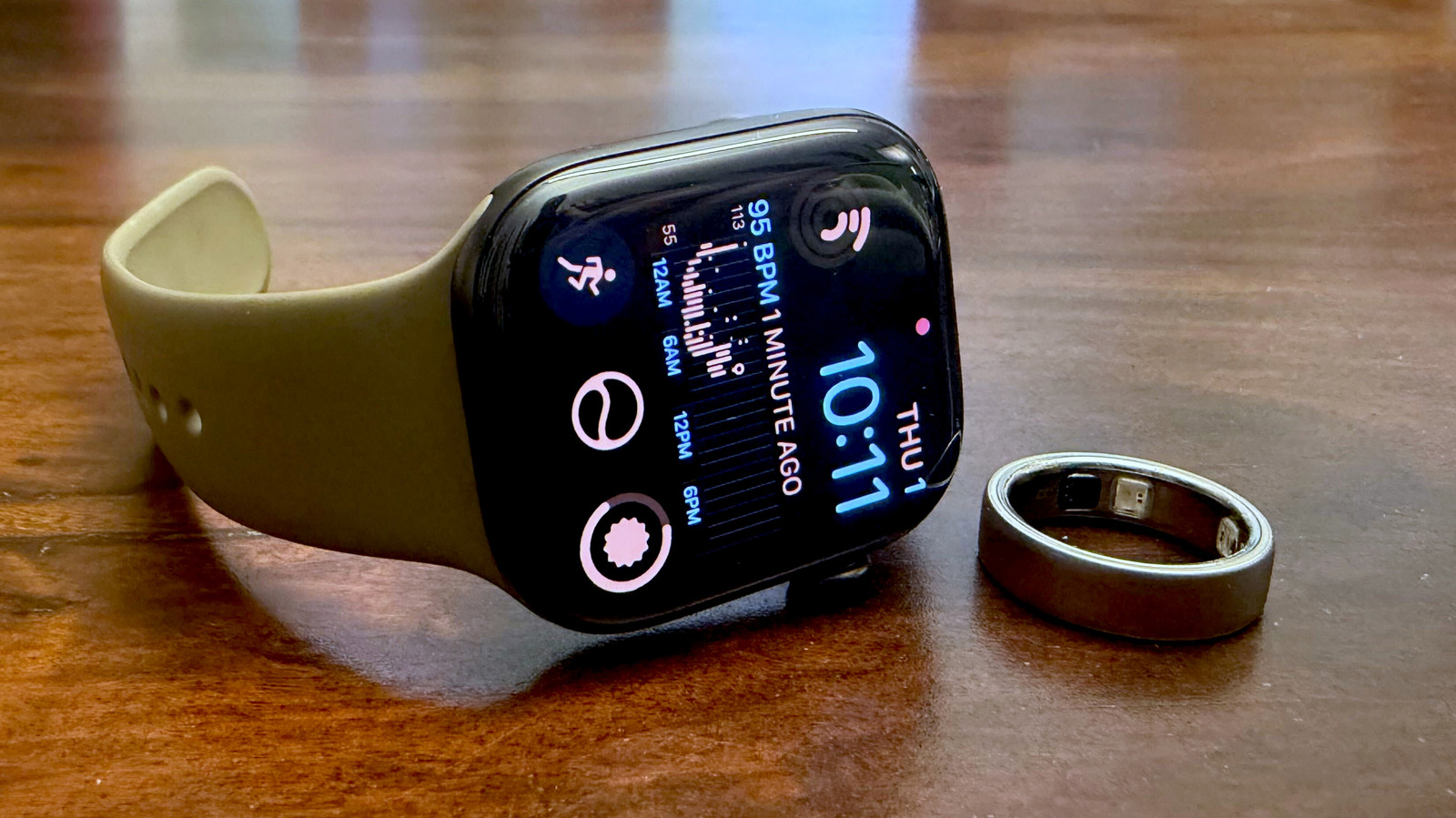
Despite their shared objective of enhancing personal health monitoring, the Oura Ring 5 and the Apple Watch Series 12 diverge sharply in their fundamental design philosophy, user interaction, and overall functionality. The most immediately apparent difference lies in their form factor: the Series 12, as a smartwatch, features a vibrant touchscreen display, available in two primary sizes – typically 42mm and 46mm, with the larger variant often incurring an additional cost of approximately $50. This display is not merely for telling time or glancing at health data; it serves as a dynamic interface for a vast array of interactions.
In conjunction with a robust 64GB of internal storage and Apple’s advanced S11 processor, the Series 12 is engineered to handle numerous tasks independently of a paired iPhone. This autonomy extends from facilitating contactless payments via Apple Pay and receiving real-time notifications, to providing turn-by-turn navigation for off-road trails. Cellular models, which typically start at a higher price point (e.g., $500), further enhance this independence by enabling some online functions, calls, and messages without requiring a Wi-Fi connection or the proximity of a smartphone.
The Oura Ring 5, by contrast, adopts an entirely different approach. Lacking any screen or tactile interface, it is designed to operate discreetly in the background. Consequently, accessing any of the Oura’s meticulously collected data or adjusting its settings necessitates interacting with a paired smartphone. This design choice, while contributing to its minimalist aesthetic and extended battery life, means the Oura Ring is inherently tethered to its companion app for all user-facing interactions. The company’s decision to discontinue its web interface further solidifies this mobile-centric approach.
Platform Compatibility: A Decisive Factor
Platform compatibility emerges as a critical, often non-negotiable, differentiator between these two devices. While both the Oura Ring 5 and the Apple Watch Series 12 offer integration with Apple Health, the similarities end there. The Series 12 is exclusively designed for the Apple ecosystem, mandating at least an iPhone 11 running iOS 27 (or a similarly advanced, future iOS version) or later. This strict requirement means that users who own Android smartphones from manufacturers such as Google, Samsung, Motorola, or others are entirely excluded from using the Apple Watch. For this segment of the market, the decision is effectively made, and their focus should instead shift to comparing the Oura Ring against Android-compatible alternatives like Google’s Pixel Watch 5 or the extensive range of Garmin smartwatches.
Conversely, the Oura Ring 5 offers broader platform support, syncing its data with Android’s equivalent health platform, Health Connect, in addition to Apple Health. This cross-platform compatibility makes the Oura Ring a viable option for a significantly larger segment of the global smartphone market, positioning it as a more inclusive choice for users not bound to the Apple ecosystem.
Fitness and Activity Tracking: Depth vs. Discretion
When it comes to dedicated fitness and activity tracking, the Apple Watch Series 12 maintains a substantial lead, particularly for those who prioritize detailed, real-time workout data and extensive sport-specific metrics. The Oura Ring 5, while capable, primarily functions through automatic activity detection, storing logged data within its proprietary app. This automatic detection, however, is not always perfectly accurate or comprehensive, occasionally failing to register certain activities or misinterpreting their intensity. While manually launching an activity through the app offers greater reliability, users are still required to retrieve their phone to view any real-time performance metrics during a workout.
The Series 12, conversely, transforms the workout experience. While many workouts still require manual initiation, this action unlocks a wealth of real-time statistics directly on the wrist, mirroring the data simultaneously displayed on the paired iPhone. More importantly, the Apple Watch is equipped to track a broader array of sophisticated data points that the Oura Ring simply cannot, such as precise running cadence, ground contact time, and highly accurate GPS location tracking. The Oura Ring can only leverage GPS data by tethering to the user’s phone, which means the phone must be carried during outdoor activities for location-based metrics.
Furthermore, the physical design of smart rings presents inherent limitations for certain types of exercise. For instance, any smart ring, including the Oura Ring, is generally a poor choice for weightlifters. The constant friction against the knurling of barbells and dumbbells can quickly abrade the ring’s finish, leading to cosmetic damage and potentially affecting its long-term durability. This practical consideration often steers dedicated strength trainers towards wrist-worn devices.
Battery Life: A Clear Advantage for Oura
One area where the Oura Ring 5 demonstrably triumphs over the Apple Watch Series 12 is battery life, a crucial factor for continuous health monitoring and user convenience. Realistically, any non-Ultra model of the Apple Watch typically necessitates daily charging. For users who wish to leverage its comprehensive sleep tracking capabilities, charging might even be required twice a day to ensure sufficient power through the night and the subsequent day. This frequent charging schedule can create data gaps if a user forgets to charge or chooses to omit sleep tracking due to battery concerns.
The Oura Ring 5, in stark contrast, boasts an impressive battery longevity, capable of operating for six to nine consecutive days on a single charge. This significantly extended battery life offers unparalleled convenience, reducing the frequency of charging cycles and minimizing interruptions in data collection. For users prioritizing uninterrupted, long-term health insights without the hassle of daily recharges, the Oura Ring presents a compelling advantage. This superior battery performance is largely a direct consequence of its screen-less design and optimized power consumption.
The Subscription Model: A Hidden Cost or Added Value?
Beyond the initial purchase price, a critical consideration for prospective buyers is the ongoing financial commitment, particularly concerning subscription models. While the Oura Ring 5 can technically be used without an Oura Membership, this choice significantly diminishes its utility and access to its full potential. Without a subscription, users forfeit not only a substantial portion of the personalized coaching insights and advanced analytical reports but also fundamental features such as 24/7 continuous heart rate tracking, blood oxygen level monitoring (SpO2), and seamless integration with popular third-party fitness applications like Strava. This essentially relegates the ring to a basic activity and sleep tracker.
Apple, on the other hand, typically bundles similar content and advanced features within its broader ecosystem at no extra cost to the Apple Watch user. Apple’s overarching strategy is to deeply integrate users into its services and hardware ecosystem, where the Watch serves as a powerful extension rather than a standalone, subscription-dependent device. While Apple does offer optional subscription services like Apple Fitness+ for guided workouts, the core health tracking features of the Apple Watch remain accessible without an additional monthly fee. To fully leverage the Oura Ring 5, users are expected to pay an additional $6 per month or approximately $70 annually, a cost that should be factored into the long-term ownership calculation.
This difference in business model presents a dilemma for consumers: Is the Oura’s subscription an acceptable price for specialized, in-depth insights and a minimalist form factor, or is Apple’s bundled approach, albeit with a higher initial device cost and platform lock-in, a more attractive value proposition?
Market Positioning and Target Audience
The distinct design philosophies and feature sets of the Oura Ring 5 and Apple Watch Series 12 naturally appeal to different market segments and user preferences.
The Apple Watch Series 12 is positioned as a comprehensive, multipurpose wearable. It caters to iPhone users who desire a seamless extension of their smartphone on their wrist, offering not just health and fitness tracking but also communication, productivity, and entertainment functionalities. Its rich app ecosystem, robust processing power, and cellular capabilities make it ideal for individuals who want to stay connected and informed without constantly reaching for their phone. It particularly shines for those who take their fitness seriously, demanding real-time metrics, diverse workout modes, and precise GPS tracking for activities like running, cycling, and swimming. The Apple Watch is designed to be a constant companion, actively engaging the user with notifications, interactive apps, and dynamic health insights.
The Oura Ring 5, conversely, occupies a more specialized niche. It is primarily designed for individuals who seek a discreet, unobtrusive device focused almost exclusively on providing a holistic overview of their health, with a strong emphasis on sleep, recovery, and overall well-being. Its minimalist form factor appeals to those who prefer their technology to fade into the background, avoiding the visual prominence or constant notifications of a smartwatch. It’s an excellent choice for individuals who prioritize long battery life, comfort during sleep, and a subtle aesthetic. For Android users, the Oura Ring often becomes the default premium health wearable due to the Apple Watch’s exclusivity. It serves those who desire deep insights into their body’s readiness and recovery, without the need for extensive real-time workout data or smartwatch functionalities.
The Future of Wearables: Trends and Outlook
The ongoing competition between smartwatches and smart rings highlights broader trends shaping the future of wearable technology. The market is increasingly segmenting, with devices catering to specific user needs rather than attempting a one-size-fits-all approach. Miniaturization, enhanced sensor accuracy, and advanced data analytics powered by artificial intelligence are driving innovation. Future iterations are expected to offer even more sophisticated health monitoring, potentially including non-invasive blood glucose monitoring, advanced stress detection, and proactive health interventions based on predictive analytics.
The debate around subscription models will also continue to evolve. As hardware margins tighten, companies may increasingly look to recurring revenue streams from premium software features and personalized insights. This could lead to a two-tiered system where basic tracking is free, but advanced diagnostics, coaching, and deeper integrations require a paid membership.
Furthermore, the emphasis on data privacy and security will intensify. As wearables collect increasingly sensitive personal health information, manufacturers will face greater scrutiny regarding how this data is stored, processed, and shared. Consumers will demand greater transparency and control over their digital health footprint.
Conclusion: Making an Informed Decision
Ultimately, the choice between the Oura Ring 5 and the Apple Watch Series 12 hinges on individual priorities, ecosystem allegiance, and lifestyle requirements.
For iPhone users who are deeply embedded in the Apple ecosystem and seek a versatile, feature-rich device that seamlessly integrates with their digital life, the Apple Watch Series 12 likely represents the superior investment. It offers a comprehensive suite of smart functionalities, robust fitness tracking capabilities with real-time data, and an extensive app ecosystem, all without an additional subscription for core health features. It is inherently superior for those who engage in serious fitness regimens or desire the convenience of performing numerous tasks without needing to consult their phone.
For Android users, the Oura Ring 5 effectively wins by default as a premium health wearable, given the Apple Watch’s exclusivity. Beyond platform compatibility, the Oura Ring is a compelling option for individuals who prioritize an overall, in-depth picture of their health, particularly focusing on sleep, recovery, and subtle long-term trends. Its extended battery life and discreet, screen-less design appeal to those who prefer their wearable technology to operate silently in the background, providing insights without constant interaction or notifications. It caters to a lifestyle where unobtrusive health monitoring takes precedence over active, real-time engagement with a device on the wrist.
Therefore, prospective buyers must carefully weigh their platform allegiance, their level of engagement with active fitness tracking, their preference for device autonomy versus minimalist design, and their willingness to embrace a subscription model. Each device is a leader in its respective category, but their divergent approaches mean that the "right" choice is deeply personal and reflective of individual needs and technological philosophies.