Sisilia Frederika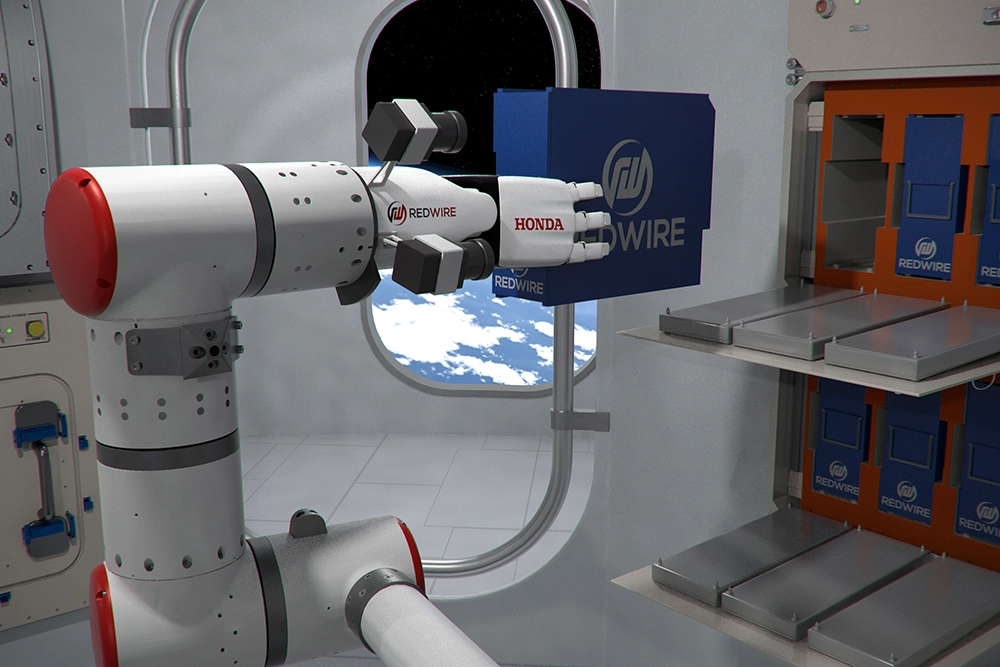
The landscape of Low Earth Orbit (LEO) is undergoing a fundamental transformation as the era of government-led space stations transitions toward a commercially driven ecosystem. At the forefront of this shift, Honda Motor Co., Ltd. and Redwire Corporation have announced a strategic collaboration to develop an automated laboratory support system designed for future commercial space stations. This partnership aims to solve one of the most persistent bottlenecks in orbital research: the scarcity and high cost of astronaut time. By combining Honda’s sophisticated robotics and tactile sensing technology with Redwire’s extensive heritage in space infrastructure, the two companies intend to create a robotic workforce capable of performing complex, delicate tasks that currently require human intervention.
The Strategic Necessity of Orbital Automation
For decades, the International Space Station (ISS) has served as the primary hub for microgravity research. However, the operational model of the ISS is heavily dependent on human crew members. Astronauts on the ISS are among the most highly trained professionals in the world, yet a significant portion of their schedule is consumed by routine laboratory maintenance. Tasks such as swapping biological sample trays, scanning barcodes for inventory management, and cleaning equipment occupy valuable hours that could otherwise be dedicated to high-level scientific analysis or complex assembly.
The "opportunity cost" of human labor in space is immense. NASA estimates suggest that the cost of maintaining a single crew member on the ISS can reach tens of thousands of dollars per hour when accounting for launch costs, life support, and training. As the space industry moves toward commercial stations, which are expected to be smaller and carry fewer crew members than the ISS, the need for automation becomes an economic imperative. Many of these upcoming platforms, such as those proposed by Axiom Space and Vast, may operate for extended periods without any human presence at all. To maintain continuous scientific output, these stations will require robotic systems that can operate autonomously or via remote teleoperation from Earth.
Honda’s Evolution from ASIMO to Tactile Robotics
While Honda is globally recognized for its automotive manufacturing, the company has maintained a dedicated robotics division for over three decades. This expertise gained worldwide attention with ASIMO (Advanced Step in Innovative Mobility), a humanoid robot that demonstrated groundbreaking capabilities in bipedal locomotion and human-robot interaction. Although Honda retired ASIMO in 2018, the technological foundations laid by the project have been funneled into the Honda Avatar Robot program.
The core contribution Honda brings to the Redwire partnership is its advanced robotic hand technology. Unlike traditional industrial grippers that rely on simple "open-close" mechanics, Honda’s latest robotic hands feature multiple independently articulated fingers. These appendages are equipped with a sophisticated array of tactile and force sensors. This "sense of touch" allows the robot to perceive the shape, weight, and fragility of an object in real-time. In the weightless environment of a space station, where objects can easily drift away if not handled correctly, or be crushed if handled with too much force, Honda’s tactile feedback systems provide the precision necessary to handle delicate glass vials, biological tissues, and sensitive electronic components.
Redwire and the STAARK Platform: Providing the Reach
Redwire Corporation has established itself as a critical player in the "NewSpace" economy, particularly through its acquisitions of companies like Made In Space. Currently, Redwire operates eight different science facilities aboard the ISS, ranging from 3D bioprinters to ceramic manufacturing modules. This experience has given the company a deep understanding of the mechanical and environmental challenges of operating hardware in LEO.
Central to this new collaboration is Redwire’s Space Technology Autonomous Agile Robotic Kit (STAARK). STAARK is designed as a "reaching and motion" platform—essentially the arm and body that will carry Honda’s robotic hands. The system is engineered to navigate the interior of a space station module, autonomously identifying and interacting with dynamic objects. By integrating Honda’s multi-fingered hand with the STAARK platform, the partnership creates a complete robotic assemblage: Redwire provides the mobility and structural reach, while Honda provides the fine motor skills and tactile sensitivity.
A Timeline of the Transition: From ISS to Commercial Outposts
The timing of the Honda-Redwire announcement is dictated by the looming retirement of the International Space Station. In early 2024, NASA reaffirmed its commitment to deorbiting the ISS by approximately 2030. The process will involve a controlled re-entry, with the massive structure—roughly the size of a football field—crashing into Point Nemo in the Pacific Ocean.
This 2030 deadline has triggered a race among private aerospace firms to launch "Commercial LEO Destinations" (CLDs). The current timeline for these projects includes:
- Axiom Space: Plans to launch its first commercial module to the ISS as early as 2026, eventually detaching to form a standalone station.
- Vast: Aims to launch Haven-1, a world-first commercial space station, as early as 2025 via a SpaceX Falcon 9.
- Orbital Reef: A joint venture between Blue Origin and Sierra Space, targeting operational status in the late 2020s.
- Starlab: A collaboration between Voyager Space, Airbus, and Mitsubishi Corporation.
The Honda-Redwire robotic system is being positioned as a "plug-and-play" solution for these diverse platforms. By showcasing their technology at the International Astronautical Congress (IAC) in Antalya, Turkey, in October 2024, the companies are signaling to these station developers that automated laboratory management is a ready-to-integrate utility.
Technical Specifications and Operational Goals
The joint robotic system is designed to meet several key performance metrics essential for orbital laboratory work:
- Multi-Modal Dexterity: The ability to operate standard laboratory equipment, such as pipettes and centrifuges, which were originally designed for human hands.
- Autonomous Inventory Management: Utilizing vision systems to track consumables and samples without human oversight.
- Force Feedback Safety: Ensuring that the robot can work alongside human astronauts without the risk of collision or accidental injury, a concept known as "collaborative robotics" or cobotics.
- Teleoperation Capability: Allowing scientists on Earth to "see" and "feel" through the robot using VR interfaces, enabling them to conduct experiments directly from their home laboratories.
According to technical briefs released by Honda, the robotic hand uses a combination of torque sensors at the joints and skin-like pressure sensors on the fingertips. This allows the system to adjust its grip dynamically. For example, if a sample vial begins to slip, the robot can detect the micro-vibrations of the sliding surface and tighten its grip before the object is lost.
Broader Implications for the Space Economy
The collaboration between a Japanese automotive giant and an American space infrastructure firm highlights the increasingly international and cross-sector nature of the space industry. For Honda, this is an opportunity to validate its robotics technology in the harshest environment possible, with potential spin-off applications for elder care, disaster relief, and manufacturing on Earth. For Redwire, the partnership adds a high-tier technology partner to its ecosystem, strengthening its bid to be the primary provider of "orbital services."
Industry analysts suggest that the success of such robotic systems will be a primary factor in determining the profitability of commercial space stations. If a station requires a constant human presence for even the simplest tasks, the overhead costs remain prohibitively high for many pharmaceutical and materials science companies. However, if a station can operate "lights-out" for 90% of its mission duration, the cost of microgravity research could drop by an order of magnitude.
Conclusion and Future Outlook
While the Honda-Redwire robotic system has yet to be flight-proven, the synergy between the two companies addresses a critical gap in current space exploration capabilities. As the International Astronautical Congress continues in Antalya, the focus remains on how these technologies will be integrated into the next generation of habitats.
The transition from the ISS to commercial stations represents a "gold rush" for orbital real estate and research. In this environment, the companies providing the "shovels"—the essential tools and automation that make work possible—are often the most strategically positioned. By automating the mundane and the meticulous, Honda and Redwire are not just building a robot; they are building the workforce for the next century of human activity in space. The coming years will determine whether this specific collaboration becomes the industry standard or if it will face stiff competition from emerging robotic startups in Europe and Asia. Regardless of the winner, the message is clear: the future of space research will be handled by robotic hands.