
 Vera Intan Clara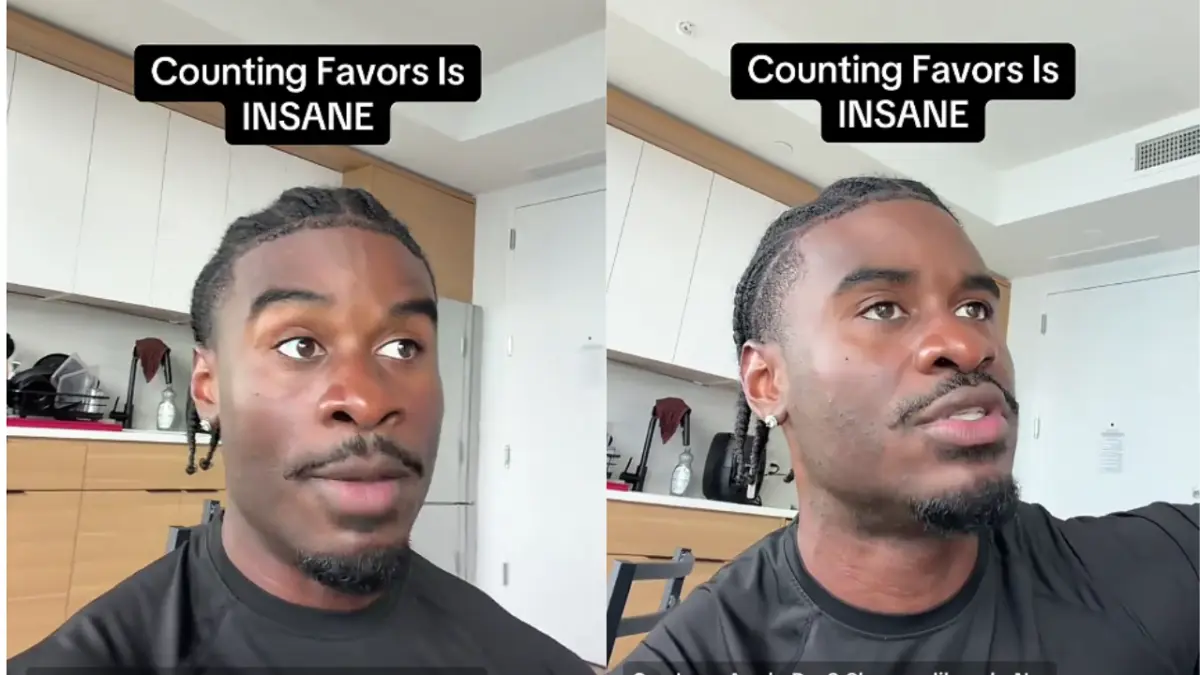
A recent viral video shared by TikTok creator @maxwellvision has sparked a widespread discussion across social media platforms, delving into the nuanced and often fraught territory of financial interactions within friendships. The video, which has garnered an impressive 1.7 million views and over a thousand comments, details a personal experience involving Maxwell and a friend, highlighting a significant miscommunication regarding a seemingly generous offer that later evolved into a contentious demand for repayment. This incident serves as a poignant illustration of the delicate balance between social generosity, explicit communication, and the inherent expectations that can silently underpin relationships, especially when money is involved.
The core of the dispute centers around a $65 meal, initially presented by Maxwell’s friend, identified as Jack, as a no-strings-attached favor. However, a fortnight later, the narrative took an unexpected turn when Jack confronted Maxwell, demanding repayment for the meal after witnessing Maxwell provide a small sum of cash to another friend. Maxwell’s account, delivered with a mix of disbelief and frustration, resonates deeply with many who have experienced similar ambiguities in their social circles, prompting a collective introspection on modern friendship dynamics and financial boundaries.
The Unfolding Narrative: A Chronological Breakdown of a Friendship Fissure
The incident, as recounted by Maxwell, began innocently enough, unfolding over several distinct phases, each contributing to the eventual misunderstanding and confrontation.
The Birthday Dinner Dilemma: A Night Out Takes an Unexpected Turn
The initial scene was set at a celebratory birthday dinner for a mutual female friend. A convivial atmosphere prevailed as a group of friends gathered to mark the occasion. As is customary in many group dining scenarios, the evening progressed smoothly until the inevitable arrival of the bill. It was at this juncture that Maxwell encountered an unforeseen predicament. Upon reaching for his wallet, he discovered his pockets were empty, leading to the dawning realization that he had either left it in the ride-share vehicle he had taken to the restaurant or, more likely, back at his residence.
A swift check of his phone confirmed his wallet’s location, safely at home, thanks to an attached AirTag. While this offered a measure of relief regarding his wallet’s security, it did little to resolve his immediate problem: he had no means to pay his $65 bill, a sum he confirmed was accurate given his food and drink orders. Maxwell, hesitant to burden his friends, initially explored alternative payment methods, inquiring with the waitress about Apple Pay, only to be informed that the system was temporarily out of service. This left him in a bind, facing an awkward situation in a public setting surrounded by his peers.
A Friend’s Gesture and the Seeds of Miscommunication
In this moment of minor crisis, Maxwell remembered the ubiquitous digital payment applications available on his smartphone, such as Zelle and PayPal. He conceived a solution: he would ask a friend to cover his bill and immediately transfer the money back to them via one of these apps. He approached his friend Jack with this proposition, explicitly stating his intention to reimburse him through Zelle.
What transpired next, according to Maxwell, was the pivotal point of misinterpretation. Jack, in a gesture that Maxwell perceived as pure generosity, declined the immediate repayment. "Zelle me the money? You good… You don’t gotta Zelle me nothing. How much is it? $65.00… Bro, you good," Jack reportedly stated. Maxwell interpreted this unambiguous refusal of repayment as a clear indication that Jack was extending a favor, a genuine act of friendship without any expectation of direct monetary return. In his mind, the implicit understanding in such scenarios among friends was that he would reciprocate in kind at a future date – perhaps by covering Jack’s meal or drinks during their next outing, thereby maintaining an equitable, albeit informal, balance of give and take. This unspoken pact, Maxwell believed, was a fundamental tenet of their friendship. The evening concluded on what Maxwell thought was a positive and reinforcing note for their camaraderie.
The Two-Week Interlude and Escalation: A Gym Confrontation
The tranquility of this understanding was shattered approximately two weeks later. Maxwell received an invitation from another friend, Jay, to play basketball at the gym, with the added incentive that Jack and other mutual friends would also be present. Agreeing to the outing, Maxwell joined his friends for a few games. Following their exertion, another friend, Eric, expressed a desire for a Gatorade. The vending machine, however, only accepted cash, prompting Eric to inquire if anyone had spare change.
Maxwell, possessing approximately $4 in cash, readily offered it to Eric. This seemingly innocuous act, a small gesture of helpfulness within a friend group, became the catalyst for the ensuing confrontation. Jack, who had observed the exchange, turned to Maxwell with an accusatory tone, remarking, "For real, bro? That’s crazy… That’s wild." Puzzled by Jack’s reaction, Maxwell inquired about the problem. Jack’s reply was direct and loaded: "Bro, you don’t think it’s weird that you’re giving other people money when you owe me money? I paid for your dinner, you said you would pay me back."
Resolution and Recrimination: The Unveiling of Hidden Expectations
Maxwell, taken aback by the sudden shift in narrative, immediately reminded Jack of their conversation two weeks prior, specifically recalling Jack’s explicit declaration that no repayment was necessary and his refusal of the Zelle transfer. Jack then offered an explanation that revealed a stark divergence in their perceptions: he claimed he had only said he didn’t need repayment "to be nice," but had privately expected Maxwell to reimburse him. He further added that he would "understand" if Maxwell couldn’t pay him back, a remark Maxwell interpreted as an insinuation that he lacked the financial means.
The public nature of this confrontation, coupled with the implication of his financial inability, prompted an immediate and decisive response from Maxwell. Without further hesitation, he pulled out his phone and transferred the $65 to Jack via Zelle. From Maxwell’s perspective, Jack was unequivocally "counting the favor," and he was unwilling to allow a $65 payment to become a lingering source of tension or resentment within their friendship. The swift transfer was an attempt to neutralize the financial debt, but the emotional and relational fallout was already in motion.
Beyond the Transaction: Analyzing the Social Dynamics of Friendship and Finance
The incident, while seemingly minor in monetary value, excavates deeper sociological and psychological layers pertaining to friendship, financial etiquette, and the crucial role of clear communication.
The Etiquette of Favors vs. Loans: Navigating Unspoken Rules
At the heart of Maxwell and Jack’s conflict lies a fundamental disagreement over the definition of a "favor" versus a "loan" within a friendship. Social psychologists and etiquette experts often differentiate between these two concepts. A loan, by definition, implies a clear expectation of repayment, often with an agreed-upon timeline or method. A favor, particularly a financial one, is typically understood as an act of generosity, extended without immediate expectation of return, though it may implicitly foster a sense of social reciprocity over time. When Jack explicitly told Maxwell he didn’t need to repay him and refused the Zelle transfer, it created a strong impression of a favor, aligning with Maxwell’s interpretation. Jack’s subsequent demand for repayment, framed as an existing debt, violated this perceived understanding.
This ambiguity is not uncommon. A 2022 survey on financial habits among millennials and Gen Z revealed that nearly 60% of respondents admitted to having lent money to friends or family without a clear repayment plan, often leading to awkward situations or strained relationships. The survey further indicated that around 35% of these informal loans were never fully repaid, underscoring the precarious nature of such transactions when explicit terms are absent.
The Imperative of Explicit Communication: Bridging Interpretive Gaps
The incident serves as a stark reminder of the critical importance of explicit communication, especially concerning money. Jack’s "polite" refusal of repayment, while perhaps intended to convey generosity or ease, ultimately created a significant interpretive gap. His internal expectation of repayment was never outwardly communicated, leading to Maxwell’s genuine belief that the $65 was a gift or a favor. This phenomenon, where individuals express one thing while internally expecting another, is a common source of interpersonal conflict. Had Jack stated, "I’ll cover it now, just Zelle me when you can," or "No worries, but please remember to get me back next time," the misunderstanding could have been entirely averted. The absence of such clear terms left ample room for differing interpretations, which ultimately poisoned the well of their interaction.
Public Confrontation and the Erosion of Trust
The manner in which Jack chose to address the perceived debt also carries significant weight. Confronting Maxwell in front of other friends at the gym, rather than in a private conversation, introduced an element of public shaming. This approach can be particularly damaging to a friendship, as it not only addresses the financial matter but also impacts the individual’s social standing and self-esteem. Such public calls for repayment can be perceived as an attack on trust and respect, potentially leading to resentment and a breakdown of the emotional bonds that define a friendship.
Digital Payments and Modern Social Interactions: A Double-Edged Sword
The proliferation of digital payment apps like Zelle, PayPal, Venmo, and Cash App has fundamentally altered how individuals manage money and interact financially. These platforms offer unparalleled convenience for splitting bills, sending money, and making instant transfers, effectively removing many of the traditional barriers to managing small debts among friends.
The Convenience and Pitfalls of Instant Transfers:
On one hand, these apps could have entirely circumvented Maxwell’s predicament. His initial offer to Zelle Jack immediately was a testament to their utility. The ease with which money can be transferred might lead some to believe that informal loans are less problematic, as repayment can be instantaneous. However, this very convenience can also blur the lines between favors and loans. When repayment is so effortless, the act of declining it (as Jack did) can be interpreted as a more significant gesture of generosity than it might have been in an era of cash or checks, where the process of repayment might have involved more effort or delay. This amplifies the perception of a favor when immediate repayment is refused.
Cash vs. Digital: The Symbolic Weight of Different Payment Methods:
The incident also subtly highlights the differing symbolic weight of cash versus digital payments. Maxwell giving Eric $4 in cash, a tangible act, was immediately visible to Jack, triggering his frustration. While digital transactions are equally real, their often invisible nature might contribute to a different psychological perception of indebtedness. The visible exchange of cash, even a small amount, can make a perceived outstanding debt feel more acute and immediate to the creditor.
The Echo Chamber of Social Media: TikTok’s Amplifying Effect
Maxwell’s decision to share his experience on TikTok transformed a personal anecdote into a public discourse, tapping into the platform’s immense power to amplify everyday dilemmas and foster collective conversation.
Viral Discourse on Everyday Dilemmas:
TikTok, with its short-form video format and algorithmic reach, excels at turning relatable personal stories into viral content. Maxwell’s video, by touching upon universal themes of friendship, money, and social expectations, resonated with a vast audience. The platform allows for rapid dissemination of experiences, enabling millions to weigh in, share their similar stories, and offer advice or solidarity. This creates an "echo chamber" where shared experiences validate individual feelings and perceptions.
Commentary and Community Consensus:
The 1,192 comments on Maxwell’s video provide a snapshot of public opinion, revealing a strong consensus largely in agreement with Maxwell’s interpretation. Many commenters echoed his sentiment that a true favor implies no expectation of repayment, especially when explicitly stated. One commenter articulated a common social norm: "Me and my buddies don’t pay each other back, we just take turns buying stuff for everyone." This highlights a reciprocal system where favors balance out over time, rather than being itemized debts. Another commenter emphasized the need for clarity: "He should’ve been straight forward with his intentions. Also, if you don’t rock with him like that, you could’ve sent him the money right away to avoid this." These reactions underscore a widespread societal expectation for honesty and transparency in financial dealings, even among close friends. The virality of such content on TikTok also serves as a form of informal social arbitration, where the community collectively weighs in on matters of social etiquette, thereby reinforcing or challenging existing norms.
Broader Implications for Friendships and Financial Boundaries
The Maxwell-Jack incident, while seemingly a minor dispute over $65, carries significant broader implications for how individuals navigate friendships, set financial boundaries, and communicate expectations in an increasingly interconnected and digitally-driven world.
Setting Clear Expectations: The Foundation of Trust
The primary lesson from this situation is the critical need for explicit communication and the establishment of clear expectations when financial transactions occur within friendships. Whether it’s a loan, a gift, or a favor, ambiguity is the enemy of trust. Friends should feel comfortable discussing these terms upfront, even if it feels slightly awkward initially. "Is this a loan or a gift?" or "I’m happy to pay, but please let me know if you expect repayment and when" are simple questions that can prevent future resentment and preserve the integrity of a relationship. The discomfort of a brief, honest conversation pales in comparison to the potential damage caused by unspoken expectations and public confrontations.
The Value of Friendship Beyond Money:
This incident also prompts reflection on the intrinsic value of friendship. When monetary considerations overshadow emotional bonds, the very fabric of the relationship can fray. Maxwell’s immediate payment, despite his belief that he was in the right, demonstrates his prioritization of the friendship’s well-being over a relatively small sum of money, even if it meant yielding to what he perceived as an unfair demand. The incident raises questions about what constitutes true friendship and whether the transactional counting of favors is compatible with the selfless nature often associated with deep platonic bonds.
Lessons Learned: For Individuals and Friend Groups:
For individuals, the takeaway is to be clear about intentions when offering or receiving financial assistance. If offering, state whether it’s a gift or a loan. If a loan, specify terms. If receiving, clarify the expectation. For friend groups, it highlights the importance of fostering an environment where open communication about money is normalized, rather than avoided. Establishing collective understandings or "rules of engagement" regarding shared expenses, favors, and loans can prevent similar conflicts. Many friend groups adopt a system of alternating payments or using shared expense tracking apps to manage these dynamics seamlessly.
In conclusion, the viral account shared by @maxwellvision transcends a simple story of $65; it serves as a contemporary parable for the complexities of modern friendships, the necessity of transparent communication, and the often-unseen expectations that govern our social interactions. As digital payments continue to evolve, so too must our social etiquette, ensuring that convenience does not come at the cost of clarity, and that the bonds of friendship remain resilient against the subtle pressures of financial misunderstandings. The discourse ignited by this video underscores a universal truth: while money may not buy happiness, its mishandling can certainly complicate, and even sever, valuable relationships.








