Sonny Valindra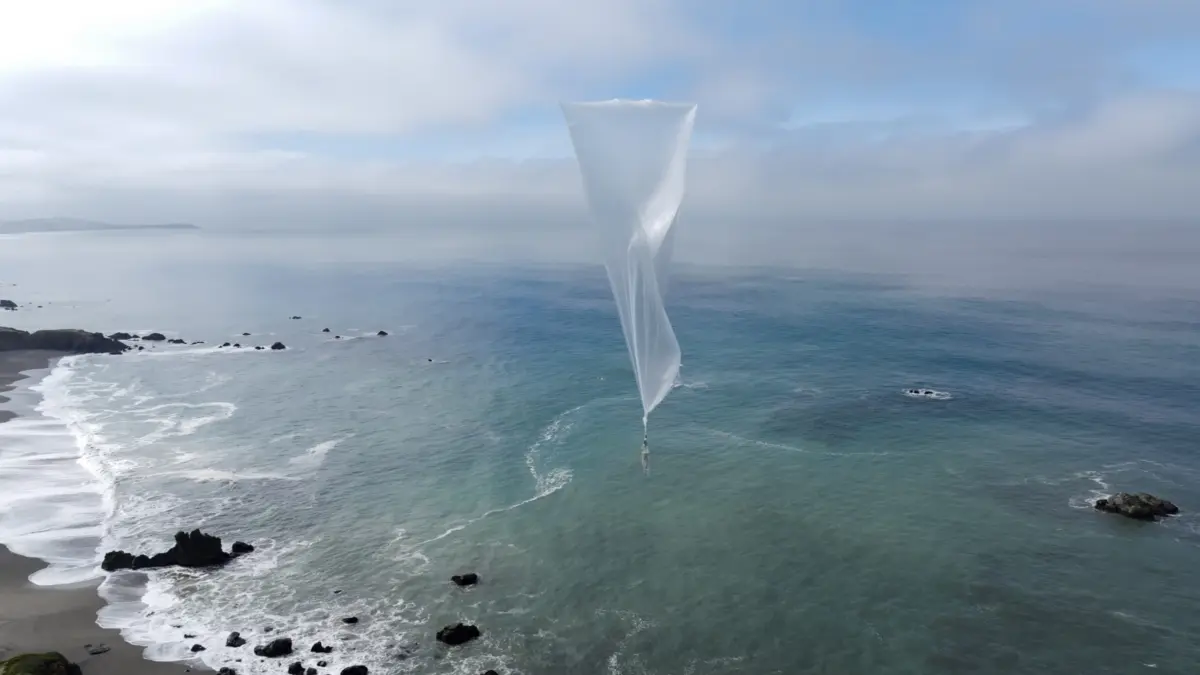
The U.S. Air Force has entered into a significant new contract with WindBorne Systems, a startup specializing in atmospheric data collection, with the potential to reach nearly $50 million. This agreement will see the Air Force procure data from WindBorne’s expansive global fleet of autonomous weather balloons, marking a substantial endorsement of the company’s innovative approach to meteorological intelligence.
WindBorne Systems, founded in 2015 and headquartered in Redwood City, California, currently operates a network of approximately 700 weather balloons that traverse the Earth’s atmosphere. These balloons are equipped with advanced sensors to gather critical atmospheric data. This empirical data is then leveraged in two primary ways: it is sold to a diverse range of customers, and it serves as the foundational input for WindBorne’s proprietary Artificial Intelligence (AI) powered weather forecasting model. This direct feeding of real-world, collected data into a deep-learning forecasting system positions WindBorne as a pioneer in the field.
The company has cultivated a strong working relationship with various branches of the U.S. government, including the National Weather Service, the U.S. Air Force, and the U.S. Navy. However, this new contract represents the largest single agreement WindBorne has secured to date. The full value of the contract is capped at $49 million, with the Air Force’s expenditure contingent on its actual data needs. This flexible structure allows the military branch to place orders for data specific to particular geographic regions and timeframes, ensuring efficient resource allocation. To date, the Air Force has already committed $1.7 million under this contract, with WindBorne executives anticipating further orders as operational requirements evolve.
Andrey Sushko, co-founder and Chief Technology Officer of WindBorne Systems, elaborated on the strategic significance of the contract. "This is largely a vehicle through which continued growth of the constellation can be supported, as well as some work on research and development to continue to improve the hardware and performance of the balloons," Sushko stated. He further emphasized the unique nature of the procurement, noting that the contract was awarded without competitive bidding. This decision, Sushko explained, stemmed from a government determination that WindBorne was the sole entity capable of providing the specific global data collection capability required for their operational needs.
The timing of this contract aligns with WindBorne’s recent strategic funding and technological advancements. In August, WindBorne CEO John Dean revealed to TechCrunch that the company had successfully raised $37 million in a Series B funding round. This capital infusion was earmarked for scaling its business operations and expanding its technological capabilities. Earlier in the summer, WindBorne unveiled the latest iteration of its forecasting model, WeatherMesh 6. The company claims that this new model surpasses the accuracy of traditional forecasting methods, including those employed by the European Centre for Medium-Range Weather Forecasts (ECMWF). The ECMWF model, a well-established benchmark, simulates atmospheric behavior based on fundamental laws of physics.
The field of AI-powered weather forecasting has witnessed a surge in innovation and efficacy in recent years, largely driven by advancements in transformer model architectures and the availability of massive weather datasets, such as those released by the ECMWF. Historically, meteorologists relied on computationally intensive supercomputers to run complex equations that approximated atmospheric dynamics. The advent of deep learning has revolutionized this process, enabling end-to-end learning models that can ingest decades of historical weather data and generate predictions with unprecedented speed and, increasingly, accuracy.
This new era of AI forecasting is yielding results that are beginning to rival, and in some cases exceed, traditional methods. Frontier research labs and government agencies are developing models that are proving to be more accurate, though the landscape remains dynamic. Both AI-driven and physics-based models are considered essential for a comprehensive understanding of weather patterns. Google DeepMind’s recent foray into AI weather forecasting, with models offering novel capabilities and advanced cyclone forecasting tools, is becoming increasingly integral to the U.S. government’s response strategies during hurricane season.
A key differentiator for WindBorne, and a testament to their advanced capabilities, was their achievement in August of becoming the first organization to successfully guide an unpowered flight system into the eye of a typhoon. This feat underscores the sophisticated navigation techniques employed by the company. WindBorne manipulates the altitude of its balloons, controls air release, or utilizes sand ballast to precisely steer these unpowered vehicles into specific atmospheric currents, directing them to their intended locations for data collection.
"That’s a pretty novel step, and the two ingredients for that are one, having good wind and weather models, and knowing how to navigate them; and two, having a large enough constellation that you have balloons in the right places," Sushko remarked, highlighting the symbiotic relationship between their AI models and their balloon fleet. He further noted the operational significance of this achievement, stating, "It’s one of the first times that a deep-learning model was used for actual operational decisions."
Background and Context: The Evolution of Weather Forecasting
The pursuit of accurate weather prediction has been a constant human endeavor, driven by the profound impact weather has on agriculture, transportation, disaster preparedness, and daily life. For centuries, meteorologists relied on direct observation and empirical data, gradually developing more sophisticated instruments and theoretical frameworks. The advent of radio and later satellites revolutionized data collection, providing a more comprehensive, albeit still limited, global view of atmospheric conditions.
The mid-20th century saw the dawn of numerical weather prediction (NWP). This approach utilizes complex mathematical models and powerful computers to simulate the atmosphere’s future state. NWP models are based on fundamental physical laws governing fluid dynamics, thermodynamics, and atmospheric chemistry. While incredibly powerful, these models are computationally expensive and require vast amounts of initial data to achieve reasonable accuracy. The resolution of these models, or the level of detail they can represent, has historically been a limiting factor, especially for predicting localized or rapidly evolving weather phenomena.
The rise of Artificial Intelligence, particularly deep learning, in the last decade has presented a paradigm shift. AI models, especially those based on neural networks, can learn complex patterns and relationships directly from vast datasets without explicit programming of physical laws. This "data-driven" approach has shown remarkable promise in weather forecasting. The availability of extensive historical weather data, coupled with advancements in AI algorithms like transformers, has enabled the development of models that can learn the intricate nuances of atmospheric behavior.
The ECMWF’s commitment to releasing large, high-quality weather datasets has been instrumental in fostering this AI revolution. By providing access to decades of meticulously recorded atmospheric information, the ECMWF has empowered researchers and companies like WindBorne to train AI models that can identify subtle correlations and predict future weather patterns with increasing fidelity.
WindBorne’s Technological Edge
WindBorne Systems distinguishes itself through its unique approach to data acquisition and its integration with AI forecasting. The company’s fleet of autonomous weather balloons offers several advantages over traditional methods:
- Global Coverage: The expansive constellation of balloons provides a more distributed and comprehensive dataset than fixed ground stations or even satellite coverage alone.
- In-Situ Data Collection: Balloons can collect precise atmospheric readings at various altitudes, offering a more detailed vertical profile of the atmosphere than remote sensing technologies might provide.
- Autonomous Navigation: The ability to maneuver balloons using atmospheric currents and controlled ballast release allows for targeted data collection in regions or at times of particular interest. This is crucial for capturing dynamic weather events.
- AI Integration: The direct feedback loop from collected data to the AI forecasting model allows for continuous learning and improvement. The model can adapt to real-world atmospheric conditions more rapidly than models that rely solely on periodic updates of observational data.
The recent success in navigating a balloon into the eye of a typhoon is a compelling demonstration of this integrated capability. Such an achievement requires not only a deep understanding of atmospheric dynamics but also the precise application of AI-driven navigation strategies. This operational capability directly addresses the Air Force’s need for high-resolution, real-time atmospheric intelligence for critical missions.
Broader Implications and Future Outlook
The U.S. Air Force’s significant investment in WindBorne Systems’ data collection capabilities signals a growing recognition within the defense sector of the strategic importance of advanced meteorological intelligence. Accurate and timely weather forecasts are crucial for a wide array of military operations, including aviation, drone deployment, maritime operations, and missile defense. The ability to predict weather with greater precision can enhance operational effectiveness, improve safety, and reduce mission risks.
This contract also has broader implications for the commercial sector. As AI-powered weather forecasting models become more accurate and accessible, they can benefit industries such as agriculture, renewable energy, insurance, and disaster management. The data collected by WindBorne’s constellation, enhanced by its AI capabilities, could lead to more reliable crop yield predictions, optimized energy grid management, and more effective early warning systems for natural disasters.
The continued development and deployment of large constellations of autonomous data collection platforms, combined with sophisticated AI analysis, suggest a future where weather forecasting is not only more accurate but also more granular and responsive to specific needs. This partnership between the U.S. Air Force and WindBorne Systems is a significant step in this direction, highlighting the transformative potential of combining innovative hardware with cutting-edge artificial intelligence for critical intelligence gathering and operational decision-making. The success of this collaboration could pave the way for similar initiatives across government agencies and commercial enterprises seeking to harness the power of advanced atmospheric data.