Sonny Valindra
San Francisco, CA – October 15, 2026 – TechCrunch Disrupt 2026 reached its crescendo today, marking the culmination of three intensive days of innovation, networking, and forward-looking discussions. Over 10,000 founders, investors, and technology leaders convened at San Francisco’s Moscone West, engaging with a rich program designed to illuminate the next frontiers of the tech industry. The final day, Day 3, was dedicated to practical insights, emerging trends, and the critical conversations shaping the future of startups and technology.
This year’s Disrupt, held from October 13th to 15th, 2026, underscored the transformative power of Artificial Intelligence, the evolving strategies for startup growth and fundraising, and the burgeoning landscape of emerging technologies. The event provided a critical platform for entrepreneurs to showcase their innovations, for investors to discover new opportunities, and for industry veterans to share hard-won wisdom. The overarching theme of the week revolved around navigating the complex and rapidly accelerating tech ecosystem, with a particular emphasis on how AI is fundamentally reshaping business models and market dynamics.
Day 3: A Deep Dive into Innovation and Strategy
The final day of TechCrunch Disrupt 2026 opened with registration and badge pickup from 8:00 a.m. to 3:30 p.m. in the Level 1 lobby of Moscone West. Attendees were equipped with event badges featuring Klik technology, designed to streamline contact exchange through simple badge scans, with all collected contact information accessible via the event app for post-conference follow-up.
The Expo Hall, also open from 8:00 a.m. to 3:30 p.m., remained a vibrant hub of activity. It hosted over 320 exhibiting startups, offering a panoramic view of cutting-edge technologies across diverse sectors. This expansive showcase served as the epicenter of Disrupt, fostering serendipitous encounters and providing a tangible demonstration of the innovation pipeline. The hall was a testament to the resilience and creativity of the startup ecosystem, with founders eager to demonstrate their solutions to a discerning audience of potential partners, investors, and customers.
A key feature within the Expo Hall was the Pitch Showcase Stage, located at the rear. This platform provided a dynamic setting for one-minute lightning pitches from promising startups representing various countries and regions. The rapid-fire format highlighted the essence of innovation under pressure, offering a glimpse into the potential of these emerging ventures. Two specific sessions on this stage focused on "Startup Battlefield 200 Fast Pitches – Health" and "Startup Battlefield 200 Fast Pitches – Consumer," demonstrating the breadth of innovation being presented.

On-Stage Programming: Keynote Discussions and Expert Panels
The main stages buzzed with activity throughout the day, featuring a curated selection of panels and keynotes designed to provide actionable advice and strategic foresight. The full Disrupt agenda offered a comprehensive overview of all sessions.
Builders Stage: Navigating the Entrepreneurial Journey
The Builders Stage offered practical guidance for founders at various stages of their careers. A candid session titled "Yes, It’s Hard to Be a Founder: An Honest Conversation" featured Nell Daly (Revenge Capital), David H. Rosmarin (Harvard Medical School), and Jack Withinshaw (Airspeeder), who shared their experiences and the realities of startup life.
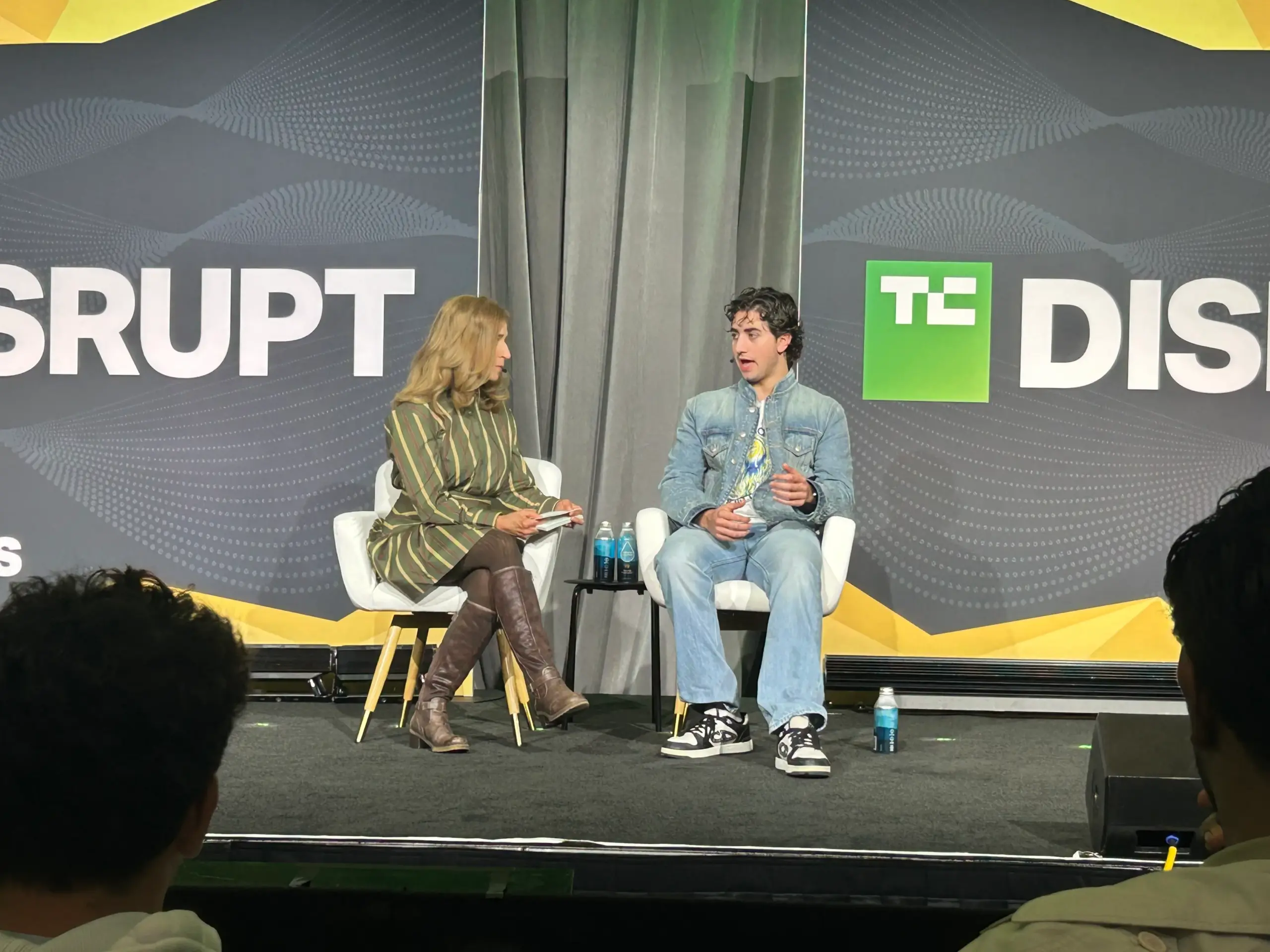
Discussions on financial strategies included "M&A Is Now an Early-Stage Strategy," with insights from Karl Alomar (M13), Lindsey Mignano (Mignano Law Group), and Ryan Yi (Onchain Group), highlighting the increasing trend of mergers and acquisitions as a viable exit or growth strategy even for nascent companies. Zach Yadegari of Cal AI delved into growth hacking with "How to Create Viral Growth and Capitalize On It," offering frameworks for scalable user acquisition.
The critical early stages of startup development were addressed in "The First 90 Days: How Startups Build Toward $10M ARR," featuring Luke Arno (Lovable), Ben Broca (Polsia), and Tomasz Tunguz (Theory Ventures). A crucial session for aspiring entrepreneurs, "Winning Pre-Seed Without a Product," saw Puneet Agarwal (True Ventures), Austin Clements (Slauson & Co.), and Sandhya Venkatachalam (Axiom Partners) dissecting strategies for securing early funding based on team and vision. The burgeoning field of AI was spotlighted in "Building AI Startups Worth Betting On," with Nader Khalil and Sydney Sykes from NVIDIA offering guidance. Rounding out the stage’s focus on investor relations, "Ask the Investors" provided a direct line to prominent figures like Karl Alomar (M13), Stacy Brown-Philpot (Cherryrock Capital), and Dayna Grayson (Construct Capital).
Disrupt Stage: Visionary Insights and Future Gazing
The Disrupt Stage served as a platform for high-level discussions on the future of technology and its societal impact. Panos Panay of Amazon kicked off a thought-provoking session on "What Comes After the Smartphone?" exploring potential paradigm shifts in personal computing and communication devices.
The evolving landscape of social media was debated in "Can Social Start Over?" with Toni Schneider and Rose Wang from Bluesky Social discussing the challenges and opportunities in building next-generation social platforms. Dr. Nabiha Saklayen of Cellino addressed the intersection of biology and technology in "Can You Bank Your Biology?" likely exploring advancements in biotech and its commercialization potential.

A post-Startup Battlefield analysis, "After Startup Battlefield: What Happens Next?" brought together former competitors Piotr Byrski (Molecule.one), Kevin Damoa (GlÄ«d), and Demetri Maxim (Nephrogen) to discuss their journeys and the post-competition phase. The highly anticipated "Startup Battlefield Final" commenced, where a panel of esteemed investors, including Karl Alomar (M13), Stacy Brown-Philpot (Cherryrock Capital), Chi-Hua Chien (Goodwater Capital), Dayna Grayson (Construct Capital), and Alexa von Tobel (Inspired Capital), evaluated the finalists. Amjad Masad of Replit addressed the democratization of software development in "Everyone Can Build Software Now. What Happens Next?" envisioning the implications of widespread coding accessibility. The session "Beyond the Check: The Power of Access" featured Bruce Lee (Keebeck Wealth Management) and Mark Wahlberg (MUNICIPAL), highlighting the value of strategic partnerships and mentorship beyond financial investment. The day’s programming culminated with the exciting announcement of the Startup Battlefield 2026 winner.
Breakout Stage: Practical Applications and Growth Strategies
The Breakout Stage focused on actionable strategies and emerging trends with direct applicability for startups. Dr. Marily Nika of the AI Product Academy led a session on "Build an AI Product in the Age of Agents (Certification Included)," providing hands-on learning for developing AI-powered products. Patrick Burke from Hostinger shared insights on scaling in the AI era with "Building a Growth Engine in the AI Era: Lessons from a Bootstrapped Unicorn."
The practical challenges of AI implementation were explored in "Physical AI Isn’t a Model Problem. It’s an Execution Problem.," featuring Ethan Batraski (Venrock), Ivan Poupyrev (Archetype AI), and Ian Rountree (Cantos). Nomi Khedawala from Reddit discussed team dynamics in "Talent as the Operating System: How High-Performance Teams Scale in the AI Era," emphasizing the importance of human capital in fast-growing tech companies.
Industry Stage – AI: Deep Dives into the AI Revolution
The Industry Stage dedicated to AI provided in-depth discussions on the most pressing issues and opportunities within this transformative sector. "The Agent Security Problem Nobody Is Talking About" featured Gavriel Cohen (NanoCo) and Ric Smith (Okta), addressing overlooked security vulnerabilities in AI agents. Cathy Gao (Sapphire Ventures), Aaron Jacobson (NEA), and Barr Moses (Monte Carlo) tackled the disruption of traditional business models in "Rewriting SaaS: Why AI Breaks the Old Business Model."
Irene Solaiman of Hugging Face offered critical insights into AI validation in "Before You Let AI Do the Job, How Do You Know It Actually Can." The session "The $63 Billion Case for Storagemaxxing Your AI Stack" brought together Kevin Cochrane (Vultr), Jake Lee (L2 Point Management), Pinaki Mukherjee (Wasabi Technologies), and Stephanie Walter (HyperFRAME Research) to discuss the crucial role of data infrastructure in AI. Alexander Embiricos from OpenAI explored future AI interfaces in "What Comes After the Chatbot."
The emergence of new roles in the AI era was examined by Kareem Amin (Clay) in "The GTM Engineer: How AI Created Tech’s Next Big Job Category." Amin also participated in "Model Behavior: How Top Startups Get Real Value From AI Adoption," alongside David Hershey (Anthropic) and Grant Lee (Gamma). The complexities of AI agent interactions were further explored in "Proxy, Host, Operator: Who Can Read Your Agent’s Prompts?" with Richard Rizk (BLACKBOX AI). Cybersecurity in the age of AI was a key theme in "Securing the AI Enterprise: Why the Cloud Just Got a Lot More Complicated," featuring Rudy Mitra (Amazon Web Services), Katie Moussouris (Luta Security), and Wendy Nather. Arsalan Tavakoli-Shiraji of Databricks challenged conventional wisdom in "The Enterprise Isn’t Broken. Your Assumptions About It Are."
Roundtables: Focused Discussions and Networking
The Roundtable sessions provided intimate settings for targeted discussions and peer-to-peer learning. Topics ranged from the impact of AI on established industries to the intricacies of co-founder relationships. James Joaquin (Obvious Ventures) led "I Built Before the Internet. AI Is Different.," offering historical perspective on technological shifts. Naren Krishna (Balerion) and Travis Skelly (Pruven Capital) debated the viability of AI-native solutions for enterprises in "AI-Native Won’t Work for the Enterprise."

"Sandboxes are Dead, Give Your Agent a Private Cloud" by Praveen Akkiraju (Insight Partners) and Vasek Mlejnsky (E2B) addressed the infrastructure needs of advanced AI agents. Berkeley’s entrepreneurial ecosystem was highlighted by Maryanne Alhallak (Lumeria), Anthea Guo (Lumeria), and Keith McAleer (UC Berkeley SCET) in "Berkeley Connect: Experience the World’s #1 Startup Ecosystem."
Discussions on the future of logistics and autonomous systems featured "The Next Logistics Stack: Autonomy, Infrastructure and National Resilience" with Kofi Asante (Bluecore Energy) and Kevin Damoa (Glīd). Parul Singh of 645 Ventures focused on investment trends in "Autonomous Intelligence: Investing in the Companies Redefining Work." The intersection of AI infrastructure, power, and sustainability was explored in "AI Infrastructure & Power & Decarbonization in Dialogue: Investor + CVC Perspective," with Jane Ge (Vectors Capital) and Elias Habbar-Baylac (Cisco).
Interpersonal dynamics were addressed in "How Not to Ruin Your Co-Founder Relationship" by Dr. Jessica Gold (Bliss Science) and Tevye Krynski (Digital Wisdom). Finally, the engineering challenges of AI were tackled in "From Silicon to Software: Building Efficient AI Inference at Scale" with Anush Elangovan (AMD) and Junchen Jiang (Tensormesh).
A Last Chance to Engage with Tech’s Forefront
As TechCrunch Disrupt 2026 drew to a close, organizers emphasized that there was still an opportunity for interested parties to secure passes. Tickets were available at a significant discount of 75% off the original price, a move aimed at maximizing participation on the final day and ensuring that those who hadn’t yet experienced the event could still benefit. This final push underscored the organizers’ commitment to fostering a broad and inclusive community of tech innovators. The urgency to secure tickets highlighted the value proposition of Disrupt as a critical nexus for networking, learning, and deal-making in the fast-paced technology sector.
The event’s success in drawing over 10,000 attendees reflects its standing as a premier global technology conference. The focus on AI, coupled with robust discussions on startup growth, fundraising, and emerging technologies, positions Disrupt 2026 as a pivotal moment for understanding the trajectory of the tech industry. The insights shared and connections forged throughout the week are expected to ripple through the startup ecosystem, influencing the development and adoption of new technologies in the coming years. The continued emphasis on practical advice and forward-looking vision ensures that TechCrunch Disrupt remains an indispensable event for anyone involved in the world of technology and entrepreneurship.