George Chandra Eka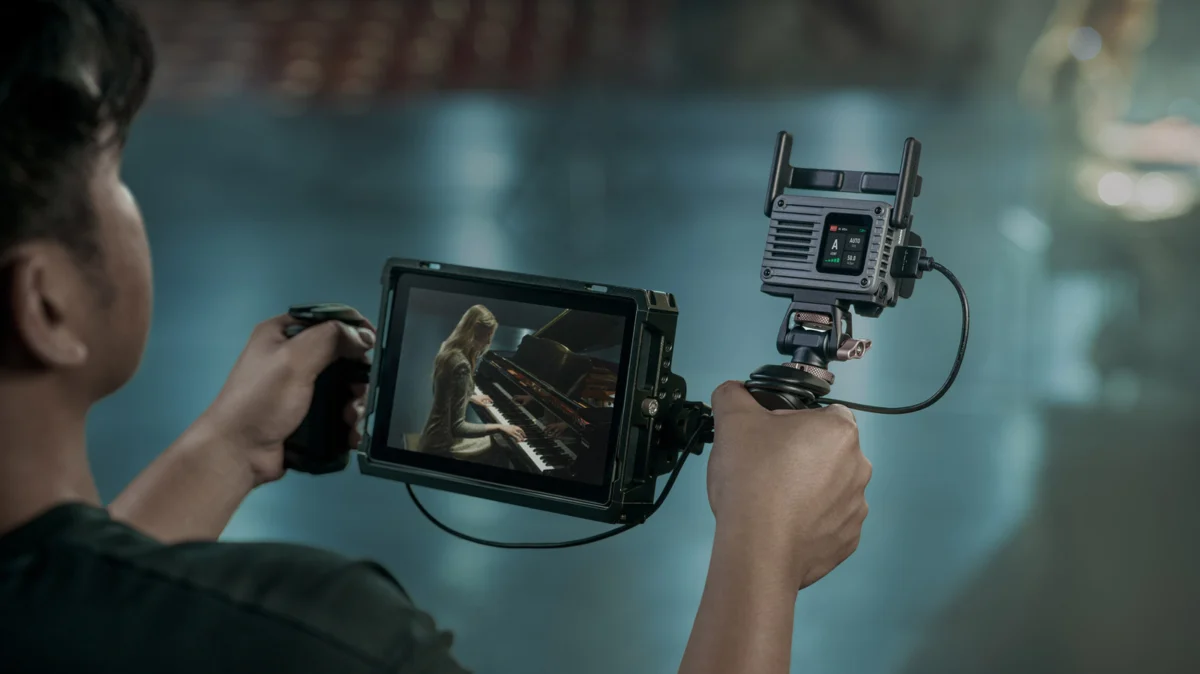
DJI, the Shenzhen-based global leader in drone and camera stabilization technology, has significantly elevated its commitment to professional video production with the launch of its new SDR Transmission II system. This groundbreaking wireless video transmission solution promises to redefine multi-camera shoots by offering unparalleled image quality, extended range, and robust control capabilities. Building upon DJI’s already formidable reputation in wireless video, the SDR Transmission II system is poised to become an indispensable tool for filmmakers, broadcasters, and event producers operating in the most demanding environments. The system’s ability to beam pristine 4K 60 frames per second (fps) High Dynamic Range (HDR) video over distances up to 2.5 miles (4 kilometers) marks a substantial leap forward, addressing critical needs in professional workflows where reliability and performance are paramount.
A New Benchmark in Wireless Video Transmission
The core innovation of the SDR Transmission II lies in its dramatic enhancement of both video quality and transmission range compared to its predecessor. The original SDR Transmission system, while capable, was limited to 1080p video at a 20Mbps bitrate and a maximum range of 1.8 miles (3 km). The new iteration, powered by advanced software-defined radio (SDR) technology, shatters these limitations. In its transmit (TX) mode, the SDR Transmission II can now send stunning 4K 60 fps HDR video at a robust 50Mbps bitrate. This significant increase in resolution, frame rate, and data throughput ensures that professional productions can capture and monitor footage with exceptional detail, color accuracy, and fluid motion, crucial for modern content creation.
The extended range of 2.5 miles (4 km) is equally transformative. This enhanced capability allows production teams to maintain a reliable video link across vast open spaces, such as sports stadiums or sprawling outdoor event venues, and through challenging natural landscapes, including dense mountain forests. Furthermore, it enables highly dynamic and complex shots, such as high-speed car-to-car tracking sequences or intricate FPV (First Person View) drone work, without compromising signal integrity or video quality. DJI explicitly stated that with this system, "a reliable link can be established in various environments from open stadiums to dense mountain forests, and through demanding car-to-car shots or challenging FPV drone work." This testament underscores the system’s versatility and resilience in diverse operational contexts, providing filmmakers and broadcasters with unprecedented freedom in camera placement and movement.
The Evolution of DJI’s Wireless Prowess
DJI’s success over the past decade has been built not only on innovative drone and gimbal hardware but also on its proprietary wireless transmission technologies. Systems like OcuSync, primarily developed for its consumer and professional drone lines, have consistently set industry benchmarks for range, low latency, and signal stability. This foundational expertise has now been meticulously refined and scaled for the demanding requirements of high-end cinematic and broadcast production with the SDR Transmission II.
The "SDR" in its name signifies Software Defined Radio, a technology that allows a radio system’s characteristics to be altered and controlled through software, rather than being fixed by hardware. This adaptability is critical for robust wireless transmission in unpredictable environments. SDR systems can dynamically adjust frequencies, modulation schemes, and other parameters to optimize signal strength and minimize interference, ensuring a stable and high-quality link even in congested radio frequency (RF) landscapes. This inherent flexibility contributes directly to the system’s extended range and its ability to maintain connection in challenging conditions where traditional fixed-frequency systems might struggle. The transition from earlier generations to the SDR Transmission II represents a mature application of this advanced radio technology, tailor-made for the intricacies of professional video production.
Unlocking New Production Paradigms
The implications of the SDR Transmission II for various production sectors are profound. In sports broadcasting, the ability to transmit 4K 60 fps HDR video over long distances with minimal latency opens doors for more dynamic camera positions. Imagine sweeping drone shots following athletes across an entire field, or remote cameras positioned in hard-to-reach areas, all feeding high-quality video back to the control room in real-time. Directors can monitor multiple angles simultaneously, ensuring comprehensive coverage of fast-paced action without signal drops or image degradation. The HDR capability ensures that the vibrant colors and nuanced lighting of sporting events are captured with stunning fidelity, ready for live broadcast or post-production.
For feature film and television production, the system provides unparalleled flexibility on set. Complex tracking shots involving vehicles or specialized camera rigs can benefit immensely from the extended range and robust signal. Camera operators and focus pullers can work further from the main recording unit, accessing critical camera controls and monitoring feeds with precision. The low latency of 35 milliseconds is particularly vital for focus pulling and gimbal movement, where even a slight delay can result in missed shots or blurry footage. This responsiveness ensures that remote control inputs translate almost instantaneously to camera adjustments, mirroring the feel of direct, wired control.
Event coverage, from large-scale concerts to corporate conferences, also stands to gain. Multi-camera setups can be deployed across expansive venues, allowing for comprehensive coverage from diverse perspectives. The system’s ability to handle multiple transmitters and receivers simultaneously streamlines complex productions, reducing the need for extensive cabling and providing greater freedom in staging and logistics.
Enhanced Workflow Efficiency and Control
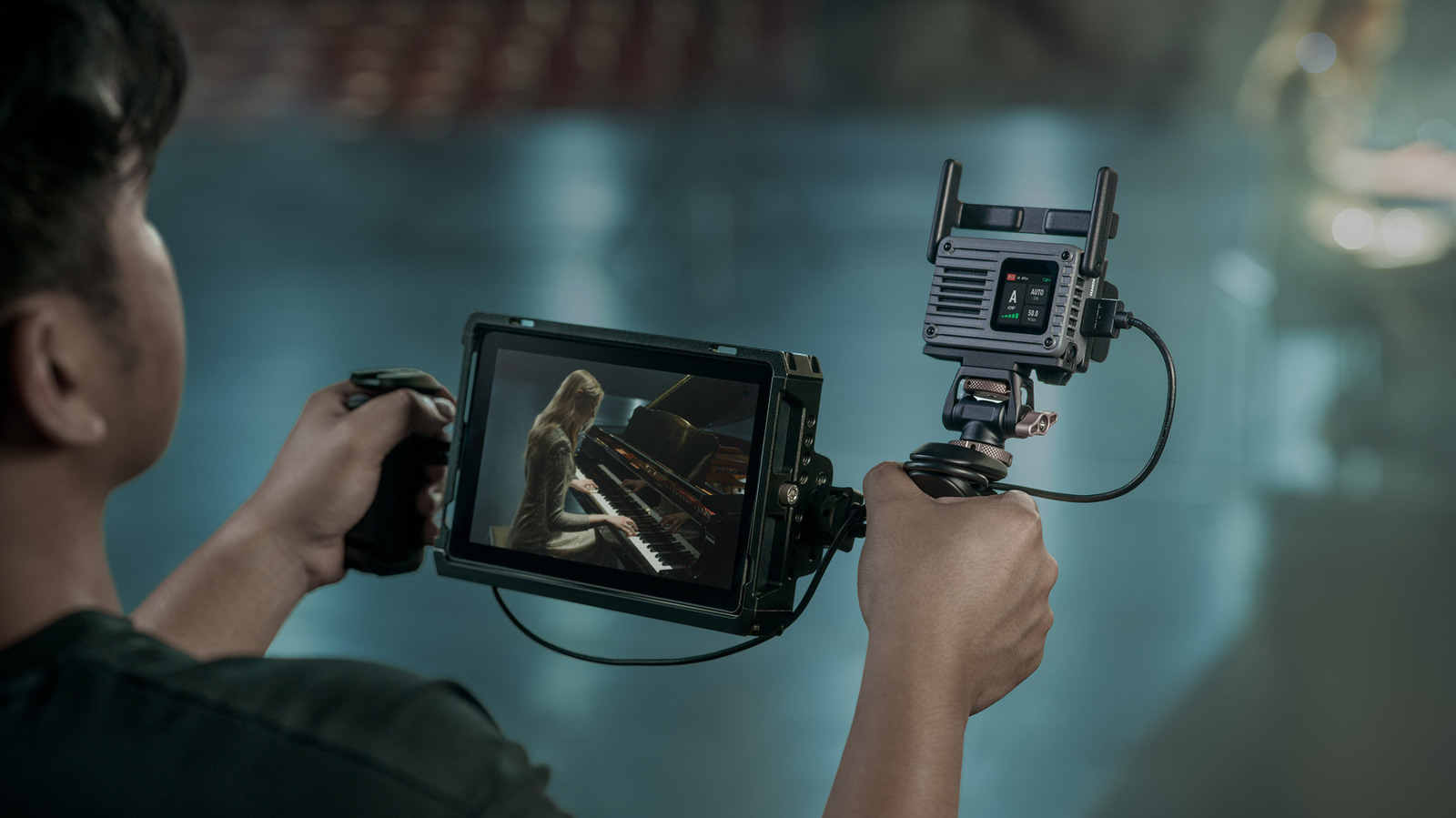
Beyond raw performance, the SDR Transmission II introduces features designed to significantly enhance on-set workflow efficiency. A single transceiver (in RX mode) can connect to up to eight others, facilitating multi-person monitoring. This means directors, producers, DPs, and various set personnel can all receive real-time video feeds simultaneously, ensuring everyone is on the same page. More critically, the system empowers camera operators and focus pullers to remotely adjust camera settings and control the camera itself. This includes critical parameters like capture start/stop, aperture, shutter speed, and ISO on compatible cameras, thanks to its support for PTP (Picture Transfer Protocol) control. This remote control capability minimizes physical interaction with the camera during takes, reducing the risk of disturbing a shot and allowing for quick, precise adjustments from a central monitoring station.
For larger productions, the system scales impressively, supporting up to five transmitters (TX units) and 40 receivers (RX units) working concurrently. This extensive scalability is a game-changer for complex multi-camera shoots, enabling seamless integration of numerous camera angles and monitoring stations across a large production footprint. A particularly innovative feature is the ability to tap to switch between camera feeds without the typical rebooting, disconnecting, and searching processes that often plague other wireless systems. This instant switching capability saves precious time on set, allowing production teams to rapidly cycle through different camera perspectives and react dynamically to unfolding action.
Furthermore, the SDR Transmission II integrates a suite of professional assist tools directly into its monitoring capabilities. These include support for Look-Up Tables (LUTs), which allow for real-time color grading previews; focus peaking, to ensure sharp focus; and waveforms, for precise exposure analysis. These tools, traditionally found on dedicated external monitors, are now seamlessly integrated, providing comprehensive on-set monitoring solutions that rival high-end dedicated equipment. Smartphone monitoring is also supported, offering a convenient, portable solution for quick checks or secondary monitoring roles.
Market Positioning and Competitive Edge
DJI’s foray into high-end professional wireless video transmission with the SDR Transmission II solidifies its position as a holistic solution provider for content creators. While companies like Teradek, Vaxis, and Hollyland have established themselves in the professional wireless video market, DJI’s unique blend of drone and gimbal technology, coupled with its robust transmission expertise, offers a compelling integrated ecosystem. The claim that "rivals can’t match" DJI’s wireless video quality and range, while bold, is frequently substantiated by the real-world performance of its OcuSync systems. The SDR Transmission II extends this advantage directly into the realm of professional cinema and broadcast, offering a competitive edge through superior technical specifications and integrated workflow features.
The strategic move to provide a dedicated, high-performance transmission system separate from its drones also indicates DJI’s ambition to cater to a broader professional market, including those who may use cameras from other manufacturers. By offering PTP control and universal assist tools, DJI is positioning the SDR Transmission II as a versatile tool compatible with a wide array of professional cameras, not just its own.
Pricing, Availability, and Regulatory Hurdles
The DJI SDR Transmission II transceivers are priced competitively, starting at €349 or £309 for a single unit. A Combo two-pack is available for €629 or £559, providing a cost-effective solution for productions requiring both a transmitter and receiver, or two receivers for expanded monitoring. These price points place the system within reach for many independent filmmakers and smaller production houses, while also offering scalable solutions for larger organizations.
However, a notable aspect of the product launch is the absence of US availability at the time of the announcement. DJI has faced significant regulatory scrutiny and trade restrictions in the United States, stemming from broader geopolitical tensions and concerns over data security and national security. The US government has placed certain DJI products on restricted lists, limiting their import and sale. This ongoing situation has impacted DJI’s ability to introduce new products into the American market seamlessly. The lack of US availability for the SDR Transmission II is likely a direct consequence of these prevailing trade policies and regulatory hurdles, representing a significant challenge for DJI in one of the world’s largest and most lucrative professional video markets. This geopolitical backdrop adds a layer of complexity to the product’s global rollout and adoption, despite its technical merits.
Future Implications for DJI Ecosystem and Industry
The technology underpinning the SDR Transmission II system, particularly its advanced SDR and OcuSync-derived foundations, points towards exciting future developments within DJI’s broader ecosystem. The article itself raises a pertinent question: "It would be nice if DJI boosted OcuSync transmission to 4K 60p as well, as that would provide a better backup in case of on-board drone memory problems." This highlights the potential for this high-bandwidth, low-latency transmission capability to trickle down or integrate more deeply into future generations of DJI’s consumer and prosumer drones. Imagine Mavic or Inspire series drones offering live 4K 60p feeds, not just for monitoring but as a robust backup recording solution or for live streaming applications. Such advancements would further blur the lines between professional and prosumer equipment, making high-end capabilities more accessible.
Moreover, the success of the SDR Transmission II could spur further innovation in wireless video transmission across the industry. As demand for 4K and 8K content grows, and production environments become more dynamic, reliable and high-performance wireless links will become increasingly critical. DJI’s push in this area could encourage competitors to accelerate their own research and development, ultimately benefiting the entire professional content creation community with more robust, versatile, and affordable transmission solutions. The trend towards integrated ecosystems, where cameras, gimbals, drones, and transmission systems work seamlessly together, is also likely to intensify, with DJI positioned to lead this charge given its diverse product portfolio.
In conclusion, the DJI SDR Transmission II system is more than just an incremental upgrade; it represents a significant technological leap that addresses some of the most pressing challenges in modern professional video production. Its ability to deliver pristine 4K 60 fps HDR video over extended ranges with minimal latency, coupled with advanced control features and multi-operator support, empowers creators to push the boundaries of visual storytelling. While regulatory challenges may temporarily restrict its reach in certain markets, the SDR Transmission II stands as a testament to DJI’s continued innovation and its commitment to shaping the future of professional filmmaking and broadcasting.