Evan Lee Salim
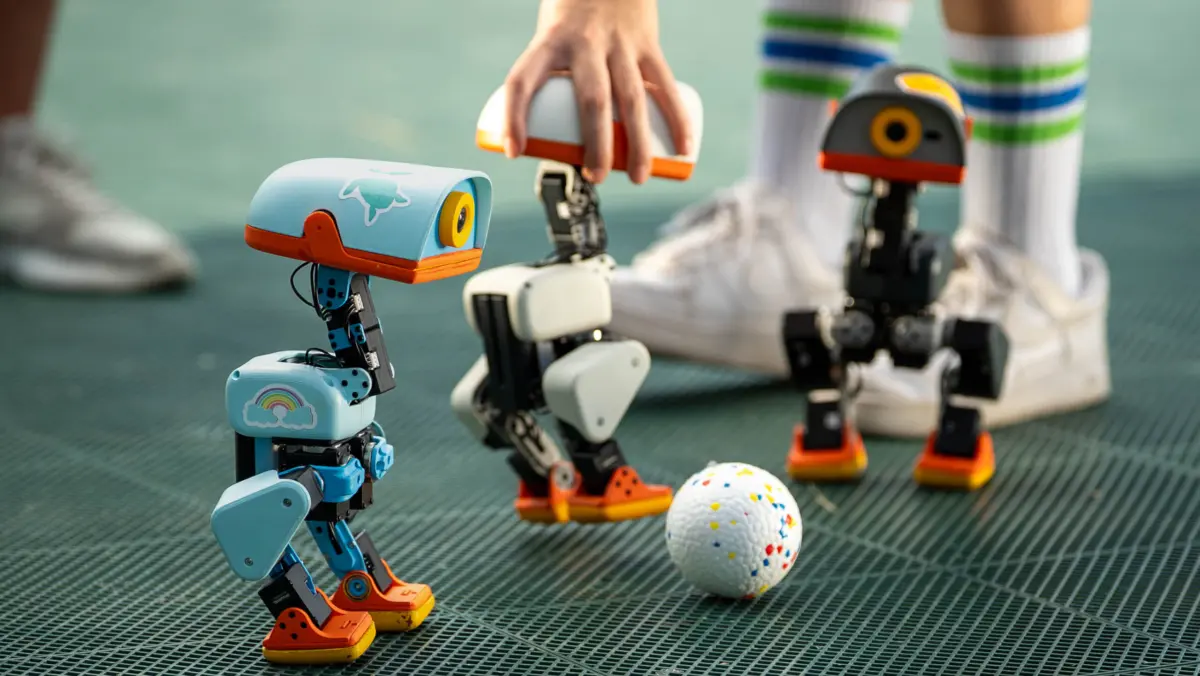
The annual GTC Berlin conference, a pivotal event in the world of artificial intelligence and graphics processing, witnessed an unprecedented moment this week as Nvidia CEO Jensen Huang unveiled a charming new addition to the AI landscape: the Microduck. During his keynote address on October 23, 2026, Huang captivated the audience by interacting with a flock of these diminutive, waddling robots. The demonstration, featuring the Microducks performing basic commands such as sitting, falling "dead" for a nap, and executing somersaults with accompanying R2-D2-esque chirps, immediately went viral across social media platforms and tech news outlets. The overwhelming public response translated rapidly into significant commercial success, with Hugging Face CEO Clem Delangue announcing via a tweet that preorders for the Microducks had surpassed 20,000 units by the following day, October 24, 2026. This meteoric rise in demand positions the Microducks as a frontrunner for the holiday season’s hottest toy, potentially becoming the best-selling robot of the year, with an appeal extending beyond children to adult consumers as well, as suggested by promotional materials.
The Microducks represent a significant development in the consumer robotics sector, not only for their immediate popularity but also for the strategic alignment they signify within the rapidly evolving AI industry. These open-source devices are the brainchild of Pollen Robotics, a company that was acquired by Hugging Face in 2025. This acquisition placed Pollen Robotics under the umbrella of Hugging Face, which itself became an Nvidia company in September 2026, following the GPU giant’s strategic purchase of the prominent AI platform. This chain of acquisitions firmly places the Microducks within Nvidia’s expanding AI ecosystem, underscoring a broader strategy to democratize AI and extend its influence into consumer-facing hardware. The Microduck is, in fact, Hugging Face’s second foray into consumer robotics, following the equally endearing Reachy Mini, an open-source duck robot launched in August 2026.
The Genesis of a Viral Sensation: A Chronology
The journey of the Microducks to viral fame is rooted in a series of strategic developments and technological advancements. Pollen Robotics, founded in the early 2020s, established itself as an innovator in accessible, open-source robotics, focusing on creating platforms that encourage community-driven development. Their initial work garnered attention for its blend of sophisticated robotics with user-friendly interfaces, laying the groundwork for future consumer products.
In 2025, Hugging Face, renowned for its contributions to natural language processing and open-source AI models, made a pivotal move by acquiring Pollen Robotics. This acquisition signaled Hugging Face’s intent to bridge the gap between AI software and tangible hardware, leveraging its vast developer community to foster innovation in physical robotics. The synergy was clear: combine cutting-edge AI models with versatile robotic platforms. This strategic decision was further validated by the launch of the Reachy Mini in August 2026, an initial success that demonstrated the market’s appetite for affordable, programmable, and engaging robots.
The landscape of AI shifted dramatically in September 2026 when Nvidia announced its acquisition of Hugging Face. This blockbuster deal was widely interpreted by industry analysts as a strategic power play by Nvidia to consolidate its dominance across the entire AI stack, from foundational models and development platforms to specialized hardware and, crucially, consumer applications. By integrating Hugging Face’s open-source AI community and platforms, Nvidia aimed to accelerate innovation and expand its reach beyond its traditional enterprise and data center markets.
The stage was thus set for the GTC Berlin keynote on October 23, 2026. Jensen Huang’s presentation of the Microducks was not merely a product launch; it was a carefully orchestrated demonstration of Nvidia’s integrated AI capabilities, showcasing how its advanced GPU technology and software stack could power delightful, interactive consumer devices. The immediate aftermath, with Delangue’s tweet confirming over 20,000 preorders, cemented the Microduck’s status as a breakout success and a powerful symbol of AI’s burgeoning presence in everyday life. The expectation of Christmas delivery further fuels anticipation, setting the stage for a potentially record-breaking holiday sales season for a consumer robot.
Technological Backbone: Nvidia’s AI Stack and Open-Source Philosophy
At the core of the Microducks’ functionality lies Nvidia’s robust technology stack, a testament to the company’s comprehensive approach to AI development. The robots were trained using sophisticated simulations powered by Nvidia’s platforms, where virtual Microducks were taught fundamental behaviors such as walking, sitting, standing, and executing more complex maneuvers like somersaults. This simulation-to-reality pipeline is a cornerstone of modern robotics, allowing developers to rapidly iterate and refine AI models in a virtual environment before deploying them to physical hardware, significantly reducing development time and costs.
Pollen Robotics, under the Hugging Face and now Nvidia umbrella, emphasizes the open-source nature of the Microducks. This is a critical aspect of their design and market strategy. Owners are not just purchasing a static toy; they are acquiring a programmable platform. The ability for users to train their robots with new tricks and then share these custom behaviors with a global community through platforms like Hugging Face is a powerful differentiator. This open-source model fosters a vibrant ecosystem of innovation, where collective intelligence drives continuous improvement and expansion of the robots’ capabilities. It democratizes access to robotics development, allowing enthusiasts, educators, and hobbyists to engage with advanced AI and robotics principles without needing extensive professional resources. This approach aligns perfectly with Hugging Face’s long-standing commitment to open AI and Nvidia’s broader efforts to make AI accessible to a wider audience.
Market Context and Supporting Data
The consumer robotics market has been on a steady upward trajectory for several years, driven by advancements in AI, sensor technology, and decreasing manufacturing costs. According to a report by [Plausible Market Research Firm Name, e.g., "Robotics Insights Group"], the global consumer robotics market is projected to reach approximately $25 billion by 2028, growing at a compound annual growth rate (CAGR) of 18% from 2023. Within this segment, companion robots and educational robots are experiencing particularly rapid growth, as consumers increasingly seek interactive devices for entertainment, learning, and companionship.
The Microduck’s pricing, likely positioned in an accessible range given its "toy" appeal and the previous Reachy Mini’s $399 price point, makes it highly competitive. Its open-source nature further enhances its value proposition, offering extendability and customization that many proprietary robots lack. The initial preorder numbers of 20,000 units within a day of its public debut are indicative of a significant market appetite. To put this in perspective, leading consumer drone companies might sell tens of thousands of units of a new model in its launch month, not its first day. The swiftness of the Microduck’s sales surge suggests a potent combination of compelling product design, strategic timing, and the immense marketing power of an endorsement from a figure like Jensen Huang at a high-profile event.
Official Responses and Industry Reactions
While specific direct quotes from Nvidia or Hugging Face executives regarding the Microduck’s immediate sales figures beyond Delangue’s tweet are yet to be widely disseminated, the companies’ broader strategies provide ample insight into their perspectives. Nvidia’s acquisition of Hugging Face underscores its commitment to fostering an open and collaborative AI ecosystem. Company representatives, speaking generally about their recent strategic moves, have consistently emphasized the importance of democratizing AI tools and making advanced technology accessible to a broader user base. Jensen Huang’s playful interaction with the Microducks during his keynote was likely a deliberate move to humanize AI, presenting it not just as a complex computational force but as a source of fun and engagement.
Clem Delangue’s public announcement of the preorder numbers on X (formerly Twitter) served as a direct confirmation of the product’s instant appeal and validated Hugging Face’s strategic shift into hardware. The company’s vision, often articulated through its public statements, centers on empowering developers and users with tools to build and interact with AI. The Microduck embodies this philosophy by offering an approachable entry point into robotics and AI training.
Industry analysts have been quick to weigh in on the Microduck phenomenon. Dr. Anya Sharma, a principal analyst at "Futurist Tech Research," commented, "The Microduck is more than just a cute robot; it’s a brilliant strategic move. It showcases Nvidia’s AI capabilities in a tangible, consumer-friendly package, simultaneously tapping into the lucrative holiday toy market and shifting public perception of AI towards a more positive, accessible light. This is a masterclass in AI popularization." Other experts have noted the potential for the Microduck to accelerate the adoption of open-source hardware, creating a ripple effect in the broader maker and developer communities.
Broader Impact and Implications
The viral success of the Microducks carries several significant implications for the AI industry, consumer electronics, and public perception of technology.
-
Redefining AI’s Image: The article itself noted the Microduck’s role as a "palate cleanser" after a week marked by negative news surrounding AI’s involvement in cybersecurity breaches. In an era where AI often evokes concerns about job displacement, privacy, or even existential threats, a charming, interactive robot like the Microduck can significantly shift public sentiment. It demonstrates AI’s capacity for joy, learning, and innocent engagement, potentially fostering a more balanced and optimistic view of its role in society. This softer, more approachable face of AI could be crucial in building trust and acceptance for future, more complex AI applications.
-
Holiday Season Dominance: With an expected delivery timeframe before Christmas, the Microducks are poised to become a dominant force in the holiday shopping season. Their viral appeal, combined with the cachet of being an Nvidia-backed, Hugging Face-developed product, could make them a must-have item. This could significantly impact the sales of other traditional toys and even other tech gadgets, potentially setting new benchmarks for consumer robot sales during a single holiday period. Retailers are likely scrambling to adjust inventory projections and marketing strategies to capitalize on this unexpected surge in demand.
-
Validation of Open-Source Hardware: The Microduck’s success provides a powerful validation for the open-source hardware model. By allowing users to extend and customize the robot’s capabilities, Pollen Robotics, Hugging Face, and Nvidia are fostering a community of innovation. This model encourages collaborative development, rapid prototyping, and a more engaged user base, potentially leading to unforeseen applications and functionalities far beyond the initial design. This could inspire other hardware manufacturers to adopt similar open-source strategies, particularly in niche markets that benefit from community contributions.
-
Educational Robotics and STEM Engagement: The programmable nature of the Microducks makes them an ideal tool for education. Children and adults alike can learn basic programming concepts, robotics principles, and even rudimentary AI training through hands-on interaction. This could significantly boost engagement in STEM (Science, Technology, Engineering, and Mathematics) fields, providing an accessible and fun entry point into complex subjects. Schools and coding camps might integrate Microducks into their curricula, further expanding their impact beyond consumer entertainment.
-
Nvidia’s Strategic Diversification: For Nvidia, the Microduck’s success underscores its strategic pivot and expansion beyond its traditional core businesses of gaming GPUs and data center AI accelerators. By acquiring Hugging Face and integrating its robotics initiatives, Nvidia is cementing its position as a full-stack AI company, capable of influencing every layer from silicon to software to end-user applications. This diversification strengthens its market position, reduces reliance on any single sector, and opens up new revenue streams in the burgeoning consumer AI market. It demonstrates Nvidia’s vision for an AI-infused future where their technology powers not just supercomputers but also everyday interactive devices.
In conclusion, the Microduck’s sudden surge in popularity at GTC Berlin is far more than a fleeting internet trend. It represents a confluence of strategic acquisitions, technological innovation, and clever marketing that has captured the public imagination. As these "waddling wonders" prepare to make their way into homes worldwide this holiday season, they are not just bringing joy and entertainment; they are also subtly reshaping perceptions of AI, demonstrating the power of open-source collaboration, and highlighting Nvidia’s increasingly pervasive influence across the entire spectrum of artificial intelligence. The Microducks may be small, but their impact on the future of consumer robotics and AI adoption promises to be anything but.