Sisilia Frederika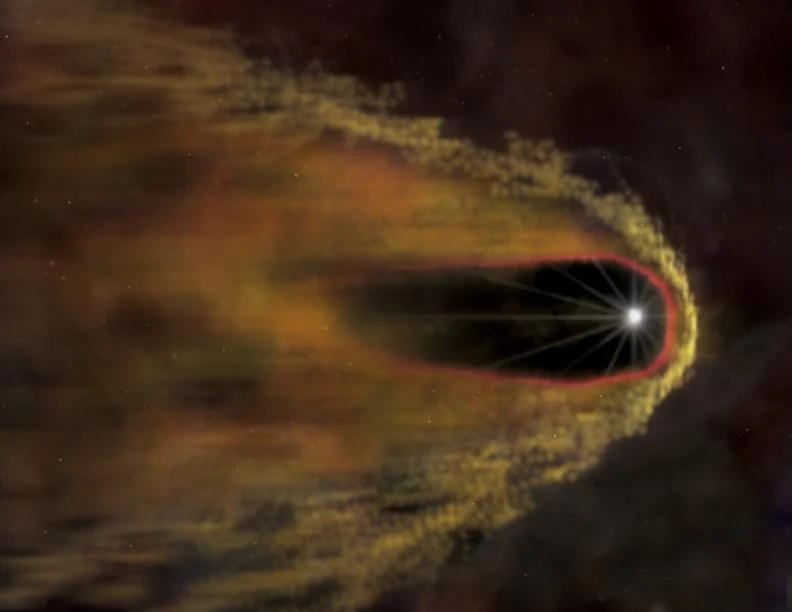
In the vast theater of the cosmos, Greek mythology has long provided the nomenclature for our celestial neighbors. Among the most enigmatic of these are the Trojans, a class of asteroids that share an orbit with a larger planet but never collide with it. Named after the legendary figures of the Iliad, these objects are most famously associated with Jupiter, which hosts a massive swarm of over 10,000 confirmed asteroids at its stable gravitational points. However, the search for these co-orbital bodies has recently expanded far beyond our solar system, reaching into the most violent and extreme environments known to science. A new study published in The Astrophysical Journal, led by Jackson Taylor of West Virginia University and an international team of researchers, has detailed a pioneering search for "exotrojans" within pulsar binary systems—specifically the high-energy "black widow" pulsars.
The concept of a Trojan body is rooted in the delicate balance of orbital mechanics. When two massive bodies, such as a star and a planet, orbit a common center of mass, they create five specific regions of gravitational equilibrium known as Lagrange points. While three of these points (L1, L2, and L3) are unstable, the L4 and L5 points—located 60 degrees ahead of and behind the smaller body in its orbital path—are gravitationally stable. These points form an equilateral triangle with the two primary masses. If a third, much smaller object, such as an asteroid or a minor planet, enters these pockets, it can become "trapped," orbiting the sun in lockstep with the planet. In our solar system, Jupiter’s Trojans are the most prominent, but Mars, Neptune, and even Earth have been found to host these cosmic stowaways.
The ubiquity of Trojans in our local neighborhood has led astronomers to conclude that exotrojans must exist around other stars. Despite the logical necessity of their existence, finding them has proven to be an immense challenge. Initiatives like the TROY project have spent years scouring data from main-sequence stars, yet a definitive discovery remains elusive. This lack of success prompted Taylor and his colleagues to look toward pulsar binary systems, environments where the physics of gravity is pushed to its absolute limits.
The Black Widow Paradigm: A Unique Hunting Ground
The focus of the research was directed at "black widow" pulsars. These are millisecond pulsars—rapidly rotating neutron stars—that are locked in a lethal dance with a low-mass companion star, typically possessing less than 1% of the mass of our Sun. The term "black widow" is derived from the pulsar’s tendency to "consume" its companion. The pulsar emits intense beams of radiation and a high-energy stellar wind that slowly strips material away from the companion star, eventually evaporating it entirely.
While such a violent environment might seem like an unlikely place for stable orbits, the mathematical reality is quite the opposite. In a binary system, the stability of the L4 and L5 Lagrange points depends heavily on the mass ratio between the two primary objects. In a system where the companion star is significantly less massive than the pulsar, the pockets of gravitational stability at L4 and L5 become more pronounced and easier to maintain over long periods. This makes black widow pulsars theoretically ideal candidates for hosting exotrojans, which could be remnants of the companion star’s destruction or captured debris from the surrounding interstellar medium.
Methodological Innovations in Exoplanet Detection
Traditional exoplanet detection methods, such as the transit method (observing a dip in light as a planet passes in front of a star) or the radial velocity method (measuring the gravitational "wobble" of a star), are largely ineffective in pulsar systems. Pulsars do not emit light in the same way as main-sequence stars; instead, they emit highly regular pulses of radio waves. Furthermore, the immense gravity of the pulsar and the proximity of its companion star create a noisy environment that masks the tiny gravitational influence of a Trojan-sized object.
To circumvent these hurdles, Taylor’s team employed two distinct and sophisticated detection techniques. The first method involved a comparative analysis of optical and radio data for the binary system PSR J1641+8049. The team utilized the fact that the optical light curve of the system peaks when the side of the companion star heated by the pulsar faces Earth. Simultaneously, they tracked the radio pulses, which provide a precise measurement of the system’s orbital center of mass.
In a simple two-body system, the radio pulse timing and the optical peak should align perfectly according to the laws of motion. However, if a third body—an exotrojan—is present at the L4 or L5 point, it would shift the system’s center of mass. This shift would create a measurable discrepancy, or "mismatch," between the radio data and the optical light curve. By analyzing these offsets, the researchers could hunt for the signature of a hidden third mass.
The second method utilized the massive NANOGrav 15-year dataset. NANOGrav (the North American Nanohertz Observatory for Gravitational Waves) monitors a network of pulsars with extreme precision to detect the ripples of gravitational waves. Taylor’s team used this data to look for "libration," a specific type of oscillation or wobble. If a Trojan body exists at a Lagrange point, it does not sit perfectly still; instead, it librates around the stable point. This movement causes the entire system’s center of mass to oscillate at a specific frequency, which in turn causes slight variations in the radio pulse Times of Arrival (TOAs) at Earth.
Findings and the Constraint of Earth-Mass Objects
The researchers applied these methods to a total of nine black widow systems. Despite the rigor of the search, the study did not yield a definitive detection of an exotrojan. In the analysis of the NANOGrav dataset, two systems initially appeared to show signals consistent with a third body. However, upon closer inspection, the team categorized these as false positives. The signals were likely the result of "red noise"—random, low-frequency fluctuations in the pulsar’s rotation—or limitations in the tracking capabilities of the Arecibo Observatory, which provided a significant portion of the historical data before its collapse in 2020.
While no Trojans were found, the study provided critical "upper limits" on what could be present in these systems. For seven of the eight systems analyzed via radio timing, the researchers were able to definitively rule out the presence of any object with the mass of Earth or larger. In the case of PSR J1641+8049, the optical-to-radio comparison was less sensitive, only allowing the researchers to rule out objects larger than approximately eight times the mass of Jupiter.
These results are significant because they represent the first time such stringent limits have been placed on co-orbital bodies in pulsar systems. The inability to find an Earth-mass object suggests that while the Lagrange points are mathematically stable, the high-energy environment of a black widow pulsar may make it difficult for large planets to form or survive in those specific locations.
Chronology of Trojan Research
The search for Trojans has a long history, beginning in 1906 when German astronomer Max Wolf discovered 588 Achilles, the first recognized Jupiter Trojan. Since then, the study of these objects has become a cornerstone of planetary science, culminating in missions like NASA’s Lucy, which launched in 2021 to perform the first-ever flyby of Jupiter’s Trojan swarms.
The transition from searching for local asteroids to searching for exotrojans began in earnest in the early 2010s. The TROY project, an international collaboration, was one of the first dedicated efforts to use the Kepler Space Telescope to find Trojan planets around other stars. While the TROY project identified several candidates, none have been confirmed with 100% certainty. The work by Taylor and his team represents the latest chapter in this chronology, shifting the search from "normal" stars to the exotic remnants of supernova explosions.
Broader Impact and Future Implications
The implications of this research extend beyond the simple discovery of new planets. Understanding the distribution of Trojans helps astronomers refine their models of planetary formation and migration. In our own solar system, the position and composition of Jupiter’s Trojans provide a "fossil record" of the early solar system’s history. If exotrojans are eventually found around pulsars, they would offer a unique window into how planetary systems survive—or are reborn—after the death of a star.
Furthermore, the techniques developed by Taylor’s team have laid the groundwork for future searches. The upcoming release of the NANOGrav 20-year dataset will provide even more precise timing data, potentially revealing smaller, sub-Earth-mass objects that remained hidden in the 15-year data. Additionally, next-generation radio telescopes like the Square Kilometre Array (SKA) will offer unprecedented sensitivity, allowing for the detection of even more subtle timing variations.
While the "cosmic stowaways" of the pulsar systems remain elusive for now, the search is far from over. The mathematical stability of the L4 and L5 points remains a compelling reason to keep looking. As Jackson Taylor and his colleagues noted in their concluding remarks, the ubiquity of these objects in our own solar system suggests that it is only a matter of time and technological advancement before we find their counterparts in the deep reaches of the galaxy. The hunt for exotrojans continues to push the boundaries of what we know about orbital stability, planetary survival, and the diverse configurations of matter in the universe.