Sisilia Frederika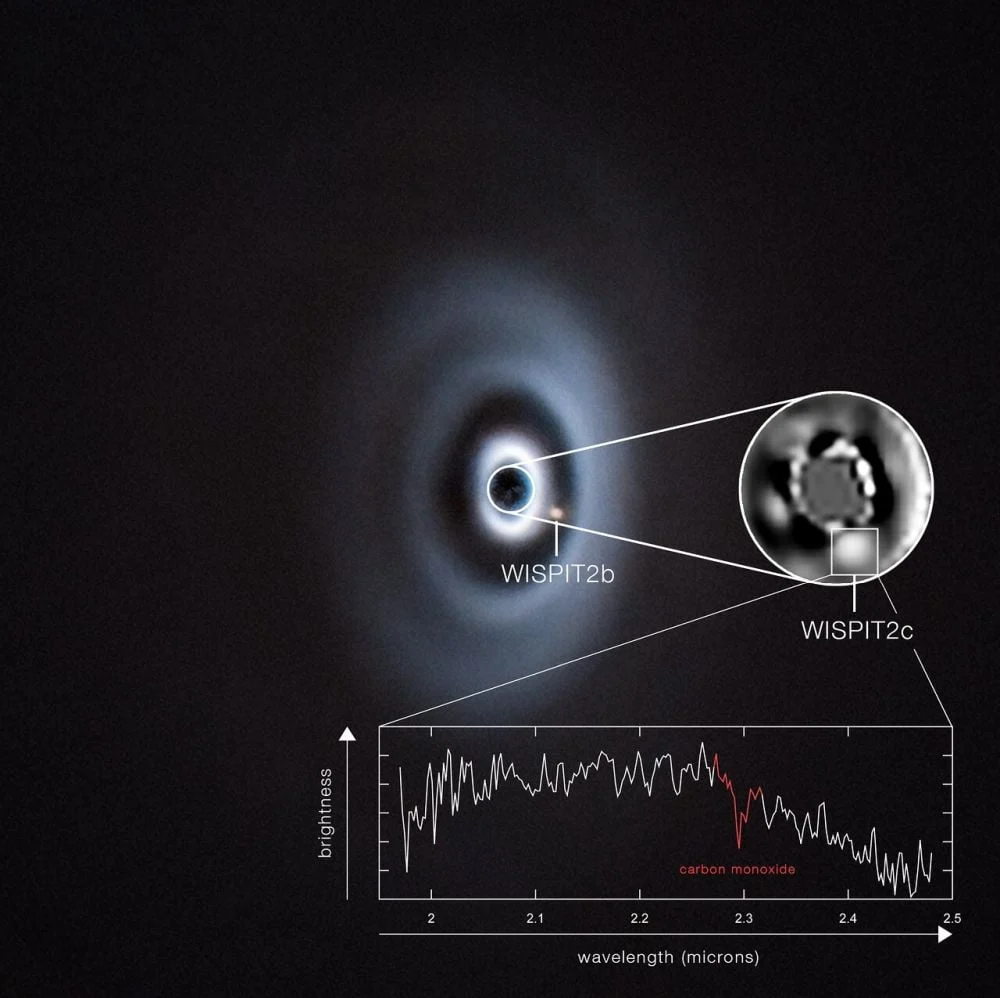
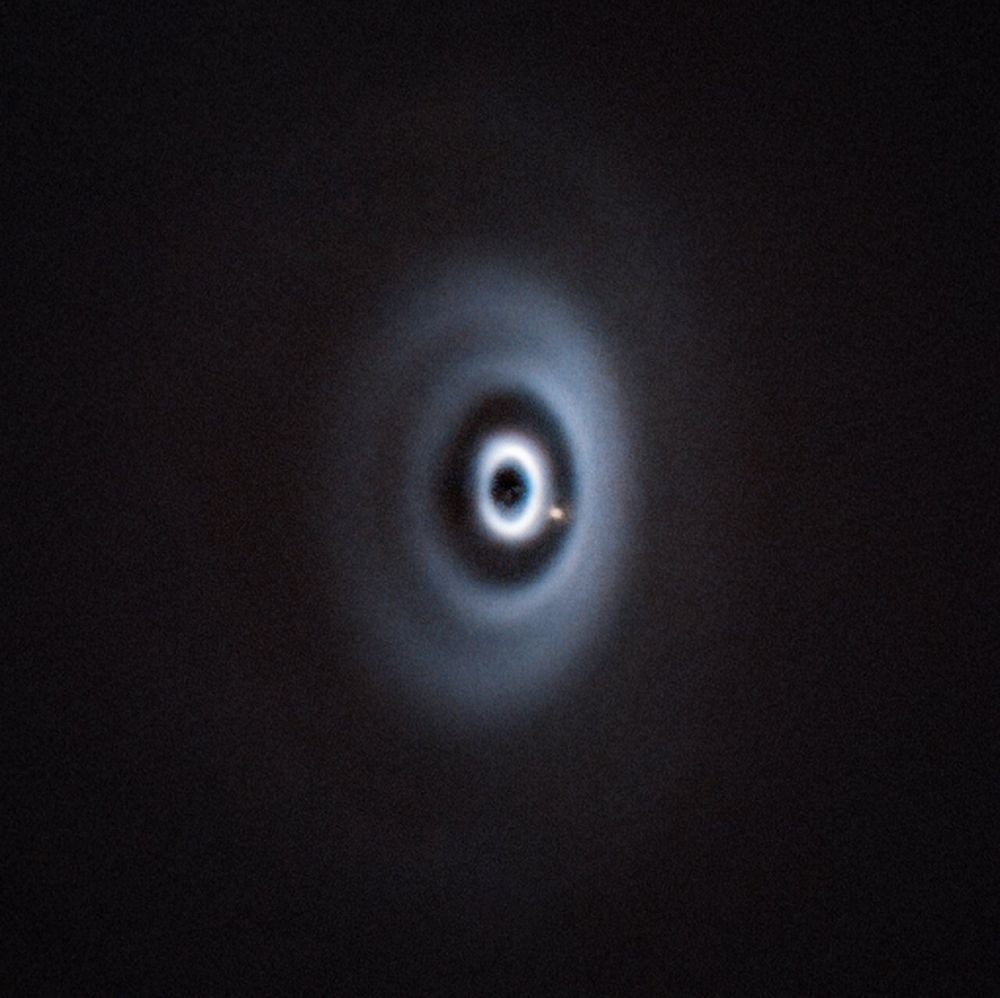
In a landmark study published in The Astrophysical Journal Letters, an international team of astronomers has confirmed the existence of a second massive protoplanet orbiting the young, Sun-like star WISPIT 2. This discovery, led by Chloe Lawlor, a PhD researcher at the University of Galway’s Centre for Astronomy and the Ryan Institute, marks a significant milestone in the field of exoplanetary science. The newly identified planet, designated WISPIT 2c, provides a rare glimpse into the chaotic early stages of solar system formation, offering a direct analog to the history of our own cosmic neighborhood.
Located approximately 437 light-years from Earth, WISPIT 2 is a T Tauri star—a class of very young, variable stars that have not yet entered the main sequence of stellar evolution. At only 5 million years old, the star possesses roughly 1.08 times the mass of the Sun. Because it has not yet commenced the stable hydrogen fusion that characterizes mature stars, it remains surrounded by a massive protoplanetary disk of gas and dust. It is within this disk that the system’s architecture is currently taking shape, providing researchers with a "living laboratory" to observe the birth of gas giants in real-time.
The Architecture of the WISPIT 2 System
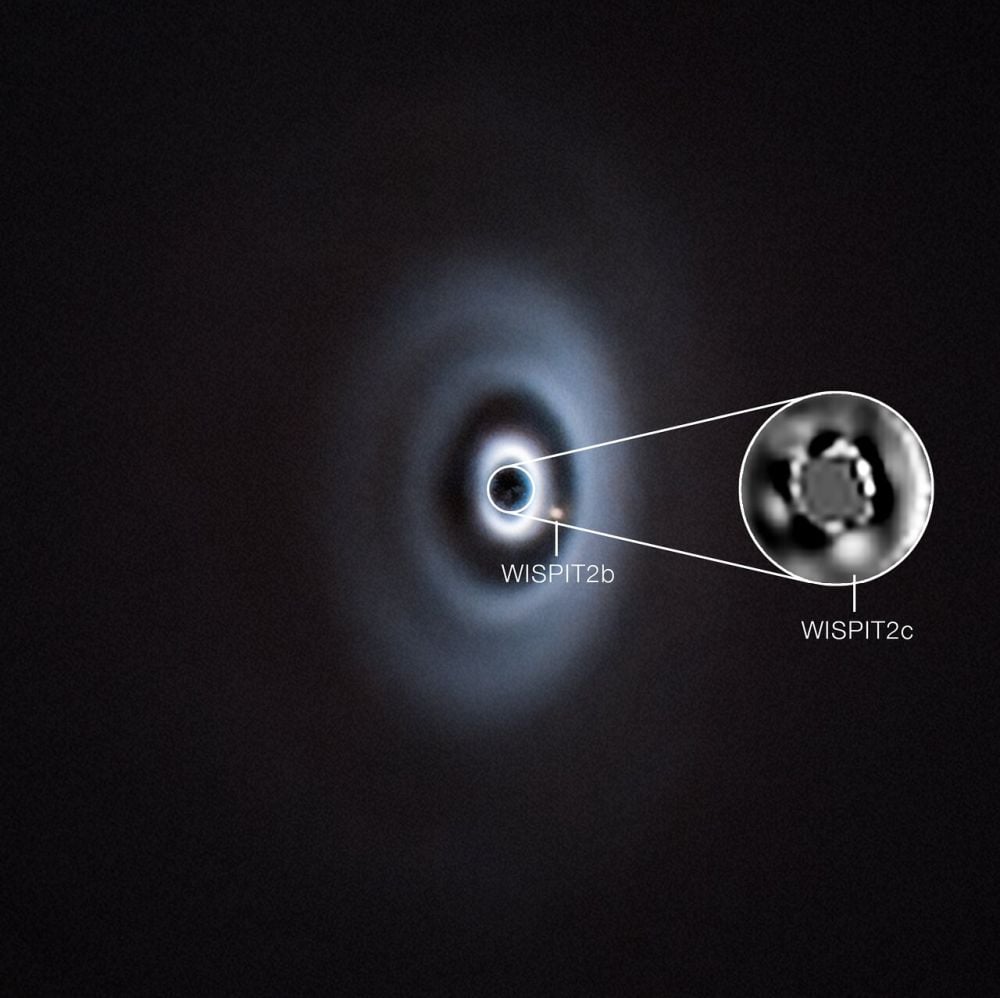
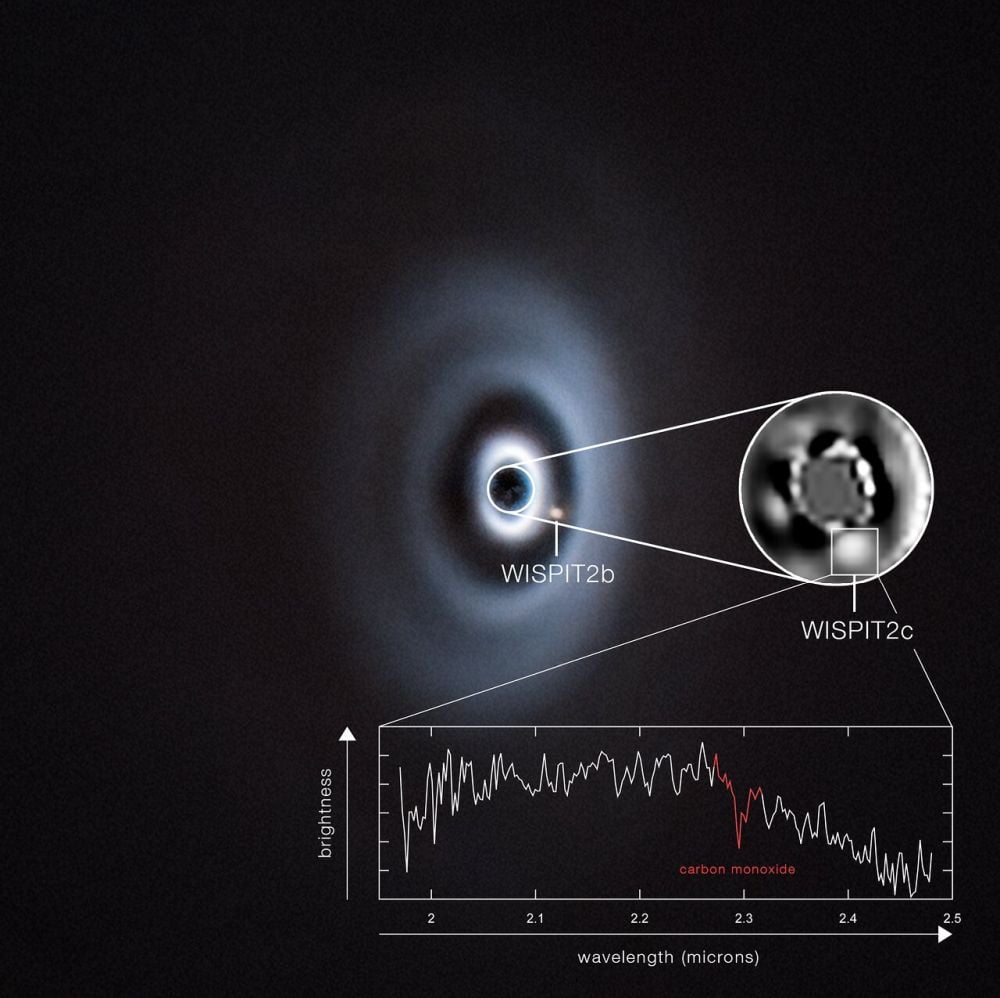
The WISPIT 2 system first garnered significant scientific attention in 2025, when a team led by Richelle van Capelleveen of Leiden Observatory announced the discovery of WISPIT 2b. That planet, a gas giant approximately 4.9 times the mass of Jupiter, was found residing in a wide 60-astronomical unit (au) gap within the star’s multi-ringed disk. Its orbital separation of 57 au placed it in the outer reaches of the system, comparable to the distances of the Kuiper Belt in our own Solar System, though far more massive.
The latest research, titled "Direct Spectroscopic Confirmation of the Young Embedded Protoplanet WISPIT 2c," expands this configuration significantly. The newly confirmed WISPIT 2c is situated much closer to the host star, at a radial separation of roughly 14 au—placing it in a region roughly between the orbits of Saturn and Uranus if it were in our Solar System. However, WISPIT 2c is a behemoth compared to those planets, with an estimated mass range of 8 to 12 Jupiter masses.
The presence of two massive planets in different stages of development and at varying distances from their star allows astronomers to test models of planetary migration and accretion. The study confirms that WISPIT 2c is significantly more massive than its outer sibling, suggesting that the inner regions of the protoplanetary disk may have provided a more resource-rich environment for rapid gas accumulation during the system’s first few million years.
Advanced Instrumentation and Direct Spectroscopic Confirmation
The identification of WISPIT 2c was made possible through the use of the European Southern Observatory’s (ESO) Very Large Telescope (VLT) and the Very Large Telescope Interferometer (VLTI). Specifically, the team utilized the Spectro-Polarimetric High-contrast Exoplanet REsearch (SPHERE) instrument and the GRAVITY+ upgrade.
Direct imaging of exoplanets is an immense technical challenge due to the overwhelming brightness of the host star compared to the faint glow of a planet. To overcome this, SPHERE uses a coronagraph to block out the star’s light, allowing the thermal radiation of the young, hot planets to become visible. While WISPIT 2b was previously imaged, the confirmation of WISPIT 2c required the high-precision interferometry of GRAVITY+.
"Direct spectroscopic confirmation" is a critical standard in modern astronomy. It involves capturing the specific light spectrum emitted by the planet itself, rather than inferring its existence through the "wobble" of the star (radial velocity) or the dimming of the star’s light (transit method). By analyzing the spectrum of WISPIT 2c, the research team detected the clear signature of carbon dioxide (CO2) in its atmosphere.
CO2 is a common component in the atmospheres of gas giants, and its detection serves as definitive proof that the observed light source is indeed a planet and not a background star or an instrumental artifact. Furthermore, these spectroscopic signatures allow scientists to constrain physical models of the planet’s temperature, gravity, and chemical composition, providing a detailed profile of a world still in its infancy.
A Comparative Analysis: WISPIT 2 vs. PDS 70
Until the discovery of the WISPIT 2 system’s multi-planet architecture, the star PDS 70 was the primary benchmark for studying planet formation. PDS 70, located 370 light-years away, was the first system where two planets (PDS 70b and PDS 70c) were directly imaged while still embedded in their natal disk.
The WISPIT 2 system now stands as the second-ever instance of a multi-planet system caught in the act of forming. However, researchers note that WISPIT 2 offers several advantages over PDS 70. Lead author Chloe Lawlor noted that WISPIT 2 possesses a more "extended and resolved" system of rings and gaps. While PDS 70 has provided foundational data, WISPIT 2 serves as a more complex and perhaps more representative model of how diverse planetary architectures emerge.
"The young T Tauri star PDS 70 once acted as a lone candle in the dark for early planet formation studies," the authors wrote in their paper. "WISPIT 2 now becomes an analog to PDS 70, offering a second laboratory for studying the formation and early evolution of a multiplanet system within its natal disk."
The Role of Protoplanetary Gaps and Future Detections
A central focus of the study is the relationship between the planets and the structure of the surrounding disk. Astronomers believe that as planets form, they clear out "gaps" in the disk by accreting gas and dust or by gravitationally pushing material away. The WISPIT 2 disk is characterized by multiple concentric rings separated by these empty lanes.
WISPIT 2b and WISPIT 2c are both located within such gaps, supporting the theory that massive planets are the primary architects of disk structure. However, Lawlor and her team have identified an additional gap in the outer regions of the disk that remains unaccounted for. This third gap is narrower and shallower than those occupied by the confirmed planets.
The team suspects a third planet, potentially with a mass closer to that of Saturn, may be carving out this distant lane. While current instrumentation—even the upgraded GRAVITY+—is not yet sensitive enough to confirm a Saturn-mass object at that distance, the researchers are optimistic about future observations.
Technological Evolution and the Path to the ELT
The success of the WISPIT 2 study is a testament to the rapid evolution of astronomical hardware. Guillaume Bourdarot, a researcher at the Max Planck Institute for Extraterrestrial Physics and study co-author, emphasized that the recent upgrade to GRAVITY+ was the deciding factor in the detection of WISPIT 2c. The upgrade allows the VLTI to image much fainter objects closer to their host stars than was previously possible.
"This detection of a new world in formation really showed the amazing potential of our current instrumentation," said Richelle van Capelleveen, who led the initial study of the system.
The next great leap in this research will come with the completion of the Extremely Large Telescope (ELT) in Chile. Scheduled for "first light" in March 2029, the ELT will feature a 39-meter primary mirror, making it the largest optical/near-infrared telescope in the world. The ELT’s superior angular resolution and light-gathering power are expected to allow for the direct imaging of smaller, cooler planets—such as the suspected Saturn-mass object in the WISPIT 2 system—and perhaps even rocky, Earth-like planets in older systems.
Broader Scientific Implications and Conclusion
The discovery of WISPIT 2c contributes to a growing body of evidence regarding the "Goldilocks Zone" for giant planet formation. By observing where these giants settle in their early millions of years, scientists can better understand the forces of gravitational instability and core accretion that dictate the final layout of a solar system.
The fact that WISPIT 2 is so similar to the Sun makes it an invaluable proxy for the Solar System’s own history. "WISPIT 2 is the best look into our own past that we have to date," Lawlor stated. By studying this system, astronomers are essentially looking back 4.5 billion years to see the conditions that might have existed when Jupiter and Saturn were still gathering mass from the Sun’s protoplanetary nebula.
As the number of confirmed exoplanets continues to climb past 6,000, the focus of the astronomical community is shifting from mere detection to detailed characterization. Systems like WISPIT 2 are at the forefront of this shift. They move the conversation beyond "what is out there" to "how did it get there," providing the empirical data needed to bridge the gap between theoretical models and the diverse reality of the cosmos.
The authors of the study concluded that while the current data remains limited by the distance and age of the system, these results bring the scientific community one step closer to making direct connections between the initial conditions of planet formation and the final architectures of planetary systems. With the ELT on the horizon and the continued success of the VLT, the WISPIT 2 system is likely to remain a focal point of planetary science for decades to come.