Vera Intan Clara
The advent of sophisticated artificial intelligence tools, particularly large language models (LLMs) like ChatGPT, has ignited a profound debate within educational circles, challenging traditional notions of learning, academic integrity, and professional preparedness. This contentious discussion was recently encapsulated in a widely-shared Reddit post on the r/NoStupidQuestions subreddit, where user u/Gifthunter3 posed a critical inquiry: "To people who regularly use ChatGPT for school: Do you think you’re still learning?" This simple yet potent question has since unraveled a complex tapestry of student experiences, educator concerns, and societal implications, reflecting a pivotal moment in the intersection of technology and pedagogy.
The Genesis of the Debate: A Redditor’s Honest Query
The original post by u/Gifthunter3 was not an accusation but a genuine plea for insight. The Redditor expressed apprehension regarding the widespread adoption of ChatGPT by classmates for assignments, open-book tests, and virtually any task where its use was feasible. "I don’t mean this to be rude, I genuinely want to know," they wrote, detailing their concerns: "If you do use it, do you believe you’re still retaining information? Do you feel well-informed for your eventual profession? Do you feel bad about using it or is it more of a flippant decision?"
u/Gifthunter3 further articulated a fundamental human aspect of learning often overlooked in the pursuit of efficiency: the value of struggle. "I understand the why, I just don’t know if I’d feel comfortable going into a job without having done the work myself, struggled myself," they confessed. This sentiment resonates with a long-held pedagogical belief that grappling with difficult concepts, making mistakes, and independently overcoming intellectual hurdles are integral to deep learning and the development of critical thinking skills. However, the Redditor also acknowledged the practical counterpoint: "But I also know that struggling isn’t always the most reasonable option," hinting at the pressures students face in demanding academic environments.
Background and Chronology: The Rapid Rise of AI in Education
The emergence of ChatGPT in November 2022 by OpenAI marked a watershed moment. Its unprecedented ability to generate human-like text, answer complex questions, write code, and even compose creative content instantly captured global attention. Educational institutions were among the first to feel its disruptive force. Initially, many schools and universities reacted with alarm, implementing outright bans on AI tools, viewing them primarily as sophisticated plagiarism machines.
However, the rapid and widespread adoption of these technologies by students quickly demonstrated the impracticality of prohibition. Educators and administrators soon realized that a more nuanced approach was necessary. The conversation shifted from "how to stop AI" to "how to adapt to AI." This evolution included exploring AI detection software, redesigning assignments to be AI-proof (e.g., requiring personal reflection, real-world application, or specific formats that AI struggles with), and even integrating AI tools into learning processes in constructive ways. The Reddit discussion serves as a real-time snapshot of how students and faculty are navigating this rapidly changing landscape on the ground.
The Spectrum of Student Experiences: Fear, Frustration, and Favorable Use
The comments section of u/Gifthunter3’s post quickly swelled with responses, painting a vivid picture of the diverse ways students and even some educators are experiencing the AI revolution.
The Erosion of Cognitive Skills and Vocabulary: A dominant theme among the responses was the fear of cognitive atrophy. User u/maddyp1112 articulated this anxiety directly: "I’m honestly scared of losing my ability to think of words to type myself." This commenter also highlighted an unforeseen consequence: the "AI voice" phenomenon. They received an email from a teacher advising caution because some words used "make it seem like I’m using AI," even though the words were merely "slightly more formal for research purposes." This anecdote points to a chilling effect, where students might self-censor their vocabulary to avoid suspicion, potentially leading to a broader "dumbing down" of academic discourse. "Now you can’t even know bigger words anymore I guess without being accused," u/maddyp1112 lamented, expressing concern about the "trajectory we seem to be heading in."
Superficial Learning and Professional Incompetence: Several Redditors echoed concerns about the depth of understanding fostered by AI reliance. u/JackalThePowerful, a graduate student, observed, "it’s legitimately difficult to discuss class content with my LLM-using peers at times since their understanding tends to be significantly more superficial and/or inflexible." This lack of foundational knowledge, they predicted, would have severe repercussions: "There will be hell to pay in professional fields that require real knowledge, eventually." This sentiment was reinforced by u/Stellar_Jay8, an employer, who unequivocally stated, "As someone employing recent grads, I can tell you that unequivocally no. They are significantly behind compared to recent grads from 5 years ago. It’s bad. No critical thinking skills." These testimonies suggest a looming crisis where a generation of graduates may enter the workforce lacking the critical thinking and problem-solving abilities essential for complex roles.
AI’s Inaccuracies and the "Hallucination" Problem: A significant practical concern raised was the unreliability of AI. u/DEAD-VHS shared a compelling example of ChatGPT "hallucinating" information even when provided with specific reference documents. "I’ve asked it to refer to those documents to give me an answer on a specific topic. It often gives me something I know is false," they wrote. Even when confronted with page numbers, the AI initially denied its error before eventually "apologizing." This user questioned the logic of relying on AI for complex tasks like essay writing if it struggles with basic document retrieval, underscoring the risk of students submitting factually incorrect or entirely fabricated content.
The Contamination of the Information Ecosystem: Beyond direct AI usage, several commenters noted the insidious impact of AI-generated content on the broader information landscape. u/qingskies mentioned the struggle to "scroll past the AI summary at the top" of Google searches. u/alt_for_ranting expanded on this, observing that "now searching sucks with so much LLM written stuff. No wonder many of them go to use LLM themselves to feel tailored to them when most of what you find elsewhere are gonna be someone else’s LLM post." This creates a feedback loop where the proliferation of AI content makes traditional research more difficult, inadvertently pushing more students towards AI tools.
Systemic Failures and the "Race to the Bottom": User u/GSilky offered a scathing critique of the educational system itself, claiming "Nobody is learning. Functionally illiterate and innumerate is back in style because of the ridiculous way schools handle a student failing to grasp the subject matter." They shared an anecdote about a nephew who, despite being an "above average" student, failed the GED test completely, highlighting a disconnect between high school performance and actual knowledge retention. This broader critique suggests that AI’s emergence merely exacerbates pre-existing fragilities within educational structures.
The "race to the bottom" mentality was eloquently captured by u/Junior-Childhood-404, a software engineer, who admitted using AI extensively for work despite worries that "it’s making us dumber." The dilemma is stark: "Issue is we can’t stop using it. If we stop using it we become less productive and performance suffers. The situation we’re in f***ing sucks. If we don’t use it, the competition will and will beat us." This highlights a significant societal and professional challenge that extends far beyond the classroom, indicating a pervasive pressure to leverage AI for productivity, even at the potential cost of individual cognitive development.
AI as a Legitimate Learning Tool: A Glimmer of Hope?
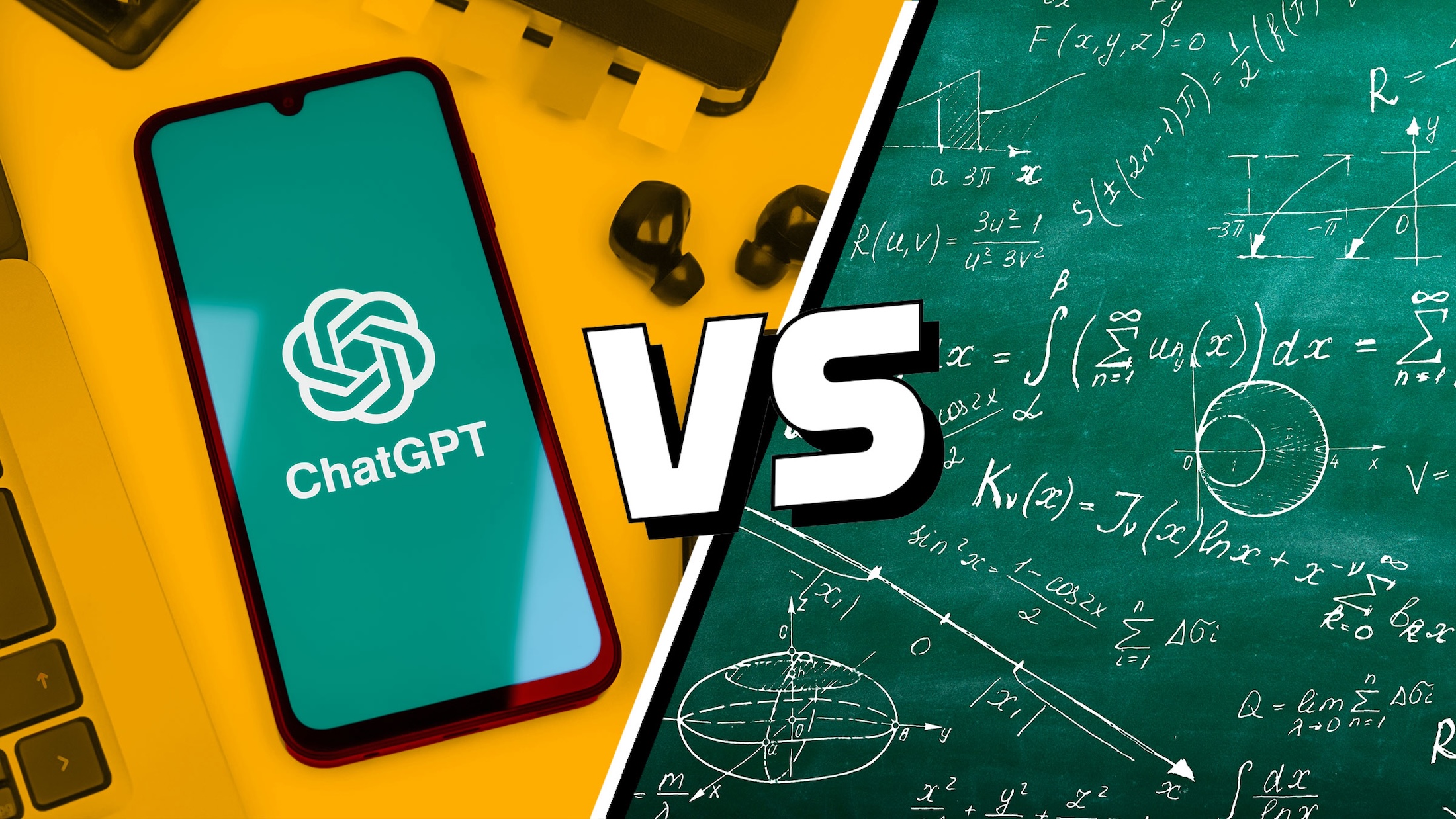
Despite the widespread apprehension, some Redditors presented a more optimistic, albeit nuanced, view of AI’s potential as an educational aid. These users emphasized that the utility of AI largely depends on how it is used.
For subjects like mathematics, AI’s ability to provide step-by-step solutions was highly praised. u/DefinitelyNotKuro explained, "I’ve been using it for my math classes, it shows me every single step in solving any given problem. I can harass it over any step of the process as much as I want without any guilt." This personalized, relentless tutoring, they argued, actually enhances learning, as evidenced by their improved test scores. u/QUDUMU echoed this, stating, "AI helps me understand maths and stuff and walks me through explanations, prepares questions based on the sources i provided etc."
Other constructive uses included:
- Mock Exam Generation: u/GotchurNose utilized AI to "create mock exams for myself to prepare for the real thing," proving instrumental in helping classmates improve their grades.
- Socratic Method: u/Expensive_Goat2201, pursuing a master’s degree for personal enrichment, found ChatGPT’s "study mode that does a Socratic method thing and doesn’t give you the answers" to be "pretty good." This points to AI’s potential for guided inquiry rather than direct answer provision.
- Discovery and Confirmation Tool: u/drakken_dude, no longer an academic student, uses AI for learning new subjects as a "discovery tool to help with pointing me in the right direction, not as a primary source." They find it "great when I’m learning something new as a way to help guide me to which sub topic I should start with and to help confirm my understanding when I’m looking at real documents."
These examples underscore a critical distinction: AI can be a powerful learning accelerator when used interactively to deepen understanding, clarify concepts, or practice skills, rather than as a substitute for intellectual effort.
Official Responses and Institutional Adaptations
The global education system is in a state of flux, actively grappling with the implications of AI. Initial bans have largely given way to more sophisticated strategies. Many universities and school districts are:
- Updating Academic Integrity Policies: Redefining plagiarism to include AI-generated content, often with severe penalties.
- Integrating AI Literacy: Teaching students how AI works, its limitations (like hallucinations), and ethical considerations for its use.
- Revising Assessments: Moving away from easily AI-generatable essays towards assignments requiring critical thinking, oral presentations, original research with unique data, group projects, and real-world problem-solving.
- Adopting AI Detection Tools: While imperfect, these tools are part of a multi-faceted approach to maintaining academic honesty.
- Developing AI-Enhanced Pedagogies: Exploring how AI can support personalized learning, provide feedback, or even serve as a virtual teaching assistant. For instance, some platforms are integrating AI to offer immediate, tailored feedback on drafts, potentially freeing up educators for more complex instructional tasks.
However, the path is not without its challenges. The anecdote from u/TheophilusOmega, whose engineering professor uses ChatGPT screenshots as lecture slides, illustrates the uneven adoption and understanding of AI even within faculty ranks. This highlights the need for comprehensive professional development for educators to effectively navigate this new technological landscape.
Broader Impact and Implications for the Future
The Reddit discussion, while anecdotal, serves as a powerful microcosm of the larger societal debate surrounding AI in education. Its implications are far-reaching:
-
Redefining "Learning": The traditional definition of learning often emphasizes memorization and individual problem-solving. In an AI-augmented world, learning might shift towards critical evaluation of AI outputs, prompt engineering, synthesizing information from multiple sources (including AI), and developing meta-cognitive skills to understand when and how to best leverage AI. The value of "struggle" that u/Gifthunter3 mentioned may evolve to encompass the struggle of effectively collaborating with AI.
-
The Future Workforce: If students graduate without adequate critical thinking, problem-solving, or communication skills due to over-reliance on AI, the workforce could face significant challenges. Employers like u/Stellar_Jay8 are already noting this deficit. The "race to the bottom" scenario feared by u/Junior-Childhood-404 could lead to a workforce that is efficient at task execution but lacks the innovative capacity and deep expertise needed for complex challenges. Conversely, those who master AI as a tool for augmentation, rather than replacement, will likely thrive.
-
Equity and Access: Disparities in access to advanced AI tools, reliable internet, and AI literacy education could exacerbate existing educational inequities, creating new digital divides.
-
Ethical Frameworks: The rapid evolution of AI necessitates continuous development of ethical guidelines for its use in education, encompassing plagiarism, data privacy, algorithmic bias, and intellectual property.
-
Role of Educators: Teachers must transform from disseminators of information to facilitators of learning, guides in critical thinking, and mentors in ethical technology use. This demands significant investment in professional development and curriculum redesign.
-
The "Dumbing Down" Debate: The fear of losing vocabulary, critical thinking, and the ability to "bang one’s head against the wall" over difficult problems is a legitimate concern. While AI offers immense potential for efficiency, there’s a delicate balance to be struck between leveraging its power and preserving the cognitive processes that foster genuine understanding and intellectual growth. The challenge lies in cultivating "AI literacy" – the ability to discern when and how to use AI effectively and ethically, rather than passively accepting its output.
In conclusion, the Reddit thread initiated by u/Gifthunter3 illuminates a critical juncture in the evolution of education. It highlights a community grappling with the profound changes brought by AI, from the anxieties over cognitive decline and academic integrity to the cautious optimism about AI as a personalized learning assistant. The consensus emerging is not one of outright rejection or unconditional embrace, but rather a call for thoughtful integration, ethical consideration, and a re-evaluation of what it truly means to learn, teach, and prepare for a future inextricably linked with artificial intelligence. The challenge for students, educators, and institutions alike is to navigate this complex landscape with foresight, adaptability, and a commitment to fostering genuine knowledge and critical capabilities in the next generation.