Sonny Valindra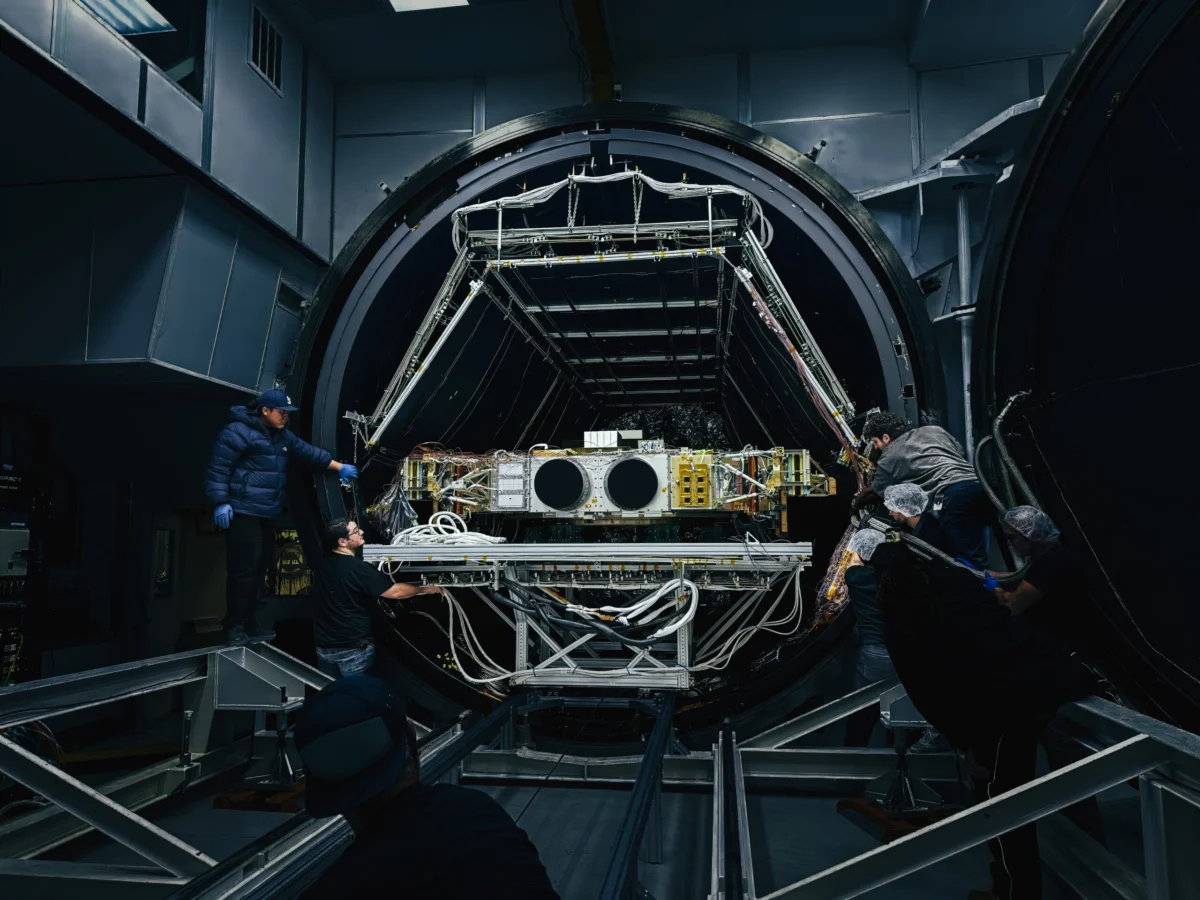
The burgeoning private space industry is on the cusp of a significant technological leap as K2 Space prepares to launch Gravitas, a two-metric-ton satellite poised to become one of the most powerful spacecraft ever deployed. Scheduled for liftoff aboard a SpaceX Falcon 9 rocket as early as the end of this month, Gravitas represents a pivotal step toward realizing the ambitious vision of establishing data centers in orbit. This mission, spearheaded by K2 Space, a company founded by former SpaceX engineers Karan and Neel Kunjur in 2022, aims to demonstrate critical technologies that will underpin future orbital infrastructure.
A New Era of High-Power Satellites
Gravitas is not just another satellite; it is a testament to the growing demand for significantly increased electrical power in space. With its solar panels unfolded, the spacecraft boasts an impressive 40-meter wingspan and is engineered to generate a remarkable 20 kilowatts (kW) of electricity. This substantial power output is crucial for operating advanced payloads, including high-performance sensors, sophisticated transceivers, and powerful onboard computers, which are essential for complex data processing and communication tasks.
To contextualize this capability, the ViaSat-3 spacecraft, a considerably larger and more expensive endeavor, can generate over 25 kW of power. Elon Musk has also indicated that future Starlink V3 satellites will achieve a similar 20 kW output. In stark contrast, most existing spacecraft typically operate with power generation in the single-digit kilowatt range. "The future is higher power," stated CEO Karan Kunjur, underscoring the fundamental shift K2 Space is driving. The company has already secured substantial backing, raising $450 million and achieving a valuation of $3 billion from investors as of December 2025. The Gravitas launch marks K2 Space’s inaugural foray into actual space operations, a crucial "first step into real space operations — and what Kunjur calls ‘the start of our iterative journey.’"
Mission Objectives and Payload Diversity
The Gravitas mission is designed to test a suite of advanced technologies and capabilities. The spacecraft will carry 12 undisclosed payload modules from a variety of customers, including a significant contract with the Department of Defense. These payloads are expected to push the boundaries of what is currently possible in space-based operations. A key component of the mission will be the testing of a 20 kW electric thruster, which K2 Space anticipates will be the most powerful ever flown in orbit.
Kunjur outlined a tiered approach to evaluating the mission’s success. The initial phase will focus on the successful deployment of the spacecraft and its ability to commence power generation. Following this, the team will assess the operational status of the payloads and the performance of the high-power thruster. The ultimate goal, contingent on the success of these initial stages, is to utilize the thruster to elevate the spacecraft to a higher orbit, a maneuver that requires significant and sustained power output.
In-House Innovation and Iterative Development
K2 Space has placed a strong emphasis on vertical integration, with an impressive 85% of Gravitas’s components designed and manufactured in-house. This approach allows for greater control over the development process and fosters rapid iteration based on real-world performance data. Kunjur acknowledges the inherent challenges of launching new spacecraft and the scrutiny that anomalies can attract. Therefore, maximizing data collection from the Gravitas mission is paramount, serving as the bedrock for the next generation of satellite designs. K2 Space has ambitious plans, with a roadmap to launch 11 more satellites over the next two years, encompassing both demonstration and commercial missions. By 2028, Kunjur envisions K2 Space as a key supplier for customers looking to establish commercial networks of high-powered space vehicles.
The Economic Imperative for High-Power Satellites
The increasing integration of satellites into the global economy necessitates greater power capabilities to unlock new business cases. Kunjur foresees the immediate impact on communications networks, where enhanced power translates directly to increased data throughput and improved signal resilience against jamming. As the trend towards in-orbit data processing accelerates, high-powered satellites will become indispensable for operating advanced computational infrastructure.
However, the significant cost of launching massive payloads into orbit remains a persistent challenge for both orbital data centers and large satellites of any kind. K2 Space’s initial strategy was predicated on the anticipated cost reductions offered by SpaceX’s Starship, a colossal rocket under development that promises to dramatically lower orbital launch expenses. The timeline for Starship’s operational readiness and its availability for commercial customers at reduced rates remains uncertain.
A Shifting Landscape and Strategic Positioning
Despite the launch cost uncertainties, the escalating demand for increased power in space positions K2 Space’s unique spacecraft advantageously. The proliferation of massive communication constellations like Starlink and Amazon LEO, the growing interest from hyperscale computing providers in orbital compute capabilities, and the Pentagon’s ambitious plans for a $185 billion missile defense system requiring thousands of new satellites, all underscore the burgeoning need for satellites with significantly more electrical capacity.
K2 Space argues that its spacecraft remain economically viable even with current launch costs. While launching on a Falcon 9 might cost approximately $7.2 million for customers, Kunjur contends that Gravitas, priced at $15 million, is still more cost-effective than comparable high-power satellites built by traditional aerospace contractors. Furthermore, it offers superior power capabilities compared to similarly priced, smaller spacecraft.
Future Ambitions and Scalability
Looking ahead, Kunjur is confident that K2 Space will be prepared to offer even larger satellite solutions once mega-rockets like Starship and Blue Origin’s New Glenn become regularly operational. "The thinking is, let’s build all the components that we’re going to go need to be a first mover when Starship and New Glenn are available for everybody else," he remarked to TechCrunch. K2 Space has already developed designs for a 100 kW satellite, with the necessary components already fabricated and occupying its factory floor, stretching across the entire facility. This forward-thinking approach ensures that K2 Space is not merely reacting to market trends but actively shaping the future of space infrastructure.
Background and Context: The Evolution of Space Power
The journey towards high-power satellites is not a sudden development but rather an evolution driven by technological advancements and increasing demands on orbital assets. Historically, satellites were designed for specific, often limited, functions, and power constraints were a primary design consideration. Early satellites, such as Sputnik or Explorer 1, were relatively small and had minimal power requirements. As the space age progressed, satellites grew in complexity, enabling more sophisticated scientific research, communication, and Earth observation.
The advent of the geostationary communications satellite in the 1960s and 70s marked a significant increase in power needs for relaying broadcast signals. However, even these early giants were dwarfed by today’s standards. The demand for higher bandwidth and more complex data processing, particularly in the last two decades, has pushed the boundaries of what is technologically feasible and economically viable in orbit.
The rise of constellations, exemplified by Starlink, has further amplified the need for efficient and scalable power solutions. These mega-constellations, comprising thousands of satellites, require robust power generation to maintain continuous operation and provide high-speed internet services globally. The challenges of manufacturing, launching, and operating such vast networks have spurred innovation in satellite design, including the critical aspect of power.
Furthermore, the growing interest in space-based computing, or "orbital compute," represents another major driver for high-power satellites. The concept of processing data in orbit, rather than transmitting it back to Earth for analysis, offers significant advantages in terms of speed, latency, and reduced bandwidth requirements. This is particularly relevant for applications like real-time artificial intelligence processing for autonomous systems or rapid analysis of vast datasets from Earth observation or scientific instruments.
The Department of Defense’s interest, as indicated by K2 Space’s inclusion of DoD payloads, highlights the strategic importance of advanced space capabilities. Modern military operations rely heavily on space-based assets for intelligence, surveillance, reconnaissance, and communication. The development of more powerful satellites can enhance these capabilities, potentially leading to improved missile defense systems, more resilient communication networks, and advanced tracking of potential threats.
K2 Space’s strategy of leveraging the potential of future launch vehicles like Starship is a calculated risk. The development of such transformative launch systems, while promising, is notoriously complex and prone to delays. However, if successful, Starship could democratize access to space, significantly lowering the cost per kilogram to orbit and making ambitious projects like orbital data centers and large-scale space infrastructure more achievable. The company’s current strategy of building a substantial, high-power satellite like Gravitas on existing launch capabilities demonstrates a pragmatic approach to market entry while laying the groundwork for future, larger-scale operations.
The competitive landscape is also evolving rapidly. Traditional aerospace giants are also investing in next-generation satellite technologies, while numerous startups are emerging with innovative solutions. K2 Space’s focus on high power, combined with its in-house manufacturing capabilities and strategic partnerships, appears to position it as a significant player in this evolving market. The company’s success will likely hinge on its ability to execute its ambitious launch and development plans, demonstrate the reliability and cost-effectiveness of its technology, and adapt to the dynamic nature of the space industry.