Sisilia Frederika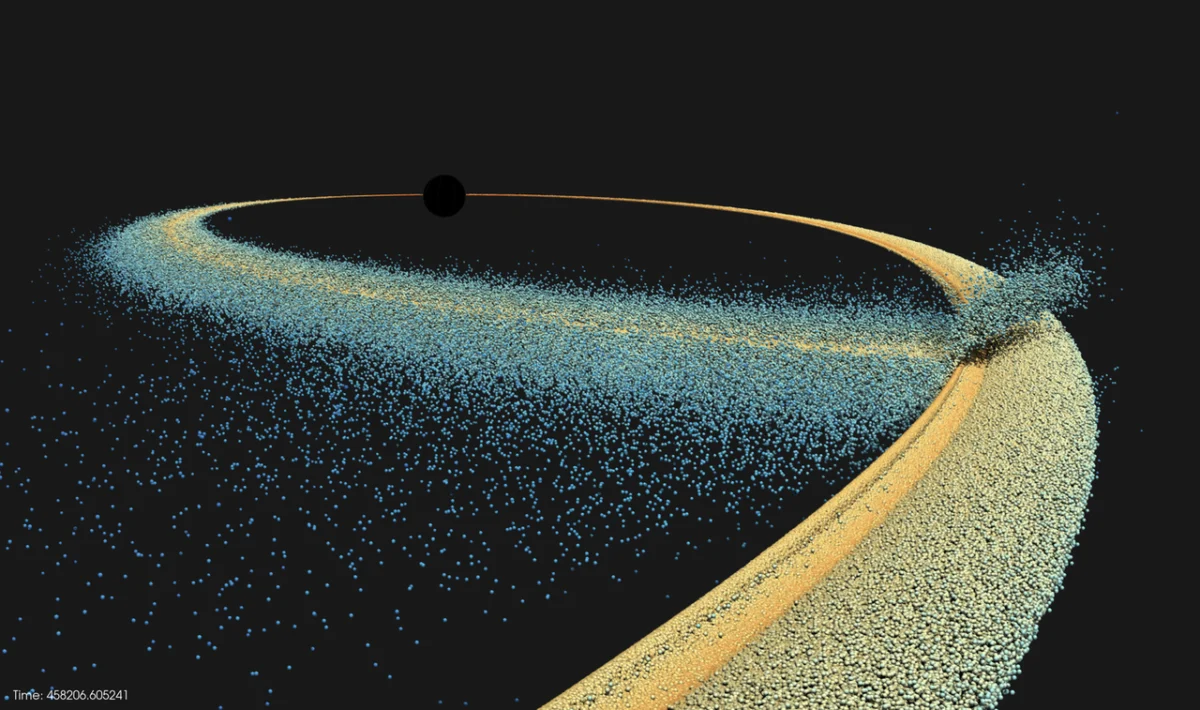
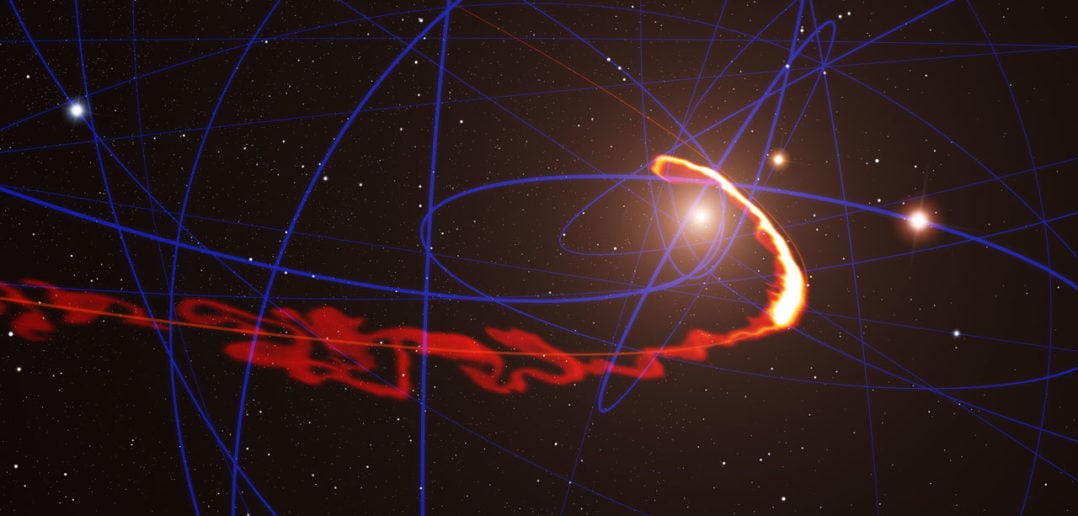
In the vast, silent expanse of the Milky Way, the center of our galaxy is dominated by a behemoth known as Sagittarius A, a supermassive black hole (SMBH) with a mass equivalent to four million suns. For decades, this region has been a focal point of intense scrutiny, but in 2014, the astronomical community turned its collective gaze toward a specific, enigmatic object named G2. Astronomers predicted a spectacular display: G2, appearing as a dense cloud of gas and dust, was on a collision course with the gravitational well of Sagittarius A. The expectation was a "cosmic feast," where the black hole’s immense tidal forces would shred the object, resulting in a brilliant flare of radiation that would light up the galactic center across multiple wavelengths.
However, the anticipated pyrotechnics never materialized. Instead of being consumed, G2 performed a graceful, albeit harrowing, flyby. It rounded the black hole, survived the intense gravitational shearing, and continued on its trajectory, though its orbit was significantly altered. This event, later described by many in the field as a "cosmic fizzle," forced a radical rethink of what G2 actually was. Subsequent analysis suggested that G2 was not a mere gas cloud but likely a "dusty protostellar object"—a young star encased in a thick shroud of debris—or perhaps the result of a binary star merger. This durability allowed it to withstand the tidal forces that would have easily dissipated a simple cloud of hydrogen.
While the G2 event did not produce the expected brilliance, it served as a catalyst for a deeper investigation into the mechanics of black hole interactions. If G2 had been a less resilient object, or if its trajectory had been more direct, it would have triggered a Tidal Disruption Event (TDE). New research led by physicists at Syracuse University and the University of Zurich is now providing the most detailed look yet at these violent phenomena. By utilizing advanced supercomputing simulations, the team has begun to unravel the mystery of why some black hole encounters result in blinding light while others remain shrouded in darkness, and why no two TDEs ever look exactly the same.
The Anatomy of a Tidal Disruption Event
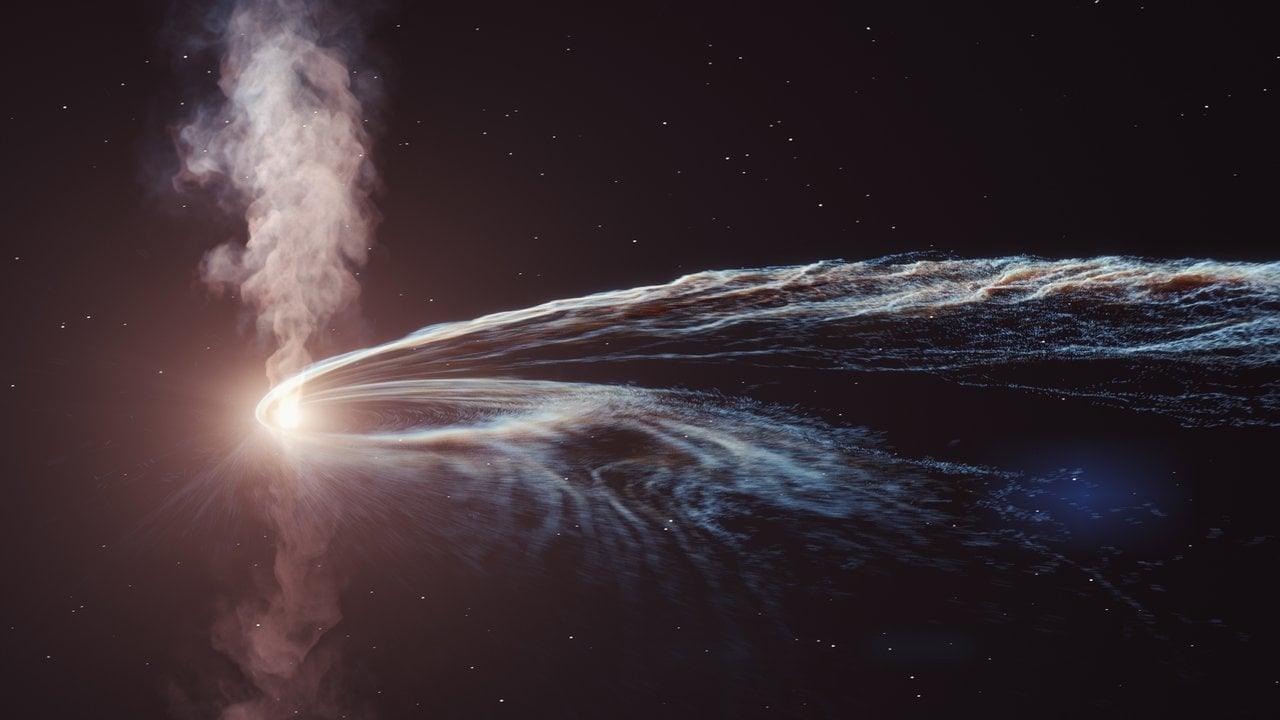
A Tidal Disruption Event occurs when a star wanders too close to a supermassive black hole. As the star approaches the "tidal radius," the gravitational pull on the side of the star nearest the black hole becomes significantly stronger than the pull on the far side. This gravitational gradient, or tidal force, eventually exceeds the star’s own self-gravity, stretching the celestial body into a long, thin strand of gas—a process colloquially known as "spaghettification."
According to the new research published in The Astrophysical Journal, approximately half of the star’s mass is typically ejected back into interstellar space at high velocities. The remaining half, however, stays bound to the black hole. This captured material begins a chaotic "death spiral," forming a narrow, coherent stream of debris that eventually circles back toward the black hole.
The brilliance of a TDE does not come from the black hole itself, which remains inherently dark, but from the kinetic energy of this returning debris. As the stream of gas loops around the SMBH, it eventually intersects with itself. These high-velocity collisions generate immense friction and shockwaves, heating the gas to millions of degrees. This thermal energy is released as a massive flare of electromagnetic radiation, often outshining the combined light of every star in the host galaxy for weeks or even months.
High-Resolution Modeling: The SPH-EXA Simulation
To understand these complex interactions, the research team, including Eric Coughlin, an assistant professor of physics at Syracuse University, utilized a sophisticated numerical method known as Smoothed Particle Hydrodynamics (SPH). This technique treats the star not as a single solid mass, but as a collection of billions of individual "particles" that follow the laws of fluid dynamics.
The team’s simulation, known as SPH-EXA, represents a significant leap forward in computational astrophysics. By modeling tens of billions of particles, the researchers were able to track the evolution of the debris stream with unprecedented precision. The simulations revealed that the "return of the stream"—the moment the gas loops back to strike itself—is the critical juncture that determines the characteristics of the resulting flare.
"We can study tidal disruption events to learn more about black holes hidden from view," Coughlin noted in a statement regarding the findings. This is particularly vital because most supermassive black holes are "quiescent," meaning they do not currently have a steady supply of gas to fuel an accretion disk. TDEs provide a rare "flashlight" that momentarily illuminates these dark giants, allowing astronomers to measure their mass and spin.
The Role of Black Hole Spin and Nodal Precession
One of the most significant contributions of the Syracuse-Zurich study is the exploration of how a black hole’s spin influences the visibility of a TDE. In Einstein’s General Theory of Relativity, a rotating massive object doesn’t just pull on spacetime; it drags it. This phenomenon, known as "frame-dragging" or the Lense-Thirring effect, has profound consequences for any object orbiting a spinning black hole.
When a star is disrupted by a spinning SMBH, the debris stream does not stay in a simple, flat plane. Instead, the frame-dragging effect causes the orbital plane of the debris to shift or "precess." This is referred to as "nodal precession."
The simulations demonstrated that if the black hole is spinning rapidly and the star’s initial orbit is tilted relative to the black hole’s equator, the nodal precession can be so severe that the returning stream of debris completely misses itself on the first few passes. Instead of a quick, bright flare, the material continues to loop around the black hole in a complex, three-dimensional pattern.
This delay explains the "diversity" of TDEs observed by astronomers. Some events show a rapid rise in brightness followed by a quick decay, while others exhibit a "slow-burn" effect or even multiple peaks of intensity. The team’s research suggests that the "missing" light in some TDE observations isn’t because the material isn’t there, but because the black hole’s spin has prevented the debris from colliding and heating up efficiently.
Chronology of Observation and Theory
The evolution of our understanding of these events has followed a clear timeline of technological and theoretical milestones:
- Pre-2000s: TDEs were largely theoretical constructs, predicted by models but rarely identified with certainty in the night sky.
- 2011-2012: The discovery of PS1-10jh, a TDE where a helium-rich star was disrupted, provided the first high-quality data set that allowed astronomers to test tidal disruption theories.
- 2014: The G2 encounter with Sagittarius A* served as a high-profile "near-miss," highlighting the difference between gas clouds and compact stellar objects.
- 2018-2023: A surge in TDE detections occurred thanks to wide-field surveys like the Zwicky Transient Facility (ZTF), which identifies dozens of potential events per year.
- 2024: The Syracuse-Zurich simulations provide a framework to link the light curves of these events directly to the physical properties (mass and spin) of the black holes involved.
Broader Implications and Future Observations
The ability to accurately model TDEs has implications that reach far beyond the study of individual stars. Supermassive black holes are believed to be central to the evolution of galaxies. The energy released during accretion events, including TDEs, can "feedback" into the host galaxy, heating up interstellar gas and potentially shutting down the formation of new stars. Understanding the frequency and intensity of these events is therefore key to understanding the life cycle of the universe.
Furthermore, the research provides a roadmap for upcoming astronomical missions. The Vera C. Rubin Observatory, currently under construction in Chile, is expected to revolutionize this field. Its Legacy Survey of Space and Time (LSST) will scan the entire southern sky every few nights, potentially discovering thousands of TDEs every year. Similarly, the Nancy Grace Roman Space Telescope will provide high-resolution infrared views of the galactic center and distant galaxies, allowing astronomers to see through the dust that obscured much of the G2 event.
By comparing the "fingerprints" of these future observations—how the light rises, peaks, and fades—with the SPH-EXA simulations, scientists will be able to catalog the spins and masses of thousands of black holes that were previously invisible.
The transition from the "cosmic fizzle" of 2014 to the sophisticated simulations of today marks a turning point in high-energy astrophysics. We are moving from an era of accidental discovery to one of precision measurement. As Eric Coughlin and his colleagues have demonstrated, even when a black hole doesn’t "light up" as expected, the physics of that silence can be just as revealing as the most brilliant flare. The dark regions of our universe are finally being forced to give up their secrets, one shredded star at a time.