Chandra Wibowo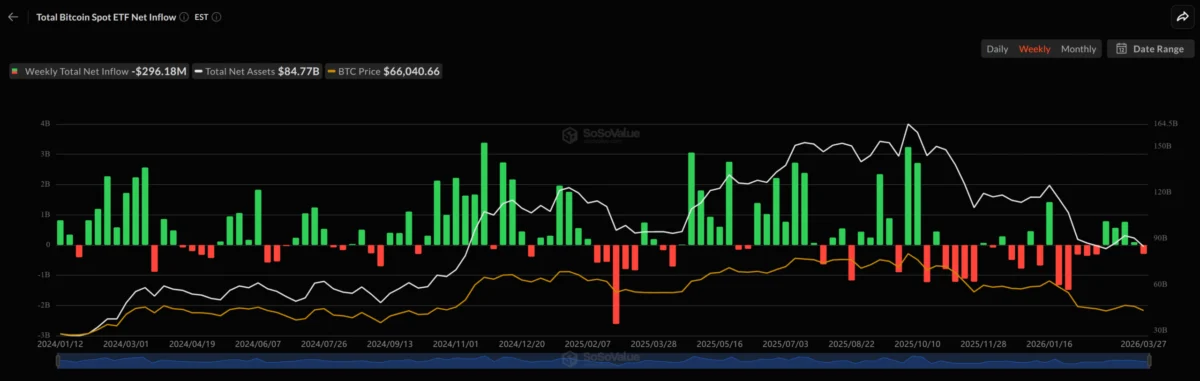
The cryptocurrency landscape is currently navigating a complex intersection of regulatory scrutiny, market sentiment shifts, and intense competition. In a significant development, prediction market operator Kalshi is confronting a new legal challenge, with the state of Washington filing allegations that its products violate state gambling laws. This comes as spot Bitcoin exchange-traded funds (ETFs) have experienced a notable reversal, breaking a four-week streak of inflows and recording substantial weekly outflows. Simultaneously, financial giant Morgan Stanley has entered the ETF arena with a strikingly low fee structure, potentially triggering a fee war among competitors and reshaping the competitive dynamics of the burgeoning Bitcoin ETF market.
Kalshi’s Legal Entanglements Deepen with Washington State Allegations
Kalshi, a platform that allows users to trade contracts based on the outcome of future events, finds itself embroiled in another state-level legal battle. On Friday, the state of Washington formally filed a complaint, asserting that Kalshi’s operations infringe upon existing state gambling regulations. The lawsuit, lodged by the Washington Attorney General’s office, directly challenges the nature of Kalshi’s prediction markets, drawing parallels to traditional gambling activities.
The Attorney General’s complaint specifically cites Washington’s long-standing prohibition on online gambling and its stringent oversight of the gaming industry. According to the filing, Kalshi’s business model violates the Washington Consumer Protection Act, the Gambling Act, and the Recovery of Money Lost at Gambling Act. The state’s legal team argues that Kalshi’s website and application present consumers with a range of events upon which they can "bet," complete with odds that determine potential payouts. This operational framework, the state contends, is indistinguishable from that of sportsbooks and other established gambling enterprises.
Washington Attorney General Nick Brown elaborated on this perspective in a public announcement, stating, "Kalshi advertises that they allow consumers to ‘bet on anything’ by simply calling their service a ‘prediction market’ rather than ‘gambling.’" The state views this semantic distinction as a deliberate attempt to circumvent gambling laws, thereby posing a risk to consumers and undermining the state’s regulatory framework.

In response to the lawsuit, Kalshi has swiftly taken steps to transfer the case to federal court. The company’s legal filing contends that the issues raised by Washington are already under litigation in other federal jurisdictions. Furthermore, Kalshi asserts that it received no prior warning or opportunity for dialogue from Washington state officials before the lawsuit was initiated, suggesting a procedural grievance alongside the substantive legal arguments. This move to federal court is a common strategy for companies facing state-level regulatory actions, aiming for a broader legal precedent and potentially a more favorable judicial environment.
The legal challenges facing Kalshi are not entirely new. The company has previously faced scrutiny and regulatory actions from other jurisdictions regarding the classification of its prediction markets. These ongoing legal battles highlight the persistent tension between innovative financial platforms that operate on event-based predictions and the established legal definitions of gambling, which vary significantly across different states and jurisdictions. The outcome of the Washington lawsuit could have far-reaching implications for the future of prediction markets in the United States, potentially setting new legal precedents or reinforcing existing regulatory boundaries.
Spot Bitcoin ETFs Experience Capital Flight, Ending a Sustained Inflow Trend
The digital asset market has witnessed a significant shift in investor sentiment as spot Bitcoin ETFs have broken a remarkable four-week streak of consistent inflows. For the week concluding Friday, these investment vehicles collectively recorded net outflows totaling $296.18 million. This reversal marks a notable departure from the robust capital accumulation seen in the preceding weeks, during which spot Bitcoin ETFs attracted over $2.2 billion in net inflows.
The momentum of inflows had been particularly strong in early March, with figures reaching $787.31 million, $568.45 million, and $767.33 million across consecutive weeks. While the prior week saw a slowdown to $95.18 million, the most recent period has seen a decisive outflow. Data from SoSoValue indicates that this weekly outflow was preceded by consecutive daily withdrawals on Thursday and Friday, amounting to more than $396 million. Friday alone accounted for a substantial $225.48 million in redemptions, representing the largest single-day outflow since March 3, when the ETFs experienced $348 million in outflows.
This sudden reversal in capital flows suggests a potential recalibration of investor strategy and risk appetite. The cessation of inflows and the subsequent outflows may be attributed to several factors. Market participants might be seeking to reduce their exposure to "directional risk" as the market enters a period of uncertainty or consolidation. This could be influenced by broader macroeconomic concerns, geopolitical events, or a natural profit-taking cycle after a period of significant gains.

The cumulative net inflows into spot Bitcoin ETFs remain impressive, standing at $55.93 billion since their inception. However, the total net assets under management have seen a decline, slipping from over $90 billion a week prior to approximately $84.77 billion. This contraction in asset value is a direct consequence of both the outflows and potentially the fluctuating price of Bitcoin itself. Trading activity on these ETFs has also moderated, with weekly volume decreasing to $14.26 billion from a higher $25.87 billion observed earlier in March. This tapering of trading volume further underscores a potential cooling of immediate investor interest.
The shift in investor behavior for spot Bitcoin ETFs is a critical indicator for the broader cryptocurrency market. While the long-term outlook for Bitcoin adoption through regulated investment vehicles remains optimistic, these short-term fluctuations highlight the inherent volatility and sentiment-driven nature of the crypto asset class. Analysts will be closely monitoring the duration and magnitude of these outflows to gauge whether this is a temporary correction or the beginning of a more sustained period of capital withdrawal.
Morgan Stanley Enters the Bitcoin ETF Arena with Aggressive Fee Strategy
In a move poised to significantly disrupt the competitive landscape of the spot Bitcoin ETF market, investment banking behemoth Morgan Stanley has announced its intention to launch its own spot Bitcoin ETF with an exceptionally low fee of 0.14%. This proposed fee structure, if approved and implemented, would position Morgan Stanley’s offering as the cheapest Bitcoin ETF available in the United States, potentially compelling rival issuers to revise their own fee schedules to remain competitive.
Morgan Stanley’s proposed fee was detailed in its latest S-1 registration statement filed with the Securities and Exchange Commission (SEC) on Friday. The 0.14% annual fee is a full basis point lower than the Grayscale Bitcoin Mini Trust ETF, which currently holds the distinction of being the most cost-effective option in the market. Furthermore, it is eleven basis points lower than the fee charged by BlackRock’s widely popular iShares Bitcoin Trust ETF (IBIT), a significant difference in the fee-sensitive world of exchange-traded funds.
The aggressive fee strategy has been met with considerable attention from market observers and analysts. James Seyffart, a prominent Bloomberg ETF analyst, characterized Morgan Stanley’s move as a "big move" and stated that "They are not messing around." Seyffart anticipates that the Morgan Stanley Bitcoin Trust (MSBT), as it is likely to be known, could launch as early as early April.

The implications of such a low fee extend beyond mere cost savings for investors. Fellow Bloomberg ETF analyst Eric Balchunas highlighted the strategic advantage of Morgan Stanley’s fee structure, noting that it would likely eliminate any potential conflicts of interest for the bank’s extensive network of financial advisors. With approximately 16,000 financial advisors managing a staggering $6.2 trillion in client assets, Morgan Stanley’s ability to recommend its own Bitcoin ETF without fee-related reservations could lead to substantial inflows. This makes the product highly attractive for advisors seeking to offer their clients exposure to Bitcoin through a familiar and trusted institutional channel.
The introduction of an ultra-low fee by a major financial institution like Morgan Stanley is likely to intensify the ongoing fee war within the burgeoning spot Bitcoin ETF market. This market, which has already accumulated approximately $83 billion in assets, is highly sensitive to fee differentials. Issuers who do not align their fees with this new benchmark may find themselves at a significant disadvantage, risking asset outflows as investors gravitate towards more cost-effective alternatives.
This competitive pressure could lead to a cascading effect, with other ETF providers being forced to reduce their fees to retain market share and attract new investors. Such a scenario would ultimately benefit retail and institutional investors by lowering the overall cost of accessing Bitcoin exposure through regulated investment products. The dynamic also underscores the maturity of the Bitcoin ETF market, where established financial players are leveraging traditional competitive strategies to capture market share in a rapidly evolving asset class. The coming months will be crucial in observing how the market adapts to Morgan Stanley’s aggressive pricing and what impact it has on the broader ETF ecosystem.