Sisilia Frederika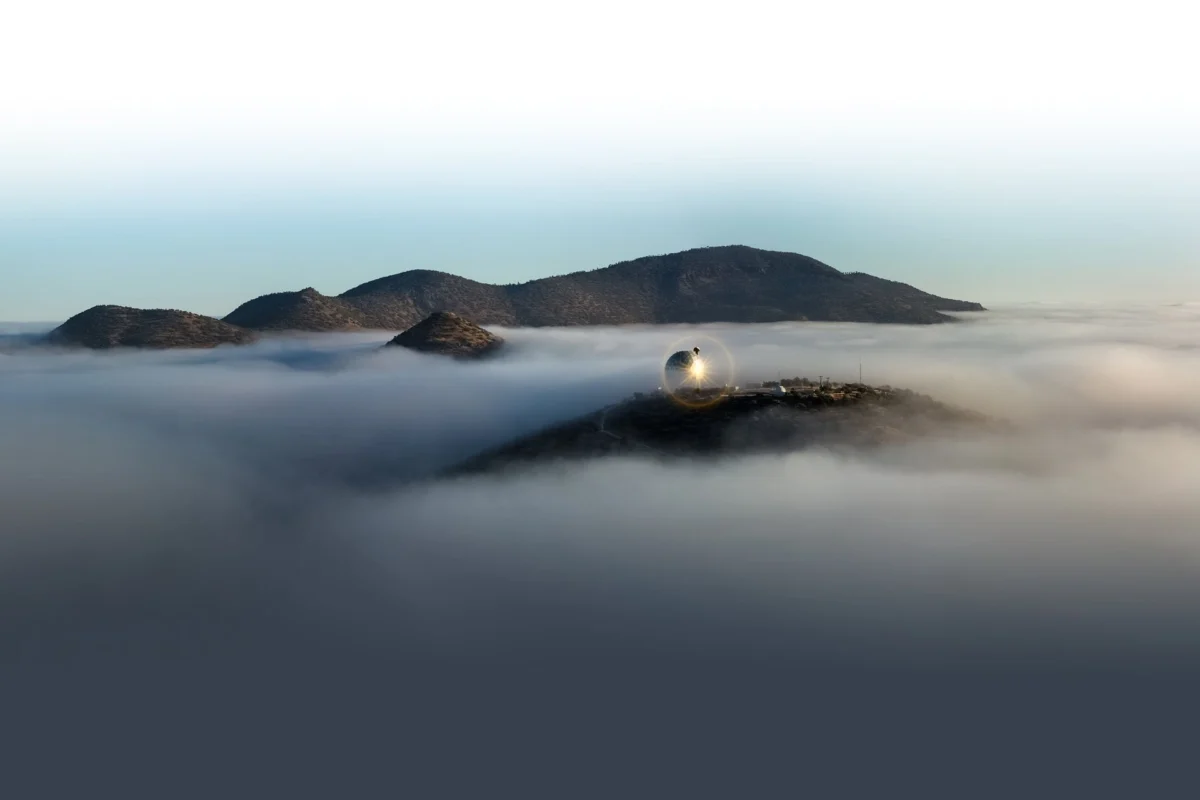
The prevailing scientific consensus regarding the origins of our universe suggests that following the Big Bang, the cosmos was a vast, dark expanse permeated by massive clouds of neutral hydrogen gas. Under the Lambda Cold Dark Matter (LCDM) model, these reservoirs served as the foundational building blocks for the first generation of stars and galaxies. This pivotal era, known to astronomers as the "Cosmic Dawn," represents the transition from a featureless void to a structured universe. For decades, theorists hypothesized that these nascent galaxies were encased in gargantuan envelopes of hydrogen gas, scientifically termed "Lyman-alpha nebulae." While the existence of such halos was a mathematical necessity for rapid galactic growth, empirical evidence remained elusive.
That evidentiary gap has now been substantially bridged. A team of astronomers utilizing the Hobby–Eberly Telescope Dark Energy Experiment (HETDEX) at the University of Texas at Austin’s McDonald Observatory has announced the discovery of tens of thousands of hydrogen halos dating back 10 to 12 billion years. This massive survey confirms that these gas reservoirs were not rare anomalies but a ubiquitous feature of the early universe, providing the first large-scale statistical confirmation of a long-standing cosmological theory.
The Scientific Foundation of the Cosmic Dawn
To understand the significance of the HETDEX findings, one must look back at the timeline of the early universe. Approximately 380,000 years after the Big Bang, the universe cooled sufficiently for protons and electrons to combine into neutral hydrogen. This period was followed by the "Dark Ages," a time before the first stars ignited. As gravity pulled matter together, the first stars began to form, emitting intense ultraviolet (UV) radiation that reionized the surrounding hydrogen.
This transition—the Cosmic Dawn—required an immense amount of raw material. Theory dictated that for galaxies to form and mature at the rates observed in the distant universe, they must have been fed by "vast reservoirs" of gas. These reservoirs, or Lyman-alpha nebulae, are characterized by their emission of a specific wavelength of light known as the Lyman-alpha line, which occurs when hydrogen atoms are excited by UV radiation from nearby stars or active galactic nuclei.
Until this recent breakthrough, the hunt for these halos was hampered by technological limitations. Astronomers had identified only about 3,000 such clouds over the last twenty years. These previous detections were largely limited to the brightest and most extreme examples, leaving a significant portion of the galactic population unobserved. The HETDEX survey has now increased the known census of these halos by a factor of ten, identifying approximately 33,000 structures.
The HETDEX Mission and the Power of Stacking
The Hobby–Eberly Telescope Dark Energy Experiment was not originally designed solely to find hydrogen halos. Its primary mission, as the name implies, is to map the positions of over one million galaxies to measure the expansion of the universe and the influence of Dark Energy. However, the sheer volume of data collected by the instrument has proven to be a goldmine for other areas of astrophysics.
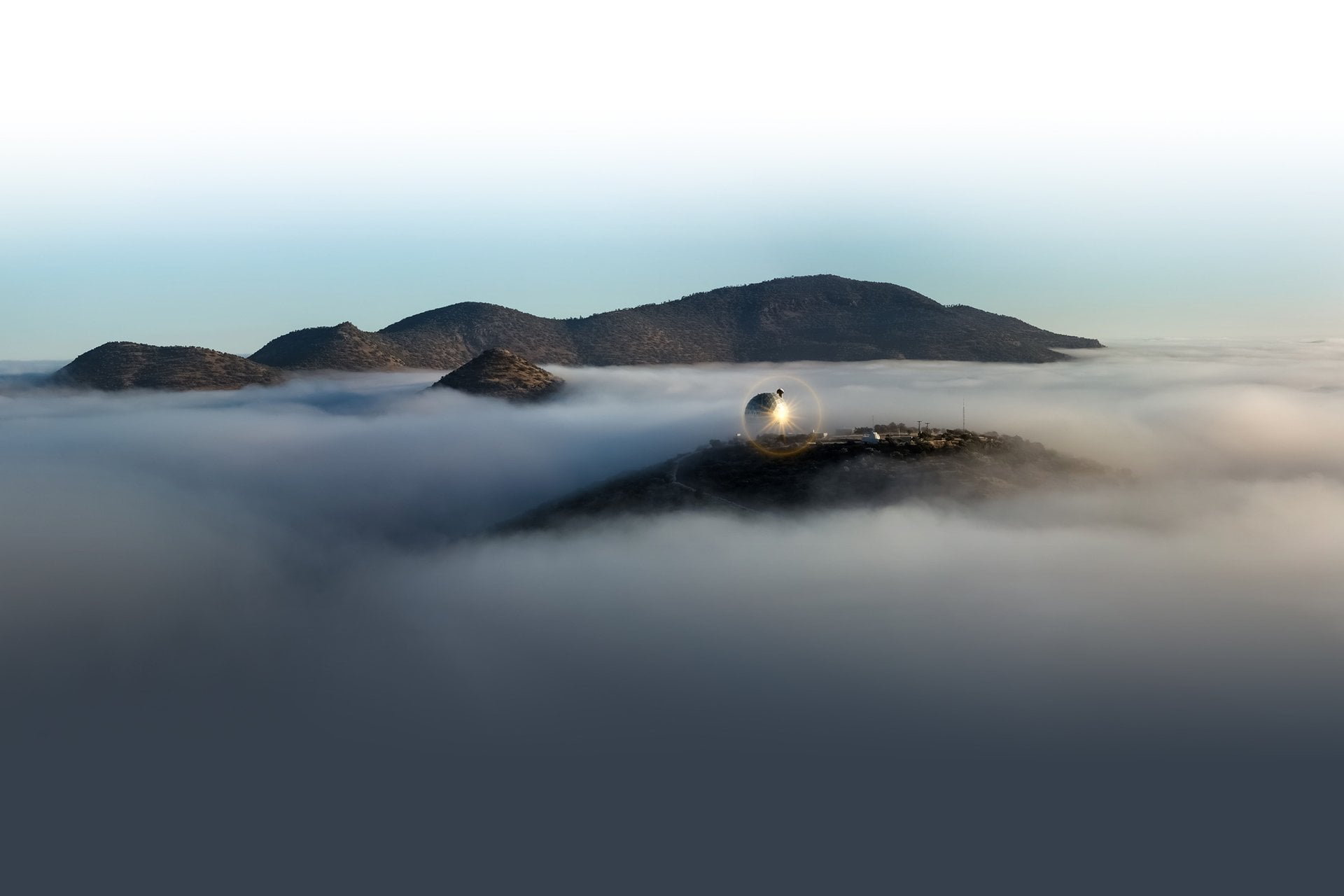
Located at the McDonald Observatory in West Texas, the Hobby–Eberly Telescope (HET) is one of the largest optical telescopes in the world. The HETDEX instrument is a unique "spectroscopic survey" tool that produces 100,000 spectra in a single observation. This capability allows researchers to capture light from vast swaths of the sky simultaneously, covering an area equivalent to more than 2,000 full Moons.
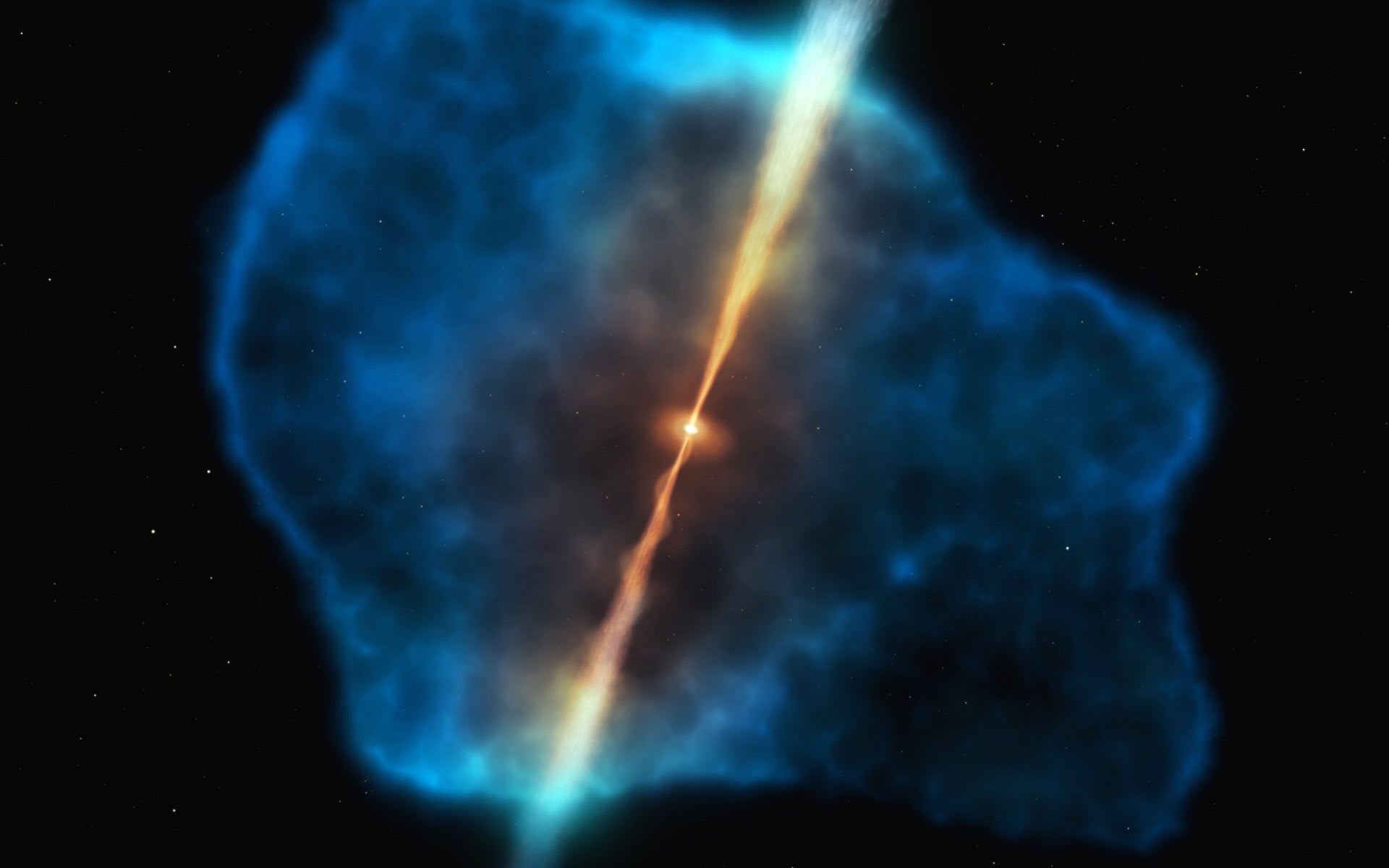
The challenge in detecting hydrogen halos lies in their inherent faintness. Hydrogen gas does not generate its own visible light; it only glows when illuminated by an external source of energy, such as a young, hot galaxy. To overcome this, the HETDEX team employed a sophisticated data-processing technique known as "stacking." By statistically combining the spectra of thousands of distant galaxies, researchers can amplify faint signals that would be invisible in any single observation. The "noise" from the background is averaged out, while the consistent signal of the hydrogen glow becomes prominent.
Data Processing and Supercomputing at TACC
The scale of the HETDEX project necessitated a massive computational effort. The team, led by Erin Mentuch Cooper, the HETDEX Data Manager, and Karl Gebhardt, the HETDEX Principal Investigator, collaborated with researchers from international institutions, including the Institute for Gravitation and the Cosmos (IGC) and the Kavli Institute for the Physics and Mathematics of the Universe (IPMU).
From a total pool of 1.6 million early galaxies identified by the HETDEX survey, the team narrowed their focus to the 70,000 brightest candidates. Analyzing this volume of data required the processing power of the Texas Advanced Computing Center (TACC) at UT Austin. Using TACC’s supercomputers, the researchers searched for the telltale signatures of Lyman-alpha emissions surrounding these galaxies.
The results were transformative. Nearly half of the 70,000 galaxies analyzed showed clear evidence of surrounding hydrogen halos. These halos range in size from tens of thousands to hundreds of thousands of light-years in diameter. In many cases, the halos are large enough to enshroud not just individual galaxies but entire clusters of galaxies, suggesting a complex web of interconnected gas that fed the growth of the early cosmic structures.
Overcoming Historical Observational Biases
Before the HETDEX survey, the astronomical community suffered from a "selection bias" regarding Lyman-alpha nebulae. Previous telescopes and surveys were often forced to use high-magnification settings to peer into the deep past. While this allowed for detailed views of individual objects, it often filtered out the broader, fainter context. Furthermore, foreground objects in the closer universe often obscured the view of the distant past, leading astronomers to focus only on the smallest or most exceptionally bright halos.
"We’ve been analyzing the same handful of objects for the past 20 or so years," noted Erin Mentuch Cooper in a statement regarding the study. The HETDEX survey changes the landscape by providing a "statistical catalog" that represents a more accurate cross-section of the early universe. Instead of looking at the "extremes," scientists can now see the "norm."
Dustin Davis, a postdoctoral fellow and co-author of the study, emphasized the uniqueness of the HETDEX instrument. "The instrument HETDEX uses produces 100,000 spectra in each observation. So, we have huge amounts of data, and there are all kinds of neat, fun, weird things waiting for us to find." This "blind" survey approach—where the telescope monitors a patch of sky without pre-selecting targets—is what allowed the team to find halos that were previously "elusive" to more targeted observations.
Implications for the Evolution of the Universe
The discovery of these tens of thousands of halos has profound implications for our understanding of galactic evolution and the mechanics of the early universe. By confirming that these gas reservoirs were common, the HETDEX data supports the LCDM model’s predictions about how matter clustered in the eons following the Big Bang.
The presence of these halos provides a "laboratory" for studying the physics of the early universe. Astronomers can now analyze the shape, size, and density of these gas clouds to determine how they fueled star formation. For instance, the fact that some galaxies did not show detectable halos suggests that either the gas was too faint to be seen even with stacking, or that some galaxies had already depleted their surrounding reservoirs.
Furthermore, the data offers a glimpse into the "Epoch of Reionization," a time when the first light sources stripped electrons from neutral hydrogen atoms. The Lyman-alpha emissions detected by HETDEX are a direct byproduct of this process. By mapping these emissions on such a massive scale, scientists can better understand how reionization progressed across the cosmos—whether it happened in uniform waves or in patchy, localized pockets.
Future Research and Global Collaboration
The findings, recently published in The Astrophysical Journal, represent only the beginning of the HETDEX legacy. With nearly half a petabyte of data already captured, the team plans to continue their analysis to refine their measurements of these halos. The collaboration involves a diverse group of institutions, including the National Astronomical Observatory of Japan (NAOJ) and the Leibniz-Institute for Astrophysics Potsdam (AIP), highlighting the international importance of the project.
Looking forward, the HETDEX catalog will likely serve as a roadmap for other major observatories, including the James Webb Space Telescope (JWST). While JWST provides unparalleled infrared resolution for individual objects, HETDEX provides the wide-field context necessary to understand where to look and what statistical trends to investigate.
Karl Gebhardt, the chair of UT Austin’s astronomy department, summed up the scale of the achievement: "Our observations cover a region of the sky measuring over 2,000 full Moons. The scope is enormous and unprecedented." This unprecedented scope has finally allowed humanity to see the "scaffolding" of the early universe—the vast, glowing clouds of hydrogen that set the stage for everything that exists today.
As astronomers continue to sift through the HETDEX data, the "Cosmic Dawn" is becoming less of a theoretical concept and more of a visible reality. The transition from a universe of dark gas to a universe of light is now documented in a catalog of 33,000 ancient halos, providing a definitive link between the Big Bang and the modern cosmos.