Sisilia Frederika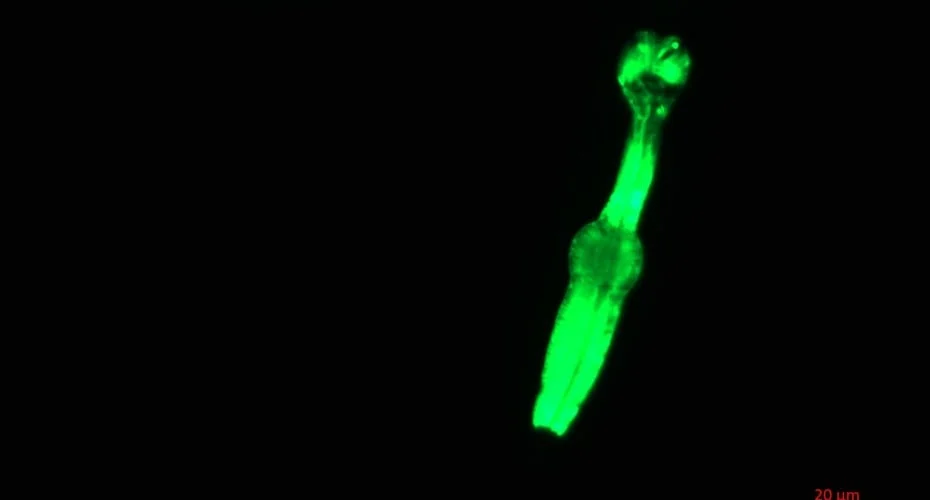
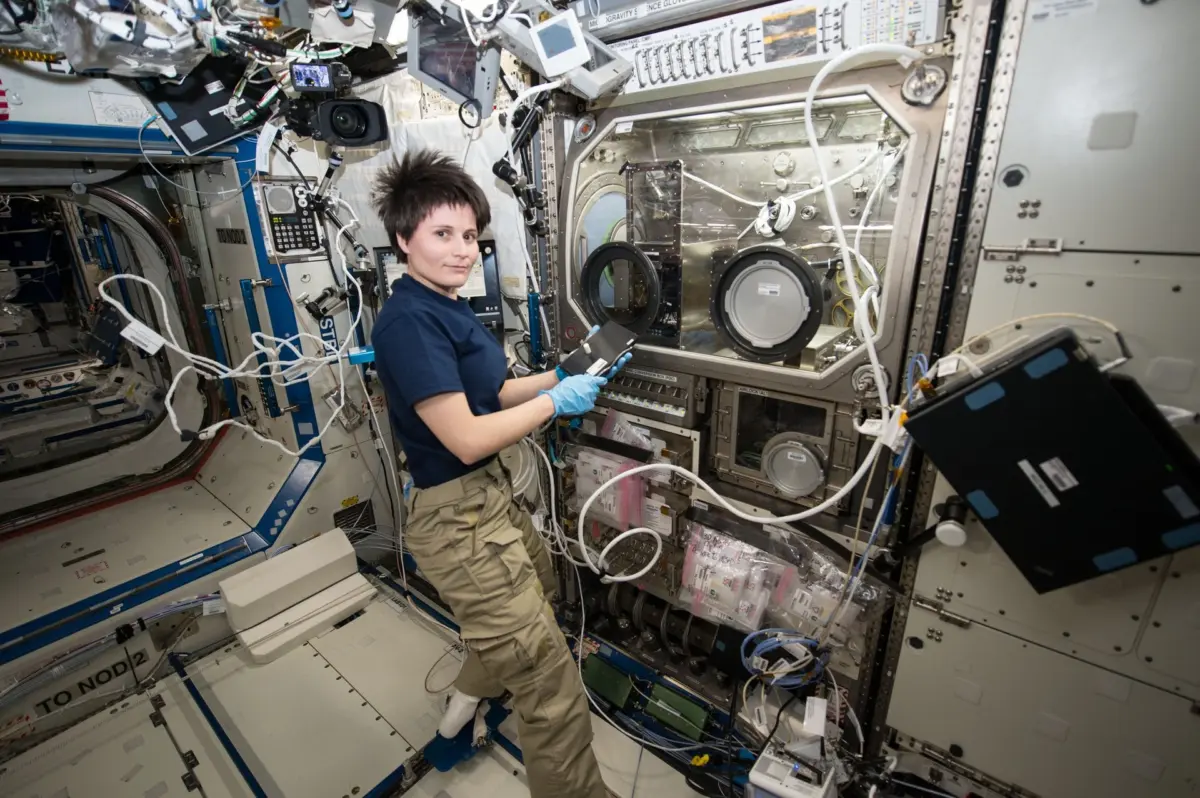
The quest for a sustainable human presence on the Moon and eventually Mars hinges not only on the development of powerful rockets and resilient habitats but also on a profound understanding of the biological toll exerted by the vacuum of space. As humanity prepares to venture beyond Low Earth Orbit (LEO) through the Artemis program, scientists are intensifying their efforts to mitigate the debilitating effects of microgravity and cosmic radiation. Central to this mission is a newly arrived crew aboard the International Space Station (ISS), composed not of seasoned astronauts, but of thousands of microscopic organisms known as Caenorhabditis elegans (C. elegans). These nematode worms, launched as part of a sophisticated biological study, are tasked with revealing how complex organisms adapt—or succumb—to the most hostile environment known to man.
The Biological Frontier: Why Nematodes Matter
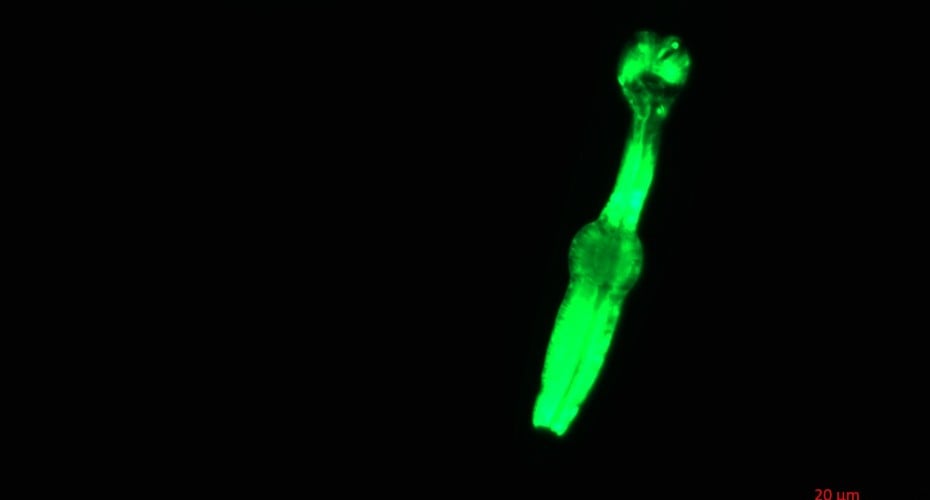
The use of C. elegans in space research is a strategic choice rooted in decades of terrestrial genetic and medical study. Measuring approximately one millimeter in length, these transparent roundworms share a surprising amount of biological commonality with humans. Approximately 60% to 80% of human genes have functional counterparts in the C. elegans genome, making them an ideal model for studying muscle atrophy, bone density loss, and the effects of oxidative stress caused by radiation.
In the context of spaceflight, the primary concerns for human health include the rapid loss of muscle mass and the degradation of bone mineral density. In the microgravity environment of the ISS, the human body no longer needs to support its weight against gravity, leading to physiological changes that mimic accelerated aging or prolonged bed rest on Earth. By studying C. elegans, which possess a nervous system, a digestive tract, and muscles that function similarly to our own, researchers can observe these degenerative processes at a cellular level over much shorter timescales. The worms’ brief lifespan—typically two to three weeks—allows scientists to observe multiple generations of biological adaptation or degradation within a single mission timeframe.
Mission Logistics and the Fluorescent Deep Space Petri-Pods Project
The current experiment, titled the Fluorescent Deep Space Petri-Pods project (FDSPP), represents a high-level international collaboration. Led by the University of Exeter and engineered by the University of Leicester, the project received critical integration support from Voyager Space Technologies and was funded by the UK Space Agency. The mission officially commenced on April 11th, when the worms were launched toward the ISS aboard the NASA Northrop Grumman CRS-24 resupply mission.
The CRS-24 mission, a routine but vital part of ISS operations, carried over 3,700 kilograms of supplies, including scientific hardware, crew provisions, and the specialized Petri Pods housing the nematodes. Following a successful launch from the Wallops Flight Facility in Virginia, the Cygnus spacecraft rendezvoused with the ISS on the following Monday, where it was captured by the station’s robotic arm, Canadarm2, and berthed to the Unity module.
Engineering a Miniature Laboratory: The Petri Pod System
The technical heart of the FDSPP is the Petri Pod, a masterpiece of miniaturized bio-engineering. Designing a life-support system capable of maintaining biological specimens in the harsh environment of space—especially when intended for exposure to the exterior of the station—presents immense challenges. Each Petri Pod measures roughly 10x10x30 centimeters and weighs approximately 3 kilograms. Within this compact frame are 12 individual experimental chambers.
These chambers are self-contained ecosystems. They provide a regulated environment where pressure and temperature are meticulously controlled to ensure the worms’ survival. To sustain the population, the chambers contain an agar-based nutrient medium, which serves as the worms’ primary food source. Furthermore, the pods are equipped with a trapped volume of breathable air, essential for the aerobic metabolism of the nematodes.
Beyond mere survival, the Petri Pods are designed for high-fidelity data collection. Four of the twelve chambers are equipped with miniaturized digital cameras capable of capturing high-resolution white-light photographic stills and time-lapse sequences. However, the most innovative aspect of the monitoring system is the use of fluorescence. Scientists have genetically modified certain strains of the worms to express fluorescent proteins in response to specific biological stressors. By tracking these "glowing" signals, researchers back on Earth can monitor real-time changes in gene expression and cellular health as the worms react to microgravity and radiation.
Chronology of the Orbital Experiment
The FDSPP mission is structured in distinct phases to maximize the data harvested from the specimens. Upon arrival at the ISS, the Petri Pods were initially kept inside the pressurized environment of the station. This phase allows the worms to acclimate to microgravity while remaining shielded from the intense radiation found outside the station’s hull.
Following this stabilization period, the experiment will transition to its most critical phase. Using the station’s external robotic assets, the Petri Pods will be moved from the interior of the ISS to the External Payload Facility on the station’s hull. Here, the worms will remain for a duration of 15 weeks.
This exterior stay is what distinguishes the FDSPP from many previous biological experiments. While the interior of the ISS is shielded by the station’s structure and the Earth’s magnetosphere, the exterior is exposed to a much higher flux of cosmic radiation, including solar particles and galactic cosmic rays. By exposing the C. elegans to this unshielded environment while simultaneously subjecting them to microgravity, the study aims to decouple the effects of these two primary spaceflight stressors.
Technical Challenges and Professional Perspectives
The complexity of the mission has been highlighted by the engineering teams involved. Professor Mark Sims, the project manager at the University of Leicester, emphasized the difficulty of packing a fully functional laboratory into such a small footprint. "It has been both an interesting and challenging instrument to design and build," Sims stated. "Having now delivered the experiment, the project team from Leicester look forward to seeing the first images in orbit."
The design had to account for the extreme thermal cycling experienced on the outside of the ISS, where temperatures can swing by hundreds of degrees as the station moves from direct sunlight into the Earth’s shadow every 45 minutes. Maintaining a stable internal temperature for the worms under these conditions required advanced insulation and active thermal control systems within the 3kg pods.
From a policy and strategic perspective, the UK Space Agency views this mission as a testament to the nation’s growing capabilities in space science. Liz Lloyd, the UK’s Space Minister, remarked on the significance of the project for future exploration. "It might sound surprising, but these tiny worms could play a big role in the future of human spaceflight," Lloyd said. "This remarkable mission shows the ingenuity and ambition of UK space science, using a small experiment to tackle one of the biggest challenges of long-duration space travel."
Broader Implications for Human Deep Space Exploration
The data gleaned from the FDSPP will have direct applications for the Artemis program, which seeks to establish a long-term lunar base and eventually send humans to Mars. Current medical protocols for astronauts involve rigorous exercise regimens to combat muscle and bone loss, but these are only partially effective and do not address the cellular damage caused by deep-space radiation.
By identifying the specific genetic pathways that are activated or suppressed in C. elegans during spaceflight, pharmaceutical researchers may be able to develop targeted therapies. For instance, if the study identifies a particular protein responsible for accelerated muscle degradation in microgravity, drugs could be designed to inhibit that protein, providing a "chemical shield" for astronauts.
Furthermore, the study of radiation effects on the worms’ DNA will provide better risk-assessment models for long-term missions. Unlike the 15-week duration of this experiment, a mission to Mars would involve a round trip of nearly two years, exposing humans to cumulative radiation doses that currently exceed safety limits. Understanding how a complex organism’s repair mechanisms function—or fail—under such stress is a prerequisite for ensuring crew safety.
Conclusion: Small Steps Toward a Giant Leap
The Fluorescent Deep Space Petri-Pods project serves as a reminder that the path to the stars is paved with microscopic insights. While the sight of a 1mm worm might seem insignificant compared to the massive scale of the International Space Station or the rockets that launch them, the biological data they provide is foundational.
As the first images and fluorescent data begin to stream back to the University of Exeter and the University of Leicester, the scientific community moves one step closer to solving the physiological puzzle of spaceflight. The success of the FDSPP will not only validate the engineering of miniaturized space labs but will also provide a clearer roadmap for the biological survival of the next generation of lunar and Martian explorers. In the harsh, silent vacuum of space, these tiny pioneers are currently speaking volumes about the future of our species.