admin
admin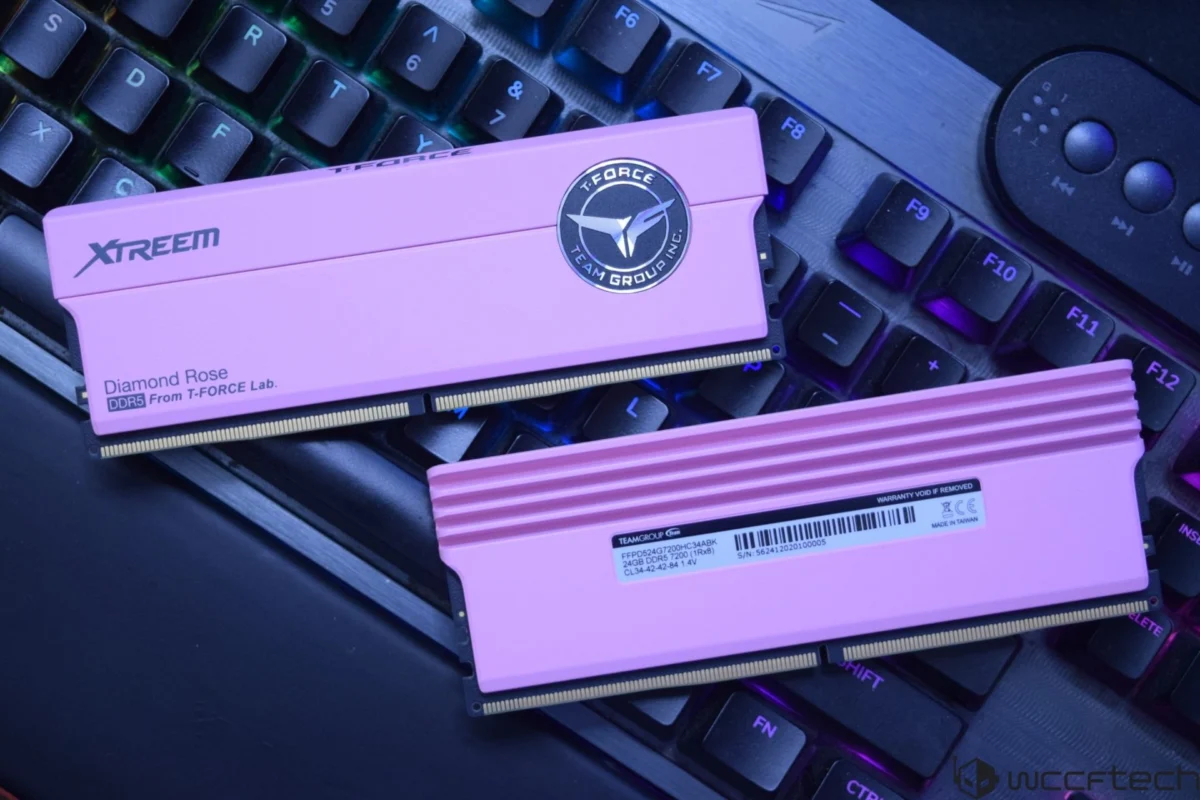
The volatility of the global semiconductor market continues to manifest in the consumer hardware sector as recent data from the German retail market indicates a reversal of the brief pricing relief observed in early 2026. Following a much-anticipated price decline in March—the first of its kind in nearly nine months—retailers in Germany have reported a renewed upward trend in DDR5 memory kit pricing for April. This shift suggests that the stabilization many analysts hoped for may be further off than initially predicted, with high-capacity and high-speed modules leading the price surge.
Market tracking reports from 3D Center, which monitors a wide range of DDR5 configurations across major European retailers, reveal that the downward trajectory seen in March was a temporary market adjustment rather than a long-term trend. The average price index for DDR5 memory now stands at approximately 410% of the baseline levels recorded in July 2025. While this remains slightly below the historic peaks witnessed in January and February of 2026, the rebound in April signals a persistent imbalance between supply and demand that continues to plague the PC component industry.
Chronology of the DDR5 Pricing Crisis (2025–2026)
To understand the current pricing landscape, it is essential to trace the trajectory of DDR5 costs over the past year. In July 2025, the market appeared to be reaching a point of relative maturity, with prices becoming accessible to mid-range PC builders. However, a series of supply chain disruptions, coupled with a massive pivot by major DRAM manufacturers toward High Bandwidth Memory (HBM) for artificial intelligence applications, began to squeeze the consumer DDR5 supply.
From August 2025 through December 2025, prices saw a steady month-over-month increase. This culminated in a significant "price shock" during the first two months of 2026, where some high-performance kits saw their retail values nearly triple compared to the previous year. The industry briefly breathed a sigh of relief in March 2026 when a noticeable dip occurred, fueled by a temporary surplus in retail inventory and a cooling of immediate demand.

The April 2026 data, however, has effectively erased those gains. The current "readjustment" reflects a market where manufacturers are prioritizing enterprise-grade silicon over consumer-grade DIMMs. This historical pattern suggests that the brief March decline was an anomaly—a "dead cat bounce" in pricing terms—rather than the start of a sustained downward trend.
Analyzing the April Price Surge by Capacity and Speed
The April price hikes have not affected all memory modules equally. The most significant growth has been observed in the high-capacity, enthusiast-grade segment. Specifically, 48 GB (2x 24 GB) and 96 GB (2x 48 GB) kits have seen the most aggressive price increases. Among these, the DDR5-6000 and DDR5-6400 specifications—widely considered the "sweet spot" for modern CPU architectures—have witnessed the highest percentage growth.
According to retail tracking data, the 2x 48 GB DDR5-6400 kits have become the most expensive outliers. While it is standard for higher-capacity kits to command a premium, the rate of increase for these "non-binary" memory capacities has outpaced the more traditional 16 GB and 32 GB kits. This is largely attributed to the specific density of the DRAM chips required for these modules, which are currently in high demand for workstation and server applications.
Conversely, some entry-level 16 GB kits have seen minor price fluctuations or even slight declines in specific retail outlets. However, these represent a shrinking portion of the market as modern operating systems and gaming titles increasingly demand 32 GB as a functional minimum. The divergence between "budget" memory and "performance" memory is widening, creating a bifurcated market where enthusiasts are forced to pay significantly higher premiums for optimal system performance.
Supply Chain Dynamics and the Role of HBM
The primary driver behind the sustained high cost of DDR5 is the strategic shift by the world’s three largest DRAM producers: Samsung, SK Hynix, and Micron. As the global demand for AI processing power continues to skyrocket, these manufacturers have diverted a substantial portion of their production capacity to HBM (High Bandwidth Memory). HBM is essential for AI accelerators like those produced by NVIDIA and AMD, and it offers significantly higher profit margins than standard consumer DDR5.

Reports from industry insiders suggest that memory makers are currently only meeting approximately 60% of the global DRAM demand. This 40% shortfall is expected to persist through 2027 as fabrication plants struggle to scale up production while simultaneously transitioning to more advanced lithography nodes. In Germany, a major hub for European tech retail, this supply constraint is felt acutely. German retailers often operate on thinner margins and are more sensitive to fluctuations in the European Central Bank’s currency valuations, further complicating the retail price for the end-user.
Industry Reactions and Market Sentiment
While official statements from major memory brands like Corsair, G.Skill, and Kingston often focus on product innovation, off-the-record sentiments from distribution partners in the DACH region (Germany, Austria, Switzerland) reflect growing concern. Distributors have noted that lead times for high-frequency DDR5 kits have extended from days to weeks, and in some cases, months.
Market analysts suggest that the "price relief" seen in March was likely the result of retailers clearing out older stock to make room for newer, more expensive shipments. Now that those inventories have been depleted, the new shipments arriving in April reflect the higher procurement costs currently being demanded by wholesalers. This suggests that the April hike is not a local retail strategy to increase profits, but rather a necessary response to rising costs at the top of the supply chain.
For the consumer, this has led to a shift in buying behavior. In the German market, there has been a recorded uptick in the sales of DDR4-based systems among budget-conscious builders, as the "DDR5 tax" becomes increasingly difficult to justify for non-professional use. However, for those building on the latest platforms from Intel and AMD, there is no alternative but to absorb the rising costs.
Regional Comparisons: Germany vs. The Global Market
While the 3D Center data focuses specifically on the German retail landscape, the trends observed are largely indicative of a broader global phenomenon. Similar price movements have been reported in North America and parts of Asia, though the timing of these shifts can vary due to local logistics and inventory cycles.

Germany serves as a particularly useful barometer for the European market due to its high volume of enthusiast builders and the presence of several large-scale hardware retailers like Mindfactory and Caseking. The fact that prices are rising in a market known for its competitive pricing suggests that the upward pressure is systemic. In North America, while some retailers have managed to keep prices stable through long-term supply contracts, industry experts predict that the "German trend" will likely manifest in US retail prices by the end of the second quarter of 2026.
Long-Term Implications and the Road to 2027
The outlook for the remainder of 2026 remains cautious. With the current supply-to-demand ratio standing at 60%, there is little room for price corrections in the near future. Furthermore, as the industry begins to look toward the eventual introduction of DDR6, investment in current DDR5 production lines may begin to plateau, potentially leading to further scarcity of high-performance modules.
For PC builders and enterprise IT managers, the current data suggests that waiting for a significant price drop may be a futile strategy. The volatility that has characterized the market since July 2025 is expected to remain a permanent fixture for at least the next 18 to 24 months. The brief respite in March 2026 serves as a reminder that while minor dips can occur, the overarching trend is driven by macro-economic factors and industrial pivots that are beyond the control of the consumer market.
In conclusion, the April price hike in Germany marks a return to the "new normal" for the memory market. High-capacity kits, particularly the 48 GB DDR5-6000 variants, continue to be the most affected by these trends. As long as the AI-driven demand for HBM continues to dominate the production schedules of silicon giants, consumer DDR5 prices will likely remain elevated, making the dream of affordable, high-speed system memory a distant prospect for the foreseeable future. Builders are advised to monitor retail trends closely, as the window for "lower" prices—even if they are still 400% above historical baselines—may only open for a few weeks at a time.