George Chandra Eka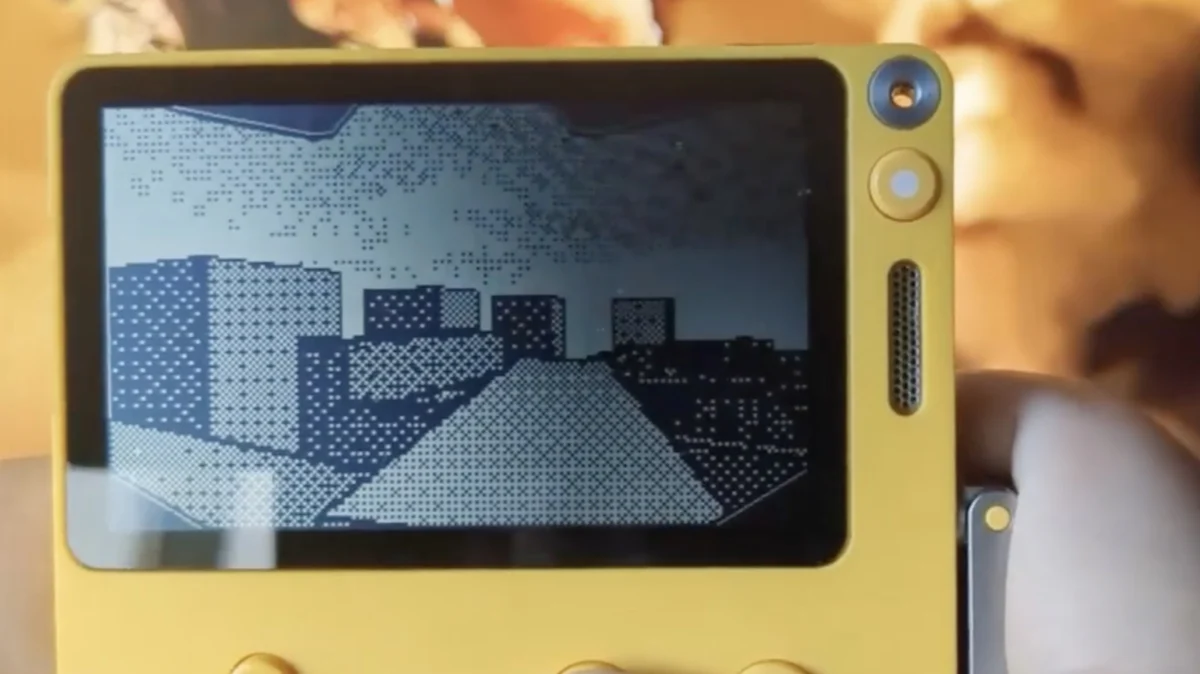
The landscape of handheld gaming has been significantly diversified by Panic Inc.’s Playdate, a distinctive yellow console celebrated for its unique crank controller, monochrome screen, and episodic game releases. While the device has garnered a loyal following through its curated "Season" of games and robust indie developer support, a recent demonstration by game developer Cristina Ramos has shattered conventional expectations, revealing the Playdate’s unexpected capability for full 3D rendering, including complex exterior environments reminiscent of modern parkour titles. This technical feat not only adds new dimensions to the device but also underscores the profound ingenuity thriving within its dedicated developer community.
The Breakthrough: Full 3D Environments on a Monochrome Canvas
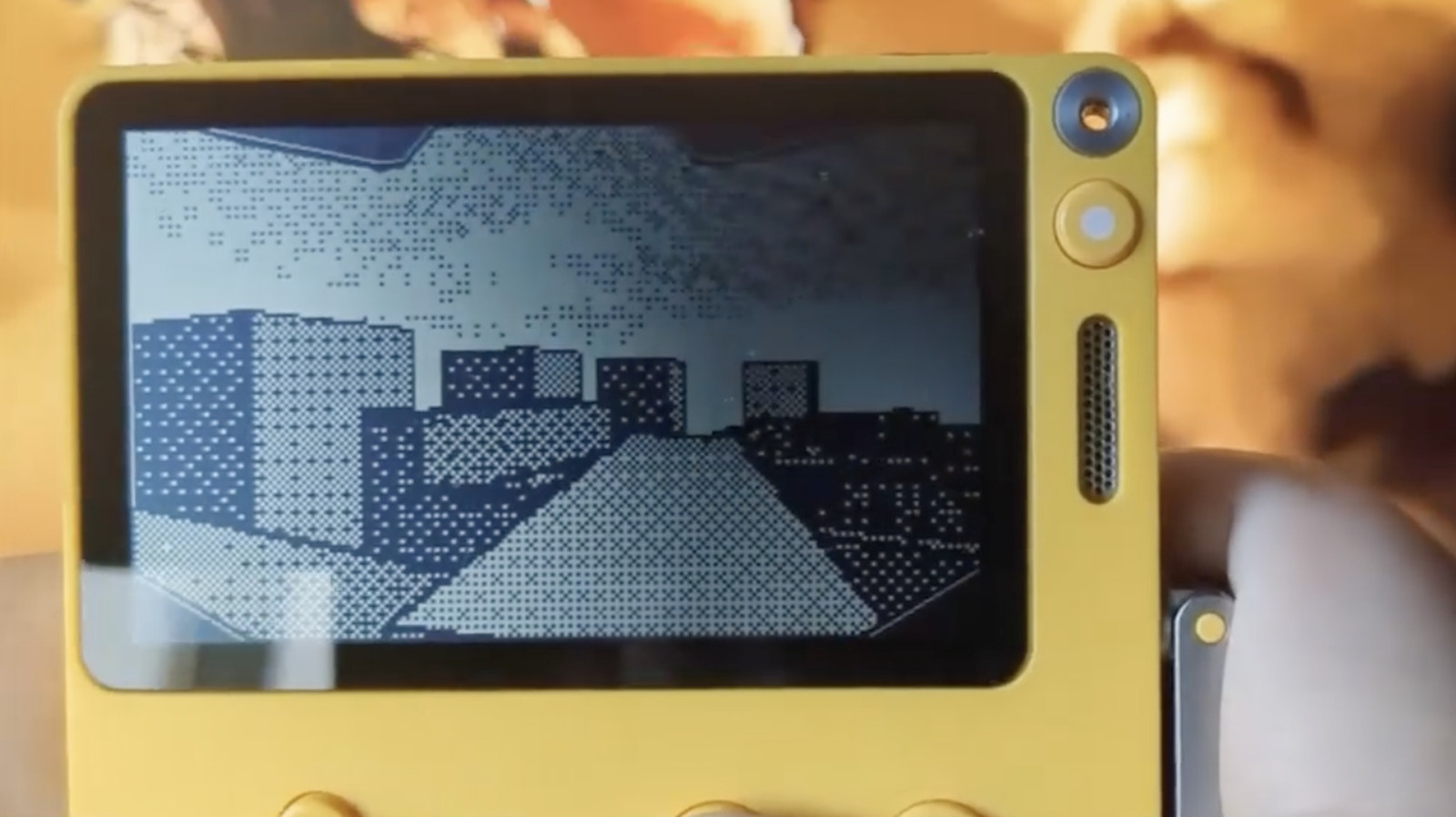
On July 22, 2026, Cristina Ramos posted a video on social media platform Bluesky showcasing a work-in-progress game demo that immediately captured the attention of the Playdate community. The footage presented a seamless transition from an interior platforming sequence to an expansive outdoor rooftop environment, featuring dynamic jumping and movement that evoked comparisons to the visually striking "Mirror’s Edge" series. This demonstration directly challenged long-held assumptions about the Playdate’s graphical limitations, particularly regarding its capacity for rendering complex three-dimensional worlds.
Ramos’s accompanying statement on Bluesky, "I was told you couldn’t do 3D on the Playdate, so I did it. Then I was told there was no way I could create exterior levels like those in Mirror’s Edge, so I proved them wrong again," encapsulates the spirit of innovation driving this achievement. The demo illustrates not just static 3D models, but interactive environments with depth perception, dynamic camera angles, and smooth character movement, all rendered on the device’s 1-bit, 400×240 pixel monochrome display. This is a significant departure from many existing Playdate titles, which predominantly utilize 2D pixel art or clever isometric perspectives to simulate depth.
Understanding the Playdate’s Hardware: A Canvas of Constraints
To fully appreciate Ramos’s accomplishment, it is crucial to understand the technical specifications and design philosophy behind the Playdate. Launched in April 2022 after its initial announcement in 2019, the Playdate was conceived by Panic Inc., an American software and video game company known for publishing titles like "Firewatch" and "Untitled Goose Game." The device was deliberately designed with specific constraints to foster creativity and differentiate itself in a market dominated by high-powered consoles and mobile devices.
Key hardware specifications of the Playdate include:
- Processor: 180 MHz Cortex M7 microcontroller, a relatively modest CPU by modern gaming standards.
- RAM: 16MB of low-power synchronous dynamic random-access memory (LPSDR SDRAM).
- Display: A unique 2.7-inch, 1-bit monochrome LCD screen with a resolution of 400×240 pixels, refreshing at 50Hz. The 1-bit nature means each pixel is either fully black or fully white, with no shades of gray.
- Storage: 4GB of flash storage.
- Connectivity: Wi-Fi and Bluetooth.
- Unique Input: A mechanical crank on the side, designed to be an integral part of gameplay, offering novel control schemes. Standard D-pad and A/B buttons are also present.
The philosophy behind these specifications was not to compete on raw power but to inspire innovative game design within defined boundaries. Panic’s co-founder Cabel Sasser frequently emphasized that the Playdate was about "joy and surprise" and challenging developers to think differently. The "Season" model, where players receive two new games each week for twelve weeks, further reinforces this, providing a steady stream of diverse and often experimental titles. The official SDK (Software Development Kit) and developer tools are freely available, cultivating a vibrant independent developer community that continually pushes the boundaries of what the device can do.
The Art of Constraint-Driven Development and Technical Ingenuity
The Playdate embodies the principle of constraint-driven design, a concept that has historically led to some of the most innovative breakthroughs in technology and art. When resources are limited, developers are forced to think outside the box, optimizing every line of code and every pixel. This approach contrasts sharply with the "more power, more features" mentality prevalent in mainstream gaming, where increasing hardware capabilities often lead to games that rely heavily on graphical fidelity over novel mechanics.
Achieving 3D rendering on hardware as limited as the Playdate’s requires significant technical ingenuity. Without a dedicated Graphics Processing Unit (GPU), all rendering operations must be performed by the main CPU. This typically involves:
- Software Rendering: The CPU calculates all vertex transformations, lighting, and pixel drawing entirely in software, rather than offloading these tasks to specialized hardware.
- Simplified Geometry and Low Polygon Counts: To reduce computational load, 3D models must be extremely low-polygon. This means characters and environments are composed of the fewest possible triangles or quadrilaterals, requiring clever artistic design to remain recognizable and appealing.
- Fixed-Point Math: Instead of floating-point numbers, which are more computationally expensive, fixed-point arithmetic is often used for 3D calculations (e.g., for camera matrices, vertex positions). This provides a performance boost at the cost of some precision, which is often acceptable for low-resolution displays.
- Optimized Culling Techniques: Techniques like back-face culling (not rendering polygons facing away from the camera) and frustum culling (not rendering objects outside the camera’s view) are essential to minimize the number of elements the CPU needs to process.
- Dithering for Perceived Grayscale: The Playdate’s 1-bit screen cannot display shades of gray. To create the illusion of depth, shading, and texture, developers employ dithering algorithms. These algorithms arrange patterns of black and white pixels to trick the eye into perceiving intermediate shades. Ramos’s demo likely utilizes sophisticated dithering to give the impression of varied lighting and environmental textures in her exterior scenes.
- Minimal Texture Mapping or Procedural Textures: Applying complex textures is resource-intensive. Instead, simpler techniques like solid colors, basic patterns, or even procedurally generated textures might be used, further relying on dithering for detail.
Ramos’s ability to create "Mirror’s Edge style" exterior levels on this hardware is particularly impressive because open environments typically involve more complex geometry, greater draw distances, and potentially more objects onscreen than confined interior spaces. This suggests highly optimized scene management, aggressive culling, and perhaps very sparse but cleverly designed environments to maintain a playable frame rate. The smooth movement observed in the demo indicates a well-optimized rendering pipeline.
Community and Developer Impact: Inspiring a New Wave of Creativity
Cristina Ramos’s 3D demo is more than just a technical curiosity; it represents a significant milestone for the Playdate developer community. Her achievement is likely to inspire a new wave of experimental games and applications, challenging other developers to re-evaluate what’s possible on the platform.
The Playdate community has always been characterized by its collaborative and inventive spirit. Forums, Discord channels, and social media platforms are rife with developers sharing tips, code snippets, and innovative solutions to hardware limitations. Ramos’s demo will undoubtedly become a touchstone, encouraging others to delve into 3D rendering techniques for the Playdate SDK. This could lead to:
- New Game Genres: The possibility of 3D could open the door for genres previously considered unfeasible, such as first-person adventures, racing games, or more complex puzzle games with spatial elements.
- Enhanced Visuals: Even if full 3D isn’t adopted universally, the techniques developed for it could be adapted to enhance existing 2D games, adding more dynamic camera movements or subtle depth effects.
- Educational Value: The process of optimizing 3D for such constrained hardware is an excellent learning experience, fostering a deeper understanding of graphics programming fundamentals.
This kind of innovation is precisely what Panic Inc. hoped to cultivate when designing the Playdate. By providing accessible tools and a platform that rewards ingenuity, they have created an ecosystem where developers are empowered to push creative boundaries, often exceeding the original design team’s own expectations.
Playdate’s Broader Influence: Beyond Gaming
The Playdate’s reputation for unexpected versatility extends beyond just complex gaming graphics. The device has demonstrated its utility in various unconventional applications, further solidifying its status as an "inspiration machine." One notable example, highlighted in the original article, involved the Playdate playing a surprising role in the maintenance of London’s iconic Big Ben.
In a lesser-known but fascinating application reported earlier, a Playdate was temporarily utilized by engineers to help regulate the timing mechanism of Big Ben during a period of complex restoration work. While not a permanent fixture, its precision timing capabilities and readily programmable nature made it a surprisingly effective stop-gap solution for a specific calibration task. This anecdote, while seemingly whimsical, underscores the robustness and flexibility of the Playdate’s underlying hardware and software, proving it can be adapted for tasks far removed from its primary gaming purpose. It demonstrates the device’s potential as a versatile, low-power computing platform for niche applications, not just a retro-inspired toy.
Furthermore, the Playdate continues to attract critical acclaim for its unique approach to game delivery and its role in fostering indie creativity. With "Season 3" of games confirmed to be in development, the platform is poised to continue its growth, offering new experiences and attracting more developers eager to explore its distinctive capabilities. Its success is a testament to the idea that innovation doesn’t always require cutting-edge technology but often thrives in environments that encourage creative problem-solving and a passion for engaging design.
Looking Ahead: The Future of Playdate Development
Cristina Ramos’s 3D demo represents a significant marker in the Playdate’s evolutionary timeline. It serves as a proof-of-concept, demonstrating that the device is far more capable than its modest specifications might suggest. This achievement will undoubtedly spark further exploration within the developer community, potentially leading to a new generation of Playdate games that leverage these newly discovered capabilities.
The implications are manifold. While not every game will or should be 3D, the techniques refined by Ramos and those who follow her will undoubtedly inform future development. It could lead to hybrid experiences, where 2D elements are integrated with 3D backgrounds, or games that use the crank in novel ways to navigate three-dimensional spaces. The demo reinforces the Playdate’s identity not just as a gaming console, but as a dynamic platform for technological and artistic experimentation.
In an industry often driven by ever-increasing graphical realism and processing power, the Playdate stands as a refreshing counter-narrative. Its success, and the extraordinary feats of its developers like Cristina Ramos, prove that creativity, ingenuity, and a well-defined set of constraints can lead to innovation that continuously redefines what is possible, adding truly new dimensions to the gaming experience. The little yellow machine, once thought limited to charming pixel art, now holds the promise of expansive, rendered worlds within its grasp, thanks to the pioneering spirit of its community.