Vera Intan Clara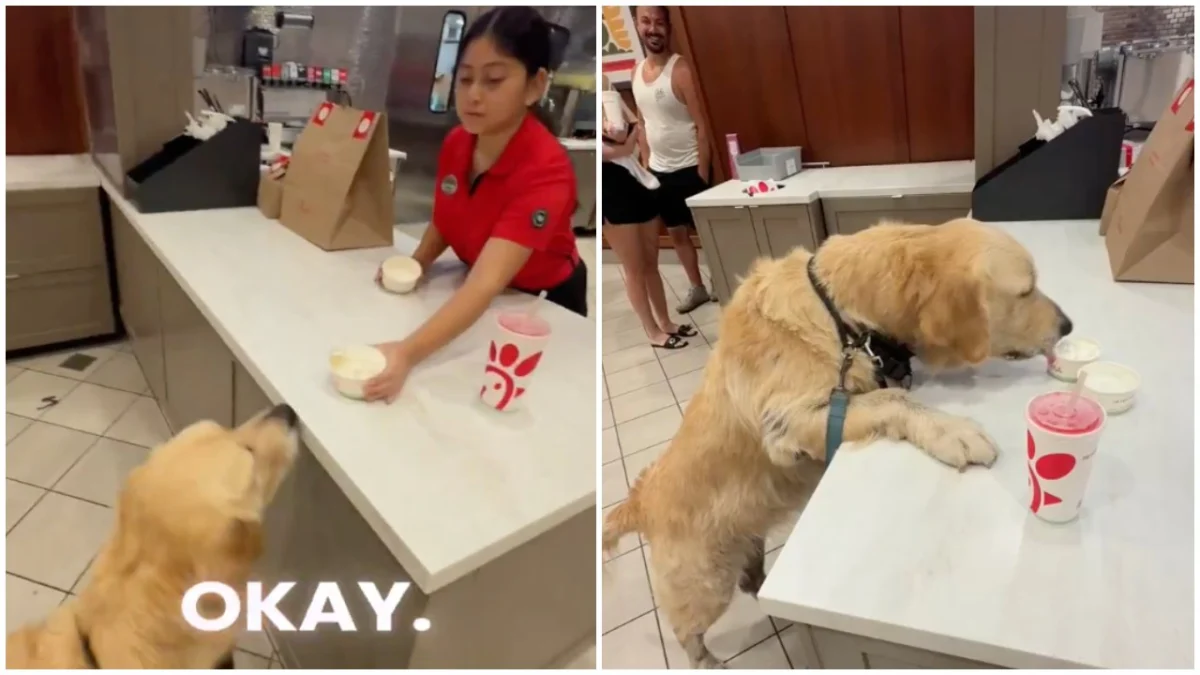
The "Hawaii Pup Cup Pick Up" Goes Viral: A Detailed Chronology
The contentious video, which gained widespread traction online, captures a man identified as Jake’s owner entering a Chick-fil-A establishment. The clip opens with the owner addressing his dog, saying, "OK Jake, we got our audience," implying an awareness of being filmed or observed, setting a stage for the ensuing interaction. The context provided by the video’s caption, "Hawaii pup cup pick up," suggests the event took place in Hawaii, though this detail, along with the precise recording date, remains unverified by independent journalistic sources.
A Chick-fil-A employee is then seen approaching the counter, carrying what appears to be a "pup cup"—a common, often dairy-based, treat offered by some fast-food establishments to canine customers. As the worker prepares to place the treat, the man explicitly directs her, pointing to a specific spot on the main serving counter, instructing her on where to set it down. This initial interaction, where the customer dictates the placement of the dog’s treat on a surface typically reserved for human food orders, was among the first elements to draw the ire of online observers, many of whom immediately labeled the behavior as "entitled."
After the pup cup is placed precisely where the owner indicated, he turns to Jake, encouraging him with "Go for it, Jake." The dog initially shows some hesitation, prompting the owner to further coax him, repeatedly saying, "get it." To further entice Jake, the man slides the cup closer to the counter’s edge and even offers a small taste directly from the cup. Following this encouragement and a brief sample, Jake, now fully engaged, jumps up, placing both of his front paws directly onto the stainless steel serving counter. With his paws firmly planted on the public food service area, Jake proceeds to enthusiastically consume the pup cup.
Throughout this sequence, other patrons visible in the background appear to observe the scene with smiles and amusement, seemingly unperturbed by the dog’s presence on the counter. However, this immediate, in-person reaction starkly contrasted with the overwhelming negativity that erupted online once the video circulated. The discrepancy highlighted a growing divide in public opinion regarding pet etiquette in spaces traditionally governed by stringent hygiene standards.
Public Health Imperatives and Food Safety Regulations
The core of the online backlash centers on legitimate public health concerns and established food safety protocols. Under the guidance of the U.S. Food and Drug Administration (FDA) Food Code, which provides a uniform system of provisions for safeguarding public health through preventing foodborne illness, live animals are generally prohibited in areas where food is prepared, stored, or served. The primary exception to this rule is for service animals, which are specifically trained to perform tasks for individuals with disabilities. These animals are legally permitted in public establishments, including restaurants, but are still expected to be controlled and prevented from contaminating food preparation or service areas.
A pet like Jake, however well-behaved or beloved, does not fall under the legal definition of a service animal. Therefore, its presence, particularly on a food serving counter, represents a potential violation of health and safety standards. Dogs, by their nature, carry various microorganisms, including bacteria, viruses, and parasites. Their paws, which come into contact with numerous outdoor surfaces—from sidewalks potentially harboring human and animal waste, to parks where other animals may defecate—can be significant vectors for contamination.
Specific pathogens of concern include Salmonella, E. coli, Campylobacter, and Listeria, all of which can cause severe gastrointestinal illness in humans, and in vulnerable populations (such as the elderly, young children, or immunocompromised individuals), can even be life-threatening. Beyond microbial contamination, pet dander and hair are also allergens for some individuals and can contribute to general unsanitary conditions. The act of a dog placing its paws directly on a surface where human food is handled or exchanged introduces a clear and avoidable risk of cross-contamination. This is not merely an aesthetic issue but a fundamental breach of the hygiene principles that underpin public health in food service.
Restaurants operate under strict guidelines to prevent such contamination, including regular cleaning and sanitization of food contact surfaces. Allowing a pet to directly contact a serving counter necessitates immediate and thorough sanitization of that area, a step that may not always be visible or immediately performed in a busy environment.
The Evolving Role of Pets in Society and the "Humanization" Trend
The incident also highlights a broader societal trend: the increasing humanization of pets. In many modern households, pets are no longer merely animals but are considered integral family members. This shift is reflected in consumer spending, with billions of dollars annually allocated to pet food, accessories, healthcare, and services. A 2023-2024 APPA National Pet Owners Survey reported that 66% of U.S. households own a pet, equating to 86.9 million homes. This deep emotional connection often leads owners to desire to include their pets in all aspects of their lives, including outings to restaurants and cafes.
Consequently, there has been a significant rise in demand for "pet-friendly" establishments. Many businesses, particularly those with outdoor patio seating, have adapted to this trend, offering water bowls and even specific pet menus. However, a crucial distinction remains between pet-friendly outdoor spaces and indoor food service areas. The legal framework, particularly the Americans with Disabilities Act (ADA), strictly differentiates between service animals, which have public access rights, and emotional support animals (ESAs) or companion pets, which do not enjoy the same legal protections regarding access to all public spaces, especially those involving food preparation or service. Jake, in the video, is clearly presented as a companion pet, not a service animal.
This evolving relationship between humans and their pets, while fostering companionship and well-being, simultaneously creates friction when it clashes with established public health regulations and societal expectations of hygiene in shared spaces. The "pup cup" incident serves as a stark reminder of these conflicting perspectives and the need for clear boundaries.
A Torrent of Online Criticism and Public Reaction
The immediate and overwhelming online response to the video was one of condemnation. Comment sections across various platforms quickly filled with expressions of disgust, outrage, and accusations of entitlement.
One prominent sentiment, echoed by multiple users, focused on the potential health risks. "Dogs carry bacteria that can literally kill people. Doing this is beyond dumb. I used to own restaurants and I’d never allow dogs in my locations," one commenter wrote, reflecting the perspective of those with industry experience and a deep understanding of food safety. This comment underscores the severity of the potential health implications, moving beyond mere inconvenience to genuine danger.
Another common criticism targeted the owner’s behavior and attitude. "You sound entitled. Look how he talked to the employee. No surprise he did what he did," a user commented, pointing to the interaction where the owner dictated the placement of the pup cup as an indicator of a broader sense of privilege. This suggests that the issue was not just the dog’s presence, but the owner’s perceived disregard for the employee’s role and the establishment’s standards.
Even self-proclaimed dog lovers expressed dismay. "I love dogs, but this is disgusting. These stupid non-service dogs that Karen’s have allowed to go everywhere now is getting to be too much," wrote a third person. This comment highlights the frustration among many pet owners who feel that irresponsible actions by a few undermine the broader acceptance of well-behaved pets in appropriate public settings. The use of "Karen’s" (sic) is a common internet colloquialism often used to describe individuals perceived as entitled or demanding beyond reason.
Humor was also used to express disapproval, as one person quipped, "Jake hesitated because he has more sense than his owner." This lighthearted jab, which itself went viral, suggests that even the dog intuitively understood the impropriety of the situation.
Perhaps the most visceral reaction came from a commenter who detailed the potential contaminants on a dog’s paws: "The dog put it’s feet on the counter! Right after it stepped on the spit some asshole spit on the sidewalk outside the restaurant. Before that the dog was playing at the dog park and stepped all over shit piles and piss! That dog owner is an asshole!" This comment powerfully articulated the specific, tangible risks of paw-to-surface contamination, painting a vivid and unsettling picture for anyone considering consuming food from that counter. The intensity of these reactions underscores the public’s low tolerance for perceived hygiene breaches in food service environments.
Inferred Corporate Stance and Operational Challenges
While The Daily Dot reported an inability to independently verify when or where the video was recorded, or whether Chick-fil-A has officially responded to this specific incident, it is highly probable that the company, like all reputable food service chains, adheres strictly to health department regulations. These regulations typically prohibit pets, other than trained service animals, from entering the interior of food establishments where food is prepared and served.
Chick-fil-A’s corporate policies would undoubtedly prioritize food safety and public health, aligning with FDA Food Code guidelines. Any actions that compromise these standards would likely be addressed internally. For employees on the front lines, enforcing such rules can be challenging. Confronting a customer who is actively filming, or who appears intent on having their pet participate in an unusual interaction, can put staff in an uncomfortable position. The pressure to provide excellent customer service, even in the face of policy violations, can create a dilemma for frontline workers who might hesitate to escalate a situation in the moment.
Should an official response be issued, it would most likely reiterate the company’s commitment to food safety, hygiene, and compliance with all local and federal health regulations, gently reminding patrons of the guidelines regarding animals inside their restaurants.
Broader Implications: Social Etiquette, Business Practices, and Consumer Expectations
The Chick-fil-A "pup cup" incident transcends a single isolated event, serving as a microcosm of broader societal tensions. It highlights the ongoing negotiation of social etiquette in an increasingly pet-centric world. The balance between accommodating the desires of pet owners and upholding public health standards, as well as the comfort and safety of all patrons, is a complex issue for businesses and communities alike.
For businesses, particularly in the competitive food service industry, incidents like this carry significant implications. Viral videos showcasing hygiene breaches can rapidly damage a brand’s reputation, potentially leading to a loss of customer trust and revenue. Health department investigations and fines are also a real possibility. Businesses must weigh the benefits of being perceived as "pet-friendly" against the risks of alienating customers who prioritize strict hygiene and the potential legal and health ramifications.
Consumer expectations are also at play. While some consumers actively seek out pet-friendly establishments, a significant portion expects a pristine and sanitary environment when dining out. The incident underscores a need for greater public awareness and education regarding the legal distinctions between service animals, emotional support animals, and pets, and the corresponding rules for public access, especially in food preparation and serving areas.
Ultimately, the viral video of Jake and his pup cup serves as a vivid reminder that while the bond between humans and their animal companions is cherished, it must operate within the framework of public health regulations and shared social responsibility. The online uproar demonstrates that for many, the line between pet affection and public hygiene is clear, and stepping over it, particularly in a food service setting, will not go uncriticized.