Vera Intan Clara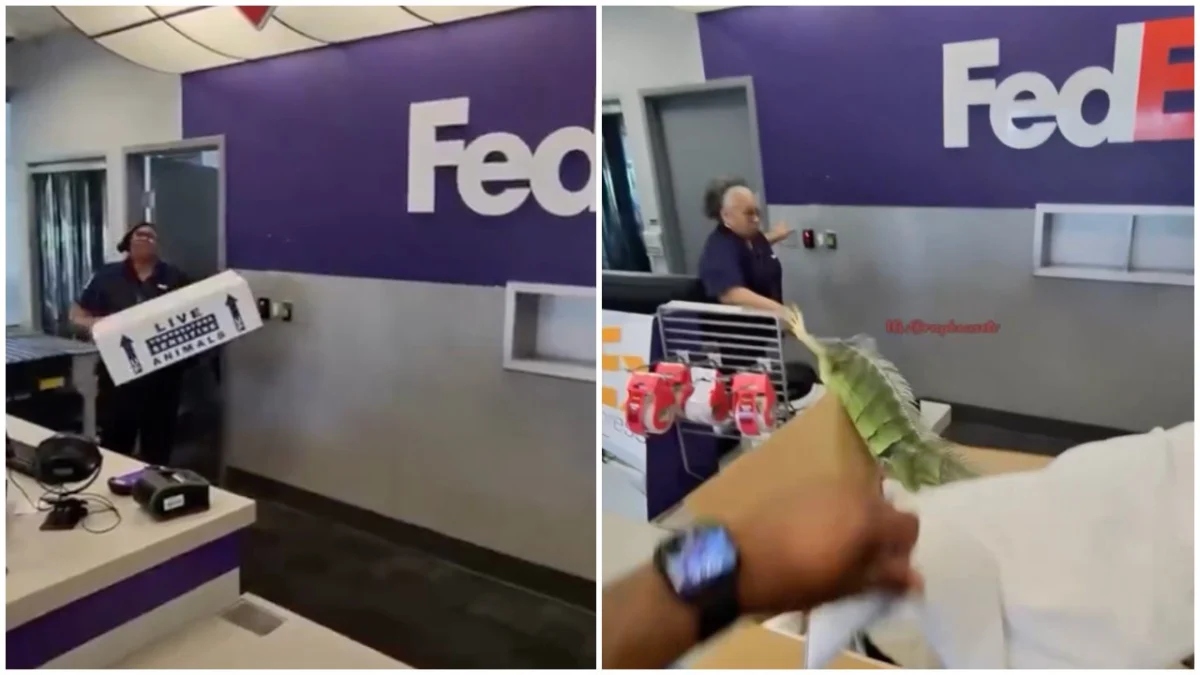
A viral video circulating widely across social media platforms has ignited a fervent discussion regarding the shipping of live animals, after a sizable iguana allegedly escaped from a FedEx package at a service center, causing immediate pandemonium among staff and customers. The incident, captured by the package recipient and widely reshared, highlights the complexities and inherent risks associated with transporting live creatures via commercial carriers, prompting scrutiny of shipping regulations and animal welfare practices.
The Unfolding Chaos: A Chronology of the Incident
The sequence of events, as depicted in the widely shared footage, commenced with a customer at a FedEx location preparing to collect a parcel. The package in question was distinctly marked with "Live Animals" and "Temperature Sensitive" labels, alongside instructions to "remain upright," immediately signaling its unusual contents. After a FedEx worker carefully placed the box down, a palpable sense of curiosity permeated the scene. Another employee, visibly intrigued, inquired about the package’s contents and the estimated size of the animal within, setting the stage for the unforeseen drama that would soon unfold.
Responding to the workers’ curiosity, one FedEx employee handed the customer a box cutter, requesting that he open the package inside the facility. The customer complied, carefully slicing open the packaging. The interior revealed a meticulous, albeit ultimately insufficient, containment system: a piece of foam covering the top, followed by an interior lined with similar material, and additional paper for cushioning. Nestled within this protective layer was a white bag, seemingly surrounded by temperature-controlled packs, indicating an attempt to provide a suitable environment for the creature during transit.
As the customer retrieved the white bag, the iguana inside remained relatively still, perhaps disoriented or calm from its journey. However, the situation rapidly escalated the moment the customer began to flip the bag over, intending to release the reptile. In a sudden, explosive burst of energy, the iguana began to wiggle aggressively, then darted out of the bag with astonishing speed.
The immediate aftermath was one of startled chaos. The women present, particularly the FedEx staff, reacted with screams of alarm. One elderly worker, visibly overwhelmed by the sudden appearance of the large reptile, lost her footing and fell to the ground in shock. Another employee, who had initially expressed keen interest in seeing the animal, quickly retreated, seeking refuge behind a nearby chair. The iguana, exhibiting remarkable agility, vanished from the camera’s view, scrambling through the PVC strip curtains typically found on conveyor belts, suggesting it moved deeper into the facility’s operational areas.
The commotion was not confined to the staff. Customers present in the service center were equally terrified. One woman was observed sitting atop a counter, evidently attempting to distance herself as much as possible from the loose reptile, embodying the widespread panic that had gripped the room. The video abruptly ends with the iguana’s disappearance, leaving the immediate fate of the animal and the subsequent actions of the FedEx staff unclear, though it can be inferred that efforts to locate and safely recapture the animal would have commenced swiftly.
Navigating the Complexities of Live Animal Shipping Regulations
The viral spread of the incident ignited a broader public discourse, shifting focus from the dramatic escape to the legality and ethics of shipping live animals, particularly reptiles, through commercial carriers. Many online commenters expressed outright shock, questioning how such a practice could be permissible.
To understand the regulatory landscape, it’s crucial to examine the guidelines set forth by major shipping companies. While the incident occurred at a FedEx location, the original commentary in the video post referenced UPS guidelines, which offer a useful benchmark for industry standards. According to UPS policy, live animals can indeed be shipped, provided stringent conditions are met. Key stipulations include:
- New Packaging: Animals must be placed in a new, sturdy box designed specifically for live animal transport.
- Breathable Containment: For lizards and geckos, individual containment in bags constructed of breathable material, such as burlap, is often recommended or required. This ensures adequate ventilation while preventing escape.
- Expedited Transit: Live animals are generally only accepted for transport if they are expected to arrive at their destination the next day, minimizing the duration of stress and confinement.
- Temperature Control: Cooling requirements are explicitly listed, mandating appropriate measures to maintain a stable and safe temperature range throughout the journey, crucial for the animal’s survival and well-being.
While these are UPS’s specific guidelines, they reflect common industry practices and regulatory concerns. FedEx, like other major carriers, also has its own set of detailed policies for shipping live animals, which vary by species and destination. These policies typically involve specific packaging requirements, adherence to federal, state, and local laws, and often require special handling services. For instance, FedEx’s website often outlines that certain species are prohibited, while others require specific permits, health certificates, and approved container types that ensure ventilation, prevent escape, and provide sufficient space. The general expectation is that the shipper is responsible for knowing and adhering to all applicable regulations and for providing a humane and safe environment for the animal during transit.
The core question that arises from the iguana incident is whether the specific packaging observed in the video – an iguana within a white bag, inside a foam-lined box – met all the necessary requirements for safe and legal transport. While the presence of breathable material and temperature control packs suggests an attempt at compliance, the iguana’s ability to aggressively escape upon opening raises serious questions about the adequacy of the primary containment within the white bag.
The Broader Context: Exotic Pet Trade and its Logistics
The incident also sheds light on the booming global exotic pet trade, where online sales and specialized shipping services play a pivotal role. Iguanas, particularly green iguanas (scientific name Iguana iguana), are popular pets due to their striking appearance and relatively docile nature when properly socialized. However, they can grow quite large, often reaching lengths of 5 to 6 feet, including their tails, and require specific care, diet, and environmental conditions. Their increasing popularity has led to a significant demand for their transport across vast distances.
The logistics of shipping live reptiles are inherently complex and fraught with potential challenges:
- Animal Welfare: The primary concern is the welfare of the animal. Transportation can be incredibly stressful, leading to dehydration, injury, illness, or even death if conditions are inadequate. Proper ventilation, temperature, humidity, and secure yet comfortable containment are paramount.
- Public Safety: Escaped animals, especially larger reptiles like iguanas, pose a potential risk to public safety. While iguanas are generally not aggressive, a frightened or cornered animal can bite or lash out with its powerful tail, causing injury. Furthermore, if an exotic animal escapes into an unfamiliar environment, it could struggle to survive or, conversely, become an invasive species, disrupting local ecosystems.
- Regulatory Compliance: The shipment of exotic animals is subject to a labyrinth of regulations. At the federal level in the United States, agencies like the U.S. Fish and Wildlife Service (USFWS) and the U.S. Department of Agriculture (USDA) oversee various aspects, particularly concerning endangered species (CITES), animal health, and humane transport. State and local laws can add further layers of complexity, with some jurisdictions prohibiting the ownership or transport of certain species altogether. Shippers are responsible for obtaining all necessary permits and health certificates.
- Carrier Liability: Shipping companies face significant liability risks when transporting live animals. An escape, injury, or death of an animal can lead to claims, reputational damage, and potential regulatory fines. This is why carriers often have stringent guidelines and sometimes refuse to ship certain species or require specialized, often more expensive, services.
The fact that the video’s origin and specific circumstances remain unverified by The Daily Dot underscores a common challenge in the age of viral content: separating fact from rumor. However, the visual evidence of an iguana escaping a package within a FedEx facility is compelling enough to warrant a serious examination of the processes involved.
Public and Official Reactions: A Call for Clarity and Responsibility
The video’s rapid ascent to viral status triggered a wave of reactions across social media platforms. Beyond the initial shock and amusement, a significant portion of the commentary focused on genuine concerns for animal welfare and the perceived laxity of shipping regulations. Hashtags and comments questioning the legality and humanity of transporting animals in such conditions dominated the discussion. Users expressed disbelief that an animal could be shipped "with no air," reflecting a misunderstanding of typical packaging for live reptiles, which usually includes ventilation but might appear enclosed to an untrained eye.
While FedEx has not issued a public statement directly addressing this specific incident at the time of this writing, such high-profile occurrences invariably prompt internal reviews of policies and procedures. Carriers are constantly balancing customer demand for diverse shipping options with the need for safety, regulatory compliance, and animal welfare. The incident serves as a stark reminder of the potential for things to go awry even when protocols are in place.
Animal welfare organizations, while not directly commenting on this video, consistently advocate for the safest and most humane transport of all animals. They often emphasize that shipping, particularly for exotic species, should be a last resort and undertaken only with expert knowledge, specialized equipment, and adherence to the strictest guidelines to minimize stress and risk.
Implications and Future Considerations
The iguana escape incident, while seemingly an isolated event, carries broader implications for several stakeholders:
- For Shipping Carriers: Incidents like this can lead to operational disruptions, potential injury to staff or customers, and significant reputational damage. It may compel FedEx and other carriers to review and potentially tighten their live animal shipping policies, enhance training for staff on handling such packages, and improve customer education regarding compliance.
- For Shippers and Recipients: The onus remains heavily on shippers to ensure full compliance with all regulations and to utilize packaging that is genuinely secure and humane. Recipients also bear responsibility for understanding what they are receiving and how to safely handle it upon arrival. Ignorance of regulations is rarely an acceptable defense.
- For Animal Welfare Advocates: The incident provides a potent visual aid to highlight the inherent risks and stresses animals endure during transport, potentially fueling calls for stricter regulations or even outright bans on the commercial shipping of certain exotic species.
- For Public Safety: While this iguana was seemingly contained within the facility, the possibility of an exotic animal escaping into a public area raises legitimate safety concerns, particularly if the animal is venomous, aggressive, or capable of causing significant damage.
In conclusion, the viral video of the escaping iguana at a FedEx facility transcends a mere moment of online entertainment. It serves as a compelling case study on the complex intersection of commercial logistics, animal welfare, public safety, and regulatory compliance within the exotic pet trade. As the digital age continues to facilitate the global movement of goods, including live animals, the need for transparent, rigorously enforced, and humane shipping practices becomes ever more critical to prevent similar incidents and ensure the well-being of all creatures involved. The incident underscores that while the convenience of modern shipping is undeniable, it must always be balanced with a profound respect for the living cargo it carries.