Galang Taruna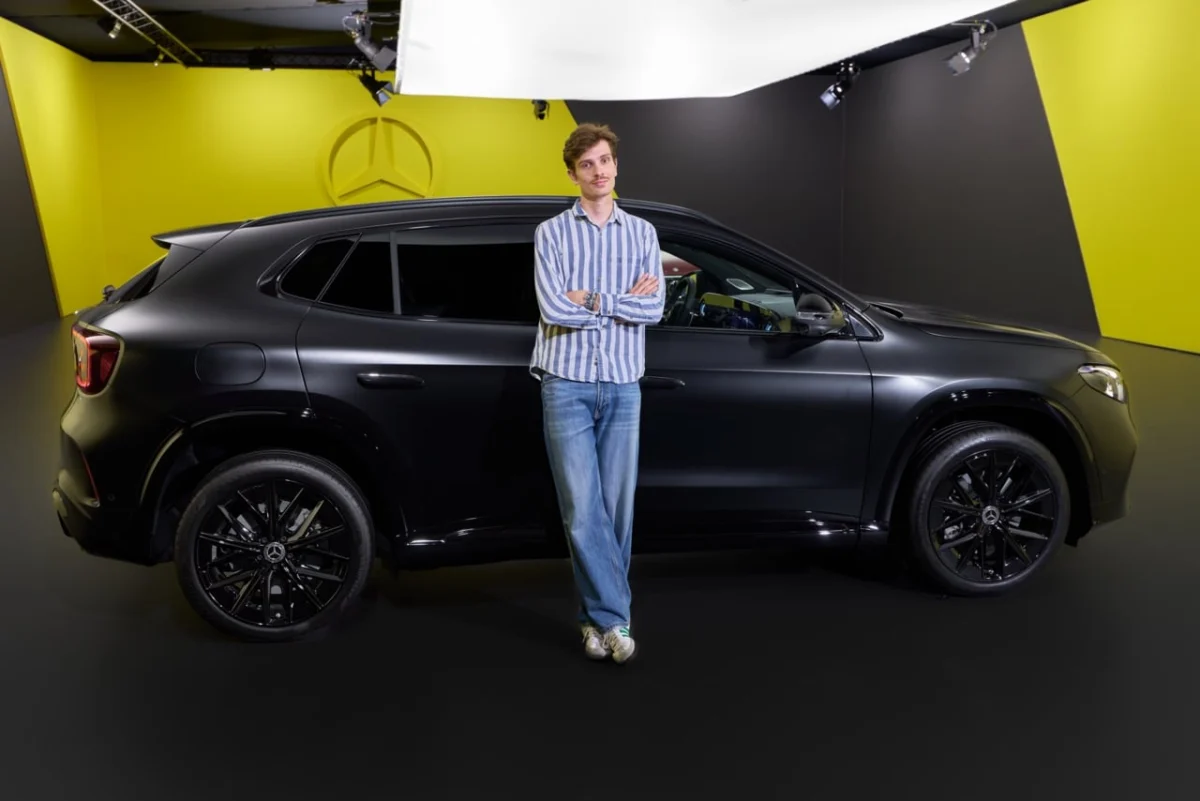
Mercedes-Benz has officially unveiled its latest all-electric SUV, the GLA, marking a significant milestone in the luxury automaker’s ambitious electrification roadmap. The new GLA leverages the advanced technologies first introduced with the innovative CLA, positioning itself as a pivotal model in Mercedes’ push to redefine the electric vehicle landscape within the premium compact segment. This introduction follows a comprehensive strategy to integrate electric and combustion vehicle nomenclature, moving away from distinct "EQ" branding for its electric models, a shift initiated with the G-Class 580 EQ.
Mercedes-Benz’s Evolving Electrification Strategy
The debut of the electric GLA underscores Mercedes-Benz’s unwavering commitment to its "Electric First" strategy, aiming for a fully electric future where feasible by 2030. The brand is systematically revamping its entire lineup, ensuring that electric variants are not merely standalone models but integral parts of existing, well-established product families. This strategic pivot is designed to streamline customer perception and reinforce the core Mercedes-Benz identity across all powertrains.

The Modular Architecture (MMA) platform, which underpins the new GLA, is central to this evolution. First introduced with the CLA, the MMA platform is engineered to support a new generation of highly efficient and technologically advanced electric vehicles across Mercedes’ compact and mid-size offerings. Its versatility allows for significant battery capacity, extended range, and robust performance, setting a new benchmark for what consumers can expect from premium electric mobility. The GLA’s arrival, following the CLA, solidifies Mercedes-Benz’s intent to become a dominant force in the electric vehicle market, offering both groundbreaking technology and an unwavering commitment to luxury.
Design Evolution: A Return to Core Mercedes Aesthetics

The new Mercedes GLA electric SUV replaces the outgoing EQA, and in doing so, introduces a more "consensual" and distinctly Mercedes design language. While the EQA, with its unique aesthetic, sometimes divided opinions, the GLA re-embraces the brand’s quintessential design codes, seamlessly blending modern electric vehicle requirements with classic Mercedes elegance.
At the front, the GLA proudly features the iconic large Mercedes grille, now reinterpreted with sophisticated backlighting, making a striking visual statement day or night. Unlike the more traditional bonnet-mounted star found on models like the S-Class, the GLA sports a prominent illuminated star centrally positioned within the grille, signaling its dynamic and youthful positioning within the Mercedes portfolio. This design choice differentiates it from more "stately" vehicles aimed at a more established clientele, emphasizing its appeal to a contemporary audience. Furthermore, the headlights incorporate a distinctive star-shaped motif, serving as a signature daytime running light, enhancing brand recognition and visual appeal.

The profile of the GLA is characterized by its clean and uncluttered lines. Integrated roof rails extend gracefully from the bodywork, contributing to its sleek silhouette. A notable modern touch includes retractable door handles, a feature increasingly common in premium electric vehicles, which not only enhances aerodynamics but also contributes to the vehicle’s minimalist aesthetic when stationary.
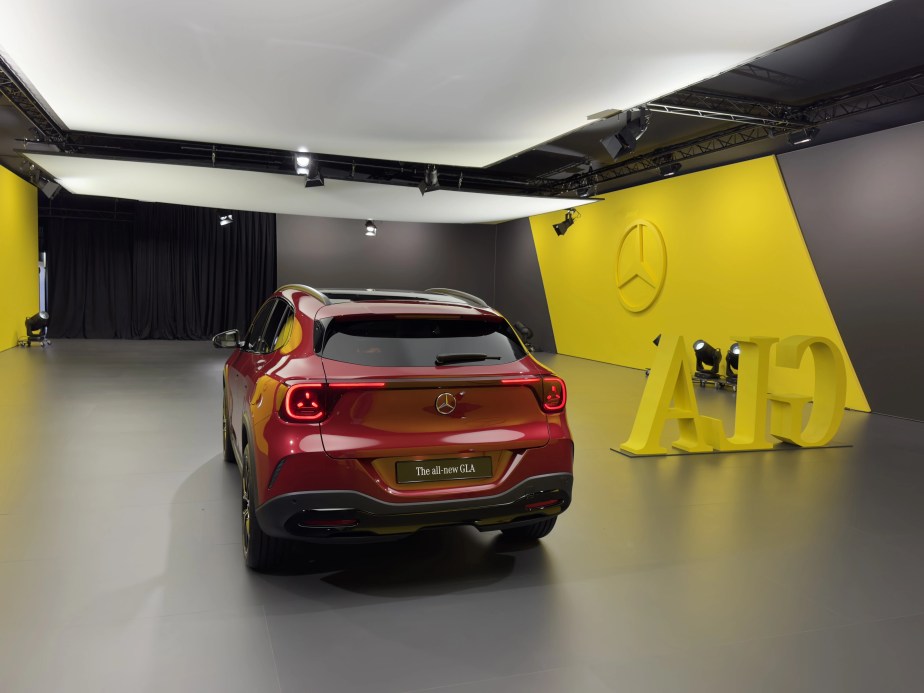
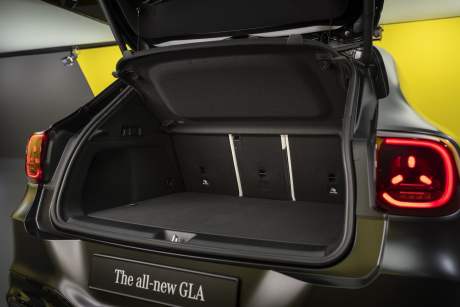
At the rear, a continuous red light bar spans the width of the vehicle, though unlike the front grille, it is not retro-illuminated. The taillights themselves illuminate in red, echoing the star-shaped motif found in the front projectors, ensuring a cohesive design signature from every angle.
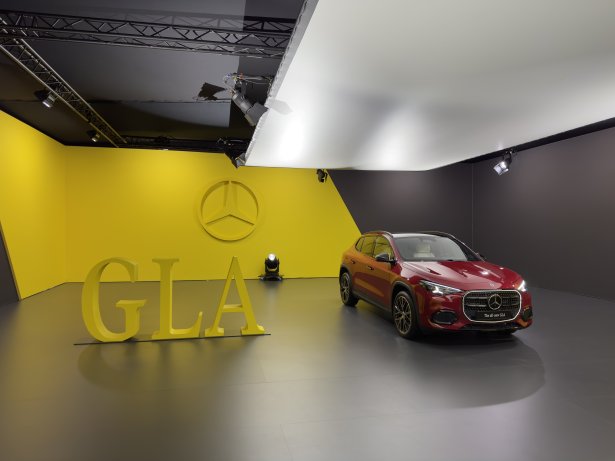
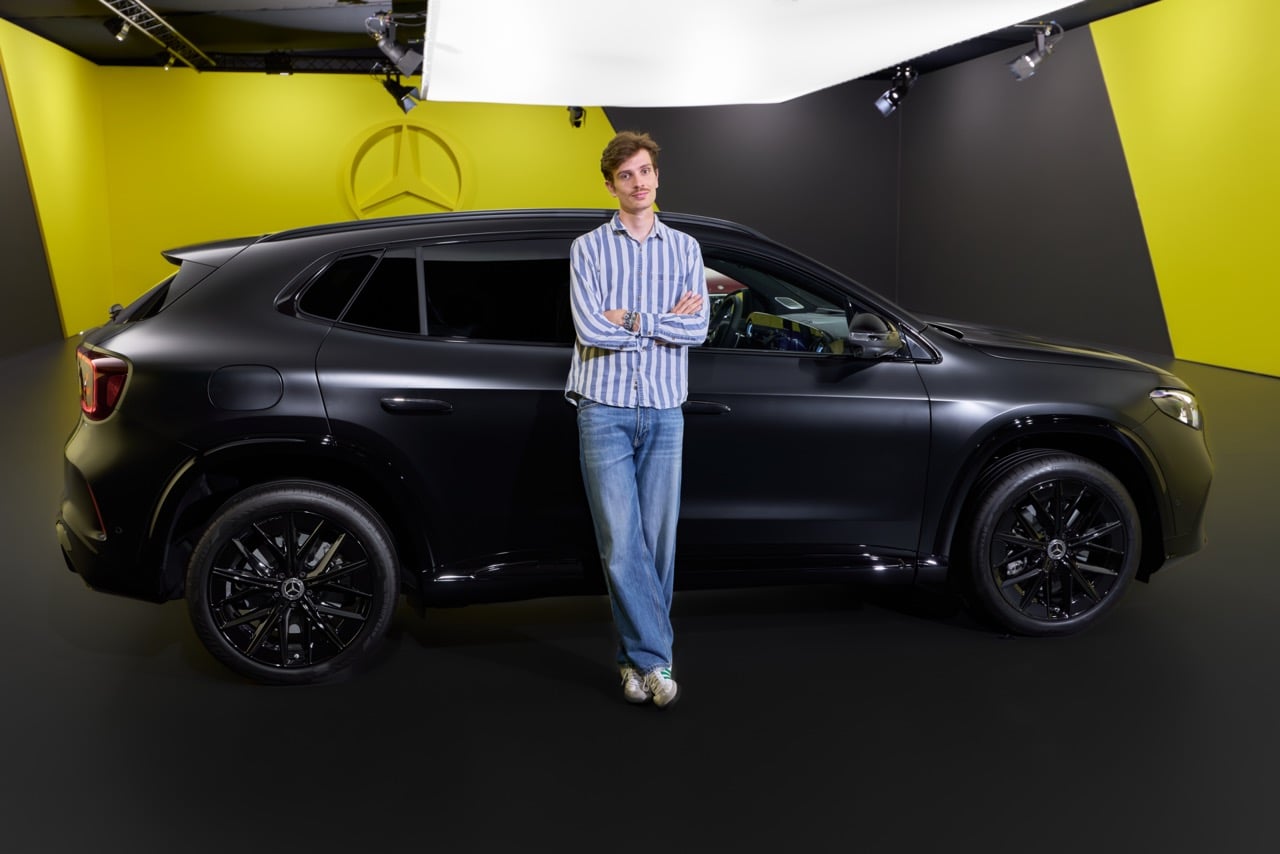
The overall design of the GLA is simplified and purified, yet undeniably recognizable as a Mercedes-Benz. This is a significant departure from the EQA, which occasionally ventured too far from the brand’s established visual identity. While appreciating the design in a studio setting, particularly in a matte black finish that can absorb artificial light, the hybrid version’s vibrant red configuration offers a clearer illustration of the vehicle’s sculpted lines and dynamic proportions. It’s worth noting that the visual differences between the electric and hybrid variants are minimal, primarily limited to the hybrid’s open grille designed for thermal engine cooling.
Enhanced Dimensions and Practicality
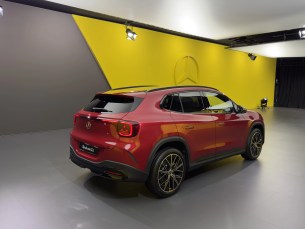
Despite its classification as a compact SUV, the Mercedes GLA boasts substantial dimensions that contribute to an imposing road presence. Compared to its predecessor, it features an extended wheelbase of 61 mm, a reduced height of 20 mm, and an increased width of 31 mm. These adjustments translate into a more commanding stance and improved interior spaciousness.
The new GLA measures 4.56 meters in length with a wheelbase of 2.79 meters. While slightly more compact than rivals like the Tesla Model Y or the Audi Q4 e-tron, it aligns closely in size with the Skoda Elroq, positioning it competitively within the burgeoning electric SUV market.
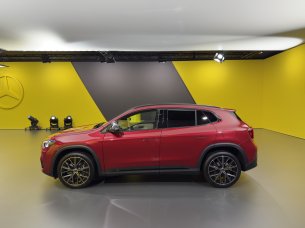
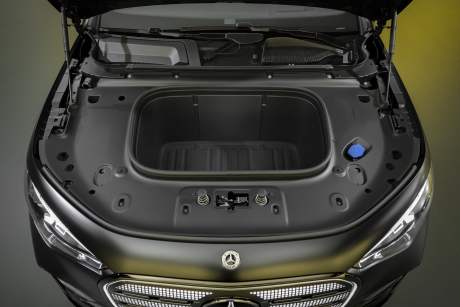
In terms of practicality, the GLA offers a respectable 410 liters of boot space. While this figure might not be class-leading, it is complemented by a generous 107-liter "frunk" (front trunk), providing additional secure storage for charging cables or smaller items. The elongated wheelbase ensures ample space for rear passengers, while front occupants also benefit from a generous and comfortable environment. Numerous storage compartments are intelligently integrated throughout the cabin, and the central console elegantly wraps around the front passengers, creating a cocoon-like sense of comfort and luxury.
A Captivating and Technologically Advanced Interior
Stepping inside the new GLA evokes an immediate sense of wonder, an experience the reviewer described as a subtle yet powerful "wow" effect, even when compared to higher-tier Mercedes models like the C 400 4Matic. The AMG Line version, for instance, features sporty, supportive seats upholstered in a sophisticated black and white scheme. However, the true showstopper is the optional panoramic liquid crystal roof, which can display up to 150 illuminated stars, creating a stunning "starlit sky" ambiance regardless of the time of day. While purely an aesthetic enhancement, such distinctive luxury details often sway purchasing decisions in the premium segment.
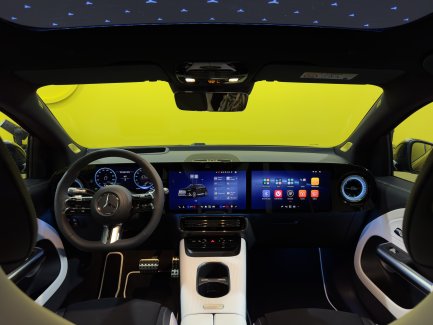
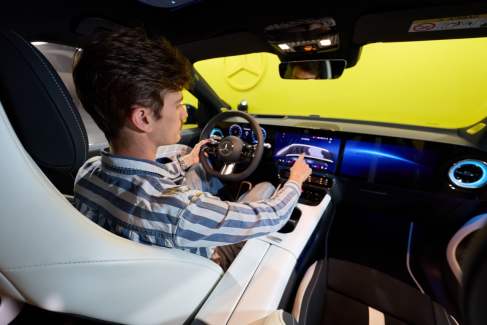
The MBUX infotainment system is another highlight, mirroring the advanced setup found in the CLA and GLB. Unlike the single, expansive display in the C-Class, the GLA’s MBUX Superscreen configuration integrates three distinct screens: a 10.25-inch instrument cluster, a 14-inch central touchscreen, and an equally sized passenger display. While some might find this multi-screen approach "too much," it demonstrates Mercedes-Benz’s commitment to cutting-edge in-car technology. The system boasts exceptional responsiveness, haptic feedback comparable to premium smartphones, and the highly functional "Hey Mercedes" voice assistant, designed to simplify daily interactions and enhance the user experience. This MBUX Superscreen presentation masterfully integrates advanced technology without compromising the interior’s overall design aesthetic, a challenge many manufacturers face in an era of minimalist dashboards.

Mercedes-Benz’s approach to interior design successfully merges technology with comfort. The materials chosen are consistently high-quality and tactilely pleasing. While the ambient lighting, with its extensive color options, can lean towards "bling-bling" depending on the chosen hue, it undeniably contributes to a personalized and inviting atmosphere. The overall sensation within the GLA is one of well-being and refined luxury, making it a space where occupants feel genuinely comfortable and engaged.
Advanced Powertrain and Rapid Charging Capabilities

The GLA is built on the aforementioned MMA platform, which allows for substantial battery capacities, extending up to 85 kWh. This enables the GLA to achieve an impressive WLTP range of up to 657 km, positioning it as a strong contender in terms of long-distance electric travel.
Upon launch, Mercedes-Benz will offer a range of electric powertrains:
- GLA 200 Electric: A 224-horsepower variant equipped with a 58 kWh Lithium Iron Phosphate (LFP) battery. LFP batteries are known for their cost-effectiveness, longevity, and enhanced safety characteristics.
- GLA 250+ Electric: This model delivers 271 horsepower from a single motor, paired with an 85 kWh Nickel Manganese Cobalt (NMC) battery. NMC batteries offer higher energy density, contributing to the extended range.
- GLA 350 4MATIC Electric: The top-tier sporty model boasts 353 horsepower and features the same 85 kWh NMC battery, enabling a brisk 0 to 100 km/h acceleration in just 5.4 seconds.
Furthermore, an additional model with a 71 kWh NMC battery, already available in the GLB, is slated to join the lineup in early 2027, providing further options for consumers.
A standout feature of the GLA’s electric architecture is its 800-volt system. This advanced architecture allows for ultra-rapid DC charging speeds of up to 320 kW. Mercedes claims that the battery can be recharged from 10% to 80% in a mere 22 minutes, and drivers can recover approximately 270 km of range in just 10 minutes. This significantly reduces downtime during long journeys, making electric travel more convenient and practical.
However, a critical detail regarding charging flexibility is the default compatibility. While 800-volt charging is exceptionally fast, standard 400-volt charging capability is not included. Customers must opt for an optional 400-volt adapter, which limits charging power to just 100 kW – a figure comparable to more entry-level electric vehicles like the Citroën ë-C3. This strategic decision by Mercedes-Benz prioritizes the emerging 800-volt infrastructure but may pose limitations for users relying heavily on existing 400-volt fast chargers without the adapter. For AC charging, the GLA supports up to 22 kW, facilitating efficient overnight or destination charging.
Market Outlook: A Strong Contender in the Premium Electric SUV Segment
The Mercedes GLA is poised for considerable commercial success, capitalizing on the current market preference for SUV body styles over traditional sedans. By integrating the advanced features and platform of the CLA into a popular SUV format, Mercedes-Benz is likely to appeal to a broader demographic. Its dynamic styling further differentiates it from the GLB, offering a more agile aesthetic.
While official pricing for the GLA has yet to be announced, industry analysts anticipate that an entry-level version in France could start from around €46,990, mirroring the pricing strategy for the GLB and the EQA. This pricing would allow it to qualify for certain government incentives, such as the "prime coup de pouce CEE." The high-performance GLA 350 4MATIC, with its superior power and features, is expected to exceed €60,000.
In the competitive premium electric SUV market, the GLA faces established rivals. The BMW iX1, for instance, offers a maximum autonomy of 514 km and a 29-minute charging time, while the recently updated Audi Q4 e-tron reaches up to 568 km WLTP range. A compelling alternative from France is the DS N°7, which boasts similar dimensions, an impressive 740 km range on a single charge, and an attractive starting price under €47,000.
Despite not being an "affordable" electric vehicle, especially for variants offering extended range and advanced features, the GLA’s sophisticated technology and luxurious appointments justify its premium positioning. The market’s increasing shift towards electrifying corporate fleets further strengthens the GLA’s prospects. For businesses looking to green their vehicle parks, a prestigious Mercedes offering excellent range, rapid charging capabilities, and cutting-edge technology presents a highly attractive and practical choice, potentially making it a leading contender in this crucial segment. The GLA represents not just a new model, but a confident step forward in Mercedes-Benz’s electric future.