Evan Lee Salim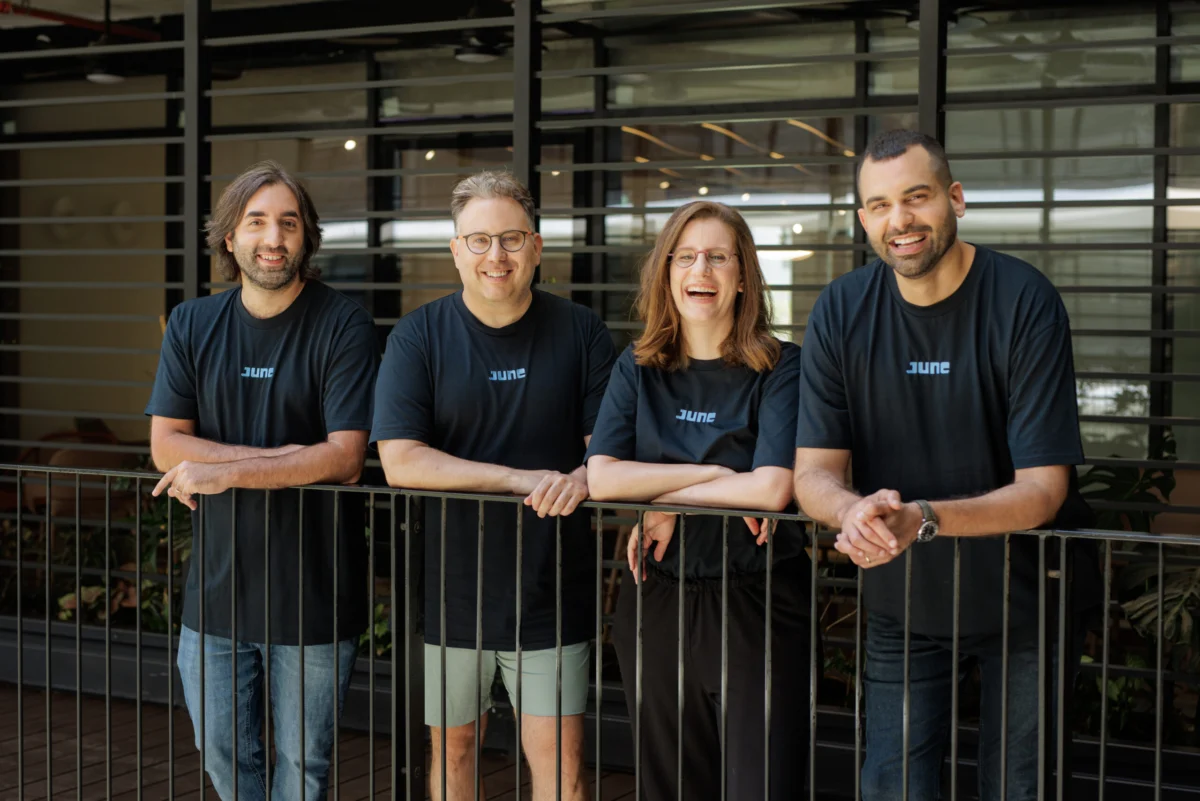
A new venture, June, has emerged from stealth mode with a substantial $20 million in pre-seed funding, poised to tackle one of the most persistent and costly challenges facing large enterprises today: the reliable and efficient integration of Artificial Intelligence tools into their complex operational frameworks. Led by former Salesforce executive Efrat Rapoport and her co-founders, June aims to automate the intricate process of bridging AI capabilities with existing legacy systems, a task that has paradoxically fueled a booming demand for specialized human expertise, notably the rise of "forward-deployed engineers" (FDEs).
The conventional wisdom in enterprise AI adoption has often been to pour more human capital into the problem. As Rapoport articulates, "AI, paradoxically, increases the demand for professional services. The industry’s answer to AI implementation is, ‘let’s hire more and more and more people.’" This sentiment underscores a critical friction point in the current technological landscape. While AI models and agents are becoming increasingly sophisticated, their deployment within large organizations is rarely a plug-and-play affair. Enterprises grapple with decades of technical debt, fragmented data spread across disparate platforms, and deeply entrenched, often inefficient, workflows. These factors coalesce to create a formidable barrier to realizing AI’s promised value, necessitating an army of consultants and specialized engineers to manually untangle and integrate new AI solutions.
The Unseen Hurdles of AI Adoption in the Enterprise
The proliferation of advanced AI capabilities, from generative models to sophisticated automation agents, has ignited widespread excitement about increased efficiency, innovation, and competitive advantage. However, the journey from AI concept to operational reality within a Fortune 500 company is fraught with complexities that often go underestimated. Unlike consumer-facing AI applications, enterprise AI must seamlessly interoperate with a sprawling ecosystem of mission-critical software: Customer Relationship Management (CRM) systems like Salesforce, Enterprise Resource Planning (ERP) platforms such as Workday, data warehousing solutions like DataBricks, and IT service management tools like ServiceNow, among countless others.
This intricate web of existing infrastructure presents a unique set of challenges. Data, often the lifeblood of AI, is frequently siloed, inconsistent, or duplicated across different departmental systems. A simple customer record, for instance, might exist in slightly different formats or with varying levels of completeness in Salesforce, an internal billing system, and a marketing automation platform. For an AI agent to perform effectively, it needs a unified, clean, and contextually rich understanding of this data, which is rarely available out-of-the-box. Moreover, established business processes, honed over years, are often deeply embedded in these legacy systems, making any significant alteration a painstaking and high-risk endeavor. The fear of disrupting critical operations or compromising data integrity often stalls AI initiatives before they can even begin.
This environment has given rise to the "forward-deployed engineer" (FDE) – a highly specialized professional who embeds within client organizations to bridge the gap between AI product capabilities and specific enterprise requirements. FDEs spend weeks or months understanding a company’s unique architecture, data models, and business logic, then custom-tailoring AI solutions to fit. While indispensable, this approach is resource-intensive, expensive, and often slow, leading to scalability issues for both AI vendors and their enterprise clients. It highlights that the "SaaSpocalypse," the widely discussed fear that AI might entirely replace existing software-as-a-service (SaaS) providers, has not yet materialized. Instead, AI’s immediate impact is often contingent on its ability to augment and integrate with these very systems, making the integration layer the new frontier of innovation.
June’s Innovative Approach to AI Integration
June’s founders — Efrat Rapoport, Ohad Hen, Barak Goldstein, and Idan Tsitiat — believe there’s a more scalable and automated way to bring AI into broader enterprise use. Their platform directly addresses the "mess underneath" that Rapoport describes. Instead of requiring extensive manual intervention, June’s proprietary technology is designed to intelligently scan a company’s existing systems, essentially creating a comprehensive digital blueprint of its operational landscape. This scanning process goes beyond mere data mapping; it aims to understand the intricate business processes, identify latent bottlenecks, and pinpoint inconsistencies such as duplicate database fields or conflicting data definitions used by different teams.
Once this understanding is established, June’s platform doesn’t just suggest improvements; it actively builds more optimized, AI-powered processes. It generates "agent templates" — the logical easy part, as Rapoport notes — but crucially, it then guides the enterprise through the complex steps required to make these agents functional within their unique environment. This includes providing a detailed, step-by-step roadmap for implementation, advising on data cleanup (e.g., "Remove these duplicates"), specifying necessary data source connections, and then, with a simple click, initiating the automated construction of these new processes directly within the organization’s existing software ecosystem. Automated notifications through the company’s communication channels ensure teams are kept abreast of changes and progress.
This automated, guided approach represents a significant departure from traditional AI integration methodologies. By demystifying the underlying complexities and providing actionable, system-specific instructions, June aims to empower internal IT teams and business units to deploy AI agents safely and effectively, without the exhaustive, custom-coding efforts typically associated with such projects. It essentially operationalizes the expertise of an FDE into a scalable software platform, offering a systematic way to overcome technical debt and data fragmentation.
A Proven Track Record: From Bonobo AI to June
The confidence inspiring June’s impressive funding round is deeply rooted in the proven track record of its founding team. Rapoport, Hen, Goldstein, and Tsitiat are not new to the AI startup scene. They previously co-founded Bonobo AI, a pioneering company in the pre-transformer language model era. Launched in 2017, Bonobo AI developed a voice-to-text service that helped companies transform customer interactions into valuable, actionable data. Their innovative approach quickly garnered attention, leading to its acquisition by Salesforce just two years later.
Following the acquisition, the entire team integrated into Salesforce, where they spent several years contributing to the tech giant’s extensive AI initiatives. This period within one of the world’s leading enterprise software companies provided them with invaluable insights into the practical challenges and strategic opportunities of deploying AI at scale within diverse corporate environments. They witnessed firsthand the struggles customers faced in integrating cutting-edge AI capabilities with their entrenched platforms, solidifying their conviction that a more fundamental solution was needed. Their departure from Salesforce to launch June was a direct response to these observed market gaps.
The caliber of investors backing June further underscores the team’s reputation and the perceived market need. The $20 million pre-seed round was led by Marc Benioff’s Time Ventures, a powerful endorsement given Benioff’s deep understanding of the enterprise software landscape and his previous acquisition of their company. Additional backing from tech luminaries like Michael Dell (founder of Dell Technologies), Aaron Levie (CEO of Box), and George Kurtz (CEO of CrowdStrike) signifies profound industry confidence. Rapoport’s anecdote that "we didn’t even have a deck for this raise" speaks volumes about the investors’ trust in the founders’ vision, expertise, and ability to execute on a critical, unmet need in the market. This level of early-stage funding without a traditional pitch deck is exceptionally rare and highlights the strategic importance and perceived potential of June’s mission.
Real-World Impact: CMG’s Transformative Experience
The efficacy of June’s platform is perhaps best illustrated by the experience of Paul Akinmade, Chief Strategy Officer at CMG, a prominent U.S. mortgage lender. Akinmade’s team had successfully transitioned its software engineering efforts to Claude Code, a powerful AI development environment. However, the subsequent challenge of integrating these AI-driven applications with CMG’s Salesforce ecosystem proved to be a significant roadblock. This was a particularly pressing issue for Akinmade, who had publicly committed at Salesforce’s annual conference to returning the following year with 100 AI agents running—a target that seemed increasingly out of reach due to integration hurdles.
Akinmade recounted weeks of frustration, where his team "spent weeks hitting a wall — meeting with architects, talking to forward-deployed engineers, consulting everybody they could — without making progress." This scenario is emblematic of the common plight faced by many enterprises: possessing advanced AI tools but lacking the seamless integration layer to make them operational within their existing business processes. The very FDEs and consultants, who are meant to solve these problems, were unable to provide the clarity and efficiency Akinmade’s team desperately needed.
Enter June. Akinmade credits June with providing his team a "clear view of where to deploy agents and letting them do so safely, even before the official kickoff call between the two companies." This ability to gain immediate, actionable insights and begin deployment safely and autonomously was a game-changer. It bypassed the usual lengthy and often opaque consultation processes, offering CMG an unprecedented level of self-sufficiency in their AI integration journey. This testimonial validates June’s core promise: to simplify and accelerate AI deployment by providing clarity and automation where previously there was only complexity and manual effort.
Redefining the Role of AI Specialists
While June’s platform is designed to automate many aspects of AI integration, Rapoport sees it as a tool that "complements FDEs and consultants." However, the practical implications for customers like Paul Akinmade suggest a more transformative potential. Akinmade’s candid feedback to Rapoport was unequivocal: "If your product requires FDEs, I don’t want your product. I’ve already done that and I’m getting annoyed by it. I don’t want a black box. I don’t want something only certain people can figure out. I want an easy-to-use tool."
This statement encapsulates a growing sentiment among enterprise leaders: a desire for accessible, transparent, and self-service AI solutions rather than opaque, consultant-dependent "black boxes." Akinmade’s experience with June, where the tool demonstrably "cleared the bar," highlights its potential to empower internal teams, reducing or even eliminating the need for expensive, external forward-deployed engineers. This doesn’t necessarily mean the obsolescence of FDEs, but rather a re-evaluation of their role. Instead of spending time on foundational integration tasks, FDEs might shift their focus to higher-value activities such as complex custom AI development, strategic AI roadmap planning, or optimizing highly specialized AI models. June could effectively democratize the foundational layer of AI implementation, freeing up human experts for more nuanced and strategic challenges.
Strategic Backing and Future Outlook
The substantial pre-seed funding and the high-profile list of investors signal a strong belief in June’s potential to become a pivotal player in the enterprise AI ecosystem. Marc Benioff’s involvement, in particular, suggests a strategic alignment with the future direction of enterprise software, where seamless AI integration is paramount. The investment from industry titans like Michael Dell and Aaron Levie further solidifies the notion that June is addressing a universally recognized pain point across various sectors.
June enters a rapidly evolving market where the demand for AI capabilities is surging, yet the practical challenges of deployment remain significant. Analyst firms consistently highlight integration as a top barrier to AI adoption. According to a recent report by Accenture, 85% of businesses believe AI will revolutionize their industry, but only 12% have achieved "AI maturity." A significant portion of the gap can be attributed to integration hurdles and the inability to scale AI solutions beyond pilot projects. June’s platform directly targets this gap, promising to accelerate the path to AI maturity for enterprises.
Looking ahead, June’s success will likely depend on its ability to continually expand its compatibility with a diverse range of enterprise platforms, adapt to evolving AI models, and maintain its promise of ease-of-use and transparency. The competitive landscape will undoubtedly see other players attempting to solve similar integration problems, but June’s early traction, strong backing, and experienced founding team position it favorably. By transforming the complex, manual process of AI integration into a guided, automated workflow, June holds the potential to not only streamline AI adoption but also fundamentally alter how enterprises approach their digital transformation journeys in the age of artificial intelligence. Its emergence signifies a crucial step towards making enterprise AI truly accessible, scalable, and impactful for businesses worldwide.