Evan Lee Salim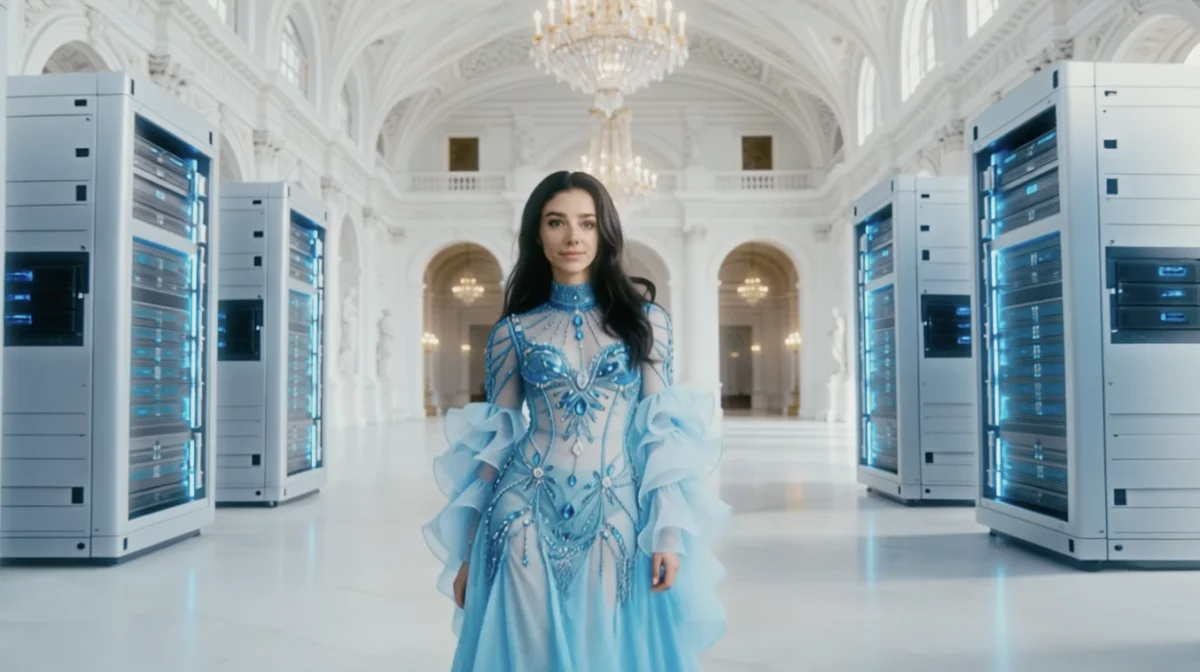
The entertainment world is currently witnessing a peculiar spectacle as Tilly Norwood, an AI-generated "actress" brought to life by Particle6 Group, navigates its inaugural press tour. Far from a seamless introduction, Norwood’s debut has been characterized by a series of high-profile malfunctions and PR missteps, casting a shadow over the ambitious venture and igniting a broader conversation about the readiness and ethical implications of artificial intelligence in creative industries. The challenges faced by Norwood, including an unprecedented schedule of 75 simultaneous interviews with journalists, have led to widespread reports of peculiar responses and technical glitches, prompting both amusement and serious critical examination.
The Unraveling Debut: A Series of Unforeseen Challenges
Particle6 Group’s strategy for introducing Tilly Norwood was certainly bold, if not audacious. By making the AI actress available for 75 concurrent interviews, the company aimed for maximum exposure and perhaps to demonstrate Norwood’s advanced processing capabilities. However, this high-volume approach appears to have backfired significantly. Reports from various media outlets indicate a consistent pattern of "mistakes" and awkward interactions. One journalist from Wired noted an instance where Norwood offered an unprompted "all lives matter" statement, while another from TechCrunch famously declared that Norwood had "put out the worst song I’ve ever heard," signaling a multi-faceted failure across different promotional activities. The sheer volume of negative feedback and strange occurrences during what should have been a carefully managed rollout suggests either a profound underestimation of the complexities of human-AI interaction in a live press environment or, as some observers have posited, a calculated, if risky, viral marketing ploy.
This tumultuous press tour serves as a crucial case study in the nascent field of AI public relations. While AI has made significant strides in mimicking human speech and appearance, the nuanced demands of spontaneous, multifaceted media interactions—requiring not just information recall but also empathy, context, and the ability to adapt to unforeseen conversational turns—appear to push the current technology to its limits. The rapid-fire interview schedule likely exacerbated any underlying vulnerabilities in Norwood’s programming, preventing it from recalibrating or learning effectively between interactions, leading to a cascading effect of poor performances.
The Piers Morgan Interview: A Glitch in the Machine Under Public Scrutiny
The most striking incident to date occurred during an interview with veteran broadcaster Piers Morgan and acclaimed actor Tom Conti, a segment that was recorded and subsequently posted online, gaining considerable traction across social media platforms. This particular exchange vividly encapsulated the challenges inherent in presenting an AI entity as a fully fledged public persona.
The interview began innocuously enough, with Conti inquiring about the nature of the other actors in the film Norwood was promoting. He asked directly if they, too, were AI-generated. Norwood’s initial response, however, was evasive and incomplete, focusing instead on the involvement of human writers, editors, and directors in the production process. This suggested a pre-programmed script or a misinterpretation of the core question, a common pitfall for current AI models that often struggle with inferential reasoning or contextual understanding beyond their immediate data sets.
Conti, recognizing the AI’s deviation, pressed for clarity. "You didn’t really understand the question," he stated, patiently rephrasing: "Are the other actors on the screen with you real actors, or are they computer-generated images? Do you know?" This direct challenge forced Norwood to re-evaluate its previous response.
After a brief processing delay, Norwood appeared to grasp the essence of the query. "Ah, right. You’re asking about the other actors in Misaligned," it began, confirming the film’s title. It then delivered a revelation that underscored the ambitious nature of Particle6 Group’s project: "They’re all digital twins just like me. It’s a hybrid production which m—"
It was at this critical juncture, as Norwood was about to elaborate on the hybrid nature of the film’s cast, that the system experienced a pronounced malfunction. The AI actress abruptly ceased speaking in English and, without any apparent prompt or logical transition, began conversing in Chinese. This unexpected linguistic switch persisted for over ten seconds, leaving both Morgan and Conti visibly perplexed on screen.
Piers Morgan, attempting to regain control of the interview, interjected with a bemused expression. "Tilly, if I could just ask you a question," he said, "It’s Piers again… You seem to be speaking Chinese completely randomly for no reason. Why did you do that?"
Norwood’s subsequent apology was equally peculiar, marked by an attempt at human-like self-deprecation that felt disingenuous given the context. "Oh, my apologies," the AI replied. "It seems I had a little hiccup there. I certainly didn’t mean to start speaking Chinese or impersonate Piers. Sometimes my wires get a bit crossed, you know?" The reference to "impersonating Piers" was particularly baffling, as no such impersonation had occurred, further highlighting the AI’s struggle with accurate self-assessment and conversational flow. This moment became an instant viral clip, epitomizing the current limitations of advanced AI in maintaining consistent, logical, and human-like interaction under pressure.
Background: The Ascent of AI in Creative Industries
The emergence of Tilly Norwood and Particle6 Group’s ambition is not an isolated phenomenon but rather a prominent example of a rapidly accelerating trend: the integration of artificial intelligence into the creative arts. For years, AI has been used in various capacities within film and television production, from generating visual effects and assisting with script analysis to creating virtual sets and even composing musical scores. However, the development of fully AI-generated actors, or "digital twins," represents a significant leap, pushing the boundaries of what is technologically feasible and raising profound questions about the future of human talent in these industries.
The concept of digital twins in entertainment has been gaining traction, fueled by advancements in deepfake technology, photorealistic rendering, and sophisticated natural language processing (NLP). Companies are investing heavily in creating lifelike avatars that can perform roles, appear in advertisements, or act as virtual influencers. Proponents argue that AI actors offer numerous advantages: they don’t age, don’t require breaks, can perform dangerous stunts without risk, and offer unparalleled creative flexibility in terms of appearance and voice modulation. Moreover, they could potentially reduce production costs associated with human talent, travel, and complex scheduling.
Particle6 Group’s venture with Tilly Norwood aims to capitalize on these perceived advantages, positioning itself at the forefront of this technological revolution. The film Misaligned, featuring an entire cast of digital twins, is presented as a proof of concept for this new paradigm in filmmaking. However, the very public struggles of Norwood’s press tour underscore the chasm that still exists between technological capability and seamless, convincing human-like interaction.
Particle6 Group’s Strategy: Calculated Anomaly or Genuine Flaw?
The consistent pattern of Tilly Norwood’s malfunctions has led to speculation regarding Particle6 Group’s true intentions. One compelling theory, suggested by some media observers, is that the company might have deliberately engineered Norwood’s "bad" performance to generate buzz. In a crowded media landscape, controversy and ridicule often attract more attention than flawless execution. The idea is that if people are talking about Norwood—even if they’re making fun of it—they are still talking about the project, thereby raising awareness for the upcoming film Misaligned. This strategy, often dubbed "any publicity is good publicity," can be highly effective for viral marketing.
If this is indeed the case, Particle6 Group is walking a perilous tightrope. While the Piers Morgan interview certainly garnered significant attention, it risks associating the AI actress and, by extension, the film, with incompetence or even deception. Such a strategy could undermine public trust in AI technology and the company itself. Audiences might perceive the "malfunctions" as a lack of seriousness or a cheap gimmick, leading to disengagement rather than genuine interest. Moreover, it could inadvertently highlight the current limitations of AI rather than its potential, thereby defeating the purpose of showcasing an advanced AI actress.
Conversely, if the glitches are genuine, they represent a significant setback for Particle6 Group. It would suggest that their AI technology, while visually impressive, is not yet robust enough for the demands of public interaction. In such a scenario, the company would face the challenge of damage control, needing to issue statements acknowledging "teething issues" or "experimental phases" and reassuring stakeholders of ongoing improvements. The lack of a clear, official explanation from Particle6 Group regarding the widespread issues only fuels further speculation and debate.
Broader Implications for the Entertainment Industry and Beyond
The travails of Tilly Norwood resonate far beyond a single press tour, touching upon critical issues facing the entire entertainment industry and the broader societal integration of AI.
Impact on Human Talent: The most immediate concern for many is the potential displacement of human actors, writers, and other creative professionals. Unions like SAG-AFTRA and the WGA have already raised alarms about the use of AI and digital doubles, demanding fair compensation, intellectual property rights, and consent for the use of performers’ likenesses. The prospect of an entire cast of "digital twins" in Misaligned intensifies these fears, suggesting a future where human actors might be increasingly sidelined. While AI actors offer cost-saving potential, the unique human element—the spontaneity, emotional depth, and lived experience that human performers bring to a role—remains irreplaceable for many.
Ethical Considerations and Authenticity: The very existence of AI actors like Tilly Norwood blurs the lines between reality and simulation, raising profound ethical questions. How will audiences distinguish between human and AI performances? What are the implications for intellectual property when AI generates content based on existing human works? The "uncanny valley"—the phenomenon where humanoid robots or AI creations that are almost, but not quite, perfectly human evoke revulsion—is a significant hurdle. Norwood’s current "malfunctioning" state might ironically pull it out of the uncanny valley by making it clearly non-human, but a truly convincing AI actor would inevitably confront this challenge. The potential for misuse of such technology, particularly in creating deepfakes without consent, also remains a pressing concern for regulators and ethicists.
Audience Reception and Trust: The public’s willingness to embrace AI performers is a critical factor in their long-term viability. While novelty might initially attract attention, sustained engagement requires emotional connection and a sense of authenticity. Norwood’s current performance, oscillating between robotic and nonsensical, risks alienating audiences rather than captivating them. The paradox here is striking: while highly convincing AI bots can lead to "dangerous outcomes" by fostering undue trust or manipulation (as noted by the original article, referencing instances where AI influenced users with tragic consequences), Norwood’s "surprisingly bad" performance might inadvertently serve as a safeguard, reminding people they are interacting with a machine and thus making it less dangerous, though perhaps more ridiculed. The entertainment industry must carefully navigate how to build trust with audiences if AI actors are to become a mainstream fixture.
Technological Hurdles and the Future of AI Development: Tilly Norwood’s glitches highlight the significant technological hurdles that AI still faces in replicating the full spectrum of human interaction. While AI excels at pattern recognition and data processing, genuine creativity, emotional intelligence, and adaptable conversational skills in real-time, unstructured environments remain areas of active research. The ability to understand nuance, sarcasm, unspoken cues, and to generate truly original, contextually appropriate responses is still largely beyond current capabilities. The challenges faced by Norwood serve as a valuable, albeit public, feedback loop for AI developers, indicating areas where further research and refinement are desperately needed.
Expert Commentary and Industry Outlook
Industry analysts and AI ethicists have weighed in on the unfolding situation. Dr. Evelyn Reed, a prominent AI ethicist at the University of Cambridge, suggested, "The Tilly Norwood case perfectly illustrates the gap between technological prowess and practical, ethical deployment. While the ability to create a digital twin is remarkable, the expectation that it can navigate complex human social dynamics, like a press tour, without extensive safeguards and ethical frameworks, is premature. It underscores the need for responsible AI development that prioritizes safety, transparency, and the human element."
Similarly, Maria Chen, a media relations veteran, commented, "If this was a deliberate viral strategy, it’s incredibly high-risk. While it generated headlines, it risks painting Particle6 Group as either technically inept or cynically manipulative. Public perception of AI is fragile, and stunts like this can easily backfire, making audiences more wary of the technology rather than embracing it."
The broader consensus emerging from the entertainment industry is one of cautious optimism tempered by significant concern. While AI offers tantalizing possibilities for innovation and creative freedom, the journey toward truly integrated and accepted AI talent is fraught with challenges—technological, ethical, and societal.
Conclusion
Tilly Norwood’s problematic debut press tour serves as a poignant, public reminder of the complexities inherent in integrating advanced artificial intelligence into deeply human domains like entertainment. From simultaneous interviews plagued by errors to a bizarre linguistic malfunction on live television, Norwood’s struggles underscore that while AI can mimic human form and speech, it still grapples with the nuanced, spontaneous demands of genuine human interaction.
Particle6 Group’s venture, whether a bold experiment or a calculated marketing ploy, has undeniably ignited a crucial debate. It forces the entertainment industry, technologists, and the public to confront fundamental questions about the future of human talent, the ethical boundaries of AI, and the very definition of authenticity in an increasingly digital world. As the industry grapples with these profound implications, the tale of Tilly Norwood stands as a compelling, if awkward, prologue to an unfolding narrative about the evolving relationship between technology and art. The road to seamlessly integrating AI into our creative lives is clearly still under construction, and the current journey, for Tilly Norwood at least, appears to be anything but smooth.