Lina Irawan
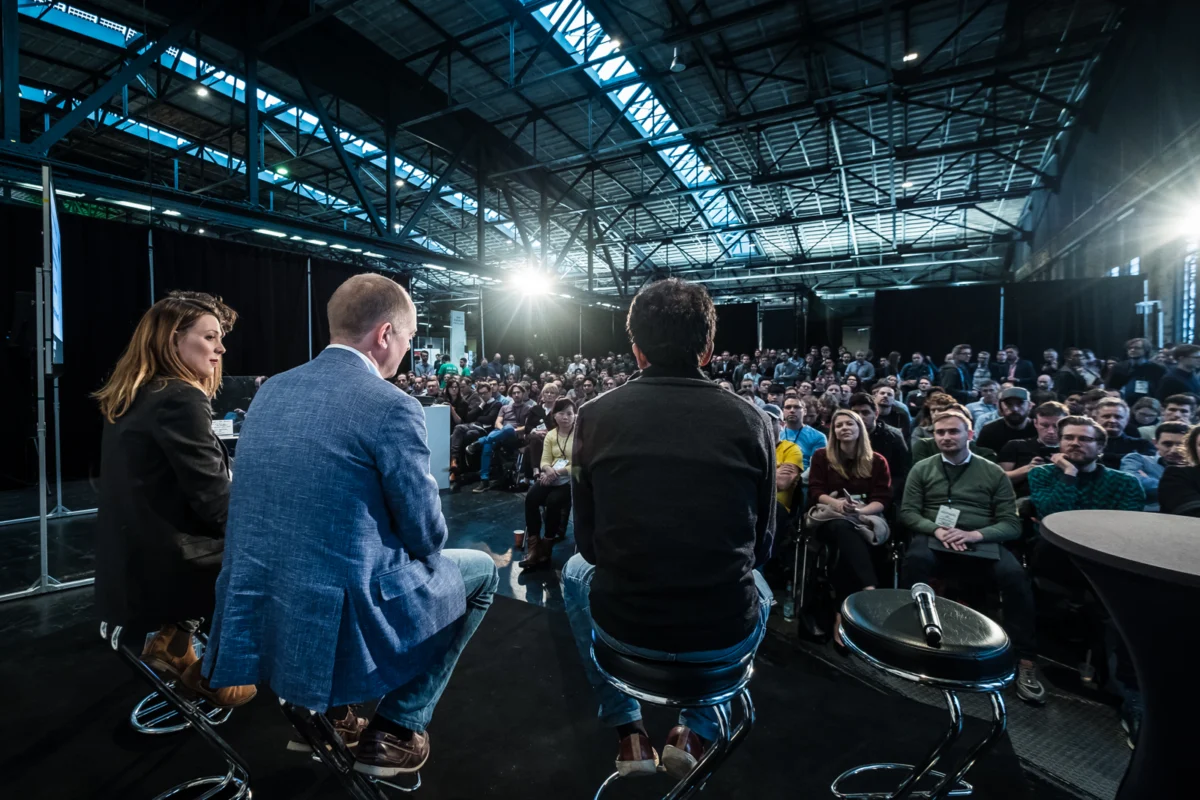
The landscape of cloud-native infrastructure has reached a critical inflection point where the complexity of microservices has outpaced the cognitive capacity of human operators. In a recent technical discussion, Ryan, a prominent voice in the DevOps community, sat down with Asaf Savich, the AI Engineering Group Manager at Komodor, to dissect the transition toward autonomous Site Reliability Engineering (SRE). The conversation highlighted a fundamental shift in the industry: modern reliability work no longer centers on manual troubleshooting but on the sophisticated management of cross-service context and the orchestration of AI agents. As Kubernetes-based environments become the standard for global enterprise operations, the integration of artificial intelligence is transforming the SRE from a reactive "firefighter" into a strategic architect of autonomous systems.
The Escalation of Cross-Service Complexity in Modern Infrastructure
As of mid-2026, the average enterprise architecture has grown significantly more fragmented than it was at the start of the decade. The shift from monolithic systems to microservices, and subsequently to serverless and distributed edge computing, has created a "context explosion." In this environment, a single user request might traverse dozens of independent services, each with its own logging, monitoring, and performance metrics. For a human SRE, identifying the root cause of a failure requires navigating this massive cross-service context—a task that involves correlating data from disparate sources such as Prometheus metrics, Jaeger traces, and GitHub deployment history.
Savich emphasized that the sheer volume of data generated by these systems has made traditional manual observation obsolete. When a service fails, the symptoms often manifest several layers away from the actual cause. A database bottleneck might appear as a front-end latency issue or a timeout in a middle-tier authentication service. Without a holistic view of the entire stack, engineers spend hours in "war rooms," attempting to piece together a narrative of what went wrong. This is the primary driver behind the move toward AI-driven SRE platforms like Komodor, which are designed to ingest this multi-dimensional context and provide actionable insights in real-time.
The Emergence of Context Engineering for AI Reliability
A central theme of the discussion was the concept of "context engineering." While generative AI and Large Language Models (LLMs) have demonstrated impressive capabilities in code generation and general troubleshooting, their utility in SRE is entirely dependent on the quality of the data they receive. Savich noted that good context engineering is the bridge between a generic AI model and a highly specialized SRE agent.
Context engineering involves the systematic selection, weighting, and formatting of infrastructure data before it is fed into an AI agent. This includes:
- Topology Mapping: Understanding the relationships between pods, nodes, namespaces, and external APIs.
- Temporal Correlation: Matching deployment events (e.g., a new CI/CD pipeline push) with performance anomalies.
- Historical Analysis: Leveraging past incident reports and remediation steps to inform current decision-making.
In an autonomous SRE framework, the AI does not just "read" logs; it understands the intent behind the architecture. By providing the AI with a structured "context window" that includes the current state of the Kubernetes cluster alongside historical patterns, the system can move beyond simple pattern matching to true causal inference.
The Evolution of the SRE Role: From Toil to Strategy
The integration of AI into site reliability is fundamentally altering the career trajectory and daily responsibilities of engineers. Historically, a significant portion of SRE work was defined by "toil"—repetitive, manual tasks such as scaling clusters, rotating secrets, or investigating routine alerts. Savich and Ryan discussed how the rise of autonomous agents is reclaiming this time for higher-level strategic work.
In this new paradigm, the SRE’s role is shifting toward "AI Agent Management." Rather than performing the troubleshooting themselves, engineers are responsible for:
- Defining Guardrails: Setting the boundaries within which an autonomous agent can operate (e.g., "The AI may restart a pod but cannot change load balancer configurations without approval").
- Policy Orchestration: Developing the high-level reliability policies that govern the AI’s behavior.
- Model Oversight: Monitoring the performance of the AI agents to ensure they are not hallucinating or making suboptimal decisions based on skewed data.
This shift represents a professionalization of the SRE discipline. By offloading the "low-level" cognitive load to autonomous platforms, engineers can focus on architecture design, cost optimization, and long-term resilience planning.
Supporting Data: The Economic and Technical Pressures of 2026
The move toward AI SRE is supported by a growing body of industry data reflecting the economic pressures on IT departments. According to 2025-2026 market analysis reports, the cost of unplanned downtime for Fortune 500 companies has risen to an average of $12,000 per minute, driven by the high interconnectedness of digital supply chains.
Furthermore, a 2026 survey of DevOps professionals indicated that:
- 78% of organizations have reported that their infrastructure complexity has increased by more than 50% in the last 24 months.
- 64% of SRE teams are now utilizing some form of AI-driven root cause analysis (RCA) to manage their Kubernetes environments.
- The "Mean Time to Resolution" (MTTR) has decreased by an average of 40% in firms that have successfully implemented autonomous context-aware agents.
These statistics underscore the reality that human-led operations are no longer financially or operationally viable for high-scale digital enterprises. The "human-in-the-loop" model is evolving into a "human-on-the-loop" model, where the human provides the final verification for high-stakes autonomous actions.
Chronology of SRE Evolution (2010–2026)
To understand the current state of the industry, it is helpful to view the timeline of how reliability work has transformed over the last 15 years:
- 2010–2015: The Manual Era. Reliability was managed through manual scripting, ticket-based systems, and "on-call" rotations that relied heavily on tribal knowledge and static documentation.
- 2015–2020: The DevOps and Observability Era. The rise of Docker and Kubernetes introduced containerization. Monitoring shifted to observability, with a focus on metrics, logs, and traces. Tools like Prometheus and Grafana became industry standards.
- 2020–2023: The AIOps Early Adoption. Initial AI applications focused on anomaly detection and alert noise reduction. However, these systems often lacked the "context" necessary to provide specific solutions, leading to "alert fatigue" in a different form.
- 2024–2025: The LLM Breakthrough. Generative AI began to be used for interpreting logs and writing post-mortems. Platforms like Komodor started integrating autonomous capabilities that could execute remediations within Kubernetes clusters.
- 2026 and Beyond: The Autonomous SRE. Reliability becomes a self-healing property of the infrastructure. AI agents manage the vast majority of incidents, and "Context Engineering" becomes a core competency for senior engineering leadership.
Industry Reactions and Official Responses
The tech community has responded with both enthusiasm and caution to the rapid advancement of autonomous SRE. While platforms like Komodor are leading the charge in automation, industry veterans emphasize the need for transparency.
In a recent statement regarding the integration of AI into infrastructure, a representative from the Cloud Native Computing Foundation (CNCF) noted: "The goal of autonomous SRE is not to replace the engineer, but to provide them with a ‘digital twin’ of their infrastructure that can process information at machine speed. The challenge for 2026 and beyond is ensuring that these AI agents are explainable and that their decision-making processes are auditable by human supervisors."
Similarly, during the discussion, Savich highlighted that Komodor’s approach is built on "transparency and trust." The platform provides the reasoning behind every suggested fix, allowing engineers to understand the "why" before the "how." This educational aspect is crucial for maintaining the skill sets of human engineers as they transition into supervisory roles.
Broader Impact and Future Implications
The implications of autonomous SRE extend beyond the technical realm and into the broader labor market and corporate strategy. As AI agents take over the bulk of operational work, the demand for "Generalist SREs" may shift toward "Specialist Reliability Architects" who possess deep knowledge of both AI behavior and distributed systems.
Moreover, the democratization of high-level reliability is expected to empower smaller startups. Previously, only "hyperscalers" like Google or Netflix could afford the massive SRE teams required to maintain 99.999% uptime. With autonomous platforms, a small team can now manage a complex, global infrastructure that would have previously required dozens of engineers.
However, this transition also raises questions about "black box" failures. As AI systems become more autonomous, there is a risk that human engineers will lose the "muscle memory" required to fix a system if the AI itself fails. This has led to a renewed focus on "Chaos Engineering"—the practice of intentionally stressing systems to test both the infrastructure and the autonomous agents designed to protect it.
Conclusion
The insights shared by Asaf Savich and Ryan reflect a broader movement toward a more resilient, AI-augmented future for cloud computing. By focusing on context engineering and the strategic management of AI agents, organizations can finally overcome the complexity barriers of modern Kubernetes environments. As we move further into 2026, the success of an engineering organization will likely be measured not by the size of its on-call rotation, but by the sophistication of its autonomous reliability stack and the ability of its human engineers to steer that autonomy toward business-critical goals.
In recognition of the ongoing community efforts to solve these complex problems, the discussion also noted recent contributions to the technical knowledge base. For instance, the "Populist" badge was recently awarded to Stack Overflow contributor joemaller for providing a definitive Python equivalent to the ‘which’ command—a reminder that while AI is scaling the heights of infrastructure management, the foundation of the industry remains built on shared, fundamental technical knowledge.