Vera Intan Clara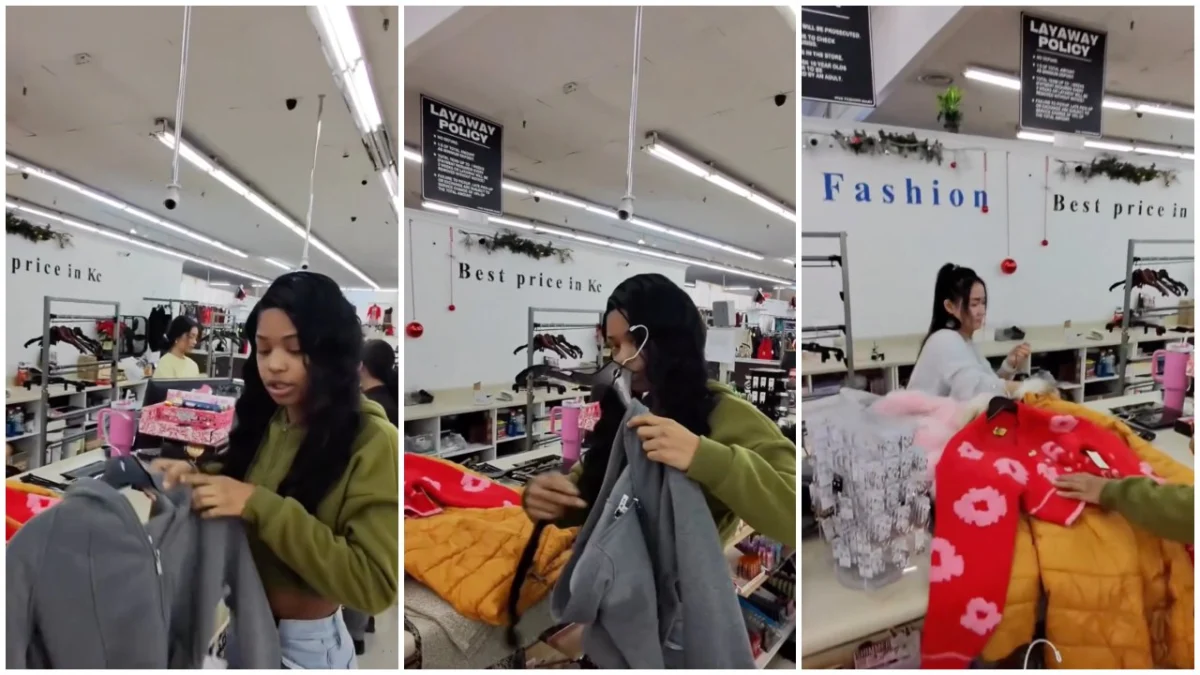
A recent viral video has ignited widespread discussion across social media platforms, particularly X (formerly Twitter), after it appeared to capture a contentious exchange between a woman and her alleged first date over a substantial shopping cart filled with clothes. The incident, which unfolded at a retail checkout, has prompted extensive debate concerning modern dating etiquette, financial expectations, and the increasingly blurred lines between genuine encounters and performative content in the digital age.
The highly circulated clip, initially shared by X user @omoelerinjare1 (whose handle in the original text appears to be "NOLLY" in the quoted tweet, a minor discrepancy that highlights the fluidity of social media attribution), depicts a woman at a checkout counter, systematically unloading a large quantity of clothing items from her shopping cart. In the background, a male voice, purportedly her date, can be heard expressing palpable surprise and questioning the sheer volume of her purchases. The core of the ensuing conflict quickly crystallizes as he presses her on who intends to cover the cost of what he perceives as an excessive shopping spree. Her confident declaration that he is expected to pay, despite the alleged first-date context, sets the stage for a dramatic and widely scrutinized confrontation. The video’s virality is not merely due to the immediate shock value but also its resonance with broader societal anxieties and evolving norms surrounding relationships and financial transparency.
The Unfolding Scene: From Casual Outing to Confrontation
The incident, as captured in the minute-long video, begins with the woman busily placing garments onto the conveyor belt. Her companion initiates the dialogue, expressing mild exasperation, "You said we weren’t going to be that long in the store." She nonchalantly dismisses his concern, stating, "We just had to get a couple things." His immediate, incredulous retort, "We?", underscores a clear divergence in their understanding of the outing’s purpose and scope. He then challenges her assertion, adding, "What you mean we, you shopping for the whole year." This statement vividly illustrates the scale of the purchases from his perspective, suggesting a volume far beyond a casual "few things."
The woman, seemingly unfazed, defends her actions, retorting, "Yeah, I need clothes, what do you mean?" She further expands on her shopping list, casually mentioning that she has also included "a few items for her mom," escalating the perceived financial burden. At this point, the man’s tone shifts from mild irritation to overt disbelief as he pointedly asks, "So who’s buying all of this?" Her unequivocal response, "You," is delivered with an air of expectation, triggering his bewildered follow-up: "No, hold on, what do you mean me?" The man’s reaction suggests that the idea of him funding such a substantial purchase on a first date was entirely unforeseen and unacceptable.
As the cashier continues to scan items, the woman attempts to deflect his growing concern by shifting the focus to the aesthetics of her selections, questioning whether he likes the items or if they look good on her. However, the video makes it clear that his objection is purely financial, not aesthetic. He reiterates his initial understanding of their outing, reminding her that they were merely going to "run into" the store as a brief interlude during their date. Despite his increasingly agitated demeanor, she remains steadfast in her expectation that he will pay. The tension peaks when the man instructs the cashier to stop ringing up items, a command she overrides by telling the cashier to "continue scanning everything," highlighting her resolve.
The Breaking Point: "I Ain’t Even Smashed" and the Exit
The man’s frustration reaches a breaking point as he declares, "I’m not buying it." His subsequent statements reveal the depth of his shock and his perception of the transaction’s unfairness. He stutters, grappling for words, "I haven’t even… We ain’t even…" before bluntly concluding, "I ain’t even smashed." This raw, unvarnished remark, though controversial, provides insight into his perceived transactional understanding of the situation, suggesting an expectation of a certain level of intimacy or progression in the relationship before such a significant financial outlay. He then explicitly questions the rationale behind him purchasing "so many items considering where they stand" in their nascent relationship.
The woman, now visibly taken aback by his explicit statement, attempts to garner sympathy or validation from the cashier, asking if she believes she should be obligated to "sleep with him for him to buy her clothes." This question frames the man’s refusal in a potentially negative light, suggesting an expectation of quid pro quo. In an attempt to resolve the escalating situation, the man then asks if she possesses any money, presumably to either complete the transaction herself or mitigate the waste of the cashier’s time. Her response, that she "didn’t even bring her wallet," further solidifies his belief that she had no intention of paying, regardless of his refusal.
With no resolution in sight and the situation becoming increasingly untenable, the man emphatically states, "I’m not paying for this… I’m about to leave." He concludes his participation in the unfolding drama by declaring, "I don’t know what you got going on, but I’m out of here," before filming himself walking out of the store, leaving the woman and the cart full of clothes at the checkout. The video ends with this dramatic departure, leaving the immediate aftermath to the viewer’s imagination.
Social Media Eruption and Public Discourse
The video’s rapid dissemination across X and other platforms triggered an avalanche of reactions, with users expressing a mix of shock, amusement, condemnation, and occasionally, defense. The post resharing the clip by @omoelerinjare1, and other prominent accounts like @Mikeylikesithot (who questioned, "She took him shopping on the first date? She expected him to pay? This cannot be real."), quickly amassed millions of views, likes, and comments.
A significant portion of the public reaction condemned the woman’s actions as audacious, exploitative, and a blatant disregard for basic dating etiquette. Many viewed it as a "test" of the man’s financial capacity and generosity, with one widely quoted comment stating, "she’s testing his bank account on day one." This perspective highlights a common critique of what some perceive as "gold-digging" behavior or an excessive sense of entitlement in dating. Commentators frequently pointed to the implicit expectation of shared understanding on a first date, suggesting that such a significant financial demand fundamentally violates the premise of getting to know someone.
Conversely, a smaller but vocal segment of online users offered alternative interpretations or even defended the woman. Some argued that if a man invites a woman on a date, he should be prepared to cover expenses, though even these advocates often conceded that the scale of this particular "expense" was extraordinary. Others suggested that the man’s "I ain’t even smashed" comment was equally, if not more, problematic, reducing the interaction to a transactional exchange of money for intimacy. This counter-narrative highlighted concerns about misogyny and the objectification of women in dating, regardless of the initial shopping incident. The incident became a lightning rod for broader discussions about gender roles, expectations of chivalry, and the boundaries of financial generosity in nascent relationships.
Dating Etiquette and Financial Expectations: A Broader Context
This viral incident taps into a long-standing and evolving debate about dating etiquette, particularly regarding finances. Traditionally, there has been a societal expectation, especially in heterosexual dating, for men to pay for dates. This norm is rooted in historical gender roles where men were seen as providers. However, in contemporary society, with increasing financial independence for women and a growing emphasis on gender equality, these traditions are being re-evaluated.
Modern dating advice often advocates for open communication about financial expectations, shared responsibility, or at least a clear understanding of who is paying for what, especially as a relationship progresses. On a first date, typically, expenses are modest—a coffee, drinks, or a meal—and are often implicitly or explicitly covered by one party, or sometimes split. The concept of a first date involving a significant shopping spree, let alone one where one party expects the other to fund an entire wardrobe, deviates drastically from widely accepted norms.
Research into dating economics frequently reveals a disconnect between perceived expectations and actual preferences. While some surveys indicate that a majority of women still appreciate a man paying for the first date, there’s also a strong sentiment for financial independence and shared contributions as a relationship develops. The incident underscores the potential for miscommunication and differing assumptions about financial roles, which can be a significant source of conflict and discomfort in early dating stages. The average cost of a dinner date in many urban areas can easily exceed $100-$150, but a "cart full of clothes" could easily run into several hundreds, if not thousands, of dollars, representing an entirely different magnitude of financial commitment.
The Blurring Lines of Online Content: Reality or Staged Performance?
A crucial aspect of analyzing such viral content is the inherent difficulty in verifying its authenticity. The original article from The Daily Dot explicitly states its inability to "independently verify the circumstances surrounding the video, including whether the pair were actually on a first date." This disclaimer is vital. In the age of social media, many viral videos are staged or exaggerated for entertainment, engagement, and the pursuit of virality. Content creators frequently orchestrate "social experiments" or dramatic scenarios to provoke strong reactions and generate clicks, shares, and followers.
The seemingly extreme nature of the woman’s behavior and the man’s reaction, while plausible in a genuine encounter, also aligns with the characteristics of staged content designed to maximize outrage or amusement. Elements like the woman’s unwavering expectation, the man’s specific "I ain’t even smashed" remark, and the dramatic walk-out could all be scripted to create a compelling narrative arc. If the incident were indeed a performance, it raises questions about the ethics of deceiving an audience for views and the impact such staged scenarios have on public perception of real-life dating dynamics. Regardless of its authenticity, the video’s impact remains significant, as it functions as a powerful cultural artifact reflecting prevalent anxieties and debates.
Expert Perspectives and Broader Implications
While no direct statements from the individuals involved have surfaced, relationship experts and cultural commentators would likely emphasize several key takeaways from this incident. Firstly, the paramount importance of clear and early communication regarding expectations in dating, particularly financial ones. Ambiguity can lead to significant misunderstandings and resentment. Secondly, the incident highlights the need for establishing boundaries. Both parties, regardless of gender, should feel comfortable asserting their limits regarding time, emotional investment, and financial contributions.
From a sociological perspective, the video could be viewed as a microcosm of broader societal shifts. It reflects the ongoing tension between traditional gender roles and the push for modern equality. It also underscores the potential for individuals to misinterpret or exploit evolving norms, leading to situations that generate public outcry. The "testing" narrative, where one person assesses a potential partner’s willingness to spend money, speaks to a cynical approach to dating that can erode trust and foster transactional relationships.
The broader implications for modern dating are significant. Such viral incidents can contribute to a climate of mistrust and caution among singles. They fuel stereotypes, potentially making individuals more wary of engaging in new relationships, fearing exploitation or misjudgment. For men, it might reinforce anxieties about being perceived as mere ATMs, while for women, it could amplify concerns about being judged for their financial independence or expectations. Ultimately, the viral first date shopping spree serves as a stark reminder of the complexities and challenges inherent in navigating contemporary dating landscapes, where personal expectations, societal norms, and the omnipresent gaze of social media constantly intersect.