Lina Irawan
The annual Snowflake Summit has long served as a bellwether for the data warehousing and cloud services industry, but this year’s event marked a definitive shift in the company’s trajectory toward integrated artificial intelligence. Central to the proceedings was the formal introduction of Snowflake CoCo, a conversational copilot designed to streamline the intersection of data management and generative AI. Alongside this product launch, Snowflake’s leadership outlined a rigorous strategic pivot aimed at transforming internal engineering cultures from experimental "chaos" into disciplined, AI-assisted production environments. The summit provided a platform for Umesh Unnikrishnan and Vivek Raghunathan, Senior Vice President of Engineering at Snowflake, to detail how the organization is navigating the transition from traditional software development to an AI-first paradigm.
The Evolution of Snowflake CoCo and the AI-Assisted Ecosystem
The unveiling of Snowflake CoCo represents a significant milestone in the company’s "Data Cloud" vision. CoCo, short for Conversational Copilot, is engineered to lower the barrier to entry for complex data operations. By leveraging large language models (LLMs) integrated directly into the Snowflake platform, CoCo allows users to interact with their data using natural language queries. This move is seen by industry analysts as a direct response to the growing demand for "democratized data," where non-technical stakeholders can derive insights without requiring deep proficiency in SQL or Python.
Umesh Unnikrishnan, a key figure in the development and rollout of Snowflake’s latest releases, emphasized that CoCo is not merely a search tool but a foundational component of the Snowflake ecosystem. The tool is designed to assist in code generation, query optimization, and the automated documentation of data pipelines. By embedding AI directly into the workflow, Snowflake aims to reduce the "time to insight" that has historically plagued large enterprises dealing with petabyte-scale datasets.
The technical architecture of CoCo relies on a combination of proprietary Snowflake data governance and advanced machine learning models. Unlike generic AI assistants, CoCo is tuned specifically for the nuances of the Snowflake environment, ensuring that the code it generates adheres to best practices for performance and security within the Snowflake Data Cloud. This specialization is a critical differentiator in a market currently saturated with general-purpose AI coding tools.
From Chaos to System: The Five-Stage Engineering Framework
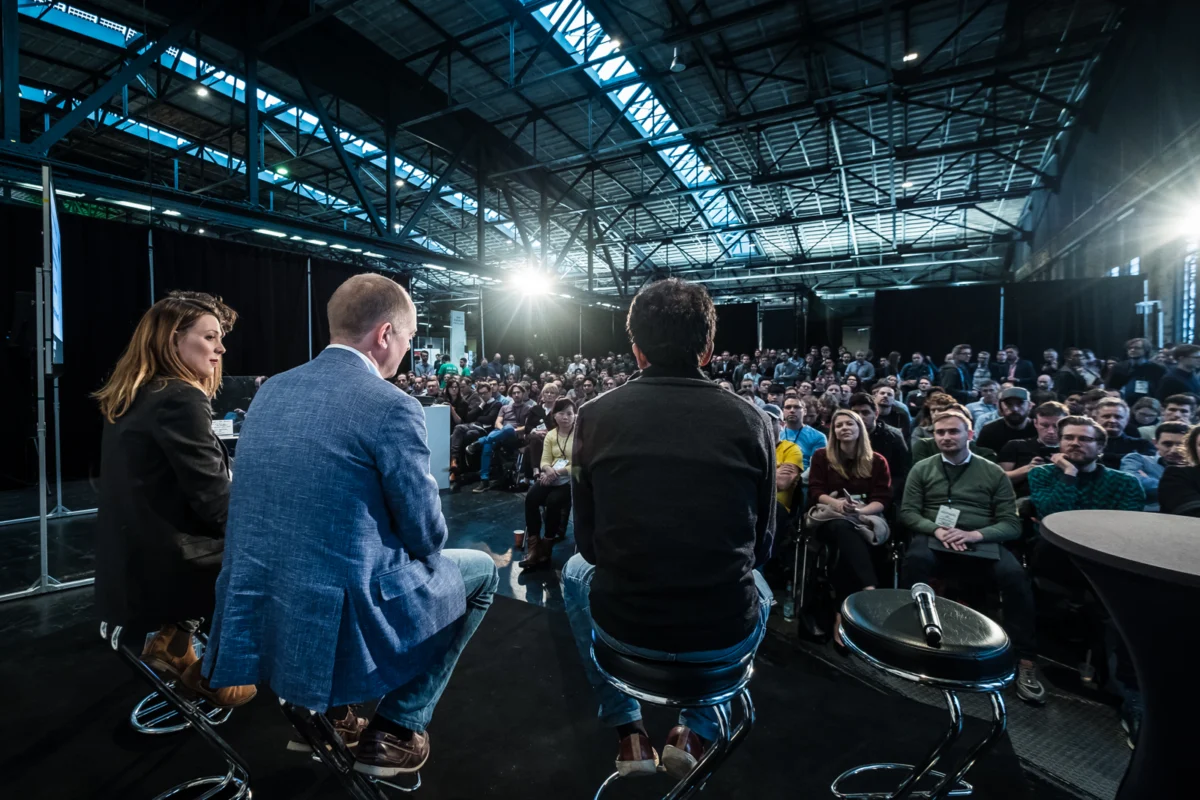
While the product announcements captured the headlines, the internal methodology behind Snowflake’s AI adoption provided a roadmap for other Fortune 500 companies. Vivek Raghunathan, SVP of Engineering, sat down at the summit to break down the five-stage framework his organization utilized to standardize AI-assisted engineering. According to Raghunathan, the early days of generative AI integration were characterized by a "let chaos reign" philosophy—a period of rapid, uncoordinated experimentation where individual developers used various tools without centralized oversight.
To move beyond this fragmented state, Raghunathan’s team implemented a repeatable, organization-wide system. The first stage involved identifying the "low-hanging fruit"—tasks like unit testing and documentation where AI could provide immediate, low-risk value. The second stage focused on tool consolidation, ensuring that the engineering org was not duplicating costs or creating security vulnerabilities through the use of unvetted third-party AI extensions.
The third and fourth stages of the framework addressed the more complex challenges of governance and integration. This involved creating internal benchmarks to measure the quality of AI-generated code and establishing "human-in-the-loop" protocols to ensure that senior engineers remained the final arbiters of code quality. The final stage, which Snowflake is currently refining, involves the creation of a "repeatable playbook" where AI is no longer an add-on but a native part of the software development life cycle (SDLC). Raghunathan noted that this transition is essential for maintaining engineering velocity as the complexity of cloud-native applications continues to scale.
Chronology of Snowflake’s AI Integration
The path to the 2026 Snowflake Summit announcements was paved by several years of strategic acquisitions and internal development. The timeline below illustrates the company’s steady march toward AI dominance:
- 2023: Snowflake acquires Neeva, a search company founded by former Google executives, to bolster its generative AI and natural language processing capabilities.
- Early 2024: The launch of Snowflake Cortex, a fully managed service that provides access to industry-leading LLMs, begins to gain traction among enterprise customers.
- Late 2024: Internal pilots for CoCo begin within Snowflake’s own engineering teams, testing the tool’s ability to manage Snowflake’s massive internal codebase.
- 2025: Snowflake announces partnerships with major LLM providers to ensure that their models can run securely within the Snowflake "Clean Room" environment.
- 2026 (Current): The formal launch of CoCo and the public release of the AI-assisted engineering framework signal Snowflake’s maturity as an AI-centric platform.
This chronology demonstrates that Snowflake’s current success is not a reaction to recent trends but the result of a multi-year strategy to integrate intelligence layers directly into the data storage layer.
Supporting Data and Industry Trends
The shift toward AI-assisted engineering is backed by significant data from the broader developer community. Stack Overflow’s 16th Annual Developer Survey, which opened concurrently with the Snowflake Summit, is expected to provide further evidence of this trend. Preliminary data from previous years and industry reports suggest a rapid uptick in the adoption of AI tools among professional developers.
According to recent industry benchmarks, nearly 70% of professional developers are either already using or planning to use AI tools in their development process. Furthermore, organizations that have successfully implemented AI-assisted frameworks report a 20% to 30% increase in developer productivity, particularly in the areas of debugging and boilerplate code generation.
However, the data also highlights significant concerns regarding security and code reliability. A study conducted by cybersecurity firms in 2025 found that AI-generated code can sometimes introduce vulnerabilities if not properly audited. This finding underscores the importance of the governance-focused stages in Vivek Raghunathan’s five-stage framework. By prioritizing "repeatable systems" over "chaos," Snowflake is positioning itself as a leader in the responsible deployment of AI in the enterprise.
Official Responses and Stakeholder Perspectives
The reaction from the developer community and Snowflake’s partners has been largely positive, though tempered with a demand for continued transparency. Industry analysts at the summit noted that Snowflake’s approach addresses the "trust gap" that often exists between experimental AI tools and enterprise-grade requirements.
"Snowflake is not just giving us another chatbot; they are giving us a framework for how to actually build software in the age of AI," said one lead architect from a global financial services firm attending the summit. "The focus on the five-stage framework is particularly useful because it acknowledges that the transition to AI is as much a cultural shift as it is a technical one."
Within Snowflake, the sentiment is one of focused execution. Umesh Unnikrishnan’s outreach to the developer community through platforms like the Stack Overflow "Leaders of Code" podcast reflects a commitment to open dialogue. By sharing their internal struggles—moving from "chaos" to "system"—Snowflake is fostering a sense of shared learning with its customer base.
Broader Impact and Implications for the Future of Data Engineering
The implications of Snowflake’s latest announcements extend far beyond its own platform. As Snowflake and its competitors (such as Databricks and BigQuery) continue to integrate AI deeply into their stacks, the role of the traditional data engineer is undergoing a fundamental transformation. The focus is shifting from manual ETL (Extract, Transform, Load) processes and complex SQL optimization to the orchestration of AI models and the management of "data products."
The introduction of CoCo suggests a future where the "Data Cloud" is self-optimizing. If an AI can understand the intent of a query and automatically restructure the underlying data to be more efficient, the cost of cloud computing could drop significantly for many enterprises. This, in turn, could lead to a surge in data-driven innovation, as companies that were previously priced out of high-performance analytics find new ways to leverage their information assets.
Furthermore, the emphasis on the Annual Developer Survey highlights the critical role of community feedback. As developers provide more data on their workflows and pain points, platforms like Snowflake will continue to iterate on their AI tools. The "Leaders of Code" series and the detailed playbooks shared by executives like Raghunathan are likely to become the new standard for how tech companies communicate their internal progress to the world.
In conclusion, the Snowflake Summit has set a high bar for the industry. By combining product innovation (CoCo) with organizational wisdom (the five-stage framework), Snowflake is addressing the two most significant hurdles to AI adoption: technical capability and operational readiness. As the 16th Annual Developer Survey gathers more insights from the global coding community, the industry will be watching closely to see if Snowflake’s "repeatable system" becomes the blueprint for the next decade of software engineering. The transition from the era of "chaos" to an era of structured, AI-enhanced productivity is no longer a theoretical goal; it is the current reality for the world’s leading data organizations.