Galang Taruna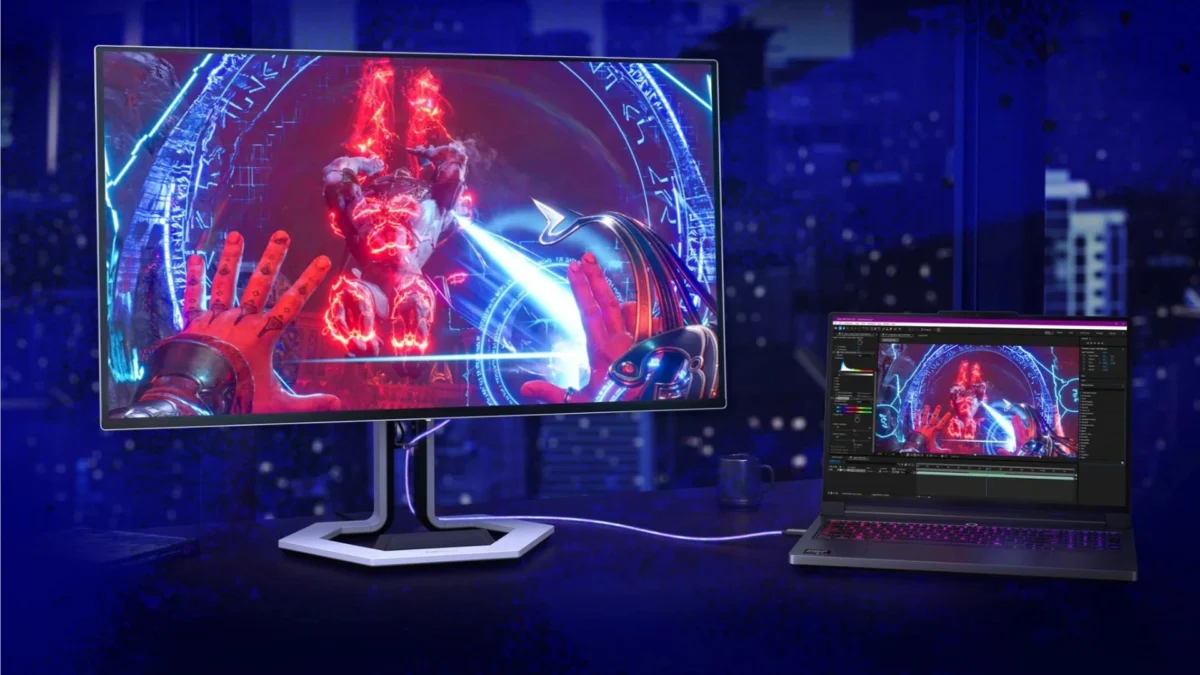
Lenovo has officially introduced its latest flagship gaming display, the Legion Pro 32UD-10, a monitor engineered to redefine the high-end gaming experience. This sophisticated display, boasting a 31.5-inch 4K QD-OLED panel, a blazing 240Hz refresh rate, and an astonishingly low response time, is positioned to cater to the most discerning gamers and content creators alike. Currently, the monitor is available for acquisition at €635.37 on Amazon, presenting a 29% reduction from its typical retail price, though prospective buyers should note the possibility of extended delivery times. For those prioritizing immediate access, the monitor can be purchased directly from Lenovo’s official website for €749.90, offering a faster shipping option despite the higher price point. This strategic dual-channel offering highlights Lenovo’s intent to capture various segments of the premium market, balancing aggressive pricing with consumer convenience. The introduction of such a high-spec monitor at a notably competitive price is a significant development in the rapidly evolving landscape of gaming peripherals, indicating a broader trend towards making cutting-edge display technologies more accessible to a wider audience.
The Evolution of Gaming Displays: A Quest for Immersion and Performance
The journey of gaming monitors has been one of relentless innovation, driven by the ever-increasing demands of both competitive esports and visually rich narrative experiences. For decades, Twisted Nematic (TN) panels dominated the high-refresh-rate segment due to their rapid response times, albeit at the expense of color accuracy and viewing angles. In parallel, In-Plane Switching (IPS) and Vertical Alignment (VA) technologies offered superior color reproduction and contrast, respectively, but often lagged in speed. The advent of OLED (Organic Light-Emitting Diode) technology marked a paradigm shift, promising perfect blacks, infinite contrast ratios, and instantaneous pixel response thanks to its self-emissive nature. However, early OLED implementations in monitors faced challenges related to brightness, color volume, and the persistent concern of burn-in, which tempered widespread adoption in the PC gaming sphere.
The introduction of QD-OLED (Quantum Dot Organic Light-Emitting Diode) technology by manufacturers like Samsung Display has addressed many of these prior limitations, representing a significant leap forward. QD-OLED panels combine the inherent advantages of OLED with a Quantum Dot layer, allowing for superior color purity, increased peak brightness, and enhanced color volume, especially at higher brightness levels, compared to traditional white OLED (WOLED) panels. This technological advancement has opened new avenues for monitor manufacturers to deliver displays that offer an unparalleled visual experience without compromising on the critical performance metrics required by serious gamers. The Lenovo Legion Pro 32UD-10 stands as a prime example of this evolution, integrating these cutting-edge display innovations to deliver a product that caters to the apex of gaming performance and visual fidelity. Its release underscores the industry’s commitment to pushing the boundaries of what’s possible in digital entertainment, continuously striving to bridge the gap between virtual worlds and real-world perception.
Unpacking QD-OLED: The Heart of Visual Excellence
At the core of the Lenovo Legion Pro 32UD-10’s appeal is its Quantum Dot OLED (QD-OLED) panel. Unlike traditional LCD displays that rely on a backlight and liquid crystals to modulate light, QD-OLED technology utilizes self-emissive organic light-emitting diodes. Each pixel generates its own light, allowing for individual pixel control and, crucially, the ability for pixels to completely turn off. This fundamental difference results in "perfect blacks" – a truly infinite contrast ratio where black areas are genuinely devoid of light, providing a depth and realism that conventional LCD panels, even those with advanced local dimming, cannot replicate. The impact on visual quality is profound, particularly in high-contrast scenes found in cinematic games or dark environments, where details often get lost on less capable displays.
Furthermore, the integration of Quantum Dots enhances the color spectrum and vibrancy. QD-OLED panels produce highly saturated and accurate colors, covering a vast portion of color spaces such as DCI-P3, which is critical for HDR content and professional creative work. The Quantum Dots convert blue light emitted by the OLED sub-pixels into precise red and green, resulting in a purer, more efficient color generation without the need for a separate color filter layer as seen in some WOLED implementations. This not only contributes to a wider color gamut but also improves color volume at peak brightness levels, ensuring that colors remain rich and distinct even in very bright scenes. The 31.5-inch screen size, coupled with a 4K UHD (3840×2160) resolution, translates to a pixel density of approximately 140 pixels per inch (ppi). This high pixel density ensures exceptional sharpness and clarity, making text crisp and game environments incredibly detailed, minimizing visible pixel structure even at close viewing distances. For gamers, this means more immersive worlds and a competitive edge through enhanced visual information.
Unrivaled Performance for the Demanding Gamer
Beyond its stunning visual fidelity, the Lenovo Legion Pro 32UD-10 is engineered for uncompromising gaming performance. The monitor boasts a maximum refresh rate of 240Hz, a critical specification for competitive gaming. A higher refresh rate means the display can update the image on screen more frequently, resulting in smoother motion, reduced motion blur, and a more immediate sense of responsiveness. In fast-paced titles like first-person shooters or racing games, this translates to a tangible advantage, allowing players to react quicker to on-screen events and track opponents with greater precision. The difference between 60Hz, 144Hz, and 240Hz is palpable, providing an increasingly fluid visual experience that enhances both competitive performance and overall immersion.
Complementing the high refresh rate is an incredibly low response time of 0.03 milliseconds Gray-to-Gray (GtG). This metric, which measures the time it takes for a pixel to change from one shade of gray to another, is a key indicator of motion clarity. A near-instantaneous response time effectively eliminates ghosting and smearing artifacts, ensuring that fast-moving objects remain sharp and clear on screen. Combined with the 240Hz refresh rate, this makes the Legion Pro 32UD-10 one of the fastest monitors on the market, minimizing input lag and delivering a virtually instantaneous visual feedback loop crucial for professional esports players.
To further enhance the gaming experience, the monitor integrates support for AMD FreeSync Premium Pro and Adaptive Sync technologies. These technologies synchronize the monitor’s refresh rate with the output frame rate of the graphics card, dynamically adjusting to prevent screen tearing (where different parts of the image appear misaligned) and stuttering (choppy motion due to frame rate fluctuations). FreeSync Premium Pro specifically adds support for HDR content and low framerate compensation (LFC), ensuring a smooth and tear-free experience across a wide range of frame rates and in demanding HDR games. This comprehensive suite of performance features ensures that whether players are engaged in milliseconds-critical competitive combat or exploring expansive, graphically intensive narrative worlds, the Legion Pro 32UD-10 delivers a consistently smooth, responsive, and visually stunning experience.
Design, Ergonomics, and Connectivity: A Holistic Premium Offering
Lenovo has not only focused on raw panel performance but also on the overall user experience, reflected in the design and connectivity of the Legion Pro 32UD-10. The monitor’s physical dimensions, with a 31.5-inch diagonal, strike a balance between an expansive viewing area and practical desktop footprint. The chassis is designed with a "NearEdgeless" aesthetic, featuring ultra-thin bezels on three sides. This minimalist design not only enhances immersion by reducing visual distractions but also makes the monitor ideal for multi-monitor setups, creating a near-seamless panoramic view. Weighing 8.5 kg for the panel alone, the monitor is supported by a robust and highly adjustable stand. This ergonomic stand allows for a wide range of adjustments, including tilt, height adjustment, and pivot functionality. The ability to pivot the screen (rotate it into portrait mode) can be particularly useful for productivity tasks, coding, or specific gaming genres. Such adjustability ensures users can achieve an optimal viewing position, reducing strain during extended gaming sessions or work.
Connectivity is another area where the Legion Pro 32UD-10 excels, providing a comprehensive array of ports to accommodate a diverse range of devices. It features two HDMI 2.1 ports, which are crucial for modern console gaming (PlayStation 5 and Xbox Series X/S) as they support 4K resolution at 120Hz, alongside variable refresh rate (VRR) capabilities. This ensures console gamers can fully exploit the visual and performance potential of their latest-generation systems. Additionally, a DisplayPort 1.4 connection is included, typically preferred for PC gaming to achieve the full 4K 240Hz refresh rate. A versatile USB-C port (with up to 15W power delivery) allows for single-cable connectivity with compatible laptops, transmitting video, data, and power simultaneously, streamlining desktop setups. The integrated USB hub, featuring three additional USB-A ports, provides convenient access for connecting peripherals such as keyboards, mice, webcams, or charging mobile devices. Finally, an audio output jack allows users to connect headphones or external speakers directly to the monitor, offering flexibility in audio configurations. This rich connectivity suite transforms the monitor into a central hub for a complete gaming and productivity ecosystem.
Market Positioning and Competitive Landscape Analysis
The release of the Lenovo Legion Pro 32UD-10 at its current aggressive price point significantly impacts the high-end gaming monitor market. This segment, traditionally dominated by a few key players like Alienware (Dell), ASUS ROG, and Samsung Odyssey, has seen increasing competition, particularly with the proliferation of QD-OLED and WOLED panels. Lenovo’s strategy with the Legion Pro 32UD-10 appears to be multifaceted: first, to firmly establish the Legion brand as a premium contender in the display space; and second, to disrupt existing pricing structures for QD-OLED technology.
Historically, QD-OLED monitors with similar specifications (32-inch 4K 240Hz) have launched at prices considerably higher, often exceeding €1000 or even €1200. For instance, competing models from other manufacturers, while offering comparable panel technology and performance, have been introduced at a higher premium. By offering the Legion Pro 32UD-10 at €635.37 on Amazon, Lenovo is effectively setting a new benchmark for value in this high-performance category. This move could catalyze a broader price adjustment across the industry, forcing competitors to re-evaluate their own pricing strategies to remain competitive. This aggressive pricing could be attributed to economies of scale, supply chain optimizations, or a strategic decision to gain market share rapidly in a crucial segment.
The duality of pricing – lower on Amazon with potential delivery delays versus higher on Lenovo’s site for faster shipping – suggests a careful balancing act. The Amazon deal likely serves as a powerful market entry statement, generating buzz and demonstrating a commitment to affordability for cutting-edge tech. The Lenovo site pricing, while higher, caters to customers who prioritize immediate gratification and are willing to pay a premium for expedited service, ensuring that Lenovo doesn’t solely rely on the long-term, lower-margin sales channel. This approach allows Lenovo to capture both price-sensitive and time-sensitive segments of the premium gaming market. The emergence of such high-spec QD-OLED monitors at increasingly accessible price points signals a maturing market and an accelerating adoption curve for these advanced display technologies, moving them from niche enthusiast products to more mainstream high-performance options.
The Value Proposition and Future Implications
The Lenovo Legion Pro 32UD-10 represents a compelling value proposition for serious gamers and prosumers. Combining a large 4K QD-OLED panel with a 240Hz refresh rate and near-instantaneous response time, it delivers a no-compromise visual and performance package. At €635.37, it offers features that were previously only available at significantly higher price points, making premium gaming more attainable. However, prospective buyers must weigh the potential for extended delivery times from Amazon, which, stretching possibly into late 2026, could be a significant deterrent for those eager to upgrade. This suggests either a highly popular product experiencing unexpected demand or a logistical challenge in fulfilling orders for such an advanced component at this price point. The alternative, purchasing directly from Lenovo for €749.90 for quicker delivery, presents a clear trade-off between cost savings and immediate gratification. For many, the approximately €115 difference might be justifiable for instant access to a top-tier display.
Looking ahead, the introduction of products like the Legion Pro 32UD-10 underscores several key implications for the gaming and display industries. Firstly, it signals a clear trend towards the democratization of advanced display technologies. As manufacturing processes mature and competition intensifies, the cost of QD-OLED panels is gradually decreasing, allowing brands to offer more aggressive pricing. This will likely accelerate the transition of high-end gaming from traditional LCDs to OLED-based solutions. Secondly, it reinforces the demand for hybrid displays that cater to both competitive performance and immersive visual quality. Gamers no longer want to choose between speed and stunning graphics; they expect both, and QD-OLED delivers on this promise. Thirdly, it highlights the increasing importance of comprehensive connectivity, especially HDMI 2.1, as the convergence of PC and console gaming on a single high-performance monitor becomes more common.
Ultimately, the Lenovo Legion Pro 32UD-10 is more than just a new monitor; it is a statement piece that exemplifies the current pinnacle of gaming display technology. Its strategic pricing and feature set are poised to disrupt the market, offering an exceptional experience that was once the exclusive domain of a select few. As the gaming ecosystem continues to evolve, monitors like the Legion Pro 32UD-10 will play a crucial role in shaping the future of digital immersion, setting new standards for visual fidelity, responsiveness, and overall user satisfaction. The challenge for consumers now lies in navigating the availability and delivery logistics to seize this unprecedented opportunity for a premium upgrade.