Garick Elordi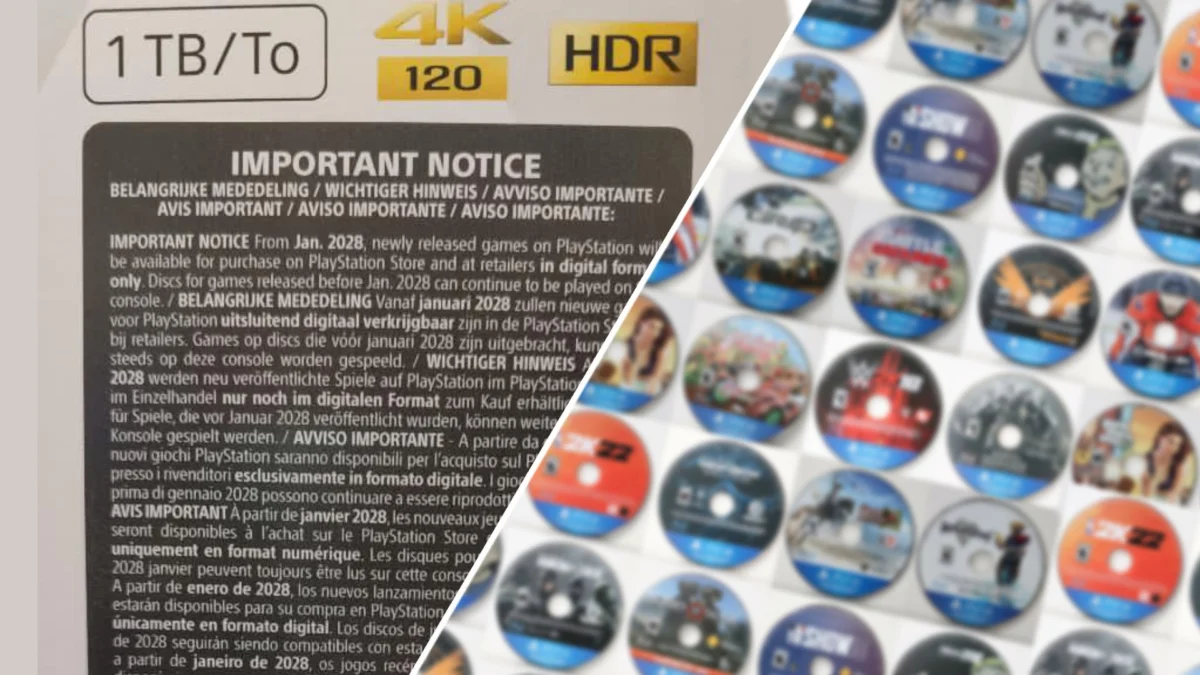
Sony Interactive Entertainment has moved to solidify its timeline for the transition to an all-digital ecosystem, beginning the distribution of PlayStation 5 consoles featuring an explicit warning regarding the future of physical media. The notice, which has recently been spotted on retail packaging and internal documentation, informs consumers that the company will cease the production and support of physical disc-based games starting in January 2028. This move marks a definitive end to a four-decade era of physical distribution for the PlayStation brand, signaling a total shift toward the PlayStation Store as the primary gateway for software acquisition.
The printed notice accompanying new PS5 units states: "Important notice: from January 2028, newly released games on PlayStation will be available for purchase on PS Store and at retailers in digital format only. Discs for games released before January 2028 can continue to be played on this console." While the hardware itself will maintain its ability to read legacy discs, the directive ensures that the next generation of software—including highly anticipated first-party sequels and third-party blockbusters—will be untethered from physical distribution.
The Chronology of Sony’s Digital Transition
The path toward an all-digital future for PlayStation has been visible for several years, characterized by incremental shifts in hardware design and consumer behavior. When the PlayStation 5 launched in November 2020, Sony offered two distinct models: a standard version with an Ultra HD Blu-ray disc drive and a Digital Edition at a lower price point. This was the first clear indicator that Sony was testing the market’s appetite for a disc-less environment.
By 2023, the introduction of the "Slim" model further emphasized this trajectory. Unlike the launch models, the newer PS5 iterations featured a modular design where the disc drive could be purchased separately and attached to the console. However, this hardware required an internet connection to "marry" the drive to the motherboard, a requirement that sparked early concerns among preservationists about the long-term viability of the hardware should Sony’s authentication servers ever go offline.
The formal announcement that Sony would end physical media production by 2028 was met with significant industry friction, but the company has remained steadfast. Industry analysts suggest that the move is driven by the desire to eliminate the overhead costs associated with manufacturing, warehousing, and shipping physical goods, while simultaneously capturing 100% of the revenue from software sales by removing the "middleman" of third-party retailers and the secondary used-game market.
Market Data and the Decline of Physical Sales
The decision to pivot to digital-only distribution is supported by a decade of shifting consumer data. In Sony’s recent quarterly financial reports, the company revealed that digital software sales now account for approximately 70% to 80% of total game purchases on the PlayStation platform. This trend is mirrored across the broader gaming industry, where digital convenience often outweighs the desire for physical ownership for the average consumer.
However, the remaining 20% to 30% of the market represents a vocal and dedicated demographic of collectors, budget-conscious players, and those in regions with limited high-speed internet infrastructure. For these users, physical media serves as a vital tool for cost management through the second-hand market. Data from retail tracking firms indicates that physical copies of major titles often see price reductions much faster than their digital counterparts. Furthermore, the ability to trade in or sell a physical disc allows consumers to recoup a portion of their initial investment—a financial flexibility that is entirely absent in a digital-only ecosystem.
Implications for Consumer Rights and Digital Ownership
The move to eliminate physical media has reignited a fierce debate over the definition of "ownership" in the digital age. Under current End User License Agreements (EULAs), a digital purchase is often classified as a non-transferable license to access content rather than a transfer of property. This distinction became a point of contention when Sony previously announced the removal of certain digital content from users’ libraries due to expiring licensing agreements with third-party film studios, though some of these decisions were later walked back following public outcry.
Without a physical disc to act as a permanent "key" to the software, consumers are entirely dependent on the continued operation of the PlayStation Store and Sony’s licensing servers. Legal experts and consumer advocacy groups have raised concerns that an all-digital future grants platform holders unprecedented control over software pricing and longevity. Without the competition provided by physical retailers like Amazon, GameStop, or Best Buy, Sony will maintain a monopoly on the pricing of its software, potentially leading to fewer discounts and the implementation of "dynamic pricing" models.
Industry and Retailer Reactions
The retail sector faces an existential threat from Sony’s 2028 deadline. Major retailers have already begun downsizing their physical media sections; in early 2024, Best Buy announced it would stop selling physical DVDs and Blu-rays, and many stores have significantly reduced the shelf space allocated to video games. For specialized retailers like GameStop, the end of PlayStation discs removes a primary revenue stream: the "buy-sell-trade" cycle that has sustained the business for decades.
Third-party publishers have expressed mixed reactions. While many favor the higher profit margins of digital sales, others remain concerned about the "discoverability" of games in a crowded digital storefront. Independent developers, in particular, often rely on limited-run physical releases to build brand prestige and cater to niche audiences. The 2028 mandate suggests that even these boutique physical releases will be prohibited on the PlayStation platform, forcing a total reliance on digital marketing.
Organized Resistance and the "PS5 Blackout"
The consumer response to the confirmation of the 2028 deadline has been one of organized frustration. On social media platforms and gaming forums, the hashtag #SavePhysicalMedia has gained significant traction. A group of advocates has organized a "PS5 Blackout" protest, encouraging users to refrain from making any digital purchases or logging into PlayStation Network services for a designated period to demonstrate the collective bargaining power of the physical-media-buying public.
Furthermore, a global petition directed at Sony Interactive Entertainment’s leadership has garnered hundreds of thousands of signatures. The petition argues that the removal of physical media is an anti-consumer practice that disproportionately affects low-income families and those in rural areas with data caps or slow internet speeds. "A game on a disc is a promise of permanence," the petition reads. "A digital license is a temporary privilege that can be revoked at any time."
Sony’s social media channels have become a primary battleground for this discourse. Announcements regarding upcoming titles, such as the story trailers for first-party exclusives, are frequently overshadowed by comments demanding a reversal of the digital-only policy. While Sony has acknowledged the feedback in brief statements, the company has clarified that its strategy is focused on "the evolving needs of the global gaming community," implying that the transition is an inevitable evolution of the medium.
Technical and Preservation Concerns
From a technical standpoint, the shift to all-digital raises questions about the long-term preservation of gaming history. Organizations like the Video Game History Foundation have long warned that digital-only ecosystems are fragile. When digital stores close—as seen with the Nintendo Wii and 3DS shops—titles that do not have physical counterparts often become "lost media," inaccessible to future generations of players and historians.
While Sony has stated that discs released prior to 2028 will remain playable on existing hardware, the long-term support for the disc drive’s firmware remains a concern. If future system updates were to disable or degrade the drive’s functionality, the "Important Notice" found on PS5 boxes would offer little protection to collectors.
Future Outlook: The Road to 2028
As January 2028 approaches, the gaming industry will be watching Sony’s hardware strategy closely. It is widely speculated that the successor to the PlayStation 5, potentially the PlayStation 6, will be designed from the ground up as a digital-only device, perhaps without even the option for an external drive.
For now, the inclusion of warning labels on current PS5 hardware serves as a clear "buyer beware" for the modern consumer. It is an admission that the hardware currently being sold is a bridge between two eras: one defined by the tangible ownership of a disc, and the next defined by the ethereal nature of the cloud. As the industry moves toward this milestone, the balance of power between the platform holder and the consumer continues to shift, leaving the future of the second-hand market and game preservation in a state of profound uncertainty.