Vera Intan Clara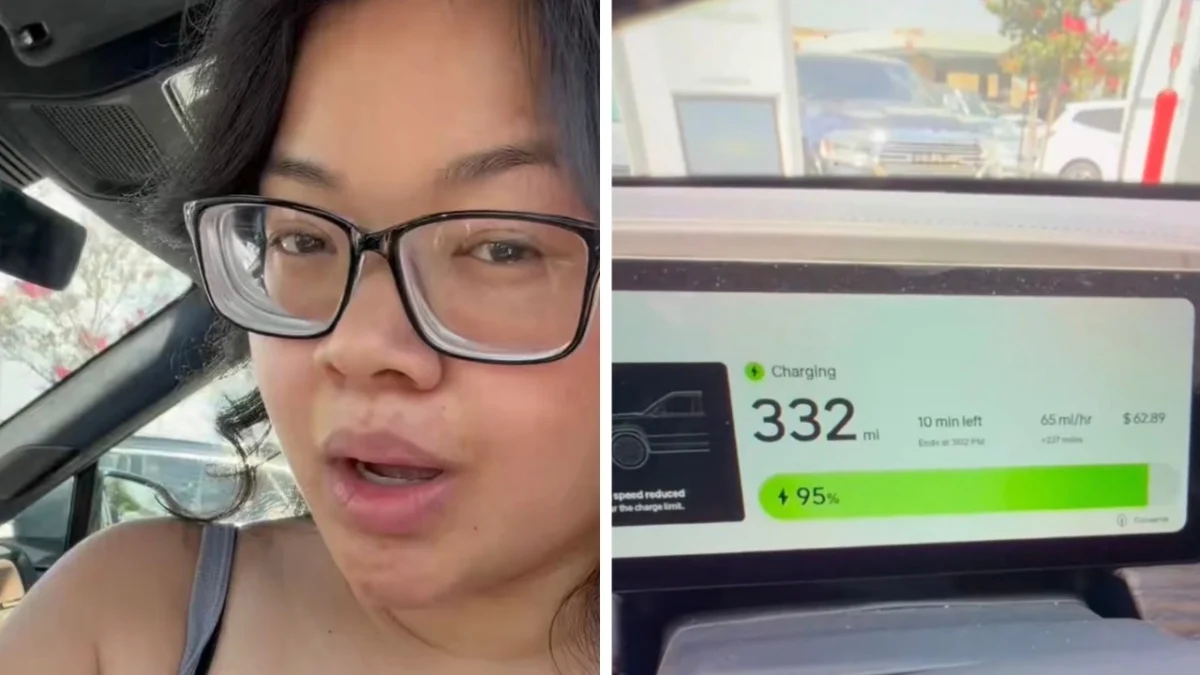
A recent video depicting a Rivian electric truck undergoing a fast-charging session at an Electrify America station located at a Costco warehouse has swiftly become a focal point of online discussion, fueling a familiar debate surrounding the economics and practicalities of public electric vehicle (EV) charging. The driver’s reported expenditure of $64.59 for a 94% charge after waiting over an hour has sparked considerable contention regarding whether public EV fast charging truly offers a cost-effective alternative to traditional gasoline refueling, particularly for those without convenient home charging solutions. The incident has cast a spotlight on the evolving landscape of EV infrastructure and the nuanced financial considerations for owners.
Chronology of the Charging Incident and its Viral Spread
The video, which gained significant traction across social media platforms, capturing approximately 798,000 views and over 13,000 likes shortly after its August 8, 2026, publication date by the account "Wall Street Apes," presented a detailed, minute-by-minute account of a Rivian R1T owner’s public charging experience. While the original creator of the clip remains unidentified, the footage clearly shows the driver plugging her Rivian into an Electrify America fast charger during a routine shopping trip to Costco.
The charging session commenced with the Rivian’s battery at 27% capacity. Upon initiation, the Electrify America charger displayed an estimated charging time of one hour and ten minutes to reach a full 100% charge. The driver utilized this period to conduct her shopping inside the Costco store. However, upon returning to her vehicle, she noted that the charging bill had already accumulated to $62.89, with approximately ten minutes still remaining on the initial time estimate. Opting to conclude the session, she unplugged the vehicle after 61 minutes. The final recorded cost for this session stood at $64.59, bringing the vehicle’s battery level to 94%.
This specific incident, documented in a raw and unedited format, quickly resonated with both EV proponents and skeptics, providing tangible data points for a discussion that often remains theoretical. The immediacy of the video allowed viewers to experience the perceived cost and time commitment alongside the driver, contributing to its rapid dissemination and the subsequent intense online dialogue.
The Online Debate: Cost, Time, and Charging Habits
The core of the ensuing online debate revolved around the driver’s subsequent calculation and critique of the charging cost. Based on her experience, she extrapolated a hypothetical zero-to-100% charge session for her Rivian to cost approximately $92.50. She further contextualized this by estimating her Rivian’s typical driving range to be between 300 and 420 miles, depending on conditions and specific model configuration. This comparison immediately drew parallels to the cost of gasoline for a similar driving distance, with many critics asserting that the public fast-charging cost appeared to exceed, or at least rival, the expense of fueling a comparable internal combustion engine (ICE) vehicle.
The online community quickly fragmented into several camps, each offering distinct perspectives and counter-arguments. One prevalent argument centered on the fundamental distinction between public fast charging and home charging. A commenter succinctly stated, "Most EV charging occurs overnight at home at much cheaper rates," highlighting that the public fast-charging scenario presented in the video does not represent the typical EV ownership experience. Indeed, residential electricity rates in many regions are significantly lower than commercial fast-charging rates, often ranging from $0.10 to $0.25 per kilowatt-hour (kWh), whereas public DC fast charging can vary widely, sometimes exceeding $0.40 to $0.60 per kWh, or even charging by the minute in some states.
Another individual shared a contrasting personal experience with a different EV brand: "My Tesla takes $12 per 300 miles of charge. Equivalent gas is $60." This statement, while potentially reflecting a different charging network (Tesla Superchargers often have competitive pricing for Tesla owners) or a home charging scenario, served to underscore the variability in EV charging costs and the potential for significant savings under optimal conditions.
Beyond cost, the time investment also became a major point of contention. The driver’s 61-minute charging duration, even for a substantial charge, led one commenter to quip, "An hour and ten minutes in Costco runs 500 or so," humorously implying the additional unplanned purchases that might accumulate during such an extended wait inside the store. This highlights the "opportunity cost" of charging time, where the perceived inconvenience and potential for additional spending during the wait are factored into the overall cost-benefit analysis of EV ownership.
Furthermore, several commenters emphasized that public fast charging is typically not intended for a full 0-100% charge. As one user explained, "It’s not meant to fill up. It’s meant to help you charge just enough to get home." This perspective underscores the strategic use of DC fast chargers as "top-up" stations for longer journeys or emergencies, rather than primary fueling points. Frequent charging to 100% at high speeds is also generally not recommended for optimal battery health, as the charging rate slows considerably after 80% to protect the battery, making the final percentage points significantly less efficient in terms of time and cost.
Understanding EV Charging Economics: Home vs. Public Fast Charging
The Rivian incident starkly illustrates a critical aspect of EV ownership: the significant divergence in cost and convenience between home charging and public fast charging. For the majority of EV owners, home charging, primarily using Level 2 (240V) chargers, serves as the backbone of their fueling strategy. A Level 2 charger can typically add 25-30 miles of range per hour, perfectly suiting overnight charging needs. The cost per mile for home charging can be exceptionally low, often translating to roughly $0.03 to $0.06 per mile, depending on local electricity rates and the vehicle’s efficiency. This is often considerably cheaper than gasoline, which, at an average of $3.50 per gallon and 25 miles per gallon efficiency, would cost around $0.14 per mile.
Public DC fast charging, such as those provided by Electrify America, offers unparalleled speed but comes at a premium. These chargers can deliver hundreds of miles of range in under an hour, crucial for road trips or situations where home charging is unavailable. However, the operational costs for these high-power stations are substantial, including grid connection fees, equipment maintenance, and peak demand charges, which are often passed on to the consumer.
Electrify America, a prominent DC fast-charging network, explicitly states that its pricing structure varies by location, charging plan (e.g., membership vs. guest rates), and energy consumption (per kWh or per minute, depending on state regulations). The company’s app and charger displays allow drivers to check current prices before initiating a session, promoting transparency. They also implement "idle fees" if a vehicle remains plugged in after charging is complete, a measure designed to encourage charger turnover and ensure availability for other drivers. This nuanced pricing model, while necessary for network sustainability, can sometimes lead to sticker shock for drivers accustomed to a simpler, volume-based gasoline pricing model.
Electrify America and the Expanding Public Charging Infrastructure
Electrify America has been a significant player in the expansion of EV charging infrastructure across North America, operating more than 1,080 charging stations with over 5,600 individual Hyper-Fast chargers. This network was established as part of Volkswagen’s settlement over the "Dieselgate" emissions scandal, with a mandate to invest in zero-emission vehicle infrastructure.
A key aspect of its strategy involves partnerships with major retail chains, including Costco. The presence of Electrify America chargers at Costco locations is a deliberate move to integrate charging into consumers’ existing routines, leveraging the high foot traffic and extended dwell times associated with warehouse shopping. Electrify America specifically highlights its commercial charging installations at Costco, recognizing the mutual benefit: Costco provides a convenient location and attracts EV drivers, while Electrify America gains visibility and accessibility. This strategy aims to alleviate "range anxiety"—the fear of running out of battery before reaching a charging station—by making charging opportunities available at common destinations.
However, the very convenience offered by these strategically placed chargers can sometimes be overshadowed by the cost. For drivers who do not have a home charging solution, such as apartment dwellers or those living in urban environments without dedicated parking, public fast chargers may become their primary, and often most expensive, charging option. This demographic represents a growing segment of the EV market and highlights a critical infrastructure gap that needs to be addressed for broader EV adoption.
The Broader Context of EV Ownership: Battery Health and Charging Habits
The Rivian driver’s experience also implicitly touches upon broader considerations for EV owners, particularly regarding battery health and optimal charging practices. Lithium-ion batteries, like those in EVs, perform best when charged within a specific range, typically between 20% and 80%. Frequent DC fast charging to 100% can, over time, accelerate battery degradation, although modern battery management systems significantly mitigate this risk. Manufacturers generally recommend limiting routine fast charging above 80% to preserve battery longevity.
This recommendation aligns with the online commenter’s advice that fast chargers are for "topping up" rather than "filling up." The charging curve for EVs demonstrates that the rate of charge slows considerably after 80%, meaning the last 10-20% of capacity takes disproportionately longer and can be more expensive per kWh. For example, charging from 27% to 94% in just over an hour is a testament to the speed of DC fast charging, but pushing for the final 6% might have added significant time and cost for minimal gain.
The total cost of ownership for an EV is a complex equation that extends beyond just the initial purchase price and charging costs. It includes factors like maintenance (generally lower for EVs), insurance (can be higher for newer EV models), and potential government incentives (tax credits, rebates). While the "fueling" cost for an EV can be significantly lower with home charging, the public fast-charging scenario, as experienced by the Rivian driver, introduces a variable that can dramatically alter the perceived savings.
Challenges and Solutions in EV Adoption
The viral video and the subsequent debate underscore several ongoing challenges in the push for widespread EV adoption. Public perception of EV costs and convenience is heavily influenced by such high-profile incidents. Misconceptions about charging times and costs can deter potential buyers, particularly those unfamiliar with the different types of charging and their respective economics.
Addressing these challenges requires a multi-pronged approach:
- Education: Consumers need better education on optimal charging habits, the distinction between home and public charging, and how to utilize charging networks efficiently.
- Transparency: Charging networks must continue to improve transparency in pricing, making it easy for drivers to understand costs before they plug in.
- Infrastructure Expansion: Continued investment in a robust, reliable, and diverse charging infrastructure is crucial, including more Level 2 chargers in residential areas, workplaces, and public destinations, in addition to DC fast chargers.
- Policy Support: Government policies can play a role in subsidizing home charger installations, promoting equitable access to charging for all residents, and potentially regulating public charging rates to ensure fairness.
The incident with the Rivian at Costco serves as a potent reminder that while EVs offer significant environmental benefits and often lower long-term running costs, the transition away from fossil fuels is not without its complexities. The "pump shock" experienced by gasoline vehicle drivers is being replaced by "charger shock" for some EV owners, particularly when relying on the most expensive, yet most convenient, public fast-charging options.
Looking Ahead: Evolving Landscape of EV Charging
As EV technology matures and adoption accelerates, the charging ecosystem is expected to evolve. Innovations in battery technology may lead to faster charging speeds and greater energy density, potentially reducing charging times and extending range. The rollout of the North American Charging Standard (NACS) by Tesla, and its adoption by major automakers and charging networks like Electrify America, promises to standardize the charging experience, reducing complexity for consumers.
Furthermore, dynamic pricing models, where electricity costs fluctuate based on demand and grid load, could become more prevalent, potentially offering cheaper charging rates during off-peak hours. Subscription services and loyalty programs from charging networks may also provide cost savings for frequent users.
Ultimately, the Rivian charging incident at Costco is more than just a single anecdote; it is a microcosm of the ongoing dialogue about the practical realities of living with an EV in a world still largely built around gasoline. It highlights the critical need for a balanced perspective, acknowledging both the considerable advantages of electric vehicles and the evolving challenges in making their ownership universally convenient and economically attractive. The figures presented in this article, drawn directly from the widely circulated video and its associated screenshots, continue to fuel this vital discussion as the automotive industry charges toward an electrified future.