Metty Iskandar
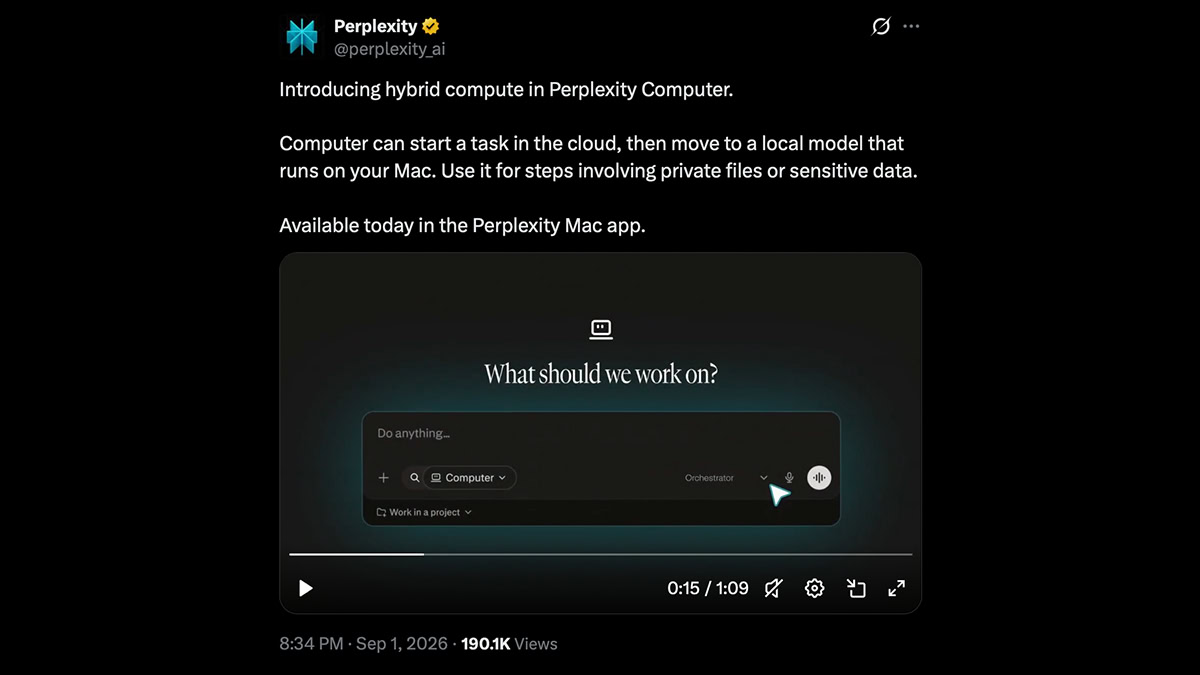
Perplexity, a rapidly evolving artificial intelligence research company, has continued its aggressive rollout of agentic AI tools with the introduction of Hybrid Compute. This latest innovation follows closely on the heels of its previously launched Personal Computer and Portable Computer, signaling Perplexity’s ongoing commitment to pushing the boundaries of AI accessibility and functionality. Hybrid Compute represents a strategic move to address growing user demands for both powerful AI capabilities and robust data privacy, offering a nuanced approach to processing information by intelligently distributing tasks between local device resources and cloud-based AI models.
The announcement, made via a post on the social media platform X, detailed the mechanics and intended user base for Hybrid Compute. This development underscores Perplexity’s strategy of iterating quickly on its AI agent technology, aiming to provide users with increasingly sophisticated tools that adapt to a variety of computational needs and privacy concerns.
The Evolution of Perplexity’s Agentic AI
Perplexity’s recent product launches highlight a clear trajectory in its development of AI agents designed to interact with and process user data in increasingly sophisticated ways. The journey began with Personal Computer, introduced in April, which aimed to provide users with a more integrated AI experience. This was followed by the Portable Computer, launched late last month, which focused on enabling local AI processing, thereby enhancing privacy and potentially reducing reliance on constant internet connectivity.
Hybrid Compute emerges as a direct response to the inherent trade-offs observed with its predecessors. While Personal Computer offered broad accessibility, it relied heavily on cloud processing, raising privacy considerations for sensitive data. Conversely, Portable Computer prioritized local processing, which, while secure, could be limited by the computational power of individual devices and the capabilities of locally hosted models. Hybrid Compute seeks to bridge this gap by offering a dynamic solution that leverages the strengths of both approaches.
Understanding Hybrid Compute: A Balanced Approach
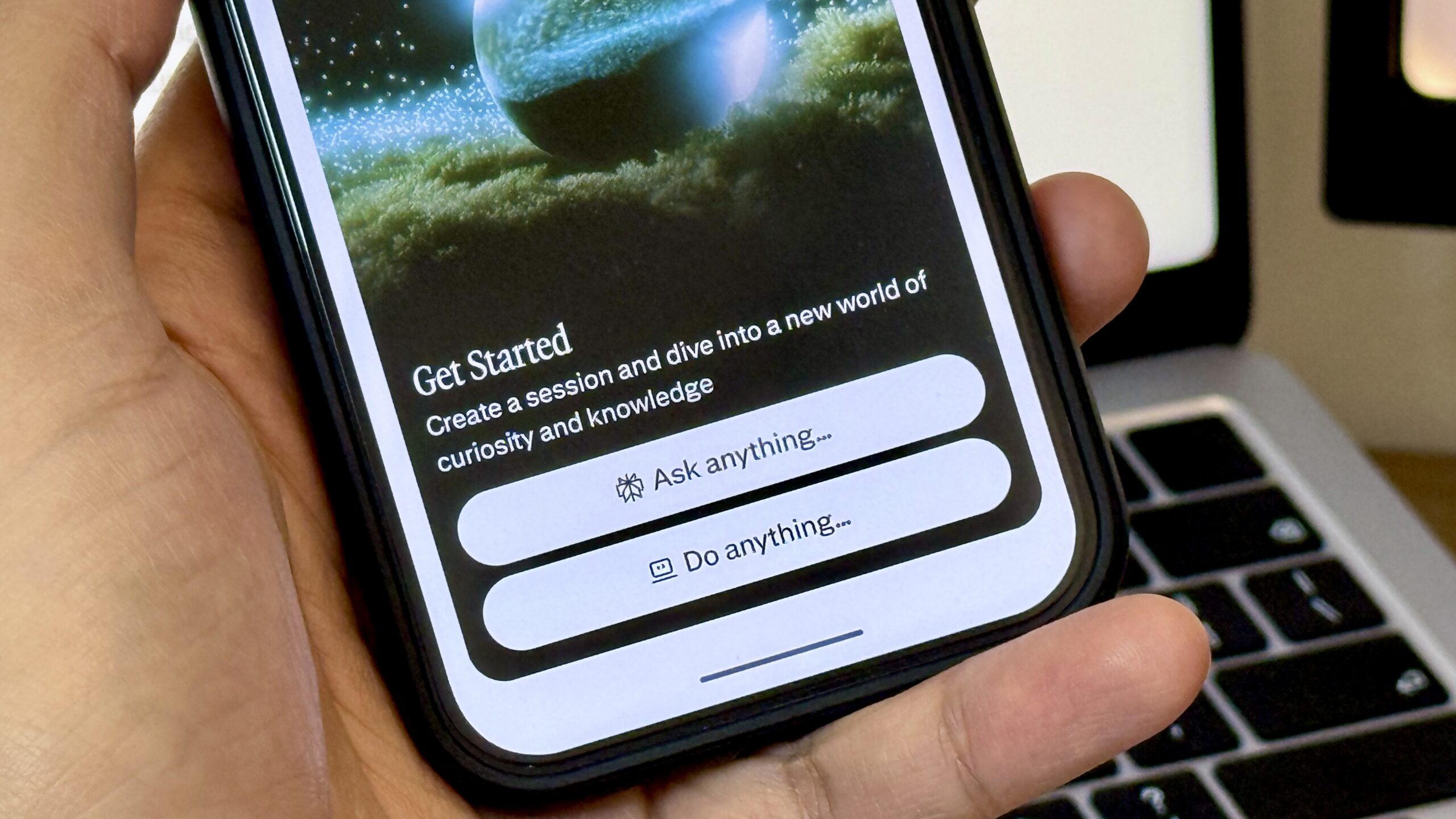
At its core, Hybrid Compute functions as a sophisticated intermediary, intelligently partitioning AI tasks. It intelligently divides the workload, assigning certain operations to powerful cloud-based AI models and others to AI models running directly on the user’s device. This dual-pronged approach aims to deliver the best of both worlds: the advanced reasoning and complex processing capabilities of large cloud models, coupled with the enhanced privacy and security of local data handling.
The system is designed to be user-aware and interactive. When a user initiates a task that requires access to local files or attachments, Perplexity’s Hybrid Compute system will proactively scan these inputs for any personal or sensitive data. Upon identification of such data, users will be presented with a choice: they can opt to split the task, ensuring that the private elements are processed locally on their machine while the remainder of the task is executed in the cloud. Alternatively, users retain the option to upload all data to the cloud for processing, should they prefer a fully cloud-based workflow or if the task complexity warrants it. This granular control empowers users to make informed decisions about their data based on the specific nature of their queries and the sensitivity of the information involved.
Technical Underpinnings and Model Support
Perplexity’s Hybrid Compute system supports a range of AI models, catering to both local and cloud-based processing needs. Locally, the system is equipped to run models such as Gemma 4 E4B and Qwen 3.6. Additionally, it incorporates a Perplexity-specific post-trained version of the Qwen 3.6 model, likely optimized for performance and integration within the Perplexity ecosystem.
For tasks that demand greater computational power or access to more advanced AI capabilities, Hybrid Compute can leverage cutting-edge cloud-based models. These include prominent large language models such as Anthropic’s Claude Opus 5 and OpenAI’s GPT 5.6 Sol. The ability to seamlessly switch between these powerful cloud models and local options provides users with unparalleled flexibility in tackling diverse AI-driven challenges, from simple information retrieval to complex analytical tasks.
Benefits Beyond Privacy: Cost Efficiency and Performance Optimization
The advantages of Hybrid Compute extend beyond its privacy-centric design. By enabling local processing of certain tasks, the system significantly reduces reliance on cloud resources, which can translate into substantial cost savings for users. Token costs, a common metric for measuring AI usage in cloud-based services, are entirely circumvented for operations handled by local models. This means that users will not incur charges for the processing power consumed by their on-device AI computations, leading to a more economical per-task cost overall.
Furthermore, this hybrid approach can also contribute to improved performance. For tasks that are computationally intensive but do not involve highly sensitive data, offloading them to powerful cloud servers can expedite completion times. Conversely, for tasks that benefit from immediate access to local files or require minimal processing, executing them locally can offer faster response times and reduce latency. This dynamic allocation of resources ensures that users experience an optimized balance of speed, cost, and privacy.
Accessibility and Future Outlook
Currently, Hybrid Compute is accessible exclusively through the Perplexity application on Apple Silicon Macs. This platform-specific rollout suggests an initial focus on devices that offer robust local processing capabilities, particularly those equipped with Apple’s M-series chips, which are designed for efficient on-device machine learning.
Access to this advanced feature is restricted to users who subscribe to either Perplexity Pro or Perplexity Max. These premium subscription tiers are likely designed to cater to power users and professionals who require the most advanced AI functionalities and are willing to invest in enhanced services.
The introduction of Hybrid Compute marks a significant milestone in Perplexity’s mission to democratize access to powerful AI tools while prioritizing user privacy and control. As AI technology continues to advance, and as user awareness of data security grows, solutions like Hybrid Compute are poised to become increasingly crucial. The company’s rapid iteration and consistent delivery of innovative features suggest that Perplexity is strategically positioning itself as a leader in the evolving landscape of agentic AI, with a keen eye on user needs and the future direction of artificial intelligence. Future developments may see broader platform compatibility and potentially new tiers of service that further refine the balance between local and cloud-based AI processing.