admin
admin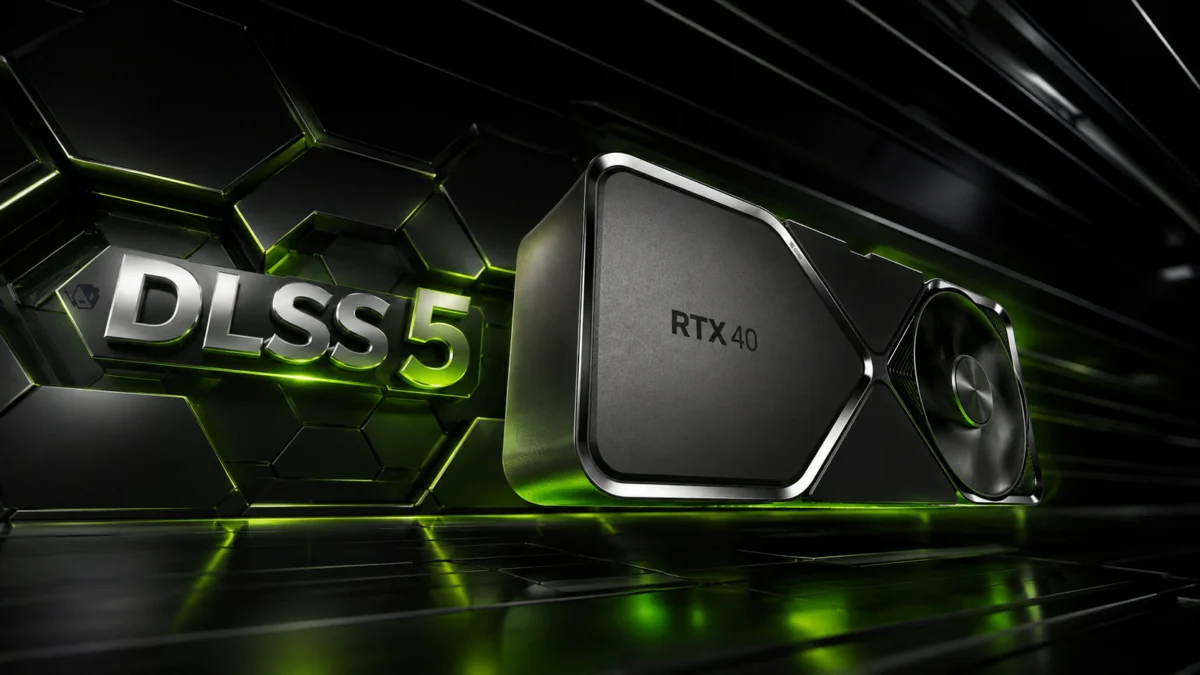
NVIDIA has officially confirmed that its next-generation Deep Learning Super Sampling (DLSS) 5 technology, which introduces the industry to 3D-Guided Neural Rendering, will eventually be extended to the GeForce RTX 40 series "Ada Lovelace" graphics cards. While the initial rollout of DLSS 5 is strategically aligned with the upcoming launch of the GeForce RTX 50 series "Blackwell" family, the company is committed to ensuring that its previous generation of hardware can leverage this significant leap in rendering technology. The debut of DLSS 5 will occur this week, with the sports simulation title NBA 2K27 serving as the flagship demonstration for what NVIDIA describes as "pixel-accurate" lifelike visuals.
The announcement marks a pivotal moment for NVIDIA’s software ecosystem. Traditionally, major leaps in DLSS versions—specifically the jump from DLSS 2 to DLSS 3—were gated behind specific hardware requirements, such as the Optical Flow Accelerator found in the RTX 40 series. By confirming that RTX 40 owners will eventually receive DLSS 5 support, NVIDIA is signaling a shift toward broader compatibility for its most advanced AI models, provided the computational overhead can be sufficiently optimized for older architectures.
The Evolution of DLSS 5: From Dual-GPU Requirement to Mainstream Accessibility
The development cycle of DLSS 5 has been characterized by rapid optimization and significant performance breakthroughs. When the technology was first unveiled during GTC 2026 in March, it was presented as a "computational heavyweight" that required substantial hardware resources to function. Initial internal demonstrations required a dual-RTX 5090 configuration to maintain playable frame rates, leading many to believe that the technology would be exclusive to the highest tier of the Blackwell architecture.
However, a chronological look at the past six months reveals a steep trajectory of improvement:
- March 2026: DLSS 5 is introduced at GTC. The model is at "1x" performance, requiring dual-GPU setups for 3D-Guided Neural Rendering.
- May 2026: NVIDIA achieves a 50% performance improvement, allowing the model to run on a single RTX 5090.
- July 2026: Further optimizations lead to a 2.5x gain in performance over the original model.
- August 2026: The company reaches a 5x performance milestone. The model is now efficient enough to run across the entire GeForce RTX 50 series product stack.
This 5x gain in just six months was achieved through what NVIDIA describes as a "co-design" philosophy. This involves simultaneous optimizations of the underlying AI model, the software kernels, and the hardware-specific instructions. By reducing the size of the model and increasing its execution speed, NVIDIA has moved DLSS 5 from a research-grade experiment to a consumer-ready feature.
Understanding 3D-Guided Neural Rendering
DLSS 5 represents a fundamental departure from the temporal upscaling seen in DLSS 2 and the frame generation of DLSS 3. While previous iterations focused on filling in missing pixels or creating entire new frames based on motion vectors, DLSS 5 utilizes 3D-Guided Neural Rendering. This technology uses AI to interpret 3D geometry and lighting data more holistically, effectively "re-rendering" the scene through a neural network to achieve a level of visual fidelity that traditional rasterization or ray tracing cannot reach alone.

The result is a reduction in common graphical artifacts such as ghosting, shimmering, and "boiling" textures often found in complex scenes. In NBA 2K27, this technology is utilized to render player skin textures, sweat, and stadium lighting with a level of precision that NVIDIA claims is "pixel-accurate." By moving beyond simple upscaling, DLSS 5 addresses the "uncanny valley" in gaming visuals, providing a more cinematic and lifelike experience.
The Strategy for RTX 40 Series Integration
The decision to delay RTX 40 series support is rooted in the sheer computational demand of the DLSS 5 model. In a statement provided to Wccftech, NVIDIA PR clarified the roadmap: "DLSS 5 is our most computationally demanding model to date. Our current focus is on optimizing performance for the GeForce RTX 50 Series with model updates expected later this fall. Once RTX 50 Series performance is more fully tuned, we plan to work on expanding official support to the GeForce RTX 40 Series."
This phased approach is necessary because the Ada Lovelace architecture, while powerful, lacks the specific hardware refinements found in the Blackwell architecture designed specifically for these types of neural workloads. For DLSS 5 to be viable on an RTX 4080 or RTX 4070, the performance "tax" of running the AI model must be minimized. Currently, the model carries a significant performance hit—estimated at 50% to 60% in its current state. NVIDIA’s goal is to optimize the model until that hit is reduced to a more manageable 10% to 15%.
Once this efficiency threshold is met, the "Performance" mode of DLSS 5 will likely become the standard for RTX 40 users, allowing them to enjoy enhanced visuals without requiring the extreme Multi-Frame Generation (MFG) modes (such as 6x interpolation) that the RTX 50 series will utilize to offset the AI overhead.
Performance Projections and Optimization Goals
NVIDIA’s engineering team is currently targeting a 7x to 10x performance improvement over the original March 2026 baseline by the end of the current calendar year. This aggressive optimization schedule is critical for the technology’s adoption. If the performance impact of DLSS 5 remains high, it risks becoming a niche feature used only for screenshots or low-frame-rate "cinematic" modes.
By reaching a 10x improvement, NVIDIA would effectively neutralize the heavy processing requirements of neural rendering. This would allow the technology to work in tandem with existing features like Reflex to maintain low latency. For competitive gamers or those playing fast-paced titles, the balance between visual "truth" and input responsiveness is paramount. NVIDIA’s focus on software kernel optimization suggests that they are finding ways to execute these neural passes in parallel with traditional rendering tasks, minimizing the "stall" time for the GPU.
Implications for the Broader GPU Market and Legacy Hardware
The confirmation of RTX 40 support raises questions about the future of the RTX 30 "Ampere" and RTX 20 "Turing" generations. While NVIDIA has not officially committed to bringing DLSS 5 to these older cards, the enthusiast community has already begun experimenting. Unofficial mods have demonstrated that DLSS 5 can be made to function on RTX 30 and even RTX 20 series GPUs, as well as older graphics APIs and even emulators like PCSX2.

These community-driven efforts suggest that while the hardware might not have the dedicated "AI-native" pathways of Blackwell, the Tensor cores in older RTX cards are still capable of the necessary math, albeit at a slower pace. If NVIDIA successfully optimizes the DLSS 5 model for the RTX 40 series, it is theoretically possible that a further-refined, "lite" version of the model could eventually be released for the RTX 30 series, continuing NVIDIA’s trend of extending the lifespan of its hardware through software innovation.
Industry Impact and Developer Adoption
The success of DLSS 5 will ultimately depend on its integration by game developers. The inclusion of NBA 2K27 as the launch title is a strategic choice. Sports titles are often at the forefront of visual realism, requiring high-fidelity character models and complex lighting environments. If DLSS 5 can prove its worth in a high-profile, mass-market title like NBA 2K, adoption by other AAA developers is likely to follow.
Furthermore, DLSS 5 gives developers more control over the final image. Unlike previous upscaling methods that were often "black boxes," the 3D-Guided nature of DLSS 5 allows developers to feed more specific scene data into the neural network, ensuring that the AI’s reconstruction aligns with the artistic intent of the game.
Conclusion: A New Era of Neural Graphics
As NVIDIA prepares to launch the RTX 50 series, DLSS 5 stands as the centerpiece of its value proposition. It represents a transition from "rendering-assisted-by-AI" to "AI-driven-rendering." The commitment to bring this technology to the RTX 40 series is a significant win for the millions of users who upgraded during the Ada Lovelace cycle, ensuring their hardware remains relevant as the industry moves toward neural-based graphics.
With a 5x performance gain already in the books and further optimizations on the horizon, the final months of 2026 are set to redefine the graphical standards for PC gaming. As the performance hit of these complex AI models continues to drop, the dream of "real-time cinematic visuals" moves closer to becoming a standard reality for the average gamer. All eyes now remain on the upcoming Blackwell launch to see exactly how DLSS 5 performs in a real-world environment and how quickly that "fully tuned" model can make its way to the RTX 40 series.