Vera Intan Clara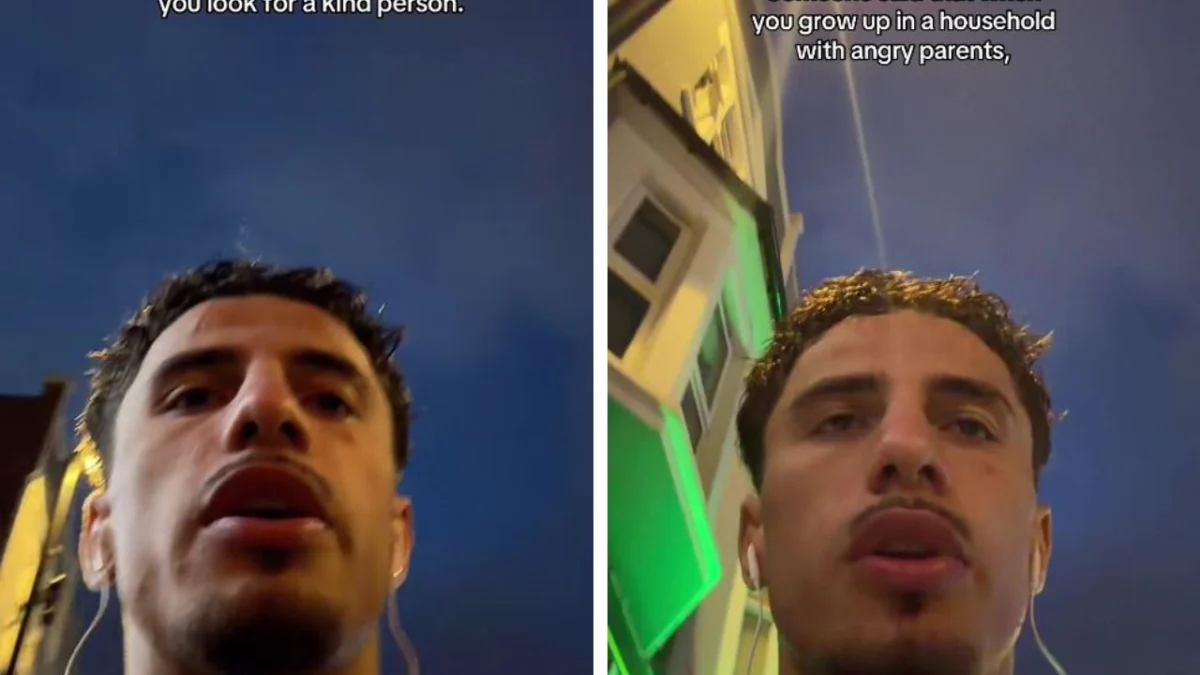
A recent TikTok video, posted by creator @emaltalks, has transcended mere social media virality to become a focal point for a profound societal conversation surrounding intergenerational anger and its often-unconscious perpetuation in adult relationships. Amassing over 1.8 million views and garnering more than 14,000 comments since its publication, the video features the creator engaged in a candid, street-level reflection on a widely relatable yet deeply personal psychological phenomenon. This digital dialogue has resonated with millions, prompting an outpouring of shared experiences and contributing significantly to the broader destigmatization of mental health discussions on online platforms.
The Genesis of a Viral Reflection
The video, characterized by its raw and unscripted delivery, shows @emaltalks walking outdoors, filming himself as he addresses the camera directly. His reflection centers on a statement he had encountered previously, though the original source remains unidentified within the video. "Someone said that when you grow up in a household with angry parents, when you reach adulthood and you look for a person that you want to marry, you look for a kind person. But now that person who’s angry is you," he articulated, his words striking a chord with a vast audience. The creator offered no personal anecdotes, additional advice, or further context regarding the statement’s origin, allowing the raw observation to stand on its own and invite viewer interpretation and self-reflection. This minimalist approach likely amplified its impact, creating a blank canvas onto which countless individuals could project their own experiences.
Chronology of Virality and Digital Engagement
The video’s ascent to viral status was swift, characteristic of TikTok’s algorithm-driven content amplification. Within days of its upload, the view count surged into the millions, accompanied by an exponential growth in comments and shares. This rapid dissemination underscores TikTok’s potent role as a platform for disseminating personal reflections that tap into universal human experiences. The comment section quickly transformed into an informal forum, where users openly shared their struggles, realizations, and ongoing efforts to navigate the complex legacy of their upbringing. This collective sharing not only validated the creator’s observation but also fostered a sense of community among individuals grappling with similar challenges, turning a solitary reflection into a shared public discourse. The sheer volume and emotional depth of the comments highlight a widespread, often unaddressed, need for spaces to discuss the nuanced impacts of childhood environments on adult identity and relationships.
The Echo Chamber of Shared Experience: User Reactions and Testimonies
The comment section of @emaltalks’ video became a poignant testament to the widespread nature of the phenomenon described. Thousands of users reacted with expressions of recognition, pain, and determination, offering raw glimpses into their personal journeys.
The Painful Realization of Repetition: A recurring theme among the comments was the profound and often painful realization that individuals had, despite their best intentions, replicated the very behaviors they had vowed to avoid. One commenter eloquently articulated this sentiment, writing, "this is so true and it hurts when you realise [sic] you became the person you tried so hard not to be." Another user echoed this sentiment more bluntly, stating, "you always grew up saying you won’t be like them until you did…" These comments reveal a deeply ingrained psychological pattern where the desire for a different future clashes with the powerful influence of early life experiences. The shock and disappointment in oneself, often accompanied by guilt, are palpable in these shared testimonies, highlighting the emotional toll of such a realization.
Active Pursuit of Change and Unlearning: Amidst the expressions of pain, many commenters also shared stories of active resistance and deliberate efforts to break the cycle. One user described a conscious journey of transformation, prompted by their partner’s observations: "I had to learn to lower my voice. I was naturally just loud until i was told by my partner. Marrying a kind person makes u a better person. Overtime u unlearn the toxic stuff from childhood" [sic]. This testimony underscores the critical role of self-awareness, external feedback, and supportive relationships in fostering personal growth and behavioral modification. It highlights the often-gradual process of "unlearning" deeply ingrained patterns and cultivating healthier emotional responses, suggesting that while the cycle can be powerful, it is not insurmountable.
Relational Avoidance as a Coping Mechanism: For some, the realization of embodying parental anger led to more drastic conclusions regarding their relational futures. One commenter articulated a decision to forgo marriage entirely, driven by a protective impulse towards potential partners. "this is why i could never marry. and never want to really. bcs i am now the angry person. and no kind person deserves to experience this anger," they wrote. This perspective reveals the profound fear of inflicting similar emotional pain on others, stemming from a deep sense of personal responsibility and a desire to prevent the perpetuation of the cycle. While perhaps a self-protective measure, it also highlights the isolating impact of such realizations, leading some to withdraw from intimate relationships.
Therapeutic Insights and Recommendations: The discussion also delved into the realm of professional guidance. One user shared invaluable advice from their therapist, offering a deeper psychological explanation for the phenomenon: "My therapist suggested that maybe my brain is not used to feeling ease, peace and stillness, so it’s purposefully diving into discomfort. It’s a paradox because I felt more comfortable in discomfort and rush of thoughts, cause that felt familiar." This insight points to the neurological basis of habit formation, where the brain, in its quest for familiarity and predictability, can gravitate towards known (even if negative) emotional states. The commenter further recommended the book "Healing Isn’t Pretty" by Mira Hartsuch, crediting it with a significant positive shift in their reality. Such recommendations within the comment section further demonstrate the platform’s role in facilitating peer-to-peer mental health resource sharing.
Psychological Underpinnings: Intergenerational Trauma and Learned Behavior
The viral TikTok video taps into fundamental psychological principles concerning human development, attachment, and the transmission of behavioral patterns across generations. This phenomenon is deeply rooted in concepts such as social learning theory, attachment theory, and the often-subtle manifestations of intergenerational trauma.
Social Learning Theory: Pioneered by psychologist Albert Bandura, social learning theory posits that individuals learn behaviors, attitudes, and emotional responses through observation and imitation. Children, in particular, are highly attuned to their primary caregivers. When raised in a household where anger is a prevalent mode of communication or emotional expression, children may internalize these aggressive patterns as normative. They learn not only how to express anger but also when it is "appropriate" or effective, even if it causes distress. This observational learning often occurs without conscious awareness, leading to automatic, conditioned responses in adulthood.
Attachment Theory: Developed by John Bowlby and further elaborated by Mary Ainsworth, attachment theory describes the dynamics of long-term relationships between humans. Early attachment styles, formed in response to caregiver availability and responsiveness, profoundly influence an individual’s emotional regulation and relational patterns in adulthood. Children of consistently angry or emotionally dysregulated parents may develop insecure attachment styles (e.g., anxious-preoccupied or avoidant-dismissing). These insecure styles can manifest as heightened reactivity, difficulty managing conflict, or a tendency to mirror the emotional volatility observed in childhood, even when seeking a "kind" partner. The desire for kindness stems from an unfulfilled need for secure attachment, yet the internalized relational models can sabotage that very pursuit.
Intergenerational Trauma: Beyond overt abuse, the concept of intergenerational trauma describes how psychological and emotional impacts of adverse experiences can be transmitted across generations. While often associated with large-scale historical traumas, it also applies to family dynamics. Children of angry parents may experience chronic stress, a sense of unpredictability, and emotional invalidation. This prolonged exposure can alter brain development, particularly in areas related to stress response and emotional regulation. Consequently, these individuals may develop a hyper-vigilance to threat, a lower threshold for frustration, and a propensity for fight-or-flight responses, which can manifest as anger, even in low-stress situations. The "comfort in discomfort" noted by a commenter’s therapist is a prime example: the nervous system, accustomed to a high-alert state, may interpret peace as unfamiliar and even threatening, subconsciously reverting to patterns of agitation.
The Paradox of Seeking Kindness: The video’s central paradox—seeking kindness while becoming the angry person—can be understood through these psychological lenses. Individuals yearn for what they lacked in childhood: calm, empathy, and emotional safety. They consciously seek partners who embody these qualities. However, their deeply ingrained emotional scripts and physiological responses, shaped by early experiences, can override conscious intentions. The "angry person" emerges not out of malice, but often from a place of unhealed wounds, learned coping mechanisms, and an inability to regulate intense emotions in healthier ways. The kind partner, in turn, may inadvertently trigger these patterns by providing the very safety that allows the individual’s suppressed anger to surface, or by challenging their ingrained dysfunctional relational dynamics.
Supporting Data and Broader Implications
The themes explored in @emaltalks’ video are not merely anecdotal; they are substantiated by a robust body of psychological research and public health data.
Prevalence of Adverse Childhood Experiences (ACEs): Studies on Adverse Childhood Experiences (ACEs) consistently demonstrate a strong correlation between childhood exposure to household dysfunction (including parental anger, verbal abuse, and domestic violence) and a myriad of negative health and psychological outcomes in adulthood. Research from the Centers for Disease Control and Prevention (CDC) indicates that a significant percentage of the population reports experiencing at least one ACE, with many experiencing multiple. These experiences are linked to increased risks of chronic diseases, mental health disorders (such as anxiety, depression, and PTSD), substance abuse, and difficulties in maintaining healthy adult relationships. A child exposed to chronic parental anger often carries that emotional imprint into their adult life, affecting their stress response and emotional regulation.
Impact on Child Development: Longitudinal studies have shown that children raised by angry or hostile parents are at a higher risk of developing aggressive behaviors, anxiety disorders, depression, and difficulties with social competence and academic achievement. They may struggle with emotional identification and expression, often internalizing shame or externalizing anger. The long-term neurological impact of chronic stress during critical developmental periods can affect the prefrontal cortex, responsible for impulse control and decision-making, further predisposing individuals to emotional dysregulation.
Relationship Satisfaction and Stability: The patterns described in the video directly impact marital satisfaction and relationship stability. Research on communication patterns in couples frequently identifies hostile communication, criticism, and contempt as significant predictors of relationship distress and dissolution. Individuals who bring unresolved anger from their childhood into their adult relationships may struggle with effective conflict resolution, leading to cycles of escalating arguments, emotional distance, or emotional abuse, inadvertently recreating the very environment they sought to escape.
Official Responses and Expert Perspectives (Inferred)
While the original article did not feature direct quotes from mental health professionals, the phenomena discussed are well-recognized within clinical psychology and family therapy. Experts would likely emphasize several key points:
- Recognition and Self-Awareness: Psychologists universally stress that the first step towards breaking these cycles is self-awareness. Recognizing the pattern, as many TikTok commenters did, is a critical breakthrough. "This TikTok video highlights a common but often unacknowledged phenomenon in psychology: the intergenerational transmission of emotional patterns," a therapist might state. "Many clients come to therapy grappling with the realization that they are exhibiting behaviors they swore they would never adopt from their parents."
- The Role of Therapy: Therapy, particularly cognitive-behavioral therapy (CBT), dialectical behavior therapy (DBT), and psychodynamic therapy, offers tools for individuals to process childhood experiences, identify triggers, develop healthier coping mechanisms, and learn emotional regulation skills. "Children of angry parents often internalize a specific model of conflict resolution or emotional expression. Without conscious effort and often professional guidance, they can default to these familiar, albeit unhealthy, patterns," a clinician might explain. The therapist’s advice mentioned by a commenter, regarding the brain seeking familiar discomfort, is a core concept addressed in trauma-informed therapy, where practitioners help clients re-regulate their nervous systems to tolerate peace and safety.
- Healthy Relationships as Catalysts for Change: The commenter who credited their kind partner with helping them "unlearn the toxic stuff" underscores the transformative power of healthy relationships. A supportive partner can provide a safe space for vulnerability, offer constructive feedback, and model healthier emotional responses, becoming an invaluable part of the healing journey. "The desire to break the cycle is powerful, but it requires significant self-awareness, therapy, and often the empathetic and patient support of a healthy partner," an expert might add.
- Parenting Education and Prevention: From a public health perspective, early intervention and comprehensive parenting education programs are crucial. Teaching prospective and new parents about emotional regulation, positive discipline techniques, and the long-term impact of their emotional expressions can help prevent the perpetuation of intergenerational anger.
Broader Societal Implications and the Digital Age
The viral success of @emaltalks’ video is indicative of broader societal shifts, particularly in how mental health is discussed and perceived in the digital age.
Democratization of Mental Health Discourse: Platforms like TikTok have democratized access to psychological concepts, bringing complex ideas out of academic journals and therapy rooms into mainstream public consciousness. This accessibility fosters widespread self-reflection and can be a powerful first step towards seeking professional help for many individuals who might otherwise feel isolated or unaware of the underlying causes of their struggles. The anonymity of online comments also allows for a level of vulnerability that might be difficult in face-to-face interactions.
De-stigmatization of Trauma and Therapy: The sheer volume of shared experiences contributes significantly to the de-stigmatization of childhood trauma and the acknowledgment of its lasting effects. When millions of people openly admit to struggling with similar issues, it normalizes the experience and reduces the shame often associated with mental health challenges. It also encourages open dialogue about therapy as a viable and effective pathway to healing.
Challenges and Caveats: While beneficial, the online mental health discourse also presents challenges. The Daily Dot’s disclaimer about being "unable to independently verify the personal experiences described by commenters" is crucial. While the themes are psychologically valid, individual accounts online should not be treated as clinical diagnoses or verified facts. Moreover, the brevity of platforms like TikTok means nuanced psychological concepts can be oversimplified or misinterpreted, highlighting the need for credible sources and professional guidance alongside peer support.
Conclusion
The viral TikTok video by @emaltalks, through its simple yet profound observation, has ignited a vital global conversation about the enduring legacy of parental anger. It has provided a powerful platform for thousands to recognize, articulate, and begin to process the often-unseen ways their childhoods have shaped their adult selves and relationships. From the painful realization of repeating patterns to the active pursuit of change and the profound insights offered by therapy, the collective response underscores the widespread impact of intergenerational emotional dynamics. This digital phenomenon serves as a compelling reminder of the human desire for healing, the power of shared experience, and the ongoing journey towards breaking cycles that no longer serve us, ultimately fostering healthier individuals and more compassionate relationships in society.