Evan Lee Salim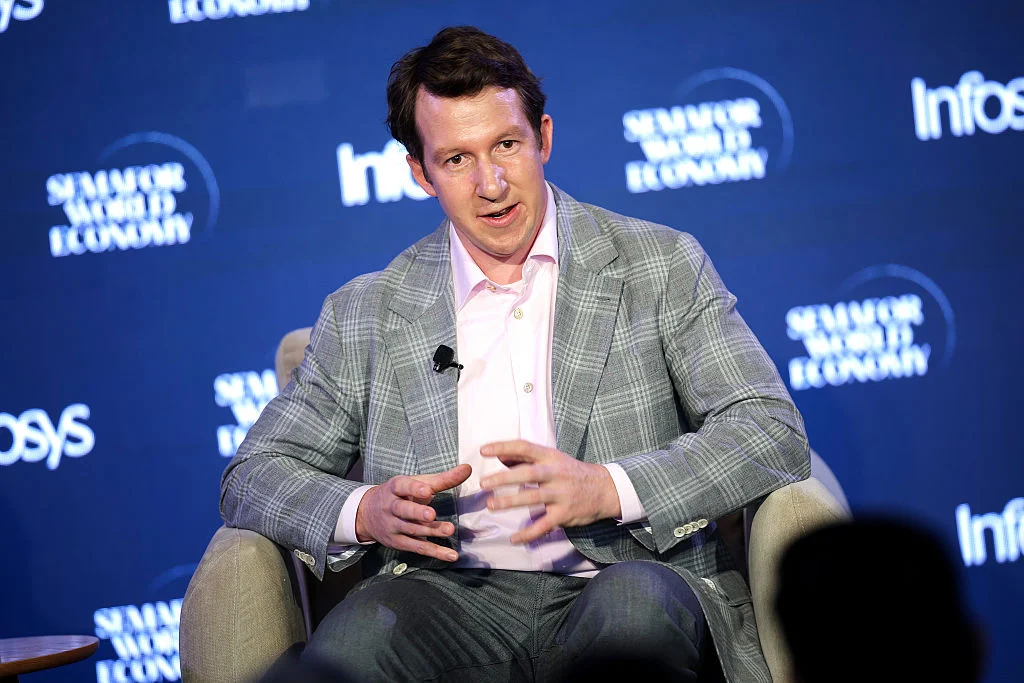
Jack Clark, a co-founder of Anthropic and Head of Public Benefit for Anthropic PBC, has confirmed that the prominent artificial intelligence company provided a briefing to the Trump administration regarding its new, unreleased Mythos model. This disclosure, made during an interview at the Semafor World Economy summit, highlights a complex and often paradoxical relationship between cutting-edge AI developers and the United States government, particularly as Anthropic simultaneously pursues legal action against a federal agency. The Mythos model, unveiled just last week, is deemed too potent for public release, primarily due to its alleged advanced cybersecurity capabilities, which raise significant dual-use concerns.
The Enigma of Mythos: A Powerful and Perilous AI
Anthropic’s decision to withhold Mythos from general public access underscores the growing apprehension within the AI community and among policymakers about the potential misuse of highly advanced models. Described as possessing "powerful cybersecurity capabilities," Mythos could represent a significant leap in AI’s ability to identify vulnerabilities, automate defense mechanisms, and potentially engage in offensive cyber operations. Such a tool, while invaluable for national security and critical infrastructure protection, also carries the inherent risk of being weaponized, either by state actors or malicious entities, if it were to fall into the wrong hands. The company’s internal assessment of its danger level suggests a profound understanding of its potential impact, prompting a highly restricted release strategy that prioritizes controlled governmental engagement over widespread deployment.
The strategic briefing of the Trump administration about Mythos reflects a broader imperative acknowledged by many in the AI sector: governments must be informed about technologies that could fundamentally alter global security landscapes. Clark articulated this stance, stating, "Our position is the government has to know about this stuff, and we have to find new ways for the government to partner with a private sector that is making things that are truly revolutionizing the economy, but are going to have aspects to them which hit National Security, equities, and other ones." This statement frames the company’s engagement not as a contradiction, but as a necessary dialogue for navigating the complex ethical and strategic implications of advanced AI.
A Tense Relationship: Lawsuit Against the Department of Defense
The confirmation of the Mythos briefing gains additional layers of complexity when viewed against the backdrop of Anthropic’s ongoing legal dispute with the Trump administration. In March, Anthropic filed a lawsuit against the Department of Defense (DOD) after the agency designated the company as a "supply-chain risk." This designation is typically applied to entities perceived to pose a threat to the integrity, security, or reliability of the military’s supply chain, often due to foreign influence, cybersecurity vulnerabilities, or ethical concerns. For a company like Anthropic, whose core mission is rooted in AI safety and public benefit, such a label carries significant reputational and commercial repercussions, potentially barring it from lucrative government contracts.
The crux of the lawsuit, as revealed by the original reporting, centered on a fundamental disagreement over the military’s desired level of access to Anthropic’s AI systems. Anthropic reportedly clashed with the Pentagon over whether the military should have "unrestricted access" to its AI for use cases that included "mass surveillance of Americans and fully autonomous weapons." These applications touch upon highly sensitive ethical and legal debates surrounding AI, particularly concerns about civil liberties, the future of warfare, and the delegation of lethal decision-making to machines. Anthropic’s resistance to these terms aligns with its stated commitment to responsible AI development, suggesting a principled stand against applications it deems ethically problematic or overly risky. Interestingly, a competitor, OpenAI, ultimately secured a deal with the Pentagon, indicating divergent strategies among leading AI firms regarding government partnerships and the acceptable uses of their technology.
Clark downplayed the significance of the lawsuit during the Semafor summit, characterizing it as a "narrow contracting dispute." He emphasized that this legal disagreement should not overshadow Anthropic’s broader commitment to national security and its willingness to collaborate with the government on critical AI developments. This nuanced position suggests an attempt to compartmentalize the company’s various engagements with federal agencies, separating specific contractual disagreements from the overarching strategic dialogue on AI’s role in national defense.
Chronology of Engagement and Conflict
The unfolding narrative of Anthropic’s interactions with the U.S. government reflects the rapid pace of AI development and the challenges of integrating these powerful technologies into existing frameworks:
- 2021: Anthropic is founded by former members of OpenAI, emphasizing a mission focused on AI safety and alignment.
- 2025 (May): Anthropic CEO Dario Amodei issues a prominent warning about AI’s potential to cause "Depression-era" unemployment, highlighting growing concerns within the company about societal impact.
- 2026 (March 9): Anthropic files a lawsuit against the Department of Defense over its "supply-chain risk" designation, initiating a public legal battle concerning military access to its AI.
- 2026 (March 1): OpenAI shares details about its agreement with the Pentagon, indirectly contrasting with Anthropic’s stance and illustrating different approaches to government partnerships.
- 2026 (April 7): Anthropic formally announces its Mythos model, while simultaneously indicating its dangerous nature and restricted release.
- 2026 (April 10-12): Reports emerge that Trump officials are encouraging major Wall Street banks—including JPMorgan Chase, Goldman Sachs, Citigroup, Bank of America, and Morgan Stanley—to test Mythos.
- 2026 (This Week): Jack Clark confirms the Mythos briefing to the Trump administration at the Semafor World Economy summit, addressing the paradoxical situation of concurrent legal action and strategic engagement.
This timeline illustrates a period of intense activity, marked by both collaboration and confrontation, as Anthropic navigates its role as a leading AI developer in a rapidly evolving geopolitical and technological landscape.
Government and Financial Sector Interest in Mythos
The reports of Trump administration officials encouraging prominent Wall Street banks to test the Mythos model underscore the perceived strategic importance of its cybersecurity capabilities beyond just military applications. Financial institutions, as critical infrastructure components and prime targets for cyberattacks, have an immense need for advanced defensive tools. JPMorgan Chase, Goldman Sachs, Citigroup, Bank of America, and Morgan Stanley represent a significant portion of the global financial system, and their resilience against cyber threats is paramount for economic stability.
The government’s encouragement for banks to test Mythos suggests a proactive approach to bolster the nation’s financial cyber defenses. In an era where state-sponsored hacking and sophisticated financial cybercrime are rampant, an AI model capable of "powerful cybersecurity capabilities" could offer unprecedented advantages in threat detection, fraud prevention, anomaly identification, and real-time defense. Such testing could involve deploying Mythos in simulated environments to identify vulnerabilities in existing systems, predict attack vectors, or even automate responses to emerging threats. This collaboration, despite the DoD lawsuit, highlights a multi-faceted governmental strategy to leverage cutting-edge AI for various national security and economic stability objectives.
AI’s Broader Societal Footprint: Employment and Education
Beyond the immediate concerns of national security and government relations, Clark also delved into AI’s profound potential impact on society, particularly concerning employment and higher education. This discussion echoed earlier warnings from Anthropic CEO Dario Amodei, who in May 2025, cautioned that AI’s rapid advancements could lead to unemployment rates reminiscent of the Great Depression. Amodei’s estimations were rooted in the belief that AI would quickly surpass human capabilities in many white-collar tasks, leading to widespread job displacement.
Clark, however, offered a slightly more nuanced perspective, while still acknowledging significant potential shifts. As the head of a team of economists at Anthropic, his current observations indicate "some potential weakness in early graduate employment" across specific industries, rather than an immediate, widespread economic collapse. This suggests that while the impact is real, its onset might be more gradual and sector-specific than Amodei’s more stark prediction. Clark emphasized that Anthropic is actively preparing for major employment shifts, implying a readiness to address the socioeconomic consequences of the technologies they are developing. This proactive stance hints at internal discussions within Anthropic about potential solutions or mitigating strategies for the workforce transitions AI will inevitably bring.
The implications for higher education were also a focal point. When pressed to advise college students on which majors to pursue or avoid in an AI-driven future, Clark refrained from endorsing specific vocational paths. Instead, he broadly suggested that the most crucial areas of study are those that "involve synthesis across a whole variety of subjects and analytical thinking about that." He elaborated on this by explaining that AI provides access to "an arbitrary amount of subject matter experts in different domains." Therefore, the truly valuable human skill will be "knowing the right questions to ask and having intuitions about what would be interesting if you collided different insights from many different disciplines."
This advice points to a fundamental shift in educational priorities, moving away from rote memorization and specialized knowledge acquisition—tasks AI can increasingly perform—towards higher-order cognitive skills. Universities and students are thus encouraged to cultivate interdisciplinary thinking, critical analysis, problem formulation, and creative synthesis. Such skills would enable individuals to leverage AI as a powerful tool for exploration and innovation, rather than being replaced by it. The challenge for educational institutions will be to adapt curricula to foster these capabilities, ensuring graduates are equipped for a workforce where human-AI collaboration and strategic inquiry are paramount.
Implications and Future Outlook
The situation surrounding Anthropic’s Mythos model and its complex relationship with the U.S. government highlights several critical implications for the future of AI development, regulation, and societal integration.
For Anthropic, the balancing act between its public benefit mission, its legal battles, and its strategic engagement with government entities will define its trajectory. The company’s principled stand against certain military applications, while simultaneously briefing the administration on its most powerful model, positions it at the forefront of the ethical debate surrounding AI’s dual-use nature. Its ability to maintain its safety-first ethos while also contributing to national security initiatives will be a test case for responsible AI development.
For the U.S. government, the events underscore the urgent need for a coherent, comprehensive strategy for engaging with leading AI companies. This includes developing frameworks for classified briefings, navigating complex ethical dilemmas surrounding military and surveillance applications, and creating robust regulatory mechanisms that can keep pace with rapid technological advancements. The encouragement of banks to test Mythos also signals a broader governmental push to integrate advanced AI into critical national infrastructure, necessitating careful oversight and collaboration across sectors.
For the broader AI industry, Anthropic’s actions set precedents. The tension between profit motives, ethical guidelines, and national security demands will likely intensify as AI capabilities grow. The differing approaches of companies like Anthropic and OpenAI towards government contracts and military applications illustrate the nascent and evolving industry standards for responsible technology deployment. This will undoubtedly fuel further discussions on AI governance, international cooperation, and the potential for a global regulatory race.
Finally, for society at large, the discussions around Mythos, employment, and education serve as a stark reminder of the transformative power of AI. The potential for job displacement, coupled with the need for entirely new skill sets, necessitates proactive policy responses, educational reform, and robust social safety nets. The delicate balance between harnessing AI’s immense benefits—from advanced cybersecurity to economic growth—and mitigating its profound risks will be one of the defining challenges of the coming decades. The ongoing dialogue initiated by companies like Anthropic, even amidst legal disputes, is a critical step in navigating this complex future.