George Chandra Eka
Chinese automotive giant BYD is on the cusp of a significant breakthrough in electric vehicle (EV) technology, asserting its "leading position" in the race to commercialize solid-state batteries. The company has announced plans to release its first vehicle incorporating this advanced battery technology as early as 2027, a move that could reshape the global EV landscape and accelerate the transition away from conventional lithium-ion power sources. This ambitious timeline positions BYD at the forefront of a highly competitive industry-wide pursuit to unlock the next generation of EV performance, safety, and efficiency.
The revelation came from Stella Li, Executive Vice President of BYD, during a recent interview with the Spanish outlet of Carwow. Li’s confident declaration underscores BYD’s strategic intent to not only maintain its market dominance in electric vehicles but to push the boundaries of what is technologically feasible. "Talking about solid-state batteries, BYD is in the leading position," Li stated, emphasizing the company’s dual strength in both commercialization and technological innovation. She further solidified the timeline, confirming, "So to prove that, next year, we have one model that will be the first one with that technology." This statement echoes earlier projections made by Sun Huajun, Chief Technology Officer of BYD’s battery subsidiary, FinDreams. At a battery conference in February 2025, Sun detailed a phased approach, indicating that BYD would conduct its initial demonstrations and installations of solid-state batteries in 2027, with mass production slated to commence around 2030, as reported by CarNewsChina.
The Transformative Potential of Solid-State Batteries
The shift from traditional lithium-ion batteries to solid-state technology represents a monumental leap forward for the electric vehicle industry. Current lithium-ion batteries rely on a liquid electrolyte solution to facilitate the movement of ions between positive and negative terminals. In contrast, solid-state batteries replace this volatile liquid with a solid electrolyte, typically composed of materials like oxides, polymers, or sulfides. BYD, in particular, is developing sulfide-based solid-state batteries, a choice that offers distinct advantages.
This fundamental change in battery architecture unlocks several critical improvements. Foremost among them is a significantly higher energy density. By eliminating the liquid electrolyte and often the bulky separator components required in liquid-based systems, solid-state batteries can pack more energy into a smaller and lighter package. This translates directly into extended driving ranges for electric vehicles without increasing battery size or weight, or conversely, allows for smaller, lighter vehicles with comparable ranges to today’s larger battery packs. Industry estimates suggest that solid-state batteries could offer energy densities exceeding 400-500 Wh/kg, a substantial improvement over the 250-300 Wh/kg typical of current high-performance lithium-ion batteries.
Beyond increased range, solid-state batteries promise faster charging speeds. The solid electrolyte can often handle higher current densities without the risk of dendrite formation (a common issue in liquid electrolytes that can lead to short circuits and degradation), potentially allowing for ultra-rapid charging, reducing the time spent tethered to a charging station to mere minutes for a substantial charge. Safety is another paramount advantage. Liquid electrolytes are flammable, and while modern lithium-ion batteries incorporate sophisticated thermal management systems, the risk of thermal runaway and fire remains a concern. Solid electrolytes are inherently non-flammable, drastically reducing the likelihood of battery fires, thereby enhancing passenger safety and consumer confidence. Furthermore, solid-state batteries are theorized to operate more efficiently and reliably across a wider range of extreme temperatures, mitigating performance degradation in very hot or very cold climates, an issue that current lithium-ion batteries frequently encounter.
Strategic Integration and Market Positioning
Despite the clear advantages, the immediate future of solid-state batteries will likely see them integrated strategically rather than replacing existing technologies wholesale. Lian Yubo, BYD’s Chief Scientist, articulated this vision at the same February conference, stating that "Solid-state batteries will be mainly used in high-end models, empowering each other with lithium iron phosphate batteries, and used in vehicles of different levels." This indicates a tiered approach, where the higher cost associated with solid-state battery production in its early stages will be absorbed by premium vehicle segments. For instance, a future iteration of BYD’s luxurious Denza Z, a high-performance convertible hypercar, could be an early candidate to feature this cutting-edge technology. This strategy allows BYD to leverage its existing, highly successful lithium iron phosphate (LFP) "Blade Battery" technology for its mass-market offerings while introducing solid-state technology as a premium differentiator for its more exclusive models. The Blade Battery, known for its exceptional safety, durability, and space efficiency, has been a cornerstone of BYD’s recent growth, proving the company’s prowess in battery innovation and manufacturing.
The high cost of solid-state batteries currently stems from several factors, including the complexity of manufacturing solid electrolytes, the need for new production processes, and the sourcing of potentially novel raw materials. Scaling up production to meet the demands of the automotive industry without compromising quality or safety is a significant engineering and logistical challenge that all developers face.
The Global Race for Battery Supremacy
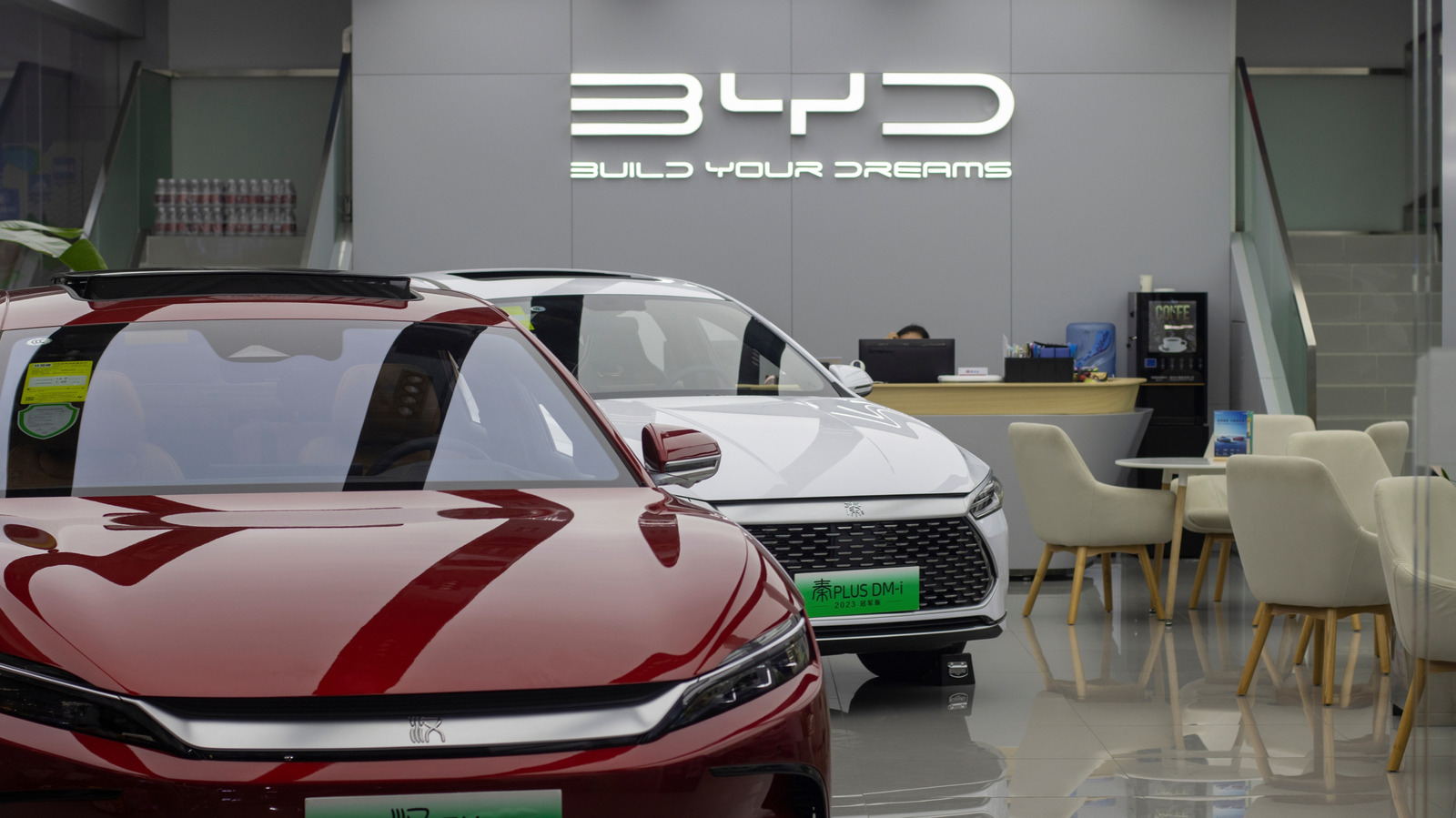
BYD’s announcement is not an isolated event but rather a significant development in a global "battery arms race" involving major automotive manufacturers and battery developers worldwide. Numerous companies are pouring billions into research and development, all vying to be the first to successfully commercialize reliable, cost-effective solid-state batteries.
Toyota, a pioneer in hybrid technology, has been a long-time proponent of solid-state batteries and has committed to offering cars with this technology by 2027 or 2028. The Japanese automaker holds a vast portfolio of patents related to solid-state technology and views it as crucial for its future EV lineup. Mercedes-Benz has also made strides, having conducted extensive long-distance testing of a solid-state EQS model, successfully covering 749 miles on a single charge. The German luxury brand aims to integrate solid-state technology into its vehicles before the end of the decade, likely targeting its high-end electric sedans and SUVs.
Across the Atlantic, Stellantis, the parent company of brands like Dodge, Chrysler, and Jeep, began road testing a solid-state Dodge Charger in 2026, signaling its intent to bring the technology to its performance and mainstream brands. Honda, another major Japanese player, recently solidified its commitment by forging a new partnership with QuantumScape, a prominent solid-state battery startup, earlier this year. This collaboration is part of Honda’s broader strategy to achieve carbon neutrality by 2050, with solid-state batteries seen as a critical enabler for its future EV performance and sustainability goals.
Beyond these established automotive giants, a multitude of startups and research institutions are also making significant headway. Companies like Solid Power, Factorial Energy (partnered with Stellantis and Mercedes-Benz), and QuantumScape (backed by Volkswagen and partnered with Honda) are developing diverse solid-state chemistries and manufacturing processes, each hoping to unlock the mass-market potential of this technology. The sheer number of players and the substantial investments highlight the perceived transformative power of solid-state batteries and the intense competition to bring them to fruition.
BYD’s Unique Position and Vertical Integration
BYD’s claim of a "leading position" is bolstered by its unique business model. Unlike many other automakers, BYD is deeply vertically integrated, controlling almost every aspect of its EV production, from raw material sourcing and battery cell manufacturing (through FinDreams Battery) to semiconductor production and vehicle assembly. This end-to-end control provides BYD with significant advantages in research and development, quality control, and cost management. Its experience with the Blade Battery, which introduced a cell-to-pack design that improves volumetric efficiency and safety, demonstrates BYD’s capability to innovate and industrialize new battery technologies rapidly and at scale. This vertical integration could be a critical differentiator in the complex and capital-intensive journey of commercializing solid-state batteries, allowing BYD to streamline development and production processes more effectively than competitors reliant on external suppliers.
Implications for the Broader Market and Future Outlook
The successful commercialization of solid-state batteries by BYD and other players carries profound implications for the automotive industry, consumers, and even geopolitical dynamics. For consumers, it promises an era of EVs with significantly longer ranges, faster charging times that rival refueling a gasoline car, and enhanced safety, effectively addressing some of the primary hurdles to widespread EV adoption, such as range anxiety and charging convenience. This could accelerate the global shift away from internal combustion engines.
For the automotive industry, it signifies a new frontier of innovation, potentially leading to entirely new vehicle architectures and designs that leverage smaller, lighter, and more energy-dense power sources. It will also intensify the competition, rewarding those who can master the complex manufacturing processes and cost structures associated with solid-state technology. The availability of diverse battery chemistries, including advanced LFP and solid-state, will allow automakers to tailor battery solutions to specific vehicle segments, from affordable urban commuters to high-performance luxury vehicles.
Economically, the development and mass production of solid-state batteries will create new supply chains for novel materials and specialized manufacturing equipment. This could shift economic power dynamics in the battery and automotive sectors, with nations and companies that control these new technologies gaining a significant strategic advantage. Given China’s dominant position in current battery manufacturing and EV production, BYD’s leadership in solid-state could further solidify the nation’s influence in the global automotive future.
While the potential of solid-state battery technology is undoubtedly exciting, significant challenges remain. The cost factor, as BYD itself acknowledges, will dictate its initial market penetration. Furthermore, ensuring long-term durability, cycle life, and consistent performance across millions of vehicles will require rigorous testing and refinement. The transition from laboratory prototypes to reliable mass-produced components is a complex undertaking, and many hurdles in materials science, engineering, and manufacturing still need to be overcome. Nevertheless, BYD’s latest announcement, coupled with the aggressive timelines from other major players, signals that the era of solid-state electric vehicles is rapidly approaching, promising a future where EVs are not just an alternative, but a superior form of personal transportation. The race is far from over, but BYD appears to be making a strong early sprint toward the finish line.