Evan Lee Salim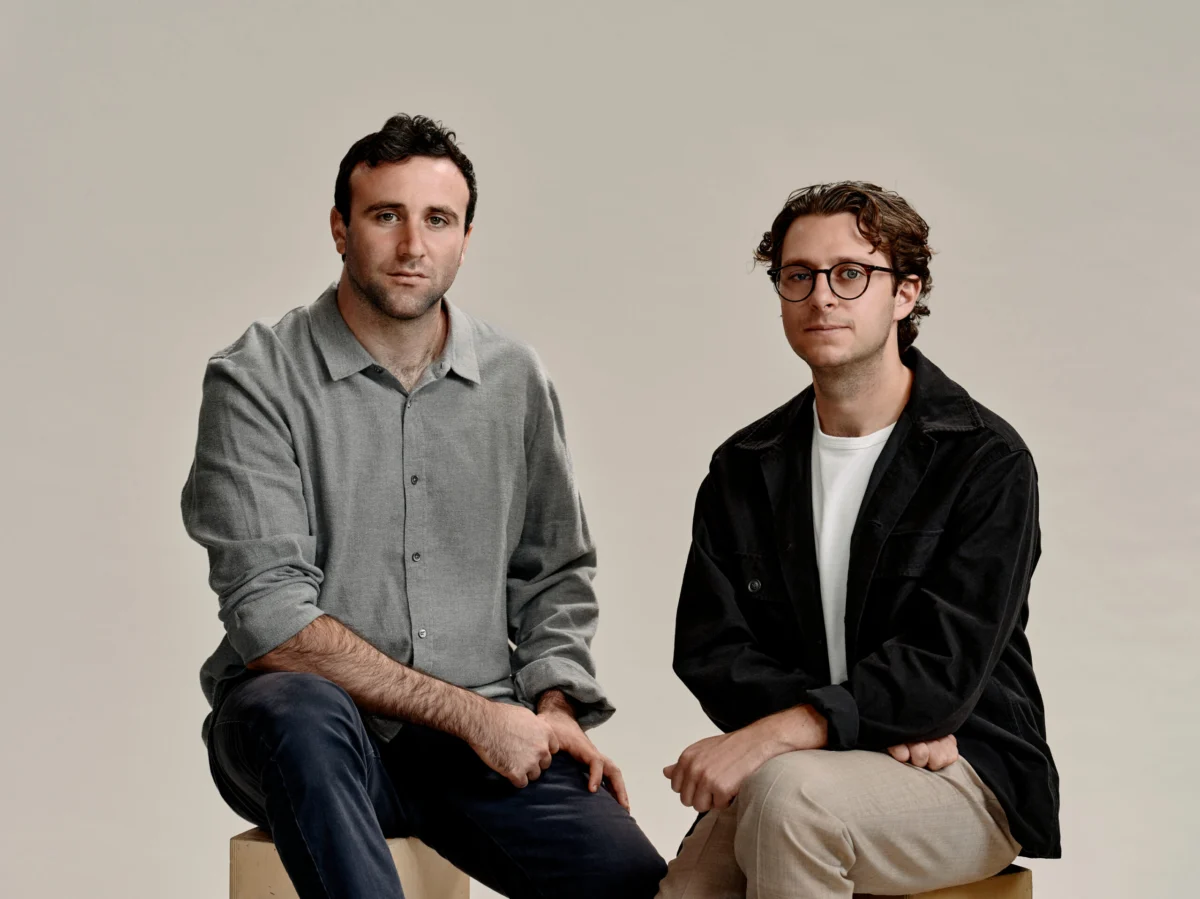
The burgeoning demands of hyperscale cloud providers and advanced AI labs are pushing the limits of existing global data infrastructure, particularly the intricate and often vulnerable network of undersea fiber optic cables. These vital conduits, while offering unparalleled bandwidth, are notoriously difficult to install, maintain, and repair, making them susceptible to disruptions ranging from natural disasters to accidental damage and even geopolitical interference. In response to this critical challenge, Endeavor Optical Networks (EON), a new startup emerging from stealth mode, has unveiled an ambitious plan to establish a network of laser-equipped spacecraft designed to link data centers from orbit, effectively creating a resilient, high-bandwidth alternative to traditional submarine cables. The company has successfully secured $10.75 million in seed funding from prominent venture capital firms General Catalyst and Andreessen Horowitz, signaling strong investor confidence in its innovative approach.
The Global Data Backbone: Challenges and Vulnerabilities
Today’s global internet traffic, estimated to exceed 480 exabytes per month by 2027, primarily traverses the world’s oceans via over 500 active undersea fiber optic cables, collectively spanning more than 1.3 million kilometers. These marvels of engineering form the silent backbone of the digital age, enabling everything from international financial transactions to streaming entertainment and cloud computing. However, their very nature presents inherent vulnerabilities. Laying these cables is an arduous and costly endeavor, involving specialized ships and intricate planning to navigate diverse seabed topographies. Once deployed, they are exposed to a myriad of threats. Annually, hundreds of incidents cause cable damage, with fishing trawlers and ship anchors accounting for a significant percentage. Natural events like earthquakes, underwater landslides, and volcanic activity also pose substantial risks, capable of severing multiple cables simultaneously.
Repairing a damaged undersea cable is a complex and expensive operation. It typically involves dispatching specialized repair ships, which can take weeks or even months to reach the site, retrieve the broken sections, splice new fiber, and re-lay the cable. The cost for a single repair can run into millions of dollars, leading to prolonged service disruptions and significant financial impact for operators and users alike. Moreover, the concentration of cables in certain geopolitical chokepoints, such as the Suez Canal or specific straits, introduces strategic vulnerabilities that could be exploited. As global data traffic continues its exponential growth, driven particularly by the insatiable demands of AI model training and distributed cloud architectures, the need for diversified, resilient, and high-capacity data transport solutions has never been more urgent. Current wireless alternatives, such as traditional radio transmissions, simply lack the requisite bandwidth – often exceeding 200 terabits per second for major undersea trunks – to serve as a viable primary alternative.
EON’s Vision: Laser Communications from Orbit
Endeavor Optical Networks, founded in May by CEO Charlie Horowitz and CTO Tyler Presser, is betting on the transformative potential of laser-based satellite communications to address these pressing infrastructure challenges. Their core proposition involves deploying a constellation of satellites equipped with advanced optical terminals to create direct, high-speed data links between ground stations connected to major data centers. This approach leverages recent advancements in satellite technology and optical physics, moving beyond the limitations of traditional radio frequency (RF) satellite communications, which typically struggle to achieve the multi-terabit speeds required by hyperscalers.
Most existing satellite broadband networks, while improving connectivity for remote areas, are not engineered to handle the massive data flows and stringent latency requirements of inter-data center traffic. EON, however, is setting an ambitious initial target: a throughput of 2.4 terabits per second for its space-to-ground links. This is a significant leap compared to the gigabit-per-second (Gbps) rates demonstrated by other private space companies, such as York, Kepler, and Cailabs, which have achieved links between Earth orbit and the ground, typically aiming for around 2.5 Gbps. Even NASA’s pioneering efforts in laser communications, exemplified by its use on the Artemis II Moon mission to beam back data, showcase the potential for scaling, but EON’s immediate terrestrial application demands even higher performance.
The primary technical hurdle for space-to-ground laser communications is atmospheric distortion. As laser signals pass through Earth’s atmosphere, they can be scattered, absorbed, or distorted by air turbulence, clouds, and other weather phenomena. This challenge is particularly acute when cloud cover obstructs the line of sight between a satellite and its ground station. EON’s co-founders indicate they possess a "secret sauce" to mitigate these atmospheric effects, though specifics remain proprietary. This likely involves sophisticated adaptive optics, advanced error correction protocols, and dynamic link management, potentially leveraging multiple redundant ground stations.
Strategic Network Design and Customer Focus
EON plans to construct an initial network comprising approximately 20 satellites. This comparatively smaller constellation, when strategically positioned, is designed to provide dedicated links between continents, offering 24-hour coverage for its early adopter customers. The company’s strategy involves carefully selecting ground station locations in diverse geographical regions, ensuring proximity to major data centers and Content Delivery Networks (CDNs). A critical element of their reliability strategy will be the use of redundant ground sites and the integration of real-time weather data to dynamically route traffic and maintain robust links even under challenging atmospheric conditions.
The target clientele for EON’s services includes hyperscale cloud providers and AI research labs, entities that generate and transmit colossal volumes of data globally. These organizations are constantly seeking to optimize data transit routes, reduce latency, and enhance network resilience. EON intends to focus on underserved or economically inefficient routes where existing fiber infrastructure is either scarce, expensive, or particularly vulnerable. Examples include lengthy transcontinental connections, such as France to Australia, or routes lacking extensive existing infrastructure, like those crossing between Africa and South America. By offering dedicated capacity, EON aims to appeal to customers who prioritize full control over their data transit and require guaranteed bandwidth and low latency. This contrasts with shared capacity models, providing a premium service tailored to the most demanding enterprise users.
Leadership, Expertise, and Initial Roadmap
The leadership team at Endeavor Optical Networks brings a formidable combination of entrepreneurial drive, deep technical expertise, and industry experience. CEO Charlie Horowitz previously served as chief of staff and then director of special projects at Apex Space, a company known for its satellite bus manufacturing. Ian Cinnamon, Apex CEO, lauded Horowitz, stating, "Charlie is a force of nature – he can move seamlessly from strategy to the details required to make something real. Charlie is the ideal founder, and I invested personally because I believe deeply in Charlie and what he’s building at EON with Tyler."
CTO Tyler Presser is a PhD astronautical engineer with a background in planning frontier missions for NASA, bringing invaluable experience in complex space systems and mission critical operations. The company’s technical bench is further bolstered by key hires like Michael David Francois, a long-time Google executive with extensive experience in global network infrastructure, and Wesley Baxter, an optics engineer who contributed to Amazon’s Project Kuiper, its ambitious low Earth orbit (LEO) satellite network. This collective expertise positions EON to tackle the intricate engineering and operational challenges inherent in developing a cutting-edge space-based optical network.
With the recently secured seed funding, EON’s immediate roadmap focuses on several critical milestones. The company plans to establish and equip a state-of-the-art optics lab, accelerate its hiring of additional engineers, and conduct extensive ground tests to refine its optical communication terminals. The ultimate goal for this initial phase is the launch of a demo satellite, anticipated around the end of 2027. Horowitz expects this spacecraft to achieve unprecedented optical downlink throughput, aiming for at least 800 gigabits per second (Gbps) and potentially reaching a full terabit per second (Tbps). This demonstration will be crucial in validating EON’s core technology and proving its ability to meet the demanding performance metrics required for hyperscale data transfer.
Achieving such high throughput will necessitate meticulous engineering. EON plans to concentrate its development efforts and investment on producing the highly specialized optical communications terminal, particularly components requiring exquisite precision, such as the gimbals responsible for accurately pointing the laser beams. To optimize development costs and timelines, the company intends to procure powerful, off-the-shelf satellite buses, such as those manufactured by Apex Space, leveraging existing, proven platforms rather than developing every component from scratch.
Competitive Landscape and Industry Perspectives
EON is not alone in recognizing the immense potential of space-based optical communications for high-bandwidth data transfer. The sector is attracting significant interest and investment, with other major players announcing ambitious plans. Notably, Jeff Bezos’s Blue Origin has unveiled TeraWave, an even more expansive project envisioning a constellation of 5,048 satellites designed to provide speeds of up to 6 terabits per second (Tbps) to large-scale users. While TeraWave’s goals are considerably more ambitious in terms of scale and throughput, its deployment will likely require a substantially longer timeline and greater capital expenditure compared to EON’s more focused, initial fleet of 20 satellites. Both companies, however, will confront many of the same fundamental technical challenges, particularly those related to atmospheric interference and precision pointing.
Industry analysts are cautiously optimistic about the prospects of satellite-based data center connectivity. Jeannette zu Fürstenburg, the General Catalyst partner who led EON’s investment, views the startup as a convergence of two key themes for the fund: artificial intelligence and resilience. "I don’t worry about demand," she told TechCrunch, "I think all of that will solve for itself. It’s really all about can you actually get this thing into space in the time that we discussed? We really think about founder-product fit, [Horowitz] is just the right caliber of guy to go after a problem like this." This sentiment underscores the venture capital community’s focus not just on market need, but on the capability of the founding team to execute on a technically challenging vision.
Caleb Henry, the director of research at Quilty Space, offers a pragmatic perspective. "Data centers have high standards for quality and redundancy," he points out. "Satellite internet is just now progressing from a technology of last resort to dependable, high-bandwidth infrastructure. That’s not to say it will be impossible to make satellites optimized for data center connectivity, just that it will be harder and take longer than most entrepreneurs suggest." Henry’s assessment highlights the high bar set by enterprise-grade data infrastructure, where uptime, latency, and reliability are paramount. While consumer-focused LEO constellations like Starlink have demonstrated the viability of satellite internet for broader audiences, adapting this technology for the ultra-demanding requirements of inter-data center traffic presents a unique set of engineering and operational hurdles.
Despite these challenges, the concept of leveraging space for data transport, rather than the more radical idea of hosting data centers in space, is seen as a more practical and immediately achievable goal. Horowitz himself articulates a clear and pragmatic philosophy for EON: "We have one rule at the company: no physics problems. There’s a market that exists today that we can go serve. Down the road, we’ll go and take on more as it comes, but we know that this is a problem that exists today, that’s only getting worse. That’s our bet – more data is moving terrestrially than ever." This statement encapsulates EON’s focus on solving a tangible, escalating problem with existing technological capabilities, rather than venturing into speculative or unproven scientific domains.
Broader Implications and Future Outlook
The successful development and deployment of EON’s laser satellite network could have profound implications for global digital infrastructure. Firstly, it would significantly enhance the resilience and redundancy of the internet’s backbone. By providing an alternative, orbital pathway for data, it would reduce the dependence on a single, vulnerable terrestrial infrastructure, thereby mitigating the impact of cable cuts and geopolitical disruptions. This diversification of data routes is crucial for maintaining continuous service for critical applications and global commerce.
Secondly, it could unlock new economic opportunities by enabling ultra-high-speed connectivity to regions currently underserved by fiber optic cables, even if indirectly through regional data centers. While EON’s primary focus is inter-data center links, improving the backbone connectivity to a continent like Africa or South America could indirectly benefit local economies by reducing the cost and improving the performance of their digital services.
Finally, for hyperscalers and AI labs, EON’s solution promises lower latency for specific long-haul routes and dedicated bandwidth, which are critical for distributed computing architectures, real-time AI inference, and complex data synchronization across global data centers. As AI models grow in size and complexity, requiring distributed training across multiple geographic locations, the demand for such high-performance, low-latency interconnections will only intensify. EON’s entry into the market represents a pivotal step towards a more robust, resilient, and high-capacity global data infrastructure, leveraging the vastness of space to overcome the limitations of terrestrial networks. While the path ahead involves significant technical and operational challenges, the substantial investment and expertise behind Endeavor Optical Networks position it as a key player in shaping the future of global data transit.