admin
admin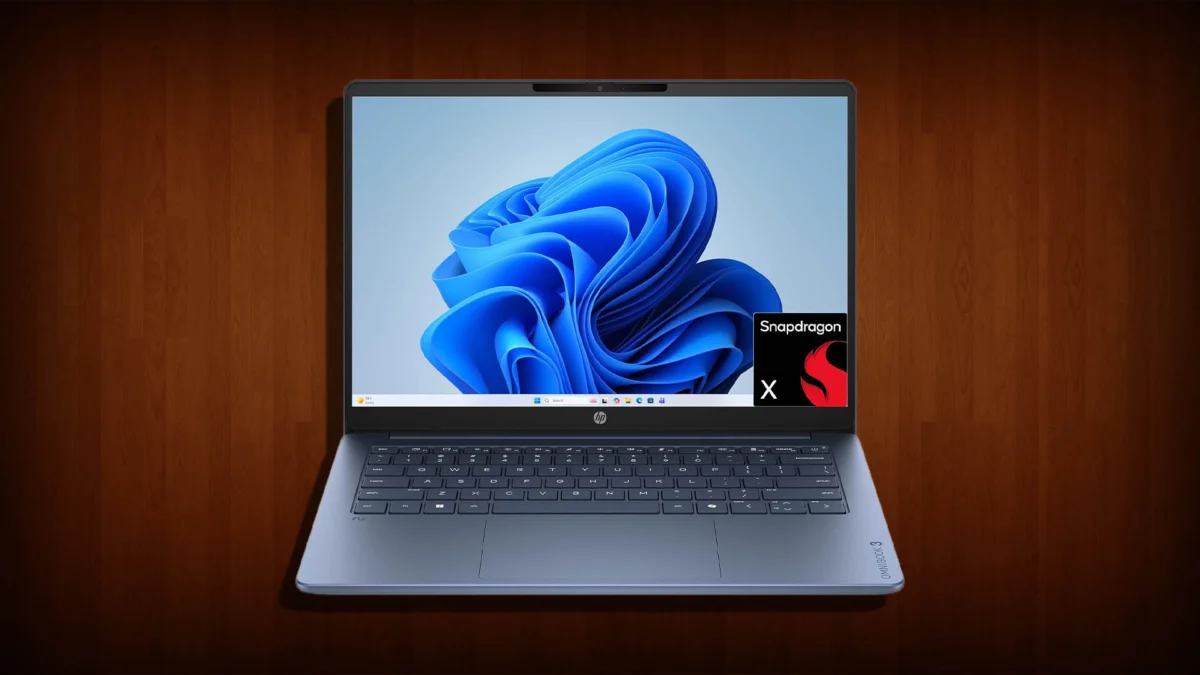
The landscape of entry-level premium computing has undergone a significant transformation with the introduction of the HP OmniBook 3, a 14-inch notebook designed to directly challenge Apple’s rumored and highly anticipated MacBook Neo. Following closely on the heels of Dell’s revamped XPS 13, which also aimed to undercut Apple’s pricing structure, the HP OmniBook 3 arrives with a strategic combination of ARM-based processing power and high-end display technology. By integrating the Qualcomm Snapdragon X System-on-Chip (SoC) and an OLED panel, HP is positioning this device not just as a budget alternative, but as a technically superior option in specific hardware categories when compared to Apple’s most affordable portable Macintosh.
The Strategic Pricing of the HP OmniBook 3
In a market where price sensitivity often dictates consumer behavior in the sub-$1,000 segment, HP has adopted an aggressive retail strategy. The OmniBook 3 has been listed at varying price points depending on the retailer, reflecting a push to capture different tiers of the consumer market. At Best Buy, the device has surfaced with a starting price of $499.99, a figure that represents a significant entry barrier for competitors. Meanwhile, on Amazon, the notebook is positioned at $599.99. Even at the higher Amazon price point, the OmniBook 3 remains $100 less expensive than the projected $699 retail price of the MacBook Neo.
This pricing strategy appears to be a direct response to the "race to the bottom" in the premium-thin-and-light category, where manufacturers are leveraging ARM architecture to reduce costs without sacrificing the battery life and portability that users have come to expect from the MacBook Air and its derivatives. By offering a device for under $500 that includes an OLED screen, HP is effectively shifting the value proposition for students, remote workers, and general consumers who previously had to choose between high-quality displays and affordable pricing.
Architectural Foundation: The Snapdragon X and AI Capabilities
At the heart of the OmniBook 3 lies the Qualcomm Snapdragon X SoC, a departure from the Intel Wildcat Lake processors that some industry analysts had expected to see in this year’s budget-premium refreshes. The specific variant used in the OmniBook 3 features an 8-core CPU clocked at 3.00GHz, supported by a 30MB cache. This architecture is designed to provide a balance between high-efficiency task handling and burst performance for more demanding applications.
A critical component of this silicon is the Adreno X1 GPU, which handles graphical output and media consumption. However, the most significant addition in the current computing climate is the integrated Neural Processing Unit (NPU). This NPU is capable of delivering up to 45 TOPS (Trillions of Operations Per Second) of AI processing power. This meets the baseline requirements for Microsoft’s "Copilot+ PC" designation, ensuring that the OmniBook 3 can handle on-device AI tasks such as real-time translation, background blur in video calls, and generative AI features within Windows 11. This focus on local AI processing is a key differentiator against older x86-based laptops that rely on cloud-based AI or less efficient integrated graphics for such tasks.
Display Technology: OLED vs. IPS LCD
Perhaps the most striking feature of the HP OmniBook 3 is its 14-inch OLED display. While Apple has historically utilized high-quality IPS LCD panels (branded as Liquid Retina) for its entry-level laptops, the OmniBook 3’s OLED upgrade offers several inherent advantages. The display features a resolution of 1,920 x 1,080. While this is technically lower in pixel density than the MacBook Neo’s expected Retina resolution, the OLED technology compensates with superior contrast ratios and color depth.
According to technical specifications provided by HP, the panel covers 100 percent of the DCI-P3 color space, making it a viable option for amateur photo and video editing. The OLED nature of the screen allows for true blacks, as individual pixels can be turned off completely, a feat impossible for traditional LCDs with backlights. Furthermore, the display boasts a 0.2ms response time, significantly reducing motion blur compared to standard laptop panels. While the peak brightness is rated at 300 nits—sufficient for indoor environments but perhaps challenging in direct sunlight—the inclusion of OLED at a $499 price point remains a rarity in the current market.
Memory, Storage, and Hardware Configuration
To achieve its aggressive price point, the HP OmniBook 3 utilizes a focused hardware configuration. The base model is equipped with 8GB of LPDDR5X RAM and a 256GB NVMe SSD. While 8GB of memory is increasingly scrutinized in the era of AI-heavy applications, the use of LPDDR5X ensures high bandwidth and low power consumption. Industry teardowns and early reports suggest that the memory is likely soldered to the motherboard to maintain the chassis’s slim profile, though there is ongoing discussion regarding whether HP might employ the newer LPCAMM2 module for potential future iterations.
The 256GB of storage is standard for entry-level devices, though it may require users to rely more heavily on cloud storage solutions or external drives for large media libraries. The use of NVMe technology ensures that boot times and application loading speeds remain competitive with more expensive ultrabooks.

Battery Life and Thermal Efficiency
One of the primary advantages of the transition to ARM architecture is the drastic improvement in energy efficiency. HP markets the OmniBook 3 as being capable of running for up to 41 hours on a single charge of its 60WHr battery. While real-world usage—involving web browsing, video conferencing, and multitasking—will likely result in a lower figure than this laboratory-tested maximum, it nonetheless suggests a device capable of multi-day use without needing a power outlet.
To support this mobility, HP includes a 65W USB-C GaN (Gallium Nitride) charger. GaN technology allows for smaller, more efficient power bricks that generate less heat during the charging process. The laptop also supports fast-charging capabilities, allowing users to quickly replenish the battery during short intervals.
Connectivity and Peripheral Support
Unlike some competitors that have moved toward a "USB-C only" philosophy, HP has maintained a diverse array of ports on the OmniBook 3. The device includes:
- Two USB-C ports: Both support DisplayPort 1.4 and Power Delivery, allowing for external monitor connections and charging.
- Two USB-A ports: Ensuring compatibility with legacy peripherals such as mice, keyboards, and thumb drives without the need for dongles.
- One HDMI 2.1 input: Allowing for high-resolution output to modern televisions and monitors.
- 3.5mm Headphone Jack: Retaining a dedicated audio port for low-latency sound.
Wireless connectivity is handled by Wi-Fi 6E and Bluetooth 5.3, providing the latest standards for high-speed internet and stable peripheral pairing. For the professional market, the inclusion of a 1080p webcam at the top of the display provides a higher fidelity video conferencing experience than the 720p sensors found in older budget models.
Chronology of the Budget-Premium Laptop War
The release of the HP OmniBook 3 is part of a broader trend that began in early 2024 as manufacturers anticipated Apple’s refresh of the entry-level Mac segment.
- Early 2024: Rumors began to circulate regarding a "MacBook Neo," a device designed to sit below the MacBook Air in Apple’s lineup, specifically targeting the education sector and emerging markets with a price point around $699.
- Mid 2024: Dell announced a refreshed XPS 13 featuring the Snapdragon X Elite and Plus chips, priced aggressively at $599 to preempt Apple’s launch.
- Late 2024: HP officially rebranded its consumer lines into the "Omni" and "Elite" categories, with the OmniBook 3 serving as the vanguard for its ARM-based consumer push.
- Current Status: The HP OmniBook 3 hits retailers like Best Buy and Amazon, successfully undercutting both Dell and Apple on price while offering an OLED display as a "killer feature."
Market Analysis: The Implications of the ARM Shift
The emergence of the HP OmniBook 3 signals a pivotal moment for the Windows ecosystem. For years, Apple’s transition to its proprietary Silicon (M1, M2, M3) gave it an uncontested lead in battery life and performance-per-watt. The partnership between Microsoft and Qualcomm, evidenced by the Snapdragon X series, represents the most serious challenge to Apple’s dominance in the portable sector to date.
By pricing the OmniBook 3 at $499, HP is not just competing with Apple; it is also putting pressure on traditional x86 chipmakers like Intel and AMD. If ARM-based Windows laptops can consistently deliver 20+ hours of real-world battery life while maintaining compatibility with essential software, the market share for traditional processors in the thin-and-light segment may erode rapidly.
Furthermore, the inclusion of an OLED screen at this price point sets a new standard for consumer expectations. As users become accustomed to the vibrant colors and deep blacks of OLED on their smartphones and tablets, the demand for similar quality in their primary computing devices increases. HP’s decision to prioritize the display may force other manufacturers to move away from IPS LCD panels sooner than planned.
Conclusion and Future Outlook
The HP OmniBook 3 stands as a testament to the rapid commoditization of high-end technology. What was considered a premium feature set only two years ago—ARM efficiency, NPU-driven AI, and OLED displays—is now available for under $500. While the 8GB of RAM and 256GB of storage remain limiting factors for power users, the OmniBook 3 is perfectly positioned for the vast majority of consumers who prioritize portability, display quality, and value.
As the "MacBook Neo" eventually makes its market debut, it will enter a significantly more crowded and competitive field than its predecessors. With HP, Dell, and other manufacturers leveraging Qualcomm’s new silicon to offer lower prices and comparable (or superior) hardware features, the battle for the "student and budget-premium" segment is set to be one of the most intense in the history of the personal computer industry. Consumers, ultimately, are the beneficiaries of this competition, gaining access to sophisticated hardware that was previously reserved for flagship devices costing twice as much.