admin
admin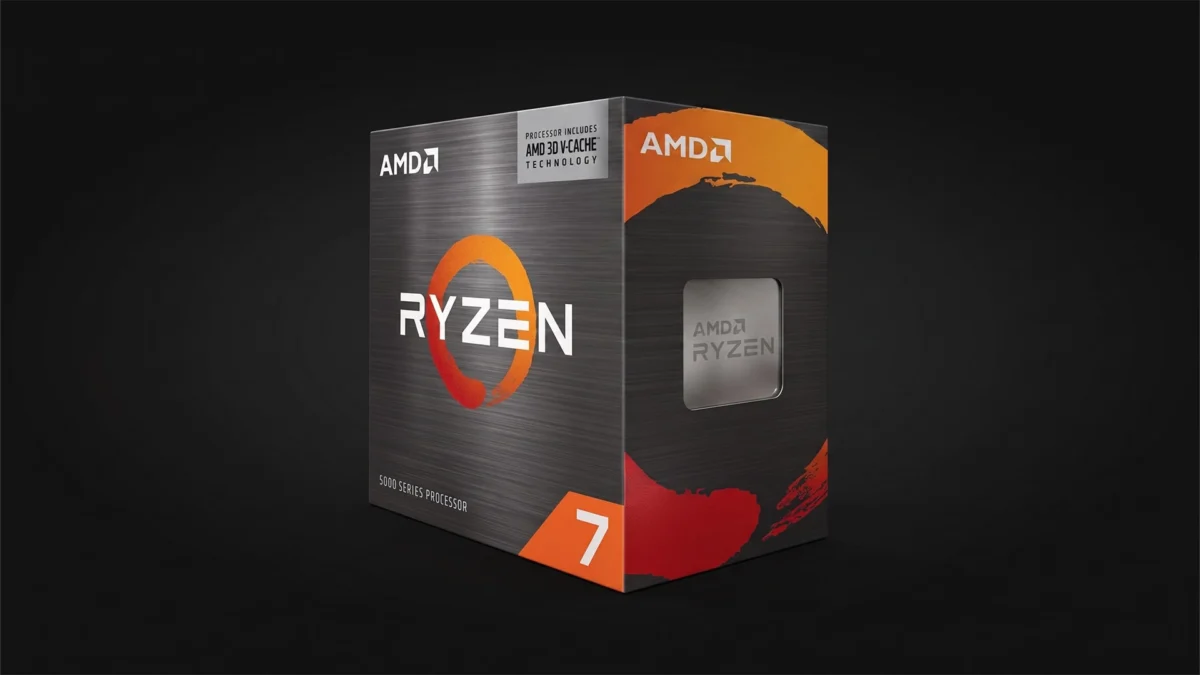
The longevity of a motherboard platform is a rare commodity in the rapidly evolving landscape of semiconductor technology, yet AMD’s AM4 socket has defied industry norms by remaining relevant for nearly a decade. Central to this enduring legacy is the Ryzen 7 5800X3D, a processor that fundamentally shifted the gaming CPU market through its innovative use of 3D V-Cache technology. Recently, technical evaluations conducted by prominent hardware analysts, including the team at Linus Tech Tips, have sought to determine whether the performance of this "re-engineered" 10th-anniversary processor is compromised when paired with aging hardware. Specifically, the investigation compared the performance of the Ryzen 7 5800X3D on the original X370 chipset—launched in 2017—against the significantly more modern X570 chipset. The findings suggest that while technical hurdles exist during the setup phase, the actual gaming performance remains remarkably consistent across generations, validating AMD’s commitment to platform continuity.
The Evolution and Resilience of the AM4 Ecosystem
To understand the significance of this performance comparison, one must look at the history of the AM4 platform. Launched in late 2016, the AM4 socket was designed to unify AMD’s consumer processor lineup, supporting everything from entry-level Athlon APUs to high-end 16-core Ryzen 5000 series monsters. When AMD first announced the platform, the company committed to supporting it through 2020. However, the manufacturer exceeded this promise, continuing to release new stock and updated SKUs well into 2024, including the re-released Ryzen 7 5800X3D.
The Ryzen 7 5800X3D occupies a unique position in hardware history. It was the first consumer CPU to feature 3D V-Cache, a packaging technology that stacks additional L3 cache vertically on top of the processor die. This resulted in a massive 96MB of L3 cache, which dramatically reduced memory latency in gaming workloads. Because many games are sensitive to the speed at which a CPU can access data, the 5800X3D often outperformed newer, higher-clocked processors that lacked the expanded cache. Its re-release for the AM4 10th anniversary serves as a testament to its popularity as the "ultimate" upgrade for millions of users still utilizing older motherboards.
Comparative Methodology: X370 vs. X570
The testing conducted by Linus Tech Tips utilized two distinct eras of AM4 motherboards to represent the extremes of the platform’s lifecycle. The "old" bench utilized an X370 chipset motherboard, a piece of hardware that originally debuted alongside the first-generation Zen architecture. The "new" bench utilized the X570 chipset, which was engineered for the Zen 2 and Zen 3 architectures and introduced several modern standards, most notably PCI Express (PCIe) Gen 4.0.

Both systems were equipped with an NVIDIA GeForce RTX 4070 Ti, a high-end GPU that, while modern, is susceptible to interface bottlenecks if the motherboard’s bandwidth is insufficient. The memory used was DDR4, the standard for the AM4 platform. The primary objective was to see if the older X370 board, limited to PCIe Gen 3.0 and older power delivery specifications, would stifle the potential of the Ryzen 7 5800X3D compared to the X570, which offers PCIe Gen 4.0 and more robust VRM (Voltage Regulator Module) designs.
Technical Obstacles and BIOS Compatibility
One of the most significant findings during the setup process was the difficulty of achieving stability on the older X370 platform. While AMD eventually enabled support for Ryzen 5000 series chips on 300-series motherboards, it was not a seamless transition. The testers noted that getting the motherboard to recognize the 5800X3D required specific BIOS updates (AGESA firmware). Furthermore, achieving optimized memory clock speeds—specifically the "sweet spot" of 3600MHz or 3200MHz often recommended for Zen 3—proved more challenging on the older traces and memory controllers of the X370 board.
These hurdles highlight a critical distinction for consumers: while "compatibility" exists on paper, the user experience on an older board may require more manual tuning and troubleshooting. The X570 platform, by contrast, was built with the signal integrity required for higher-speed DDR4 and the power requirements of high-core-count Zen 3 chips, making it a "plug-and-play" experience by comparison.
Benchmarking Results: Negligible Gains in Real-World Gaming
Despite the technical friction encountered during setup, the actual performance data revealed a surprising level of parity. In "Cyberpunk 2077," a title known for its heavy demand on both the CPU and GPU, the difference between the X370 and X570 motherboards was a mere 1 to 2 frames per second (FPS). This margin falls within the standard deviation of most hardware benchmarks, suggesting that for a triple-A gaming experience, the motherboard chipset has almost no impact on the Ryzen 7 5800X3D’s ability to drive the game engine.
The results were mirrored in "Counter-Strike 2" (CS2). While CS2 showed a slightly larger numerical gap, the analysts concluded that the difference would be imperceptible to a human player during actual gameplay. Even in "Cities: Skylines II," a game notorious for its extreme CPU intensity and simulation complexity, the performance delta remained negligible.

The data suggests that the massive L3 cache of the 5800X3D acts as a Great Equalizer. By housing more data directly on the CPU package, the processor reduces its reliance on the motherboard’s memory subsystem and bus speeds, effectively masking the limitations of the older X370 chipset.
The PCIe Gen 3 vs. Gen 4 Factor
A primary concern for many enthusiasts when pairing new components with old motherboards is the PCIe version. The X370 chipset is limited to PCIe Gen 3.0, which provides half the bandwidth per lane compared to the X570’s PCIe Gen 4.0. In theory, a powerful GPU like the RTX 4070 Ti could be throttled by the slower Gen 3.0 interface.
However, the testing reaffirmed a long-standing observation in the hardware community: most modern GPUs do not yet fully saturate the bandwidth of a PCIe 3.0 x16 slot. While synthetic benchmarks might show a difference, the real-world impact on frame rates remains minimal. The only area where X570 users see a tangible benefit is in storage performance, as PCIe 4.0 NVMe SSDs can reach speeds of 7,000MB/s or higher, whereas X370 users are capped at approximately 3,500MB/s. For a gaming-centric build, this difference primarily affects file transfer speeds and game loading times rather than in-game frame rates.
Economic Analysis: The Cost of Upgrading
The financial implications of these findings are significant for the average consumer. Currently, the Ryzen 7 5800X3D is available for approximately $339 to $349. For a user already owning an AM4 motherboard (even an early X370 or B350 model), this represents a "drop-in" upgrade that provides top-tier gaming performance for the price of a single component.
In contrast, moving to the newer AM5 platform or an Intel 14th-gen system requires a comprehensive overhaul. A transition to AM5 necessitates:

- A new motherboard (ranging from $150 to $300).
- New DDR5 memory (ranging from $100 to $200).
- A new CPU (ranging from $200 to $400).
The total cost of a platform migration can easily exceed $600 to $800. By demonstrating that an older X370 board can still support the 5800X3D with nearly 100% efficiency, the testing proves that the AM4 upgrade path is one of the most cost-effective strategies in the history of PC building. It allows users to bypass the current volatility of DDR5 pricing and the high entry cost of new motherboards while still achieving a high-end gaming experience.
Industry Impact and the Future of Platform Longevity
The results of this comparison serve as a powerful endorsement of AMD’s platform strategy. By maintaining socket compatibility over several generations, AMD has fostered immense brand loyalty. This "pro-consumer" approach stands in stark contrast to the historical strategy of competitors like Intel, which typically required a new motherboard every two processor generations.
However, this longevity also presents a challenge for AMD’s current AM5 platform. With AM4 remaining "good enough" for the vast majority of gamers, the incentive to move to the newer platform is diminished. AMD has signaled that it intends to support AM5 through at least 2027, likely in an attempt to replicate the success and consumer trust earned during the AM4 era.
Final Assessment
The technical evaluation of the Ryzen 7 5800X3D across different generations of AM4 motherboards confirms that the "brain" of the computer is far more critical than the "nervous system" (the chipset) when it comes to gaming. While the X570 offers better utility in the form of faster storage, easier BIOS management, and better peripheral support, the raw gaming output is virtually identical to that of the seven-year-old X370.
For owners of older AM4 systems, the message is clear: there is no immediate need to replace a functioning motherboard to unlock the power of 3D V-Cache. As long as a BIOS update is available, the Ryzen 7 5800X3D remains the most viable and efficient upgrade path for extending the life of a gaming PC, proving that in the world of technology, newer is not always significantly better.