Evan Lee Salim
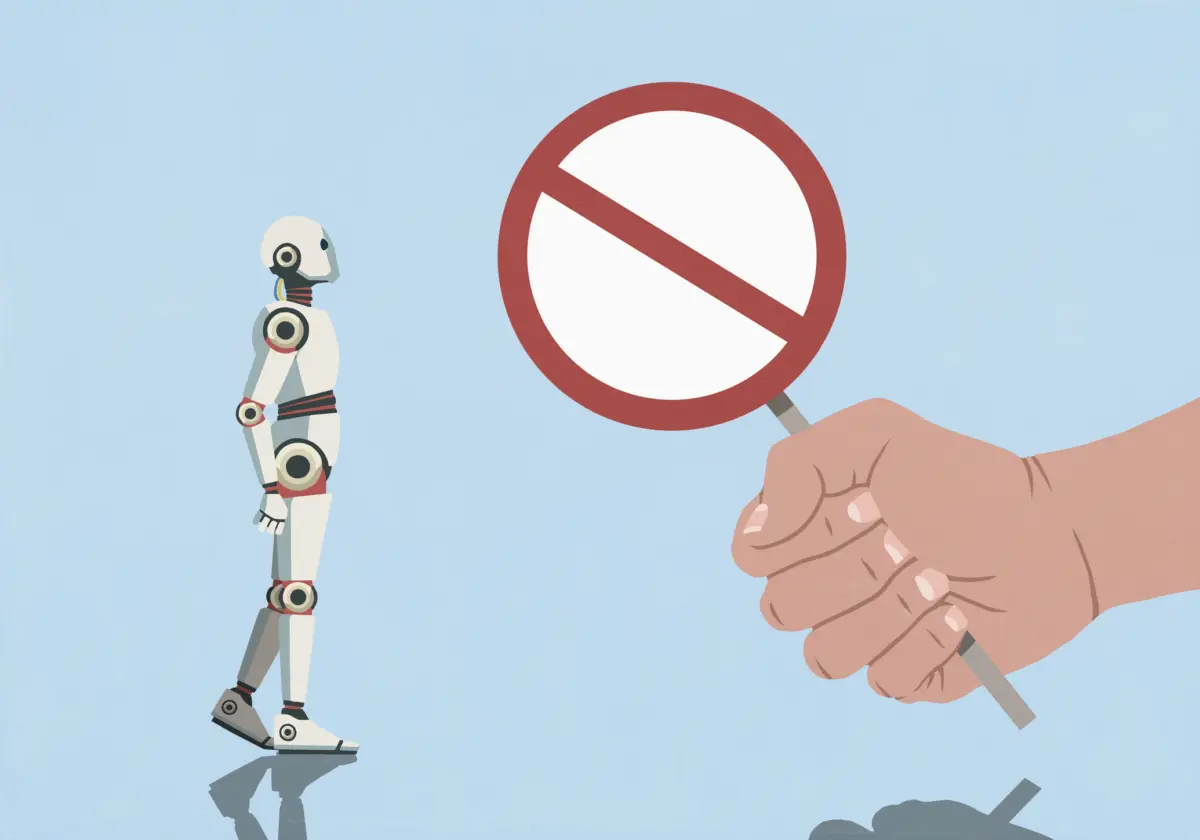
In a development that underscores the burgeoning ethical dilemmas surrounding artificial intelligence, Pope Leo XIV has issued a stark warning, decrying AI as a profound threat to human dignity. This papal concern resonates far beyond the Vatican, extending to individuals across diverse belief systems who grapple with the implications of AI on their personal convictions. Among these voices, David Durman, a self-identified nontheistic humanist, has made headlines by successfully securing a religious exemption from using AI in his workplace, marking a significant precedent in the evolving landscape of technology and employee rights.
Durman, an administrator at the University of Kentucky, recently informed TechCrunch that his philosophical framework, Humanism, is "a collection of beliefs about the human experience and how humans interact with the world." At its core, Humanism prioritizes "human well-being and flourishing, both individually and collectively… and implores a person to try to improve both their well-being and their flourishing as well as the others around them." This commitment to human agency and development forms the bedrock of his objections to the uncritical adoption of AI. As AI tools became increasingly integrated into daily professional life, Durman proactively sought guidance from the American Humanist Association (AHA), a prominent nonprofit advocating for secular humanism, to explore legal avenues for protection against mandatory AI use at work, asserting that such technology fundamentally contradicts his deeply held beliefs.
The Philosophical Core of Durman’s Objection to AI
Durman’s stance is rooted in a profound concern for the preservation of human cognitive and moral faculties. He articulated to TechCrunch, "The way we become moral actors for ourselves and for others is through the active application of our minds, and the diminishing of that [through AI use] is going to necessarily have a negative impact on our ability to do so." This statement reflects a core humanist principle: that critical thinking, independent judgment, and active intellectual engagement are essential for individual growth and societal progress. An overreliance on AI, in his view, risks atrophying these vital human capabilities.
In a formal statement released earlier this week by the AHA, Durman further expounded on his multifaceted concerns, stating, "AI is interfering with people’s ability to earn a living, the environmental costs spell disaster for humanity and our planet, and its supplanting and theft of human creativity threaten elements of our culture like art and literature that make society flourish." This comprehensive critique moves beyond individual cognitive impact, encompassing economic justice, environmental stewardship, and the safeguarding of cultural heritage – all central tenets of a humanist worldview focused on holistic human well-being.
Broader Context: A Growing Chorus of Ethical Concerns
The debate surrounding AI’s ethical implications is far from new, but it has intensified dramatically with the rapid advancements in generative AI and its pervasive integration into various sectors. Religious and philosophical traditions globally are grappling with how these powerful technologies intersect with their foundational principles.
The Vatican’s Stance on Human Dignity:
Pope Leo XIV’s condemnation of AI as a threat to human dignity is a continuation of the Catholic Church’s long-standing engagement with modern technology through an ethical lens. The concept of "human dignity" in Catholic social teaching emphasizes the inherent worth of every individual, created in the image of God, and the importance of safeguarding human autonomy, creativity, and the right to meaningful work. The Church has consistently cautioned against technologies that might dehumanize, exploit, or diminish human agency. For example, previous encyclicals and papal addresses have highlighted concerns about technology’s potential to exacerbate inequality, compromise privacy, or reduce human beings to mere cogs in a machine. AI, with its potential for widespread automation, algorithmic decision-making, and the creation of synthetic content, raises profound questions about the future of work, the nature of creativity, and the very definition of human intelligence and consciousness. The Vatican has even released guidelines on AI ethics, advocating for "algorethics" – an ethical approach to algorithms – to ensure AI serves humanity rather than dominating it.
Unitarian Universalism and the Precedent Set by Erin Maus:
Durman’s decision to seek accommodation was significantly inspired by the case of Erin Maus, a Unitarian Universalist and software engineer, who successfully secured similar protections. Unitarian Universalism is a liberal religion characterized by a "free and responsible search for truth and meaning." It embraces diverse theological beliefs but is united by a set of shared principles, including the inherent worth and dignity of every person, justice, equity, and compassion in human relations, and respect for the interdependent web of all existence. For Maus, the ethical implications of AI, particularly concerning issues like bias, accountability, and the potential for harm, conflicted with her deeply held Unitarian Universalist principles. Her successful accommodation demonstrated that such concerns are not exclusive to traditional religions and that nontheistic or broadly spiritual beliefs can also form the basis for workplace protections.
The Expanding Definition of "Religious" Accommodation:
Alexandria Huiskens, staff attorney at the AHA, underscored the broad applicability of legal protections in this context. She noted to TechCrunch, "Concern about AI and human dignity can run through several different faiths and traditions, whether that’s Catholic teachings, or Universalism, or Humanism, and we want Humanists or nontheists to know that they fall into these categories — that they are also protected by the law at work." This statement highlights a crucial aspect of U.S. law: the interpretation of "religion" for workplace accommodation purposes is expansive, encompassing not just traditional, organized faiths but also sincerely held moral or ethical beliefs that function similarly to religious convictions in an individual’s life.
The Legal Framework: Title VII and Beyond
In the United States, the legal basis for such workplace accommodations primarily stems from Title VII of the Civil Rights Act of 1964. This federal law prohibits employment discrimination based on religion, among other protected characteristics. It mandates that employers reasonably accommodate an employee’s religious beliefs or practices unless doing so would cause "undue hardship" on the employer’s business. The Equal Employment Opportunity Commission (EEOC), which enforces Title VII, has consistently interpreted "religion" broadly to include "moral or ethical beliefs as to what is right and wrong which are sincerely held with the strength of traditional religious views." This broad definition has been instrumental in allowing individuals with nontheistic belief systems, like Humanism, to seek and receive protections traditionally associated with organized religions.
The American Humanist Association plays a critical role in educating and advocating for nontheistic individuals navigating these legal complexities. By providing legal guidance and support, organizations like the AHA empower humanists to assert their rights and ensure their deeply held convictions are respected in the workplace. Durman’s case is a testament to the effectiveness of such advocacy, demonstrating that legal frameworks are adapting to the evolving nature of belief and the challenges posed by new technologies.
Chronology of a Landmark Accommodation
The journey to Durman’s successful accommodation unfolded against a backdrop of accelerating AI integration:
- Late 2022 – Early 2023: Generative AI tools like ChatGPT gain widespread public attention and begin rapid integration into various professional workflows, prompting many companies to encourage or suggest their use.
- Growing Concerns: David Durman, observing the rise of AI, begins to develop concerns about its potential impact on human agency, employment, creativity, and the environment, finding these impacts contrary to his humanist beliefs.
- The Precedent of Erin Maus: Durman learns of Erin Maus, a Unitarian Universalist software engineer, who successfully secured a religious accommodation to abstain from using AI at work. This inspires Durman to explore similar avenues.
- Contact with AHA: Durman reaches out to the American Humanist Association for legal counsel and support, seeking to understand his rights under existing employment law regarding sincerely held beliefs.
- Application for Accommodation: Durman formally requests a workplace accommodation from the University of Kentucky, citing his humanist beliefs as the basis for his objection to AI use.
- University Review: The University of Kentucky initiates a review process, evaluating Durman’s request in light of his job responsibilities and the legal requirements for reasonable accommodation.
- Accommodation Granted: After review, the University of Kentucky determines that an accommodation can be provided without causing undue hardship to the institution.
- Public Announcement: The American Humanist Association publicly announces Durman’s successful accommodation, highlighting its significance as a precedent for humanists and nontheists.
- Wider Discussion: The news sparks broader discussion in media and professional circles about the intersection of AI, ethics, belief systems, and workplace rights.
University of Kentucky’s Measured Response and Implications for Employers
The University of Kentucky, through spokesperson Jay Blanton, provided a statement to TechCrunch regarding their handling of Durman’s request. Blanton affirmed that the institution "reviews requests for religious accommodations on an individual basis, considering the employee’s job responsibilities and the circumstances of the request." Crucially, he added, "In this case, the university determined that an accommodation could be provided while allowing the employee to continue performing the essential functions of their position." This highlights the individualized and context-dependent nature of such legal obligations.
Furthermore, Blanton noted a forward-looking caveat: "As technology and job responsibilities evolve, accommodations may be reviewed to ensure they remain reasonable and workable." This statement is significant, indicating that workplace accommodations are not necessarily permanent and may be subject to re-evaluation if the nature of the job or the prevalence of AI changes drastically. For employers, this case underscores the increasing necessity of establishing clear policies and processes for evaluating such accommodation requests. It emphasizes the need for flexibility, open dialogue, and a thorough understanding of anti-discrimination laws. The concept of "undue hardship" – which legally means more than a de minimis (minimal) cost or burden – will become a critical factor for organizations as AI integration becomes more deeply embedded in core business functions.
The Nuances of AI Integration: From Administration to Software Engineering
The feasibility of securing an AI exemption often depends heavily on the employee’s role and the extent to which AI is truly essential for their job functions. Durman, in his administrative role supporting researchers applying for grants, was not explicitly required to use AI. While some colleagues and leadership had "recommended" exploring these tools, it was not yet a mandate. His proactive approach aimed to secure his exemption before a recommendation could become a requirement, demonstrating foresight in anticipating future workplace shifts.
In contrast, Erin Maus’s situation as a software engineer presented a more challenging scenario, as it has become increasingly rare for developers to write code without any AI assistance. Tools like GitHub Copilot and other AI-powered coding assistants are now standard in many development environments, making it potentially more difficult for an employer to grant an exemption without incurring "undue hardship." This distinction illustrates that while the legal right to accommodation exists, its practical application can vary significantly across different professions and industries.
Data and Trends: AI Adoption and Public Sentiment
The rapid ascent of AI in the workplace is undeniable. According to a 2023 report by McKinsey, 79% of respondents had at least some exposure to generative AI, and 22% reported regularly using it for work. Industries from finance to healthcare, marketing to manufacturing, are adopting AI tools to enhance efficiency, automate tasks, and drive innovation. However, this adoption is not without its anxieties.
Surveys consistently reveal a mixed public sentiment toward AI. A 2023 Pew Research Center study found that while many Americans are optimistic about AI’s potential benefits, a significant portion expresses concerns about its impact on jobs, privacy, and societal values. For instance, 67% of Americans expressed more concern than excitement about the increased use of AI in daily life, with 37% saying AI will mostly hurt workers. These statistics provide crucial context for Durman’s and Maus’s actions, demonstrating that their ethical concerns are shared by a considerable segment of the population, transcending specific belief systems. The rise of AI also coincides with a broader trend of increased employee empowerment, where workers are increasingly vocal about their values and seek workplaces that align with their ethical frameworks, a phenomenon sometimes linked to the post-pandemic "Great Resignation."
Broader Impact and Future Implications
David Durman’s successful accommodation, following Erin Maus’s precedent, establishes a significant benchmark. It affirms that nontheistic beliefs, when sincerely held, are entitled to the same legal protections as traditional religious faiths in the workplace. This will likely encourage more individuals with deeply held ethical objections to AI – or other technologies – to seek similar accommodations.
The case also compels employers to re-evaluate their AI adoption strategies, considering not just technological efficiency but also ethical, philosophical, and legal implications for their diverse workforces. Companies may need to develop more robust ethical AI policies, provide clear guidelines on AI usage, and be prepared to engage in good-faith negotiations regarding accommodations. The "suggestion vs. mandate" dilemma will become increasingly pressing; as AI tools become more integrated, employers may face greater challenges in demonstrating that an accommodation does not pose an "undue hardship."
Ultimately, this development underscores the urgent need for ongoing dialogue between technology developers, ethicists, legal experts, employers, and employees. As AI continues to evolve and reshape the future of work and society, balancing technological progress with human values and individual beliefs will be paramount. Durman’s motivation, as he articulated, was not to dictate others’ choices but to empower: "I’m obviously not trying to tell people how to think or feel… But I do hope that it encourages people who have similar concerns to pursue not necessarily religious exemption, but pursue their concerns to the best of their ability where they feel is the most appropriate." His case serves as a powerful reminder that the human element, with its complex tapestry of beliefs and values, must remain central in the age of artificial intelligence.