Chandra Wibowo
The cryptocurrency world was rocked by a colossal security breach on the Binance exchange, with initial estimates placing the stolen assets at a staggering $6.3 billion. While the exchange moved swiftly to address the situation, freezing billions in compromised funds and suspending services, early investigations and analyses by leading blockchain security firms are increasingly pointing towards a sophisticated North Korean state-sponsored hacking group, known as TraderTraitor, as the likely perpetrator. The incident, which unfolded rapidly in the late hours of October 29th and early morning of October 30th, has sent shockwaves through the market, prompting significant price drops across major cryptocurrencies and sparking a debate about the future of centralized versus decentralized exchanges.
Timeline of the Breach and Initial Responses
The first indications of a significant security event emerged on October 29th at approximately 9:15 pm UTC. Blockchain researcher Spreek raised concerns on X (formerly Twitter), highlighting suspicious transfers from a Binance-linked Ethereum wallet to a newly created address. These transfers were reportedly facilitated through a contract call funded by Tornado Cash, a privacy-enhancing mixer that has often been utilized by malicious actors. Spreek later observed that wallets associated with these transfers began liquidating Tether USDt (USDT) on decentralized exchanges, signaling an attempt to launder the stolen assets.
Shortly thereafter, Arkham Intelligence, a blockchain analytics platform, identified a cluster of wallets labeled "binance-hacker-1029" holding an estimated $5.84 billion in digital assets. This figure represented reported holdings rather than a definitive amount of stolen funds, but it underscored the immense scale of the potential breach.
Binance co-founder Changpeng "CZ" Zhao confirmed on X that the activity appeared to be a hack. He also revealed that stablecoin issuers Tether and Circle had proactively frozen substantial amounts of assets linked to the incident, with Tether freezing approximately $971 million and Circle freezing around $823 million. Zhao reassured users that all user funds would be fully covered by the exchange.
As the situation developed, Blockaid, a blockchain security firm, reported identifying approximately $3.3 billion in suspicious transfers across Ethereum, Arbitrum, and Avalanche networks involving Binance-linked wallets.
By October 30th, at 12:07 am UTC, Binance officially announced the temporary suspension of deposits as it conducted security checks, froze funds, and coordinated with law enforcement. Withdrawals had already been confirmed as suspended. The exchange stated its teams were working around the clock and would provide a full post-mortem report once the investigation was complete, reiterating its commitment to covering all losses.
Escalating Figures and Frozen Assets
Throughout the early hours of October 30th, the estimated value of stolen assets and the amount of frozen funds were constantly updated. At 12:26 am UTC, Chainalysis initially estimated $5.912 billion had been stolen, a figure four times greater than the amount stolen from the crypto exchange Bybit in 2025. This contrasted with an earlier Binance statement indicating $2.54 billion had been frozen.
By 12:52 am UTC, Binance updated its figure, confirming that the verified amount of assets frozen from the hack had reached $3 billion. This update came after the Arbitrum Security Council announced it had executed a transaction to freeze $30.5 million from the Binance exploit, comprising 74.6 million Arbitrum (ARB) tokens and 8,425 Ether (ETH). The council emphasized its commitment to the security and integrity of the Arbitrum community without impacting other users or applications. These frozen funds were transferred to an intermediary wallet, accessible only through further action by the Security Council or an Arbitrum DAO governance vote.
Further complicating the narrative, Blockaid co-founder and CEO Ido Ben-Natan suggested that the hack might have involved "key misuse" rather than a direct private key leak. He posited that attackers could have manipulated the exchange’s transaction-signing signature to authorize malicious transactions, a sophisticated method that doesn’t necessarily involve extracting the underlying private key. Ben-Natan’s preliminary assessment drew on Blockaid’s experience with similar attacks and their observations of on-chain activity.
Attribution to TraderTraitor and North Korean Links
The most significant development in understanding the perpetrators came on October 30th at 05:01 am UTC, when Chainalysis co-founder and CEO Jonathan Levin stated that the Binance hack was "likely carried out by North Korean hacking group TraderTraitor." Levin cited links to a previous hack as the basis for this attribution. He further estimated the theft at $6.4 billion, a figure slightly above Binance’s initial estimate. Levin also confirmed that industry partners had frozen approximately $3 billion, with Chainalysis continuing to track the funds.
Supporting this assessment, on-chain investigator ZachXBT noted that stolen funds from the Binance attack and an earlier Bitget exploit were commingled in the same blockchain address after arriving via THORChain. This commingling strongly indicated that the same actor was behind both incidents. ZachXBT added that the Bitget exploit had previously been attributed to the DPRK-linked TraderTraitor, which also showed overlap with other exploits, such as Kelp DAO.
Ido Ben-Natan of Blockaid echoed these suspicions, telling Cointelegraph that the attack bore resemblance to the work of North Korea (DPRK) due to the sophisticated on-chain preparations, the use of customer sweeper contracts, and multiple authorizations observed.
TRM Labs also weighed in, attributing the attack to TraderTraitor with "high confidence," based on "robust on and off-chain intelligence." The firm highlighted that TraderTraitor has also been identified by the FBI as the group responsible for the ByBit hack in February of the previous year, further solidifying the North Korean connection.
Binance’s Investigation and Service Restoration
Binance’s internal investigation, as of October 30th at 02:25 am UTC, pointed towards a compromised DevOps engineer’s laptop as the initial entry point. The exchange stated that this compromise may have enabled an attacker to access a service container and submit unauthorized withdrawal transactions. Crucially, Binance reported finding no evidence of a wallet private-key leak, though its investigation remained ongoing.
The exchange also confirmed that withdrawals would remain paused while it completed a security revamp of its withdrawal service and related addresses, with service expected to resume within 48 hours. Deposits, however, were reported to be operating normally.
Market Impact and Broader Implications
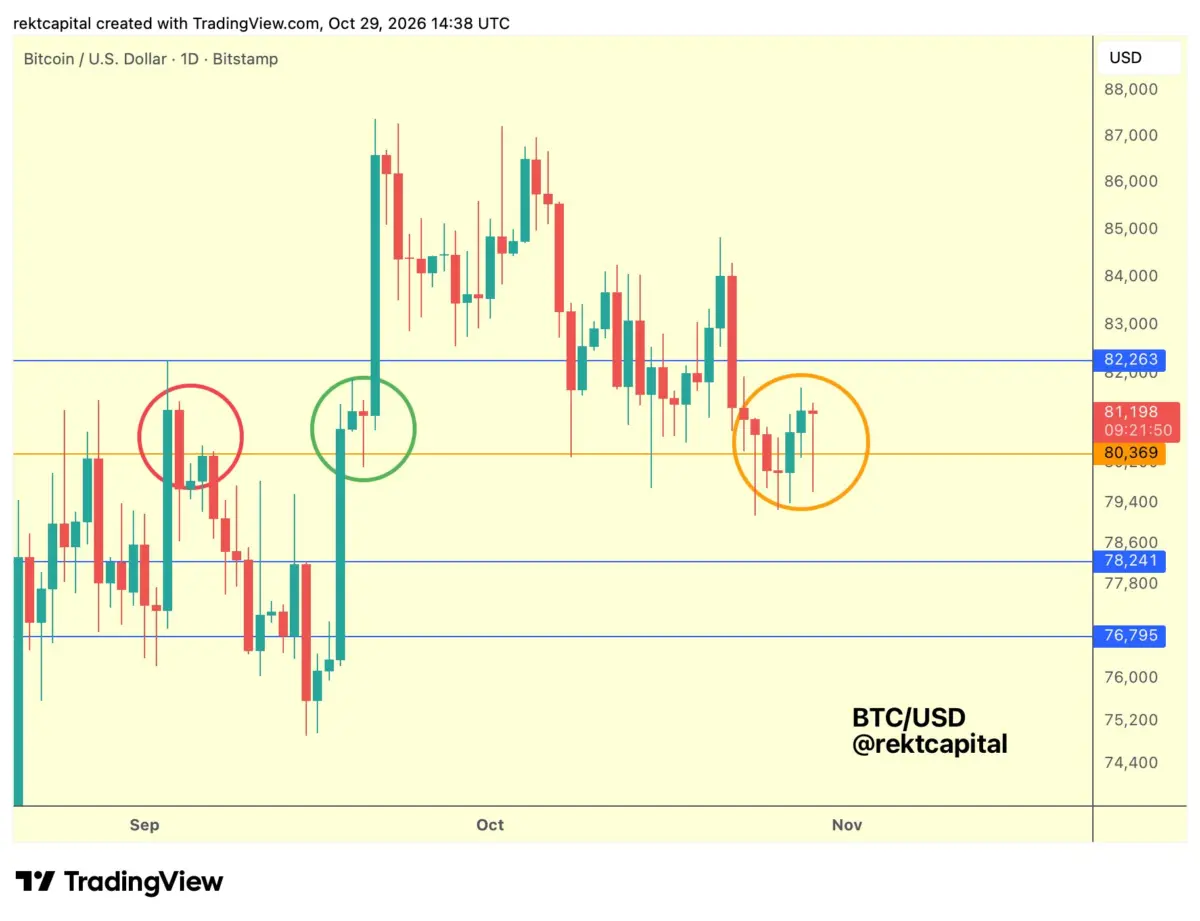
The massive exploit had an immediate and significant impact on the cryptocurrency market. By October 30th at 01:19 am UTC, Bitcoin was trading below $77,000, down 4.9% over the preceding 24 hours, according to CoinGecko. BNB, the native token of Binance, saw an 8% decline, falling to around $693, while Ether declined 5.7% to approximately $2,211. Other DeFi tokens also experienced notable drops, with AAVE down 11.3% and Uniswap’s UNI down 10.7%. The Bitcoin Fear and Greed Index plummeted to a score of 30, indicating a "fear" sentiment not seen since August.
Beyond the immediate market volatility, the Binance hack has reignited discussions about the security of centralized exchanges (CEXs) and the potential shift towards decentralized exchanges (DEXs). Geoffrey Kendrick, Standard Chartered’s global head of digital assets research, suggested that the breach could accelerate this trend and benefit DEXs like Uniswap in the long term. He reiterated his $100 price target for Uniswap’s UNI token by 2030, stating the breach was "another reason why that forecast may end up being too low." Kendrick highlighted that DEXs, such as Uniswap, have historically avoided large-scale exploits, contrasting them with the significant breach at Binance.
The incident also prompted immediate action from various stablecoin issuers and DeFi protocols. First Digital confirmed it had frozen FDUSD tokens involved in the attack. Ripple also announced it was freezing holdings of its RLUSD stablecoin linked to the hack. World Liberty Financial froze $27 million in USD1 and $2 million in WLFI.
The decentralized lending protocol Aave took a precautionary measure by freezing markets across its V3 and V4 deployments. This action followed a report that the Binance exploiter had borrowed approximately $44.6 million in Wrapped Ether (WETH) from Aave, depositing 60 million USDT as collateral. The position remained over-collateralized and subject to liquidation, not posing a direct risk to Aave suppliers, but the freeze prevented new deposits and borrowing, effectively halting market activity for new participants.
Background on TraderTraitor and North Korea’s Crypto Ambitions
The attribution to TraderTraitor places this hack within a broader pattern of North Korean cyber-criminal activity. The Democratic People’s Republic of Korea (DPRK) has become increasingly reliant on cryptocurrency theft to fund its weapons programs and evade international sanctions. Various intelligence agencies and cybersecurity firms have consistently identified North Korean state-sponsored groups, such as Lazarus Group (of which TraderTraitor is believed to be a part), as responsible for some of the largest crypto heists in history. These groups are known for their sophisticated techniques, patience, and ability to move and launder vast sums of stolen digital assets. Their targets have included exchanges, decentralized finance protocols, and individual users, with the ultimate goal of generating illicit revenue for the regime. The sheer scale of the Binance hack underscores the continued threat posed by these actors and the ongoing arms race between cybercriminals and security professionals in the digital asset space.
The incident serves as a stark reminder of the inherent risks within the cryptocurrency ecosystem and the constant need for robust security measures, diligent oversight, and rapid response capabilities from exchanges and other industry participants. As investigations continue, the full ramifications of this massive breach will undoubtedly unfold, potentially reshaping security protocols and user trust in the world of digital finance.