Galang Taruna
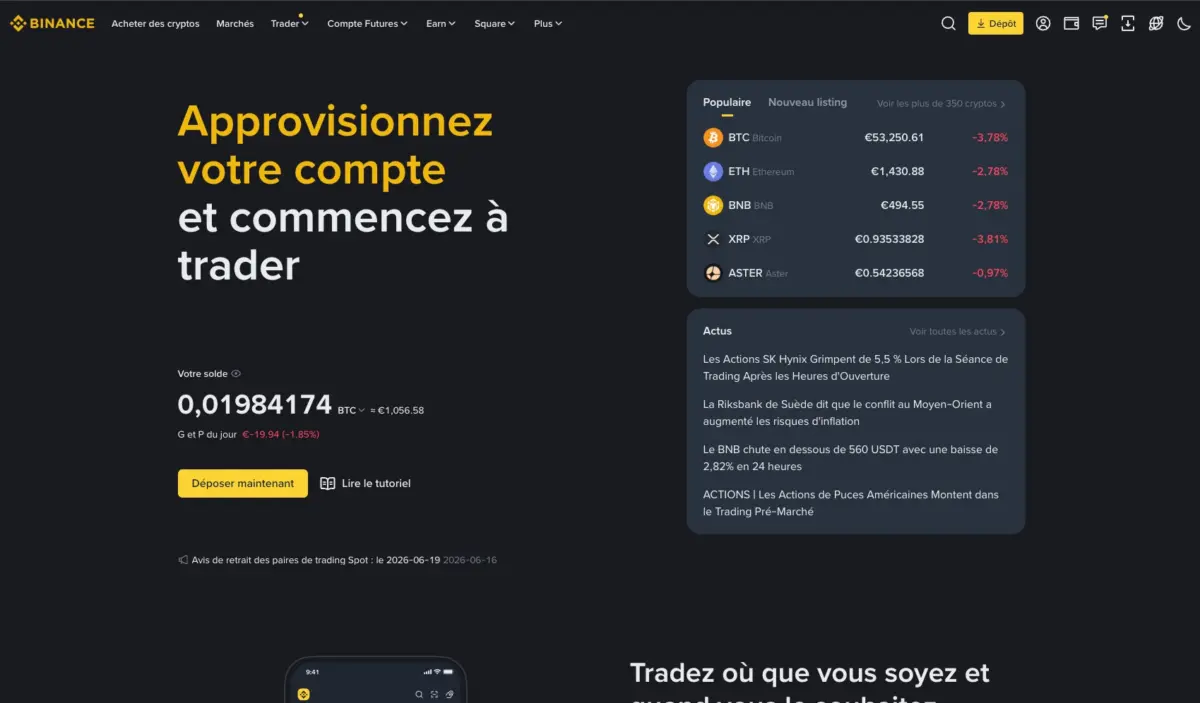
A colossal cyberattack struck Binance, the world’s largest cryptocurrency exchange, this past Thursday, October 29, 2026, resulting in the theft of billions of dollars in digital assets. While initial estimates of the stolen funds reached as high as $5.8 billion, swift action by stablecoin issuers Tether and Circle to freeze a significant portion of the assets has reduced the estimated net loss to approximately $1 billion (around €900 million). The incident has sent shockwaves across the global cryptocurrency market, raising renewed concerns about the security of centralized exchanges and the broader stability of the digital asset ecosystem.
The Anatomy of a Sophisticated Attack
The breach occurred around 9:24 PM Paris time on October 29th, when a single, massive transaction drained the contents of "Binance 14," a hot wallet critical for processing customer withdrawals. This particular wallet, perpetually connected to the internet to facilitate rapid transactions, became the Achilles’ heel in a meticulously planned operation. According to Conor Grogan, an executive at Coinbase, whose estimates were widely reported by outlets like The Block, the initial outflow encompassed up to $5.8 billion in various digital assets (approximately €5.2 billion) across multiple blockchains. If this full amount had been successfully exfiltrated, it would have dwarfed previous records, nearly quadrupling the $1.5 billion (around €1.3 billion) stolen from Bybit in February 2025, which had been considered the largest crypto heist in history at the time.
The attacker’s methodology exhibited a high degree of technical sophistication. Public data on the Ethereum blockchain, viewable via Etherscan, revealed that the perpetrator had received their initial funding the day before the attack through Tornado Cash. Tornado Cash is a notorious cryptocurrency mixer service designed to obscure the origins and destinations of digital transactions, a common tool employed by cybercriminals seeking to launder illicit gains. Subsequently, the attacker leveraged EIP-7702, an Ethereum improvement proposal that allows a standard externally owned account (EOA) wallet to temporarily delegate its operations to a smart contract. This innovative use of the protocol enabled the attacker to execute a sweeping, instantaneous drain of the "Binance 14" wallet, which contained 167,464 Ether and 63 other distinct tokens. Among these stolen assets were a substantial 1.6 billion USDT (approximately €1.4 billion), Tether’s prominent stablecoin pegged to the US dollar. Security firm Blockaid is currently investigating the total outflow, estimating it to be around $3.3 billion (or €3 billion), highlighting the complex nature of tracing the exact stolen amount.
Immediate Reactions and Binance’s Evolving Narrative
The first official acknowledgment of the incident came from Changpeng Zhao (CZ), Binance’s founder, who posted on X (formerly Twitter) around 10:15 PM Paris time. "Ça ressemble bien à un piratage" (It certainly looks like a hack), he wrote, confirming the suspicions that were already swirling through the crypto community. The Wall Street Journal quickly picked up on the story, already calling it "the biggest cryptocurrency theft in history" based on early, higher estimates.
Binance’s official communication, however, adopted a more cautious tone. Its initial statement on X referred only to a "possible security problem" and asserted that user funds were "totally safe." Analysis by FinanceFeeds, which tracked the message’s edit history, revealed that Binance had revised its statement twice within 13 minutes. The initial draft had stated "no confirmed impact" on client funds, which was later upgraded to "totally secure" in the final version. This subtle but significant shift in language, coupled with the subsequent suspension of all withdrawals across the platform, sparked concerns about transparency. Yi He, co-founder and co-CEO of Binance, later confirmed the withdrawal suspension, stating it was a precautionary measure to ensure the integrity of their systems. This move, while understandable from a security perspective, left users in limbo, forcing them to rely on Binance’s assurances without direct access to their assets.
The incident also drew reactions from competitors. Coinbase, Binance’s major American rival, quickly issued a statement confirming that its systems were unaffected and even extended an offer of assistance to Binance’s security teams. Binance.US, the independently operating American branch of the exchange, also reassured its users that its services were functioning normally, emphasizing its separate operational structure.
Mitigating the Damage: The Crucial Role of Stablecoin Issuers
A critical factor in mitigating the actual financial fallout was the swift intervention of stablecoin issuers Tether and Circle. These companies, responsible for the two largest stablecoins, USDT and USDC, possess the centralized authority to freeze their tokens on specific blockchain addresses. This capability, often a point of contention among decentralization advocates, proved instrumental in limiting the damage.
Within an hour of the attack, both companies acted decisively. Paolo Ardoino, CEO of Tether, announced that over 1.56 billion USDT had been successfully frozen. Similarly, Circle confirmed that approximately 823 million USDC had been blocked. This immediate action prevented a significant portion of the stolen funds from being moved or laundered, effectively quarantining them. However, not all assets could be recovered. The stolen Ether, for instance, cannot be frozen, as it is a decentralized cryptocurrency not controlled by any single entity or company. This highlights a fundamental difference in the underlying architecture and control mechanisms between stablecoins and native cryptocurrencies like Ether or Bitcoin.
Quantifying the Loss and Binance’s Financial Resilience
Following the freezing of the stablecoins, the true scale of the loss became clearer. 0xngmi, the founder of DefiLlama, a platform that tracks funds deposited on crypto exchanges, provided a more refined estimate via X. His calculations suggested that after accounting for the frozen USDT and USDC, the actual net loss to Binance would be approximately $1 billion (around €900 million).
While still a staggering sum, this figure represents a fraction of Binance’s overall financial strength. The exchange holds an enormous reserve of client assets, totaling approximately $144 billion. The estimated $1 billion loss, therefore, constitutes roughly 0.69% of its total assets under management. Changpeng Zhao, speaking as an owner and shareholder (having stepped down as CEO in 2023), acknowledged that the final loss "might be a little higher" but unequivocally stated that it "will be covered."
Binance’s primary mechanism for covering such losses is its Secure Asset Fund for Users (SAFU). Established in 2018, SAFU is an emergency insurance fund specifically designed to protect users’ funds in extreme cases of security breaches. As of February, the SAFU fund was composed entirely of Bitcoin, holding approximately 15,000 BTC. At Thursday evening’s Bitcoin price of around $79,000, this reserve was valued at nearly $1.2 billion (approximately €1.06 billion). On paper, this amount appears sufficient to cover the estimated $1 billion loss calculated by 0xngmi, though it leaves little margin if the final cost of the breach escalates, as CZ suggested.
This isn’t the first time Binance has tapped into its SAFU fund. In May 2019, the exchange suffered a major hack where 7,000 Bitcoins, valued at about $40 million at the time, were stolen. Binance fully reimbursed its affected customers using SAFU, demonstrating its commitment to user protection. The exchange has also publicly committed to replenishing the fund if its value drops below $800 million (approximately €720 million). Given SAFU’s all-Bitcoin composition, its value fluctuates with the market price of BTC. This threshold would be reached if Bitcoin’s price were to fall below approximately $53,000 (around €47,500), representing a roughly one-third drop from its current value.
Broader Market Repercussions and Investor Confidence
The news of the Binance hack rippled instantly across the entire cryptocurrency market. Within the hour following the announcement, Bitcoin (BTC) and Ethereum (ETH) experienced sharp declines, losing between 2% and 4% of their value. Binance Coin (BNB), the native token of the Binance ecosystem, suffered an even more significant blow, dropping by up to 6%. The panic selling triggered a cascade of forced liquidations of leveraged positions, reaching an astonishing $627.7 million (approximately €563 million). This illustrates that even individuals without accounts on Binance directly felt the impact, as the overall market sentiment soured and portfolio values depreciated.
Such incidents invariably erode investor confidence, particularly among retail participants who are often less familiar with the intricacies of blockchain security and risk management. While Binance’s strong financial position and the SAFU fund offer a layer of protection, the sheer scale of the attempted theft and the temporary suspension of withdrawals highlight the inherent risks associated with trusting centralized entities with digital assets.
Regulatory Landscape and User Trust
The incident also resurfaces critical questions about regulatory oversight in the fast-evolving crypto space. Binance has faced significant regulatory scrutiny globally, leading to its withdrawal from several markets, including France, where it ceased all services on July 1st, 2026, due to a lack of European regulatory approval. These regulatory challenges underscore the tension between the decentralized ethos of cryptocurrency and the need for consumer protection and financial stability typically provided by traditional regulatory frameworks. A major hack like this could intensify calls for stricter regulations on centralized exchanges, potentially leading to more stringent security audits, capital reserve requirements, and clearer liability frameworks.
For users, trust is paramount. Binance’s initial cautious communication and the subsequent withdrawal freeze, despite assurances, could be perceived negatively by some, particularly those who value transparency above all else. Maintaining clear, consistent, and timely communication during a crisis is crucial for rebuilding and retaining user trust.
Expert Analysis and Future Outlook for Exchange Security
Security experts view this event as a stark reminder of the continuous arms race between exchange security teams and increasingly sophisticated attackers. The use of Tornado Cash to obscure initial funding and EIP-7702 to orchestrate the wallet drain demonstrates an evolving threat landscape. While hot wallets are essential for liquidity and rapid transactions, they inherently represent a greater attack surface than cold wallets (which are offline). Exchanges must constantly innovate their security protocols, employing multi-signature authentications, advanced anomaly detection systems, and robust internal controls. The fact that a single hot wallet could be drained of such a vast amount of assets will undoubtedly lead to a re-evaluation of hot wallet management strategies across the industry, potentially pushing for more dynamic asset allocation between hot and cold storage.
This incident also reignites the debate around self-custody versus trusting centralized exchanges. While exchanges offer convenience, they concentrate risk. The ability of stablecoin issuers to freeze funds, while beneficial in this specific instance, also highlights a degree of centralization within the broader crypto ecosystem, challenging the purist decentralized vision.
Protecting Your Digital Assets: A Guide for Users
In the wake of such a significant security breach, it is imperative for cryptocurrency users to review and enhance their personal security practices. Binance itself has issued warnings about potential scams that often follow such events. Users should be highly suspicious of unsolicited links, messages, or requests for information, especially those purporting to "secure" their accounts. Never, under any circumstances, disclose your seed phrase or recovery phrase. No legitimate service or platform will ever ask for this sequence of words, as it grants complete access to your wallet. Always interact with your exchange or wallet provider exclusively through their official applications or websites.
For those seeking to minimize their reliance on centralized exchanges, self-custody solutions, such as hardware wallets, offer a more secure alternative. With a hardware wallet, users retain direct control over their private keys, thereby eliminating counterparty risk associated with exchange hacks. When purchasing a hardware wallet, it is crucial to buy directly from the manufacturer to avoid compromised devices. This advice comes after Ledger, a prominent hardware wallet manufacturer, confirmed on October 10th, 2026, that an "implant espion" (spy implant) was found in a wallet sold by one of its authorized resellers in Southeast Asia. Just five days later, Ledger unveiled the Atom, an Android-based device designed specifically for crypto security, without call or SMS functionality, priced at $849 (approximately €760 excluding taxes) for its Founder’s edition, set for delivery in summer 2027, with the price increasing to $899 (around €805) thereafter. These developments underscore the ongoing need for vigilance even in self-custody solutions.
Ongoing Investigation and Unanswered Questions
As of now, Binance has not publicly disclosed the definitive cause of the attack, the exact final amount of the loss, nor a firm timeline for the resumption of withdrawals. It also remains unclear whether the exchange will primarily draw upon its SAFU fund or its general treasury to cover the losses. The investigation is ongoing, with forensic analysis likely to uncover more details about the attack vector and perpetrator. The crypto community will be watching closely for Binance’s full transparency and its subsequent actions to reinforce its security infrastructure, as this incident will undoubtedly serve as a critical case study in the ever-evolving landscape of digital asset security.