Sisilia Frederika
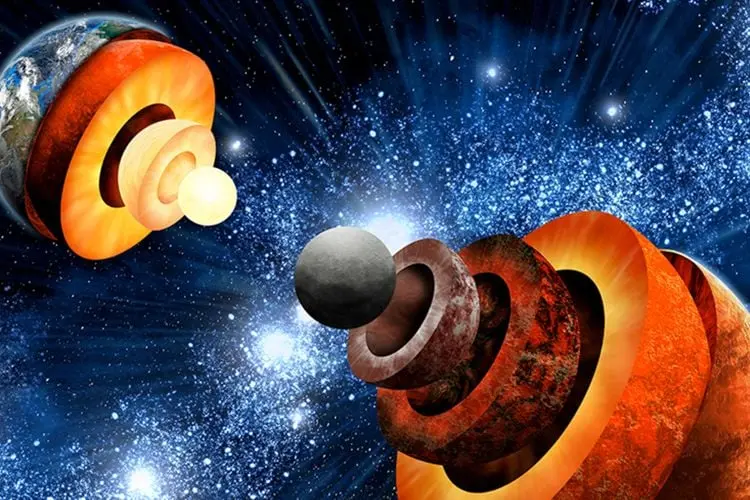
The quest to understand the internal mechanisms of distant worlds has reached a significant milestone as a collaborative team of researchers from the Lawrence Livermore National Laboratory (LLNL) and Johns Hopkins University revealed groundbreaking insights into the behavior of magnesium oxide (MgO) under conditions of extreme heat and pressure. Published recently in Physical Review X, the study serves as the culmination of a 12-year investigation into the geochemical processes that define the structural integrity and thermal evolution of planets ranging from rocky "super-Earths" to massive gas giants like Jupiter. By utilizing high-powered laser technology to simulate the crushing environments found deep within planetary mantles, the researchers have challenged long-standing assumptions about mineral physics, discovering that the direction of applied force—rather than just the magnitude of pressure—plays a critical role in how these building blocks of the universe respond to stress.
The Foundational Role of Magnesium Oxide in Planetary Science
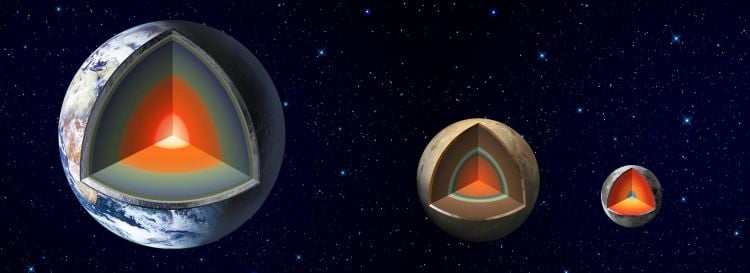
To understand the architecture of the cosmos, scientists must first understand the materials that compose it. Through the study of meteorites, Earth-based analogs, and sophisticated computer modeling, geochemists have long identified magnesium and silicon as the most abundant elements in the rocky mantles of planets. When subjected to the intense gravitational pressures of a planetary interior, these elements frequently combine with oxygen to form magnesium oxide. On Earth, MgO is a primary component of the lower mantle, existing in a solid crystalline state that influences how heat moves from the core to the surface.
However, as astronomers discover more exoplanets—specifically super-Earths, which possess masses significantly greater than our own—the need to understand how MgO behaves under even more extreme conditions has become paramount. In these massive worlds, the internal pressure can exceed those of Earth by several orders of magnitude. Whether MgO remains a solid, becomes a plastic-like flowing mineral, or melts into a conductive liquid determines the planet’s volcanic activity, its rate of cooling, and its ability to generate a protective magnetic field.
Experimental Methodology: Simulating the Hearts of Giants
The research team, led by experts from LLNL and Johns Hopkins, utilized the unique capabilities of high-energy laser systems to recreate the environment of a planetary core. The experiments involved subjecting a cubic crystal of magnesium oxide to laser-driven shock compression. This method allows scientists to reach pressures and temperatures that are otherwise impossible to achieve in a laboratory setting.
During the trials, the researchers pushed the MgO samples to a staggering 572 Gigapascals (GPa) and temperatures reaching 13,000 Kelvin (approximately 12,727 degrees Celsius). To put these figures into perspective, the pressure at the center of the Earth is estimated to be around 360 GPa, with temperatures hovering near 6,000 Kelvin. By exceeding Earth’s core conditions, the team was able to simulate the interior of "super-Earth" exoplanets and the deep rocky cores of gas giants.
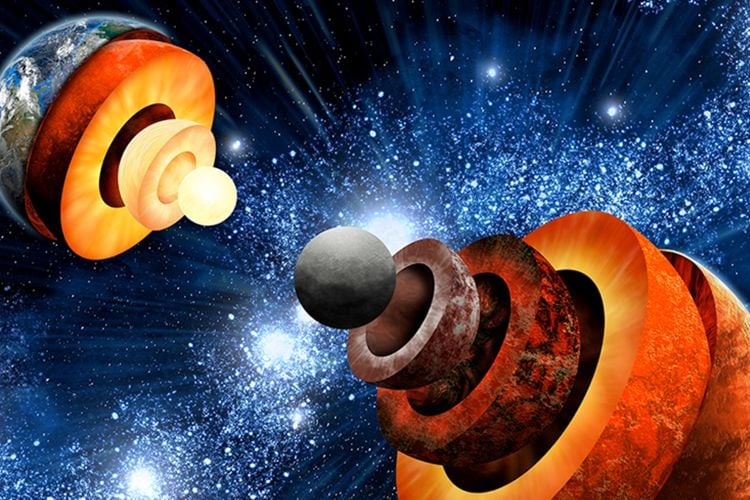
A critical component of this study was the variation in compression direction. The team applied pressure to the MgO cubes from three distinct orientations:
- Perpendicular to a cube face.
- Diagonally across a face.
- Along the main diagonal through the center of the cube.
For decades, the prevailing scientific consensus suggested that under such extreme conditions, the specific direction of compression would become irrelevant as the material reached a state of "hydrostatic" or uniform pressure. The results of this experiment, however, proved otherwise.
Challenging Established Theories: The Importance of Direction
The most surprising discovery of the study was the revelation that "how you push" the material matters just as much as "how hard" you push it. The researchers found that the crystal’s response was highly anisotropic, meaning it exhibited different physical properties depending on the direction of the laser’s impact.
When compressed along the diagonal through the center of the cube, the MgO underwent a relatively clean transformation. In contrast, compression from the other two directions resulted in disordered and irregular crystal growth trailing behind the shock wave. This phenomenon suggests that even at pressures exceeding those of Earth’s core, the underlying atomic structure of the mineral maintains a "memory" of its orientation, influencing how it deforms and transitions between phases.
This finding refutes the long-held assumption that minerals become isotropic—behaving identically in all directions—under the intense heat and pressure of a planetary interior. This discovery has profound implications for seismology and mantle convection models, as it suggests that the flow of material deep within a planet may be far more complex and directionally dependent than previously modeled.
A Chronology of Discovery: A 12-Year Scientific Journey
The findings published in Physical Review X represent the third chapter in a rigorous, decade-plus investigation. The timeline of this research highlights the iterative nature of high-energy physics and planetary science:
- 2012–2014: Initial theoretical modeling and preliminary laser experiments began at LLNL to determine the limits of MgO stability.
- 2015: The team published a seminal study in Physical Review Letters, which provided the first high-pressure evidence of MgO’s phase transitions, moving from a B1 crystal structure (like table salt) to a more compressed B2 structure.
- 2024 (Early): A follow-up study in Science Advances refined the melting curve of MgO, providing a clearer picture of the temperatures required to turn this rocky mineral into a liquid.
- 2024 (Current): The latest publication in Physical Review X addresses the directional mechanics of compression, solving the "conundrum" of irregular crystal growth observed in earlier experiments and setting a new experimental record for the melting point of MgO at 572 GPa.
Expert Reactions and Official Statements
The implications of the study extend far beyond the laboratory, touching on the very nature of planetary habitability. Dr. June Wicks, a professor in the Department of Earth and Planetary Sciences at Johns Hopkins University and a co-author of the study, emphasized the importance of these findings for understanding the life cycle of planets.
"Magnesium oxide is an important ingredient in our understanding of planetary interiors," Dr. Wicks stated following the release of the study. "These experiments help us determine where it can remain solid and where it becomes liquid, which matters for how planets transport heat and evolve."
Researchers at LLNL added that the ability to record the precise moment of melting at 572 GPa provides a new benchmark for computational mineral physics. This data allows scientists to calibrate their models with unprecedented accuracy, ensuring that future simulations of exoplanetary interiors are grounded in experimental reality rather than theoretical guesswork.
Broader Impact: Magnetic Fields and Habitability
One of the most significant takeaways from this research involves the behavior of MgO in "super-Earths." On Earth, the magnetic field is generated by the movement of liquid iron in the outer core—a process known as the geodynamo. However, in larger rocky planets, the pressures are so high that magnesium oxide in the mantle may melt and become an electrically conductive fluid.
If the mantle of a super-Earth contains a layer of liquid MgO, it could potentially generate a magnetic field much stronger than Earth’s. Because magnetic fields shield planets from harmful solar radiation and help retain an atmosphere, understanding the melting point of MgO is a key factor in determining which exoplanets might be capable of supporting life.
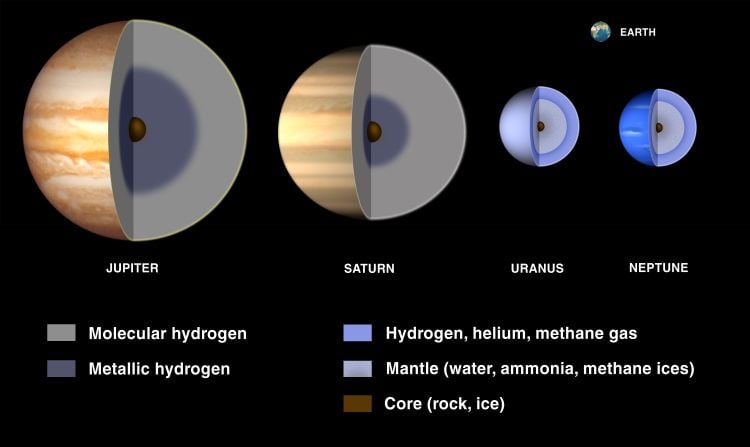
Furthermore, for gas giants like Jupiter and Saturn, these findings help clarify the state of their deep interiors. Scientists have long debated whether these planets possess solid rocky cores or if those cores have partially dissolved into a metallic liquid state. The new record for MgO melting suggests that in the hottest gas giants, the "rocky" components may actually exist in a fluid state, fundamentally changing how these planets rotate and distribute their internal heat.
Conclusion and Future Outlook
The collaborative effort between LLNL and Johns Hopkins University has successfully pushed the boundaries of human knowledge regarding the materials that form the backbone of our universe. By proving that the direction of compression influences the behavior of magnesium oxide at extreme pressures, the team has opened a new door in the study of planetary mineralogy.
As telescope technology, such as the James Webb Space Telescope (JWST), continues to provide data on the atmospheric compositions of exoplanets, laboratory experiments like these provide the necessary context to understand what is happening beneath the surface. The discovery that MgO can remain solid or become liquid under specific directional stresses will force a re-evaluation of how heat is transported through the mantles of massive worlds.
The 12-year investigation into magnesium oxide may have reached a major milestone, but the work is far from over. Future research will likely focus on how MgO interacts with other abundant minerals, such as iron and silica, under these same record-breaking pressures. For now, the scientific community has a clearer, more complex, and more accurate map of the crushing depths of the cosmos, proving once again that in the world of physics, even the smallest details of "how you push" can change our understanding of the universe.