Sisilia Frederika
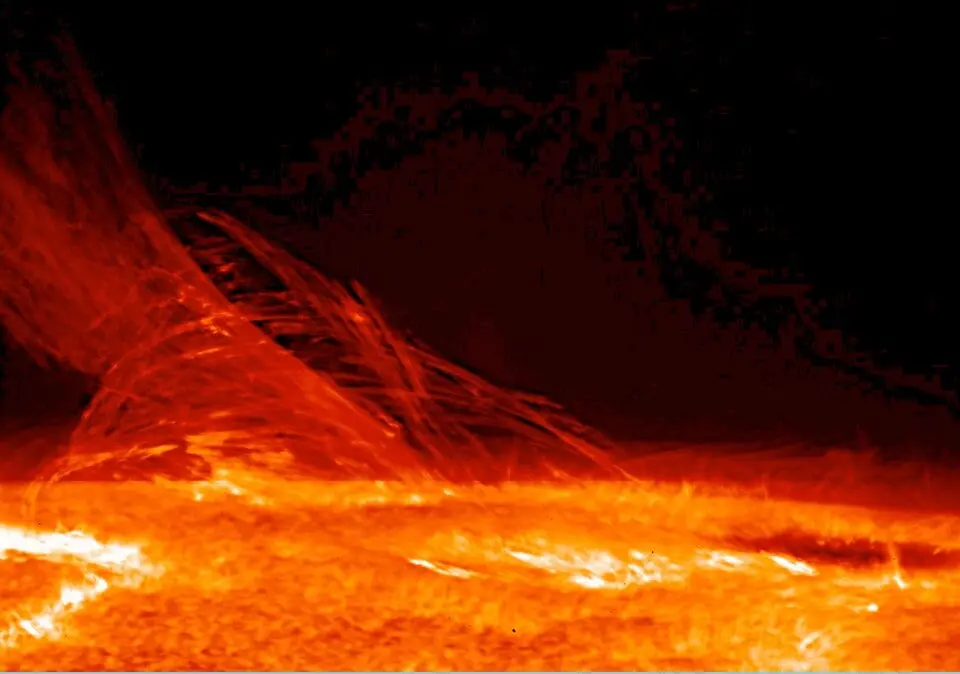
The sun, an primary engine of life and the central gravitational anchor of our solar system, continues to present scientists with some of the most enduring paradoxes in modern physics. Chief among these is the "coronal heating problem," a counterintuitive phenomenon where the Sun’s outermost atmosphere, the corona, maintains temperatures exceeding one million degrees Celsius, while its visible surface, the photosphere, simmers at a relatively cool 5,500 degrees Celsius. In a traditional thermodynamic system, temperature decreases as one moves away from a heat source; the Sun, however, defies this logic. A groundbreaking study led by researchers from the University of Newcastle, the Indian Institute for Astrophysics, and the University of Sheffield has introduced a transformative perspective on this mystery, suggesting that the solar features known as "spicules" have been fundamentally misunderstood for decades.
For over a century, solar physicists have observed spicules—slender, jet-like conduits of plasma that erupt from the Sun’s lower atmosphere into the corona. These features shoot upward at velocities ranging from 15 to 40 kilometers per second, reaching heights of thousands of kilometers before collapsing back toward the surface within minutes. At any given moment, it is estimated that millions of these plasma jets populate the solar disk. Traditionally, these have been modeled as discrete, two-dimensional "spikes" or individual plasma cylinders, often compared to miniature tornadoes. The new research, published in The Astrophysical Journal, challenges this paradigm, providing evidence that these features are not individual tubes of gas but are instead an optical illusion created by massive, three-dimensional "curtains" of plasma.
The Illusion of the Solar Limb
The core of the team’s discovery lies in the geometry of solar observations. Because Earth-based and satellite-borne telescopes often view the Sun’s edge—the "limb"—from a side-on perspective, the three-dimensional complexity of the solar atmosphere is flattened into a two-dimensional image. The research suggests that what we have long identified as individual spicules are actually the overlapping folds of a rippling, magnetic sheet of plasma.
To visualize this, the researchers suggest imagining a vast, translucent curtain blowing in the wind. When viewed from the front, the curtain appears as a broad, continuous sheet. However, when viewed from the edge, the folds where the fabric bunches together appear as dense, vertical lines. In the solar context, these "folds" are created by magnetohydrodynamic processes that cause the plasma sheets to wrinkle and sway. From our perspective on Earth or from near-Earth orbit, these dense folds appear as discrete, spinning jets of plasma, leading to the historical misidentification of spicules as individual cylinders.
This shift in perspective is not merely a matter of celestial aesthetics; it fundamentally changes the mathematical models used to calculate energy transport from the Sun’s interior to its outer atmosphere. By recognizing these features as part of a larger, integrated "atmospheric drape," scientists can better account for the massive amount of energy required to superheat the corona.
Modeling the Acoustic Pounding of the Sun
Unlike many recent breakthroughs in heliophysics that rely on fresh data from the Parker Solar Probe or the Solar Orbiter, this discovery was driven by high-fidelity numerical simulations. The research team utilized the "Pencil Code," a highly sophisticated, multi-purpose simulation tool designed to model compressible magnetohydrodynamic flows. By simulating the convection zone—the churning region beneath the solar surface—up through the chromosphere and into the lower corona, the team was able to replicate the environment of the Sun with unprecedented detail.
The simulation revealed a violent "acoustic pounding" occurring just beneath the solar surface. The Sun’s surface is covered in granules—convection cells of hot plasma that rise and fall like boiling water. As these granules churn, they strike the base of the solar atmosphere with the rhythmic force of a drum. This mechanical energy launches magnetohydrodynamic (MHD) waves that travel upward along magnetic field lines.
As these waves ascend, they encounter regions of increasingly thinning gas. Following the laws of fluid dynamics, the waves grow in amplitude as the density drops, eventually evolving into massive bow shocks. When these shocks "break," they blast portions of the lower atmosphere upward, creating the vast plasma curtains described by the researchers. These curtains can extend thousands of kilometers into space, providing a massive surface area for energy exchange.
Discovery of Coronal Swirling Conduits (CoSCos)
While the reclassification of spicules as plasma curtains is a significant finding, the study also identified a secondary, related phenomenon: Coronal Swirling Conduits, or "CoSCos." Using automated vortex-detection algorithms on their simulation data, the researchers found giant columns of rotating plasma that bridge the gap between the solar surface and the corona.
These CoSCos are distinct from spicules in both scale and behavior. They are essentially giant plasma whirlpools, often hundreds of kilometers in diameter, rotating at speeds of up to 20 kilometers per second. The researchers identified two primary mechanisms for the creation of these conduits:
- Magnetic Reconnection: CoSCos can form when magnetic field lines in the solar atmosphere snap and realign, a process known as magnetic reconnection. This process releases enormous amounts of energy and is a primary driver of solar flares and coronal mass ejections.
- Baroclinic Vorticity: This mechanism is tied to the edges of the spicule curtains. Because the plasma curtains are significantly denser than the surrounding coronal "void," intense pressure and density gradients form along their boundaries. This mismatch generates baroclinic vorticity—a phenomenon similar to how terrestrial weather systems are stirred up when cool ocean breezes collide with warm inland air.
As the plasma curtains lose their upward momentum and begin to descend back toward the Sun, the CoSCos act as giant vacuum-like vortices. They "catch" the falling plasma and pull it back up into the corona. This cycle creates a continuous pump of energy and matter, fueling the solar wind and providing the thermal energy necessary to maintain the corona’s extreme temperatures.
Validating Simulations with Historical Satellite Data
To confirm that their simulations were grounded in reality, the researchers turned to historical data from two of NASA and JAXA’s most reliable solar observatories: the Interface Region Imaging Spectrograph (IRIS) and the Hinode satellite.
Launched in 2006, the Hinode satellite has spent nearly two decades providing high-resolution images of the Sun’s magnetic fields. IRIS, launched in 2013, focuses on the "interface region" between the solar surface and the corona. Both satellites had previously captured spicules exhibiting "bizarre" motions—twisting, swaying, and appearing to move in ways that traditional cylindrical models could not explain.
When the research team compared the IRIS and Hinode observations with their "curtain and CoSCos" model, the data aligned perfectly. The strange lateral movements and apparent spinning of spicules were no longer anomalies; they were the predictable result of viewing a rumpled, swaying curtain from a side-on perspective. The "rotating spicules" observed by Hinode were, in fact, the visible markers of CoSCos—the regions where giant plasma tornadoes were actively transporting energy into the atmosphere.
Implications for Solar Science and Space Weather
The implications of this research extend far beyond academic curiosity. Understanding the mechanism of coronal heating is essential for predicting space weather, which has a direct impact on human technology. The energy transported by spicules and CoSCos fuels the solar wind—a stream of charged particles that flows outward from the Sun, bathing the planets in radiation.
When the solar wind is particularly intense, or when it is punctuated by solar flares, it can trigger geomagnetic storms on Earth. These storms have the potential to disrupt satellite communications, interfere with GPS signals, and even take down power grids. By providing a more accurate model of how the Sun’s atmosphere is energized, this research allows scientists to refine their predictions of solar activity.
Professor Robertus Erdélyi, one of the lead researchers from the University of Sheffield, noted that the discovery marks a "paradigm shift" in our understanding of the solar atmosphere. He emphasized that the interaction between the plasma curtains and the rotating conduits provides a coherent explanation for how energy is moved across the vast temperature gradient of the Sun.
Future Research and Global Collaboration
The study represents a triumph of international scientific collaboration, bringing together experts in fluid dynamics, magnetic fields, and solar observation from the UK and India. It also highlights the growing importance of computational physics in modern astronomy. As telescopes reach their physical limits of resolution, simulations like the Pencil Code allow scientists to "visit" the solar surface in ways that physical instruments cannot.
However, the team acknowledges that while the "curtain" theory answers many questions, it also raises new ones. The exact lifecycle of a CoSCos vortex and the degree to which these structures contribute to the acceleration of the solar wind remain areas of active study. Future observations from the Daniel K. Inouye Solar Telescope (DKIST) in Hawaii—the world’s most powerful solar telescope—are expected to provide the high-resolution imagery needed to see these plasma curtains in even greater detail.
As we move into a period of increased solar activity, known as the Solar Maximum, the Sun will provide ample opportunities for researchers to test this new model. For now, the image of the Sun as a star draped in magnetic curtains, stirred by invisible tornadoes of plasma, provides a more complex and beautiful picture of our local star than ever before. This research suggests that the answers to the universe’s greatest mysteries may not always require more data, but rather a new way of looking at the data we already have.