Garick Elordi
Chris Hayes, the lead services provider at id Software, has publicly challenged Microsoft’s recent decision to implement sweeping workforce reductions across its gaming divisions, asserting that the production of high-caliber triple-A (AAA) titles is "impossible" under current staffing levels. In a detailed discussion on the "Well Played" podcast with host Andre Peschke, Hayes provided a rare internal perspective on the consequences of the layoffs that have shaken the legendary studio behind the Doom and Quake franchises. The conversation, which spanned approximately 90 minutes, delved into the logistical hurdles of modern game development, the perceived disconnect between corporate management and creative departments, and the growing momentum toward unionization within the industry.
The Logistics of AAA Development and Staffing Disparities
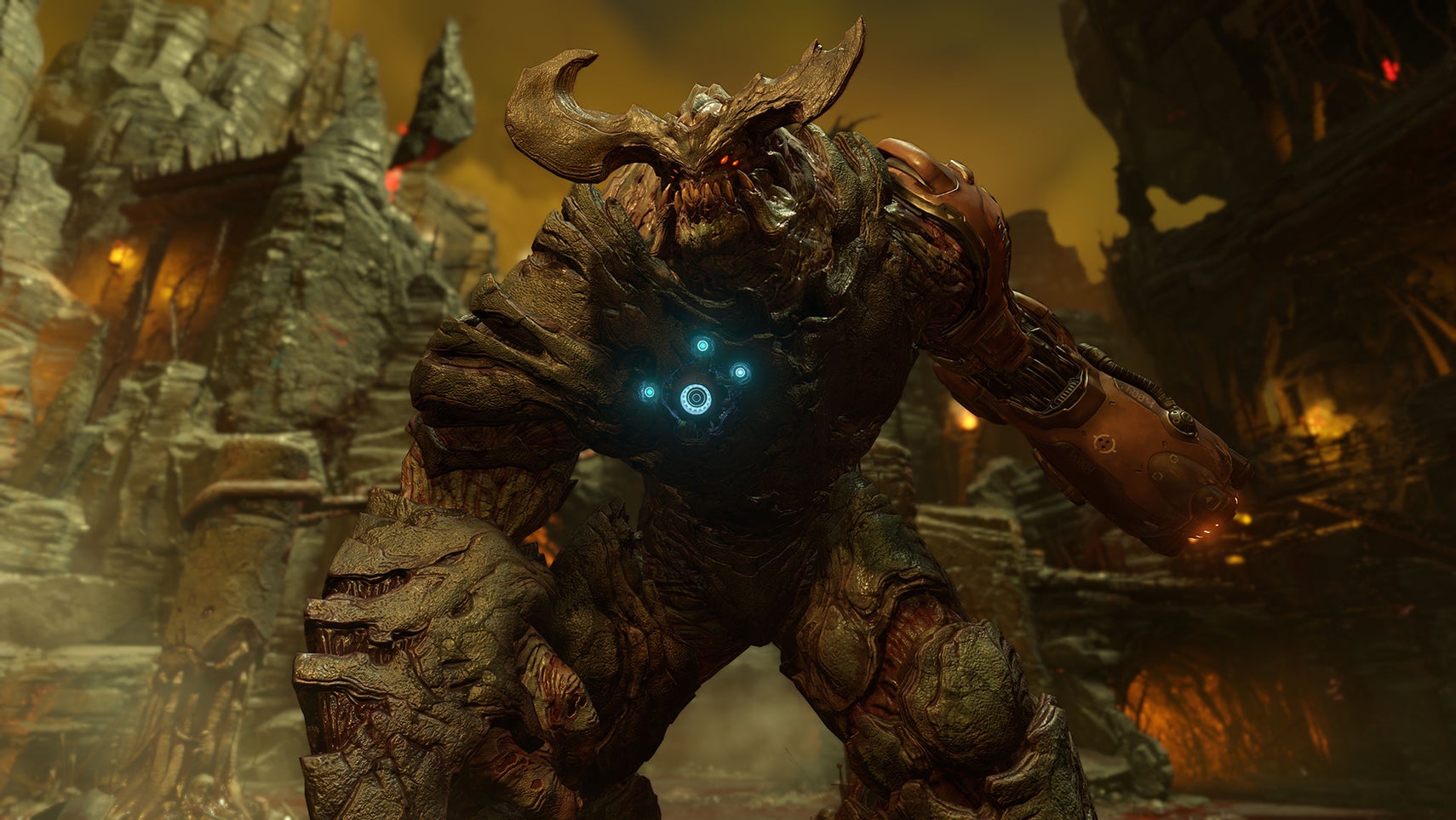
The core of Hayes’ argument rests on the sheer scale required to produce modern blockbuster video games. Using 2016’s Doom—a title credited with revitalizing the first-person shooter genre—as a benchmark, Hayes explained that the complexity of current game engines and the expectations of the global market necessitate a vast, multidisciplinary workforce. According to Hayes, the reduction of the studio’s headcount by nearly half fundamentally breaks the pipeline required to deliver a product of that magnitude.
"It is hard to make a game that is triple-A, that is like we’ve done before, with half the people," Hayes stated during the podcast. "And by hard I mean impossible. It’s hard to make a game when there are entire departments that you need: entire disciplines that are gone."
This statement highlights a critical shift in the studio’s operational capacity. While corporate leadership has attempted to maintain a public image of stability, Hayes countered the narrative that the studio remains unchanged. He specifically addressed reassurances from higher-ups claiming that "we are still the same id" despite the cuts. Hayes rejected this sentiment, noting that the studio is, in a literal sense, "half the same id." He further alleged that these talking points were part of a strategy provided by Microsoft to studio heads to mitigate further talent attrition and maintain morale among the remaining staff.
Discrepancies in Developer Headcounts
A significant point of contention during the interview involved the historical headcount of id Software. Microsoft representatives have previously suggested that the current number of developers at id Software is comparable to the team size that developed the 2016 Doom reboot. However, Hayes and Peschke noted that the credits for that game list a significantly higher number of personnel than are currently employed at the studio. When pressed on this discrepancy, Hayes noted that the corporate phrasing of being "close to" previous staffing levels is a linguistic maneuver to obscure the reality that the workforce is, in fact, smaller.
The loss of specialized disciplines is particularly damaging to a studio like id Software, which is known for its proprietary id Tech engine. The maintenance of high-end rendering technology, networking infrastructure, and complex level design requires a critical mass of expertise. Without specific departments, the burden of development often shifts to overextended remaining staff, leading to concerns about "crunch" culture and a potential decline in the technical polish for which the studio is world-renowned.
The Game Pass Paradox and Revenue Metrics
Hayes also addressed the friction between traditional game sales and Microsoft’s Game Pass subscription model. He expressed frustration with financial reports that cite "poor sales" for Bethesda-published titles while simultaneously prioritizing a service that discourages individual purchases.
"Whenever we see the financial reports that say there were poor sales under Bethesda. Like, what’s a sale if you have Game Pass?" Hayes questioned. "Are you saying poor sales means a poor number of games sold? Of course—you aren’t doing a games-sold business model."
This critique points to a broader industry debate regarding how success is measured in the era of subscription services. If a game is available on Game Pass on its launch day, traditional retail sales are expected to be lower. However, if corporate leadership uses those lower sales figures to justify workforce reductions, it creates a "catch-22" for developers whose success is tied to a metric that the company’s own business model has undermined. Hayes suggested that those responsible for these strategic decisions lack a fundamental understanding of the games industry, the artistic process, and the business models they have implemented.
Context of the "Xbox Reset"
The layoffs at id Software did not occur in isolation. They are part of a broader organizational shift within Microsoft’s gaming division, which the company has termed an "Xbox reset." This restructuring follows Microsoft’s massive $68.7 billion acquisition of Activision Blizzard and its earlier $7.5 billion acquisition of ZeniMax Media (the parent company of Bethesda and id Software).
Last month, Microsoft announced that approximately 3,200 positions would be eliminated across its gaming workforce. Of these, 1,600 were effective immediately, with the remainder scheduled for the following months. These cuts have impacted high-profile studios including Double Fine, Compulsion Games, and Ninja Theory, as well as the complete closure of Tango Gameworks (creators of Hi-Fi Rush) and Arkane Austin (creators of Prey and Redfall).
The scale of these layoffs has prompted intense scrutiny from industry analysts and labor advocates. Despite Microsoft’s record-breaking revenues and its position as one of the world’s most valuable companies, the gaming division has faced pressure to increase profit margins following its aggressive acquisition spree.
A Timeline of Recent Industry Turbulence
The current situation at id Software is reflective of a wider trend of volatility within the video game industry throughout 2023 and 2024.

- September 2020: Microsoft announces intent to acquire ZeniMax Media for $7.5 billion.
- March 2021: Acquisition of ZeniMax is finalized, bringing id Software under the Microsoft umbrella.
- January 2024: Microsoft announces the layoff of 1,900 employees across Activision Blizzard and Xbox.
- May 2024: Microsoft closes Tango Gameworks and Arkane Austin, sparking widespread industry backlash.
- Recent Months: Further layoffs totaling 3,200 positions are announced as part of the "Xbox reset," directly impacting id Software.
This timeline illustrates a period of rapid consolidation followed by aggressive contraction. For developers at id Software, this environment has fostered a sense of instability that Hayes suggests is incompatible with the long-term vision required for AAA game cycles, which often span five or more years.
The Move Toward Unionization
A significant portion of Hayes’ discussion focused on the push for unionization at id Software. In the wake of the layoffs and the perceived lack of transparency from management, employees have increasingly looked toward collective bargaining as a means of securing job protections and a voice in the studio’s direction.
This movement follows the successful unionization of other Bethesda-related entities. In early 2023, hundreds of quality assurance workers at ZeniMax Media voted to form the ZeniMax Workers United-CWA, the first studio union at Microsoft. Hayes indicated that the recent job cuts have only accelerated the desire for similar protections at id Software, as employees seek to safeguard the "cohesion between teams" that he credits for the studio’s past successes.
Broader Impact and Industry Implications
The criticisms leveled by Hayes raise serious questions about the future of the "blockbuster" game development model under massive corporate conglomerates. If a studio with the pedigree of id Software—the creator of the very foundation of the FPS genre—cannot maintain the staff necessary to produce its signature titles, it suggests a systemic issue in how AAA games are funded and managed.
Industry analysts suggest that the "growth at all costs" mentality of the last decade is clashing with the reality of plateauing hardware sales and the shifting economics of subscription services. The loss of "institutional knowledge" is another major concern; when half a studio is cut, the specialized workflows and internal culture that allow for high-level innovation are often irreparably damaged.
Furthermore, the public nature of Hayes’ comments is unusual in a sector typically defined by strict non-disclosure agreements and curated PR responses. His willingness to speak out suggests a high level of frustration and a belief that the current path is unsustainable. As id Software moves forward with its next projects, the industry will be watching closely to see if the studio can maintain its reputation for technical excellence with a diminished workforce, or if the "impossible" scenario Hayes described will manifest in the quality of future releases.
Microsoft has not yet issued a specific rebuttal to Hayes’ podcast comments, though the company continues to maintain that its restructuring is necessary for the "long-term success" of the Xbox brand. For now, the developers at id Software remain in a state of transition, caught between their legacy as industry pioneers and the harsh fiscal realities of their corporate parent.